 tradivior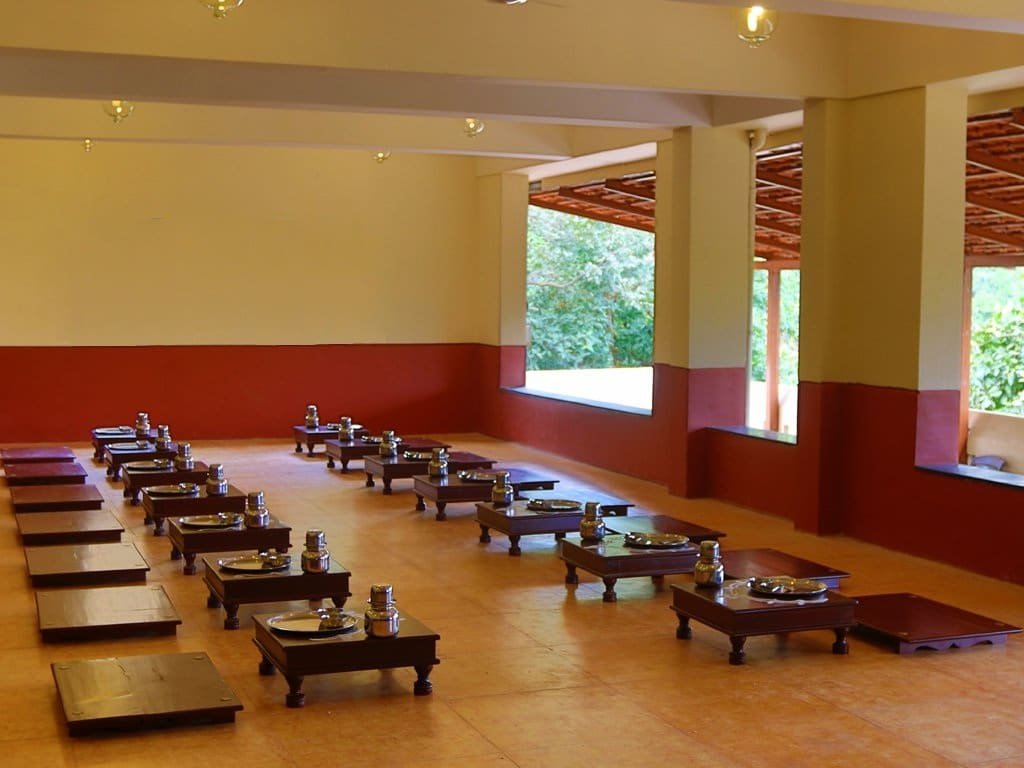
In this investigation
For generations, many Indian meals were eaten close to the ground: people sat cross-legged or in another comfortable floor posture, food arrived on low plates or leaves, and the dining table was unnecessary. Today the custom is often defended with elaborate claims about digestion, blood flow and weight loss. The tradition is real. The science attached to it is much less settled.
When the floor was furniture
Floor sitting was never only about food. In homes built around mats, low platforms and ground-level activity, people could socialize, pray, work and eat without raised chairs. A meal taken on the floor therefore belonged to a larger material culture rather than necessarily beginning as a specialized health intervention.
Indian food traditions also developed around serving vessels, leaves, shared meals and eating with the hand. A 2018 overview in the Journal of Ethnic Foods describes floor eating as a customary Indian practice and discusses cross-legged sitting alongside other traditional meal conventions. Ayurvedic literature and later interpretations also contain instructions about how and where a person should sit while eating.
A tradition does not need a hidden medical purpose
There are straightforward reasons for floor eating. It requires little furniture. It suits meals served on low surfaces or leaves. It allows groups to assemble flexibly. It fits households in which much daily activity already occurs near ground level. Religious and communal meals can also use common seating arrangements to organize large groups.
None of these explanations makes the custom less interesting. Problems begin when every durable cultural habit is assumed to conceal a forgotten biomedical discovery.
What does floor sitting actually ask of the body?
Getting down to the floor and rising again uses a larger range of lower-limb movement than simply transferring to a conventional dining chair. In a study of 60 Indian adults, cross-legged sitting was the preferred floor posture in 95 percent of participants. Older adults used more movement components, support and time than younger adults, showing that floor sitting is a real functional task whose demands change with age.
This supports a modest claim: regularly living at floor level exposes the hips, knees and ankles to movements that chair-based environments may require less often. It does not prove that eating a meal in that position uniquely improves those joints, nor that everyone should retain the same range of motion regardless of pain or disability.
Does sitting cross-legged improve digestion?
This is where popular explanations become much stronger than the evidence. Articles frequently claim that the posture automatically increases abdominal blood flow, improves vagus-nerve signalling, stimulates digestive juices, prevents overeating or produces weight loss. Such mechanisms are often presented as settled physiology without direct clinical evidence comparing otherwise identical meals eaten on a floor versus a chair.
Digestion certainly responds to posture in some circumstances, and attention to a meal can influence eating behaviour. But those general facts do not establish that cross-legged floor sitting has a unique clinically meaningful digestive effect. A plausible story is not the same thing as a tested intervention.
THE EVIDENCE
Evidence supports floor sitting as a genuine functional movement with measurable mobility demands. Evidence is much weaker for popular claims that eating cross-legged directly boosts digestion, controls body weight or optimizes circulation.
Could the meal environment still matter?
Yes, but the effect may come from behaviour rather than a special posture. A shared seated meal can be slower and less distracted than eating while walking or working. Reaching for dishes, serving one another and pausing between bites may change meal pace. These are reasonable hypotheses, but they should be tested as meal behaviours rather than credited automatically to a yoga pose.
Likewise, floor dining can have social meaning. People arranged at a common level may experience a different dining environment from one organized around formal furniture. In settings such as communal religious meals, the arrangement can also express collective identity or equality. Those cultural functions deserve recognition on their own terms.
When a chair is the better technology
Floor sitting is not universally accessible. Arthritis, reduced hip or knee motion, balance impairment, pregnancy, injury and disability can make lowering to the ground or rising again difficult. The Indian adult floor-sitting study itself showed greater movement complexity and support use among older participants.
A tradition that once matched a person’s environment does not become a moral obligation. A dining chair can be an accessibility tool. The useful modern question is not whether everyone should abandon chairs, but whether people who comfortably use the floor gain functional movement variety from continuing to do so.
“Sitting on the floor” includes several different postures
Indian diners may sit cross-legged, with one or both knees raised, in a kneeling posture, or shift position repeatedly during a meal. Treating all floor dining as one standardized pose obscures the actual biomechanics.
Hip rotation, knee flexion and ankle position differ across these postures, as does comfort. A person may alternate naturally when one position becomes tiring. The health question therefore cannot be reduced to “floor versus chair” without specifying what the body is actually doing.
Floor dining asks for mobility that chair dining does not
Lowering to the floor and rising again requires hip and knee range, leg strength, balance and some trunk control. A household that performs these transitions several times a day gives its members repeated exposure to movements that chair-height living largely removes.
This does not mean eating on the floor is a superior exercise programme. It means the built environment can quietly maintain—or erode—functional movement through ordinary repetition.
The direct digestion evidence is extremely thin
Popular explanations often claim that cross-legged floor sitting compresses the abdomen in a way that stimulates digestion or that repeated leaning forward “massages” digestive organs. Human studies have not established these claims.
Research does show that broad body posture can influence gastric emptying or intestinal transit under some conditions, but those experiments usually compare sitting with lying down rather than traditional Indian floor postures. They do not justify a claim that sukhasana after or during meals is clinically superior to upright chair sitting.
Upright matters more clearly than floor-level
For many people with reflux, remaining upright after eating is more relevant than whether the pelvis is on a cushion or a chair. Lying flat soon after a meal can worsen reflux symptoms in susceptible individuals.
A comfortable floor posture can be upright, but so can a dining chair. This is a useful example of separating a plausible component from an overbroad traditional-health claim.
Eating pace may change because the whole meal format changes
Traditional floor meals often involve serving in courses, mixing food by hand, waiting for others and interacting with family. These features can alter eating speed and attention. If a diner eats more slowly, satiety signals may have more time to develop before the meal ends.
But the floor itself cannot be credited automatically. A fast eater can eat quickly on the floor, and a mindful family meal can happen at a table. Behavioural context and posture are intertwined.
Getting up from the floor is a marker of function, not a treatment
Tests that ask adults to sit down and rise from the floor have been studied as indicators of mobility, balance and strength. Poor performance can correlate with frailty or health risk because it reflects overall function.
That does not mean eating every meal on the floor directly reduces mortality. A functional test can predict health without the tested activity itself being the causal medicine.
The floor can encourage postural variation
Chairs support the pelvis and constrain the legs into a relatively narrow range. On the floor, people often change leg position, shift weight or briefly kneel. Variation may reduce the discomfort that comes from holding any one posture too long.
The same benefit can be recreated in chair-based life by moving frequently. The broader lesson is to avoid static postures for long periods, not to declare one culturally familiar posture mandatory.
Joint tolerance matters more than ideology
People with knee osteoarthritis, hip replacement, neurological conditions, pregnancy-related mobility limitations or balance impairment may find floor dining painful or unsafe. For them, a raised chair is a functional adaptation.
Health traditions are strongest when they allow accommodation. A person should not be forced into painful deep flexion to prove cultural authenticity.
Dining height also reflects architecture and material culture
Furniture requires timber, craft, space and household investment. Mats, low platforms and the floor are cheaper and flexible. In climates where people remove footwear indoors and floors are kept clean, floor-level living can be practical rather than medically motivated.
Historical adoption therefore makes sense through economics and domestic architecture even before considering any physiological effect.
Banana leaves and low serving surfaces form one system
In many South Indian ceremonial meals, diners sit in rows while food is served onto banana leaves placed at floor level. Servers move along the rows and distribute multiple dishes in sequence.
The posture, serving vessel and social choreography evolved together. Removing one element and asking for its isolated health advantage can miss how the meal works as a cultural system.
Floor dining can express equality—and hierarchy
Sitting at a common level can symbolize equality or collective participation. Yet historical dining rows could also encode caste, gender, age or status through who sat where, who served and who ate first.
It would therefore be romantic to assume that floor eating was inherently egalitarian. Social meaning depended on the rules surrounding the posture.
Children often find floor movement easier than adults
Young children naturally move between kneeling, squatting and floor sitting. When those postures disappear from daily life, adults may gradually lose comfort in them. Lifelong exposure can therefore make a traditional practice look effortless.
This is a training-history explanation, not evidence that one ethnicity is anatomically built for floor dining.
Cross-cultural floor dining shows the practice is not uniquely Indian
Low tables, mats and floor seating occur in Japanese, Korean, Middle Eastern, Central Asian and other traditions. The recurrence supports practical explanations involving furniture, climate and domestic organization.
Indian traditions are distinctive in their own etiquette and meal structure, but the human body is broadly capable of floor-level dining when mobility is maintained.
A modern hybrid may preserve the useful part
People who enjoy floor meals can keep them. Others can preserve hip and knee mobility through exercise, use low seating occasionally, or simply rise from chairs regularly. Older family members can join the same meal at a table or raised seat without being excluded.
The evidence supports movement variety, social meals and accessible design more strongly than it supports a claim that eating on the floor uniquely enhances digestion.
Floor dining can slow serving even when it does not slow chewing
In ceremonial or family meals, dishes may be served sequentially to seated diners rather than placed as one large self-served portion. That can create natural pauses and make the meal more social.
Any effect on intake would come from meal structure, not from the height of the pelvis. This is why studies of “mindful eating” cannot simply be cited as evidence for floor sitting.
Cross-legged posture changes pressure distribution, not digestive chemistry
Moving from a chair to the floor changes hip rotation, spinal position and pressure through the legs. Those are musculoskeletal changes. There is no evidence that they alter stomach acid, pancreatic enzymes or nutrient absorption in a uniquely beneficial way.
Keeping biomechanical and digestive claims separate is one of the clearest ways to respect the tradition without inventing physiology.
The social meal may matter more than the seat
Eating with family, sharing dishes and following a recognizable sequence can influence food choice, pace and emotional experience. These are legitimate behavioural mechanisms that may accompany traditional floor dining.
The same benefits can survive when an older relative uses a chair beside family members on the floor. Social inclusion should outrank rigid posture.
Accessibility is part of cultural continuity
Traditions often survive by adapting to ageing bodies. Cushions, low stools, back support and chairs allow people with arthritis or disability to remain part of a shared meal rather than withdrawing from it.
A practice becomes more durable when its cultural purpose—eating together—is distinguished from a single compulsory body position.
Floor sitting after a meal should not be confused with lying down
Some evidence on post-meal posture compares upright sitting with lying supine. Those findings are sometimes cited to support floor dining even though both a chair and a floor posture can keep the torso upright.
The relevant evidence therefore supports avoiding inappropriate extrapolation: “upright versus lying” is not the same research question as “cross-legged floor versus chair.”
Tradition can preserve movement without making the meal medicinal
The most credible health value of floor dining may be indirect. It keeps floor transfers and hip mobility inside normal daily life. That is a movement-environment effect rather than a special digestive action of eating in one pose.
This distinction allows a useful physical habit to be recognized without turning every traditional meal into therapy.
The key health question is whether the posture expands life or restricts it
If floor dining keeps a person comfortable with getting down and up, it may support a broader repertoire of daily movement. If pain or fear of falling makes meals stressful, the same posture has become a barrier rather than a benefit.
That functional test is more useful than asking whether a chair is “modern” or the floor is “natural.” The goal is a body and dining environment that support comfort, participation and movement.
What survives scrutiny?
- Eating while seated on the floor is a genuine and longstanding Indian custom.
- Its origins need not be reduced to a medical intervention; furniture, household design, serving practices, religion and social organization all matter.
- Floor sitting requires meaningful hip, knee, ankle and transition movement.
- Regular floor-level living may help preserve familiarity with those movements, but that is not the same as proving a unique health effect from eating there.
- Claims of superior digestion, increased abdominal circulation, automatic appetite control or weight loss remain inadequately demonstrated.
- Floor dining is inappropriate or impractical for some people with pain, disability or mobility limitations.
The Tradivior Evidence Profile
Historical Authenticity — Strong. Floor eating is well established in Indian customary food culture.
Original-Purpose Evidence — Limited. Multiple practical, social and religious factors are plausible, but claims that the custom originated specifically to improve digestion are not well demonstrated.
Scientific Mechanism — Moderate for mobility; Limited for digestion. Floor transitions clearly require lower-limb mobility and control. Proposed special digestive mechanisms remain much less established.
Experimental Evidence — Limited. Functional floor-sitting research exists, but direct high-quality trials showing superior digestive or metabolic outcomes from eating cross-legged are lacking.
Cross-Cultural Evidence — Strong. Floor-level dining and sitting occur across numerous Asian, Middle Eastern and other cultural settings.
Modern Relevance — Moderate. It can preserve movement variety and cultural continuity for people who find it comfortable, but it is not medically necessary.
The Tradivior Conclusion
Historically Practical. Indians did not need a secret knowledge of the vagus nerve to have good reasons for eating on the floor. The custom fit the architecture, furniture, serving practices and social life around it, while requiring useful everyday mobility. Modern claims that the posture uniquely activates digestion or causes weight loss go beyond the available evidence. The strongest case for the tradition is simpler: it was practical, culturally meaningful and physically active—and remains a perfectly reasonable way to eat for those who can do it comfortably.
Continue investigating
Sources & further reading
- Hegde S, Chandran H, Nair LP, Irshad H. “Traditional Indian way of eating – an overview.” Journal of Ethnic Foods, 2018.
- “Using the Newly Developed Floor-Sitting Movement Analysis Proforma to Study the Effect of Age and Activity on Floor-Sitting in Indian Adults.” Study of young and older Indian adults.
- Traditional methods of food habits and dietary preparations in Ayurveda—the Indian system of medicine. Journal of Ethnic Foods, 2019.
Continue exploring

Evidence Supported
Why Do Cultures Set Aside Days to Remember the Dead?
From Pitru Paksha and Qingming to Día de Muertos and All Souls’ Day, cultures repeatedly create calendar time for the dead. Tradivior will compare how recurring remembrance renews kinship, grief…

Partially Supported
Why Do People Keep Ashes, Relics and Memorial Objects?
Hair, ashes, bones, clothing, photographs and relics allow the dead to remain materially present. Tradivior will examine why objects carry memory so powerfully and how continuing bonds differ from pathological…
Historically Practical
Why Do Cultures Preserve the Dead?
Mummification, embalming, freezing, smoking and desiccation reflect very different beliefs about bodies and afterlives. Tradivior will compare preservation traditions with the chemistry of decomposition and the practical limits of each…

Primarily Symbolic/Cultural
Why Do People Change Names, Clothes or Homes After Marriage?
Marriage often transforms identity through surname changes, new dress, residence, kinship terms or household membership. Tradivior will investigate why marriage needs visible social consequences beyond the ceremony itself.
Picked for your curiosity
Enable JavaScript to build a reading profile and see recommendations.