 tradivior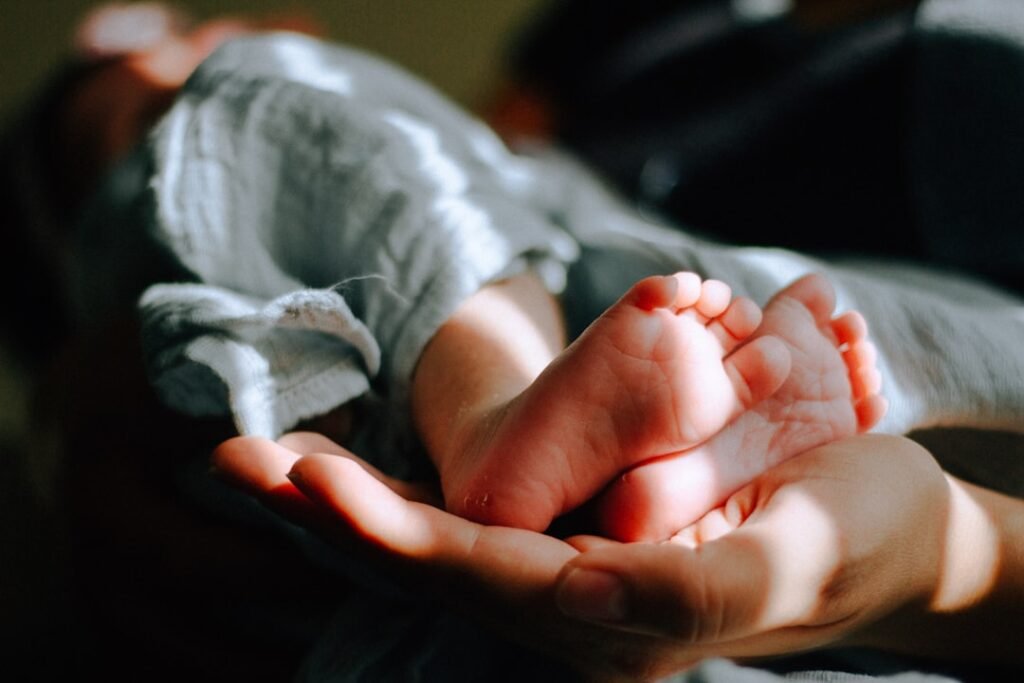
In this investigation
Across societies that developed far apart, childbirth was often followed by an unusual interval: the mother stayed home, rested, ate special foods, avoided certain activities and was cared for by relatives. China calls one famous version zuo yuezi—“doing the month.” South Asian, Southeast Asian, Middle Eastern, African and Latin American communities developed their own postpartum systems. Why did so many cultures independently decide that birth should be followed by protected time?
After birth, ordinary life stopped
Postpartum confinement is not a single universal ritual. Duration, foods, bathing rules, temperature beliefs, mobility restrictions, massage and caregiver roles differ sharply between cultures. What repeats is the creation of a socially recognized recovery period after childbirth.
In a prospective Singapore birth cohort, confinement remained common among Chinese, Malay and Indian mothers, yet each group practiced it differently. Chinese mothers were more likely to use confinement nannies and restrict showering; Malay mothers reported more massage; Indian mothers more often relied on mothers or mothers-in-law for assistance. Similar structure did not mean identical belief.
Why would confinement emerge again and again?
Childbirth creates an obvious period of vulnerability and workload. The mother is recovering while simultaneously feeding or caring for a newborn whose needs continue around the clock. A culture that formally excuses her from ordinary domestic labour can transfer cooking, cleaning and childcare to relatives.
That practical function can coexist with very different explanatory systems. Chinese traditions may describe restoring balance after childbirth; other cultures use ideas of heat and cold, pollution and purification, protection from spiritual danger, restoration of strength or special maternal foods. The explanations differ while the social technology—protected time and redistributed labour—can look strikingly similar.
ACROSS CULTURES
Postpartum traditions frequently combine several elements: mandated rest, assistance from relatives, special foods, reduced household duties, restricted movement and culturally specific ideas about warmth, vulnerability or purification. Similarity of structure does not prove a common origin or identical medical rationale.
The strongest idea may be social, not medicinal
Modern discussions often test confinement as though it were one medical treatment. It is closer to a package of behaviours. Rest may have one effect, family support another, dietary restriction another, inactivity another and prohibition of bathing yet another. Some components may help while others are neutral or harmful.
A 2024 qualitative meta-synthesis of 13 studies on Chinese postpartum confinement found both perceived importance and significant physical and psychological stressors. Women’s satisfaction depended heavily on family, social and professional support. That finding points toward something easily lost in debates over traditional medicine: the quality of care may matter more than rigid compliance with every inherited rule.
Does confinement prevent postpartum depression?
The evidence does not support a simple yes. A systematic review of 16 quantitative studies in Chinese populations found four studies suggesting reduced postpartum-depression risk, two suggesting the opposite and ten finding no significant association. The reviewers concluded that doing-the-month had not demonstrated a significant overall protective effect.
An earlier systematic review reached a similarly complicated result: some studies reported protection, some increased mood disturbance and others were inconclusive. Conflict with caregivers, reduced social support and tension between traditional expectations and a mother’s preferences could undermine any benefit.
THE EVIDENCE
Formal postpartum support is intuitively valuable, but confinement as a complete package has not consistently been shown to prevent postpartum depression. Supportive components and restrictive components should be evaluated separately.
Rest is useful. Immobility is not the same thing.
Recovery after childbirth deserves rest, sleep opportunities and help with physically demanding work. But modern postpartum care does not generally prescribe prolonged immobility for healthy mothers. Appropriate gradual movement has benefits, and individual recommendations change after caesarean delivery, complications or other medical conditions.
This illustrates the danger of treating “confinement” as indivisible. Protecting a recovering mother from exhausting household labour is not equivalent to forbidding all movement or preventing her from leaving a room.
Special foods: nourishment mixed with rules
Many postpartum systems prescribe calorie-dense dishes, broths, spices, herbs or foods classified as warming and prohibit foods classified as cooling or otherwise unsuitable. The practical desire to feed a recovering and sometimes breastfeeding mother is easy to understand. Whether each permitted or prohibited ingredient has the claimed medical effect is a separate evidence question.
Restrictions can become counterproductive when they reduce dietary variety, hydration or access to nutritionally useful foods. Traditional food systems therefore deserve component-by-component assessment rather than blanket endorsement or dismissal.
The hidden labour of postpartum care
Perhaps the most durable insight is organizational. Someone must care for a woman while she recovers and someone must absorb the work she temporarily cannot or should not do. Traditional confinement makes that obligation visible. Mothers, mothers-in-law, relatives and specialist caregivers become part of a temporary care infrastructure.
Modern households can lose that infrastructure even while abandoning restrictive rules. A woman may gain freedom to shower, eat broadly and leave home but simultaneously be expected to resume cooking, cleaning, childcare and employment with inadequate support. Tradition and modernity therefore do not map neatly onto harmful and beneficial care.
When protection becomes control
Confinement can also restrict autonomy. Rules imposed against a mother’s wishes, conflict with senior relatives, isolation, inability to seek care and pressure to follow uncomfortable dietary or hygiene practices can create distress. Cultural sensitivity does not require treating every inherited restriction as medically desirable.
The useful modern principle is to preserve support while testing the rules. Rest, nutritious food, help with domestic work and recognition of recovery can coexist with hygiene, appropriate mobility, clinical follow-up and the mother’s own preferences.
The postpartum body really is recovering from a major physiological event
After birth, the uterus contracts, bleeding continues for weeks, pelvic and abdominal tissues recover, sleep becomes fragmented and lactation may begin. Caesarean birth adds surgical recovery. A period of reduced workload is therefore not merely cultural indulgence; it matches a real phase of healing and adaptation.
Where traditional confinement protected a new mother from cooking, field work, heavy lifting or immediate household duties, the practical benefit is easy to understand without invoking a special postpartum toxin or imbalance.
Forty days is culturally common, not a universal biological threshold
Many traditions use approximately a month or forty days as a postpartum boundary, but physiology does not switch from “recovering” to “recovered” on one exact day. Lochia, pelvic-floor symptoms, breastfeeding challenges, wound healing and fatigue resolve at different rates.
The repeated forty-day pattern is better understood as a culturally useful period of protected transition than as a clinically precise deadline.
Chinese “doing the month” provides the best-studied confinement model
Research on zuo yuezi shows why confinement cannot be judged as one intervention. It can include rest, special foods, restrictions on bathing, reduced exposure to cold, family caregiving, limited visitors and strong authority from older female relatives.
A 2023 systematic review of sixteen quantitative studies found conflicting evidence for postpartum depression: most studies found no significant protective association, some suggested benefit and some suggested harm. The package therefore cannot be called a proven mental-health intervention.
Support is beneficial; loss of autonomy can cancel the benefit
Postpartum social support is consistently important for wellbeing. Someone else cooking, cleaning or holding the baby can give a mother time to sleep, feed and recover. But support becomes stress when the mother has little control over visitors, feeding decisions, movement or contact with health services.
This helps explain contradictory confinement studies: the same label can describe nurturing care in one household and coercive control in another.
Complete immobility is not evidence-based recovery
Rest after birth is valuable, but prolonged immobility increases venous-stasis risk and can delay return of strength. Modern postpartum care generally encourages safe, gradual movement according to delivery type and clinical condition.
A tradition that relieves heavy labour can therefore be protective while a rule forbidding ordinary gentle movement can become counterproductive.
Food restrictions can help or harm depending on what remains
Postpartum diets often emphasize warm, digestible or energy-dense foods and may include soups, grains, fats, spices and protein-rich preparations. Such meals can support recovery when they provide enough energy, protein, iron and fluid.
Problems arise when large food groups are prohibited without replacement. Breastfeeding does not require a universal bland diet, and unnecessary avoidance of fruits, vegetables, dairy, eggs or pulses can reduce dietary quality.
Iron deserves more attention than many traditional narratives give it
Pregnancy and childbirth can leave women iron-deficient, especially after significant blood loss. Fatigue may then be attributed culturally to cold, weakness or insufficient “warming” foods while iron deficiency remains untreated.
Traditional nourishing meals can coexist with haemoglobin assessment and evidence-based iron treatment when needed. Modern diagnosis adds information the old framework did not have.
Breastfeeding support is more valuable than policing the mother
Early breastfeeding can involve pain, latch difficulty, milk-supply anxiety and exhaustion. Experienced relatives can be helpful when advice is accurate and respectful. They can also create pressure when they insist on prelacteal feeds, rigid schedules or unsupported food restrictions.
The useful principle is practical support plus access to trained lactation and medical care, not automatic deference to either tradition or modern authority.
Rules against bathing have weak modern justification
Some confinement traditions restrict bathing or hair washing because water or cold is believed to enter the body and cause later illness. Modern hygiene does not support avoiding washing for weeks. Appropriate bathing can improve comfort and cleanliness, including after perspiration and bleeding.
The more relevant considerations are wound care, fall risk, water temperature and individual medical advice after delivery.
Postpartum mental health needs screening, not ritual reassurance alone
Sleep deprivation, prior psychiatric history, relationship stress, traumatic birth and lack of support can all increase risk of postpartum depression or anxiety. A supportive confinement environment may buffer some stress, but it cannot guarantee prevention.
Persistent hopelessness, severe anxiety, suicidal thinking, inability to function or symptoms of postpartum psychosis require prompt clinical care regardless of cultural expectations about endurance.
The tradition reveals an important social idea: recovery is a collective responsibility
Modern nuclear households often expect a mother to recover physically while feeding a newborn and resuming domestic work with limited help. Confinement traditions challenge that assumption by making caregiving labour visible and assigning it to a network.
This social insight may be more valuable than many specific prohibitions. A society can modernize the medical details while preserving the expectation that someone who has just given birth deserves protected time and practical support.
A modern confinement model can be flexible rather than all-or-nothing
Families can preserve meals, help, massage, rest and ceremonial care while allowing showers, outdoor light, medical appointments, gentle movement and the mother’s own food preferences. The boundary between tradition and evidence-based care does not have to be adversarial.
The strongest adaptation keeps the protective social architecture and removes restrictions that create nutritional deficiency, immobility, delayed care or loss of autonomy.
Visitors can help—or consume the mother’s recovery time
Many confinement traditions regulate who may visit and when. Limiting crowds can reduce exhaustion and infection exposure, while complete isolation can worsen loneliness. The useful variable is whether social contact is supportive and chosen.
A modern version can protect quiet time while allowing the mother to decide which relatives, friends and professionals she wants nearby.
Follow-up care belongs inside the recovery period
Blood-pressure complications, infection, wound problems, anaemia, breastfeeding difficulties and mental-health symptoms can emerge after discharge. Confinement should therefore never mean disappearing from healthcare for a month.
The safest interpretation is protected recovery with timely postnatal checks, not seclusion from medical assessment.
A successful postpartum tradition should reduce work, not reduce agency
The most defensible core of confinement is straightforward: someone who has just given birth should not be expected to resume full domestic and economic workload immediately. Meals, childcare help, protected sleep and practical assistance can make recovery easier.
The same protective intention fails when rules prevent a mother from seeking care, choosing her food, bathing, moving comfortably or deciding who enters her room. Modernizing the tradition therefore means shifting authority toward the recovering mother while keeping the support around her.
Protected recovery works best when help is available without turning protection into prohibition.
What survives scrutiny?
- Postpartum confinement or protected recovery periods occur across many cultures, although their rules differ substantially.
- The recurring social function—rest and redistribution of domestic and infant-care labour—is historically and practically intelligible.
- Family and social support can be valuable, but confinement as a whole has not consistently prevented postpartum depression.
- Specific food, temperature, bathing and activity restrictions require separate evidence rather than automatic acceptance.
- Prolonged restriction or unwanted family control can create physical or psychological stress.
- Modern postpartum care can preserve the strongest principle—protecting recovery—without preserving every traditional prohibition.
The Tradivior Evidence Profile
Historical Authenticity — Strong. Structured postpartum recovery traditions are widely documented across multiple societies.
Original-Purpose Evidence — Strong. Recovery, protection, restoration of strength and culturally defined vulnerability are explicit recurring purposes.
Scientific Mechanism — Moderate. Rest, nutrition and social support have plausible benefits, but confinement combines many components and several traditional mechanisms are culture-specific rather than biomedical.
Experimental Evidence — Limited. Observational and qualitative evidence is substantial, but controlled evidence for the complete confinement package is weak and mental-health findings are inconsistent.
Cross-Cultural Evidence — Strong. Analogous protected postpartum periods occur across Asia and in traditions elsewhere, while details remain culturally distinct.
Modern Relevance — Strong. Protected recovery, practical help and maternal support remain highly relevant when adapted to evidence-based postpartum care and individual preference.
The Tradivior Conclusion
Partially Supported. Postpartum confinement appears to preserve an important human insight: childbirth creates a recovery period in which a mother benefits from food, rest, recognition and help with work. Cross-cultural recurrence strengthens the case for that social function. But the package also accumulated restrictions whose benefits are uncertain and which can become burdensome or harmful. The part worth carrying forward is not unquestioning confinement—it is protected postpartum care with evidence, flexibility and maternal autonomy.
Continue investigating
Sources & further reading
- Xin M et al. Experiences of postpartum Chinese women undergoing confinement practices: a qualitative meta-synthesis. International Journal of Nursing Practice, 2024.
- Maternal postnatal confinement practices and postpartum depression in Chinese populations: a systematic review. PLOS ONE, 2023.
- Wong J, Fisher J. The role of traditional confinement practices in determining postpartum depression in women in Chinese cultures: a systematic review. Journal of Affective Disorders, 2009.
- A Comparison of Practices During the Confinement Period among Chinese, Malay, and Indian Mothers in Singapore. Birth, 2016.
Continue exploring

Primarily Symbolic/Cultural
Why Do Some South Indian Communities Celebrate a Girl’s First Menstruation?
Puberty ceremonies around first menstruation can mark fertility, adulthood, family status and gender expectations. Tradivior will investigate their regional histories and the tension between celebration, education, stigma and restriction.
Primarily Symbolic/Cultural
Why Do Cultures Create Fertility Rituals?
Fertility rituals appear wherever reproduction, inheritance and survival carry uncertainty. Tradivior will compare prayers, offerings, symbols and seasonal rites while distinguishing social meaning from unsupported claims that rituals directly increase…
Historically Practical
Why Does Pregnancy Become a Protected Social State?
Pregnancy often brings exemptions, restrictions, blessings and intense social attention. Tradivior will examine why societies formalized protection around pregnancy and where protective customs help, do nothing or cause harm.

Why Do Societies Create Prohibitions Around Sacred Days, Places and Objects?
Sacred time and space are often protected by rules about work, food, touch, speech or access. Tradivior will investigate how prohibitions create boundaries and commitment, and when they also conserve…
Picked for your curiosity
Enable JavaScript to build a reading profile and see recommendations.