 tradivior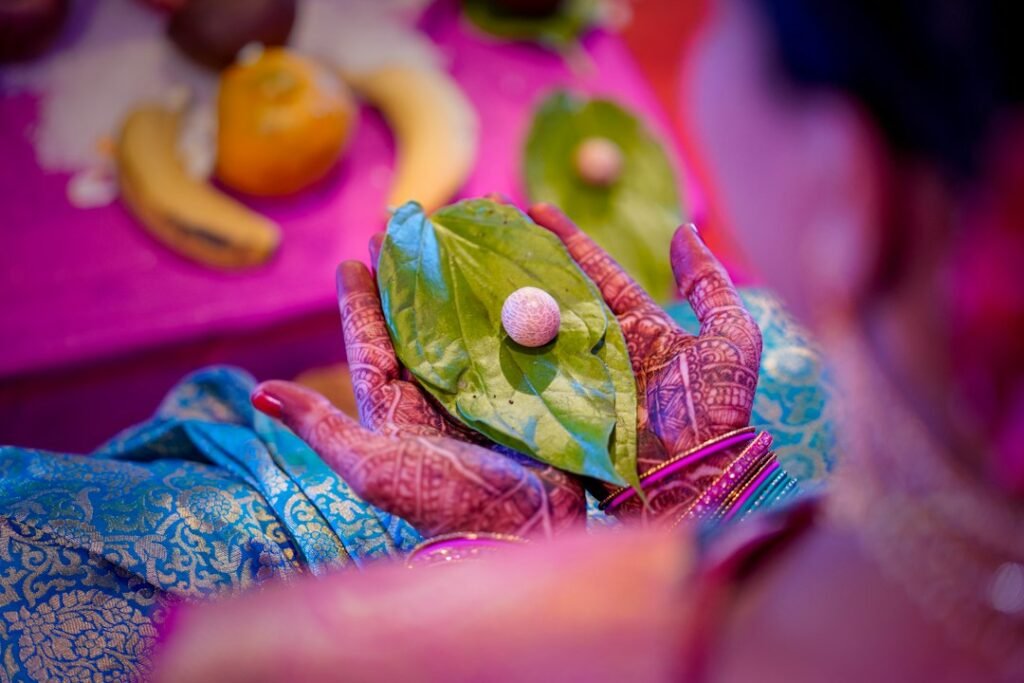
In this investigation
A newborn exists biologically before the community knows who that person is. Naming solves that problem. It gives the child a publicly usable identity, inserts them into kinship, religion, ancestry and legal recognition, and often gives relatives a formal moment to acknowledge new obligations.
This is why naming is so often ceremonial. If a name were only a label, a private decision would be enough. Ceremony turns the label into a social fact.
Names place people inside relationships
A name can refer to grandparents, ancestors, saints, deities, clans, birth order, circumstances of birth, geography or desired virtues. It can encode whom the child belongs with and whom the child is expected to remember.
Cross-cultural research on naming shows that naming practices both reflect and create ideas of personal identity.
THE RECORD
Ceremonial naming is not redundant bureaucracy. It is a public act that converts a private birth into recognized membership in a family, lineage, religious community or society.
Why not name immediately?
Some traditions delay naming for days or weeks. Historically, high neonatal mortality may have contributed in some settings, but religious calendars, purification periods and beliefs about personhood can also matter.
The delay should therefore not be assigned one universal explanation.
The ceremony distributes responsibility
Godparents, grandparents, aunts, uncles, clan elders or religious authorities may participate in naming. Their presence signals that parenthood is socially supported rather than purely private.
Cross-cultural naming research has found associations between elaborate naming institutions and broader social structures such as descent and formal authority.
THE EVIDENCE
The strongest measurable functions of naming ceremonies are social: public recognition, kinship signalling and network activation. Sacred meanings are real to participants but are not reducible to laboratory mechanisms.
Ancestral names preserve memory
Reusing a family name can connect a child to a deceased relative or lineage. Every later use of the name becomes a small act of remembrance.
Names can therefore transmit family history even in households without written genealogies.
Religious names make membership visible
Names drawn from scripture, saints, prophets or deities can mark religious identity from early life. Baptismal names, Islamic naming customs, Hindu namakarana and other traditions differ in theology but share the public creation of belonging.
Names can express hopes rather than facts
Parents may choose names meaning strength, beauty, wisdom, prosperity or devotion. The name becomes aspirational language attached to the child.
This may influence family narratives and self-identity, but it should not be interpreted as causing personality through a hidden biological mechanism.
Some societies change names across life stages
Initiation, marriage, monastic life, migration, kingship or conversion can bring a new name. This shows that names are not always understood as permanent essence; they can mark changing status.
Naming can confer legitimacy
Where inheritance, lineage or clan membership matters, formal naming may clarify who recognizes the child and what social rights follow.
This function becomes especially important in larger, more complex societies where kinship obligations cannot be assumed from daily proximity alone.
Modern legal registration partly absorbs the old function
Birth certificates create official identity for the state, while religious and family ceremonies create identity for communities. Many families now use both.
The coexistence shows that administrative naming has not eliminated the emotional or cultural need for ceremony.
Why naming ceremonies can strengthen support
A gathering introduces the child to a wider network and gives relatives an occasion to offer gifts, food and commitments. This may indirectly support parents during a demanding period.
The mechanism is ordinary social coordination, not a special physiological effect of the name itself.
A name turns an infant into a socially addressable person
Before a formal name is announced, relatives may refer to a newborn through kinship terms, nicknames or generic labels. Naming gives the child a stable identifier that can travel beyond the immediate household.
This is a basic social technology: large kin networks, religious communities and states all need durable ways to refer to individuals.
Ceremony makes the name public rather than merely private
Parents can choose a name alone, but a ceremony tells others which name has been accepted and who recognizes the child. Witnesses convert a private decision into shared knowledge.
That public recognition can matter for kinship, inheritance, religion and memory even where legal registration happens separately.
Naming can attach ancestry directly to the child
Reusing the name of a grandparent or ancestor turns genealogy into everyday speech. Each later use of the name reminds the family of a relationship that preceded the child.
In oral cultures, names can therefore help preserve lineage memory without written family trees.
Names can encode birth circumstances
Some naming systems refer to day of birth, season, birth order, place, weather, unusual events or the condition of the pregnancy. The name stores a small piece of biography.
This makes personal naming a historical archive as well as an identity marker.
A religious name can signal community membership immediately
Names drawn from scripture, prophets, saints, deities or religious languages can make affiliation visible before the child can express belief.
This can create belonging and continuity, while in some contexts it can also expose identity to discrimination. The same social visibility can protect or endanger depending on the environment.
Naming rules can allocate authority inside families
Grandparents, fathers, mothers, priests, elders or astrologers may have formal roles in choosing or announcing the name. The ceremony therefore reveals who has decision-making power.
Modern families often renegotiate that authority, turning inherited naming traditions into collaborative choices.
Delayed naming can reflect infant vulnerability
In high-mortality settings, families sometimes delayed full social incorporation of a newborn. That may have reduced the social finality of naming before survival seemed more secure.
Yet religious calendars, purification periods and ritual timing can also explain delay. No single historical mechanism fits all naming traditions.
Aspirational names create narrative expectations
Names meaning wisdom, strength, beauty, prosperity or devotion express what adults hope the child will become. The name can be repeated as a family story throughout life.
Psychologically, repeated narratives may influence identity, but there is no evidence that the semantic meaning of a name biologically determines personality.
Nicknames show that one person can carry several social identities
Many cultures distinguish formal, household, childhood, ritual or secret names. One name may be used by officials, another by family and another within a religious setting.
This demonstrates that names are relational tools rather than a single immutable essence.
Name changes mark later transformations too
Marriage, monastic life, conversion, migration, adoption, kingship or artistic careers can bring new names. The social logic resembles birth naming: a changed status is made visible through a changed identifier.
Naming ceremonies therefore belong to a wider human practice of marking transitions through language.
The state uses names differently from families
Birth registration ties a name to citizenship, schooling, healthcare and legal identity. A religious naming ceremony ties the same person to a moral or kinship community.
Both forms can coexist because they answer different institutional needs.
Ceremony creates a moment for gift exchange
Relatives may bring clothing, money, jewellery or food at a naming event. Those gifts acknowledge the child and support the household.
The ritual therefore mobilizes practical resources at the same time it performs identity.
Naming can reproduce inequality as well as continuity
Names can encode caste, class, ethnicity, religion or gender in ways that affect how others respond to the person. A tradition that strengthens belonging inside a group can also make boundaries visible outside it.
Modern debates over surnames, gender-neutral names and name changes reflect attempts to renegotiate those inherited signals.
The psychological power of a name comes largely through social response
People hear their names thousands of times and learn what others associate with them. A name may influence expectations because teachers, employers, relatives or peers respond to it, not because the sound itself contains a hidden biological program.
This keeps the mechanism social and testable.
Modern personalized ceremonies preserve the old function
Families who are secular, interfaith or geographically dispersed may create naming parties without traditional clergy or inherited scripts. The event still introduces the child to a network and publicly settles identity.
This adaptability explains why naming ceremonies survive even where formal religious observance declines.
The strongest explanation is social incorporation
Names preserve memory, signal religion, encode hopes, record circumstances and organize legal identity. The ceremony gathers those functions into one public moment.
The practice does not need a biomedical mechanism because its primary outcome is social: a new person becomes legible to the community.
Names help outsiders place a person inside a social map
Surnames, patronymics, clan names and religious names can reveal ancestry, language, region or community to people who have never met the family. That makes names highly efficient social signals.
The same efficiency can create stereotyping or discrimination. Naming systems strengthen identity partly because they make identity legible.
Ceremonial naming can stabilize family agreement
When multiple relatives prefer different names, a formal ceremony creates a deadline and a public decision. Once announced, the choice becomes harder to renegotiate casually.
Ritual therefore reduces ambiguity inside the family as well as outside it.
Astrology and calendars can structure choice without determining personality
Some traditions select syllables or names according to birth time, lunar position or religious calendars. These systems provide a rule for narrowing options and linking the child to a cosmic or sacred order.
There is no evidence that an astrologically selected syllable causally determines health or personality. Its power is cultural organization and meaning.
A naming ceremony can distribute emotional ownership of the child
Parents experience the birth most directly, but grandparents, siblings and extended kin also need to integrate the new person into their identities. Ceremony gives them roles, gifts, blessings and public participation.
This can make the infant feel socially “ours” without diminishing parental responsibility.
Digital records have not replaced ceremonial recognition
A government database can confirm that a child legally exists, yet families still hold naming parties, baptisms, namakarana or other ceremonies. Administrative identity and emotional belonging answer different questions.
The persistence of both systems shows why naming is more than paperwork.
Naming ceremonies solve a coordination problem
A family may privately decide what to call a child, but a wider network needs a shared name before relatives, neighbours, religious communities and institutions can refer to the same person consistently. Ceremony turns a private choice into public knowledge.
This is one of the simplest explanations for why naming so often becomes collective. The event synchronizes identity across a social network.
Names can transmit ancestry without written genealogy
Patronymics, clan names, grandparent names and ancestral names can preserve kinship information across generations. In societies where formal records were limited, names functioned as small carriers of history.
The repeated reuse of names also creates continuity: the child is not merely an individual but part of a lineage whose past remains socially visible.
Religious names create belonging before the child can choose it
Names drawn from saints, deities, prophets, scripture or sacred languages can place a newborn inside a religious community immediately. The child may later reinterpret or change that identity, but the initial naming marks family intention.
This is socially powerful because a name is used repeatedly in school, family, worship and public life. A one-day ritual becomes embedded in years of ordinary speech.
Delayed naming can reflect uncertainty around early survival
Some traditions delay naming for days or weeks. High neonatal mortality may have influenced certain historical practices, but religious calendars, purification rules and beliefs about personhood also matter.
The delay therefore cannot be reduced to one survival strategy, yet mortality provides a plausible context for why societies might stage social incorporation rather than make it instantaneous.
Names can shape expectations without determining personality
Aspirational names—strength, wisdom, devotion, prosperity, beauty—can influence how families talk about a child and the stories adults tell about who that child might become.
That social response can matter psychologically. It is very different from claiming that a name biologically determines temperament or destiny.
Nicknames reveal that identity is layered
Many societies use formal names, household names, childhood nicknames, religious names or occupational titles for the same person. Each name can activate a different social relationship.
This shows that naming is not simply labelling a fixed biological individual. It helps organize which version of the person is relevant in a particular social setting.
Modern state registration performs a different kind of naming ritual
Birth certificates, passports and school records make identity legible to the state. Religious and family ceremonies make identity legible to communities.
Most modern families use both systems because legal identity and social belonging answer different questions.
The strongest evidence is social, not biomedical
Naming ceremonies can mobilize relatives, distribute gifts, announce lineage and mark the child as a recognized member of a group. Those functions are historically and cross-culturally well supported.
No medical mechanism is needed. The ceremony matters because society must decide who this new person is in relation to everyone else.
That public recognition also helps the wider family coordinate care, gifts and responsibility around the child. The ceremony can therefore strengthen support without needing any biological effect from the name itself.
Because the name is then repeated thousands of times, the ceremony has unusually long social afterlife. Its power lies not in one day of ritual alone, but in the way that public choice becomes embedded in every later act of address, introduction and remembrance.
That is enough to make naming socially consequential.
What survives scrutiny?
- Ceremonial naming occurs widely across cultures.
- Names communicate kinship, religion, ancestry, circumstance and aspiration.
- Public naming can confer social legitimacy and clarify relationships.
- Participation by extended family can activate support networks around new parents.
- Naming ceremonies can preserve family memory across generations.
- Sacred meanings should be understood culturally rather than translated into unsupported biological effects.
- Modern legal registration and traditional naming ceremonies can coexist because they serve different audiences.
The Tradivior Evidence Profile
Historical Authenticity — Strong. Naming ceremonies and structured naming customs are extensively documented.
Original-Purpose Evidence — Strong. Identity, kinship, legitimacy, ancestry and religion are direct functions.
Scientific Mechanism — Moderate. Public recognition and network activation have plausible social and psychological effects.
Experimental Evidence — Limited. Evidence is mainly comparative and anthropological.
Cross-Cultural Evidence — Strong. Ceremonial naming occurs across diverse societies with different symbols.
Modern Relevance — Strong. Naming remains central to family identity even where state registration is immediate.
The Tradivior Conclusion
Primarily Symbolic/Cultural. Cultures name children ceremonially because a name does social work. It places a child within ancestry, religion, kinship and public recognition and gives the wider community a formal moment to accept new relationships. These functions are powerful without requiring a medical explanation. The name does not biologically create the person; the ceremony helps society recognize who that person is.
Continue investigating
Sources & further reading
- Alford RD. Naming and Identity: A Cross-Cultural Study of Personal Naming Practices. HRAF Press, 1987.
- van Gennep A. The Rites of Passage.
- HRAF cross-cultural naming resources.
- “Rituals and Embodied Cultural Practices at the Beginning of Life: African Perspectives.” Religions. 2021.
Continue exploring
Partially Supported
Why Do People Keep Ashes, Relics and Memorial Objects?
Hair, ashes, bones, clothing, photographs and relics allow the dead to remain materially present. Tradivior will examine why objects carry memory so powerfully and how continuing bonds differ from pathological…
Evidence Supported
Why Do Cultures Set Aside Days to Remember the Dead?
From Pitru Paksha and Qingming to Día de Muertos and All Souls’ Day, cultures repeatedly create calendar time for the dead. Tradivior will compare how recurring remembrance renews kinship, grief…
Historically Practical
Why Do Cultures Preserve the Dead?
Mummification, embalming, freezing, smoking and desiccation reflect very different beliefs about bodies and afterlives. Tradivior will compare preservation traditions with the chemistry of decomposition and the practical limits of each…

Primarily Symbolic/Cultural
Why Do People Change Names, Clothes or Homes After Marriage?
Marriage often transforms identity through surname changes, new dress, residence, kinship terms or household membership. Tradivior will investigate why marriage needs visible social consequences beyond the ceremony itself.
Picked for your curiosity
Enable JavaScript to build a reading profile and see recommendations.