 tradivior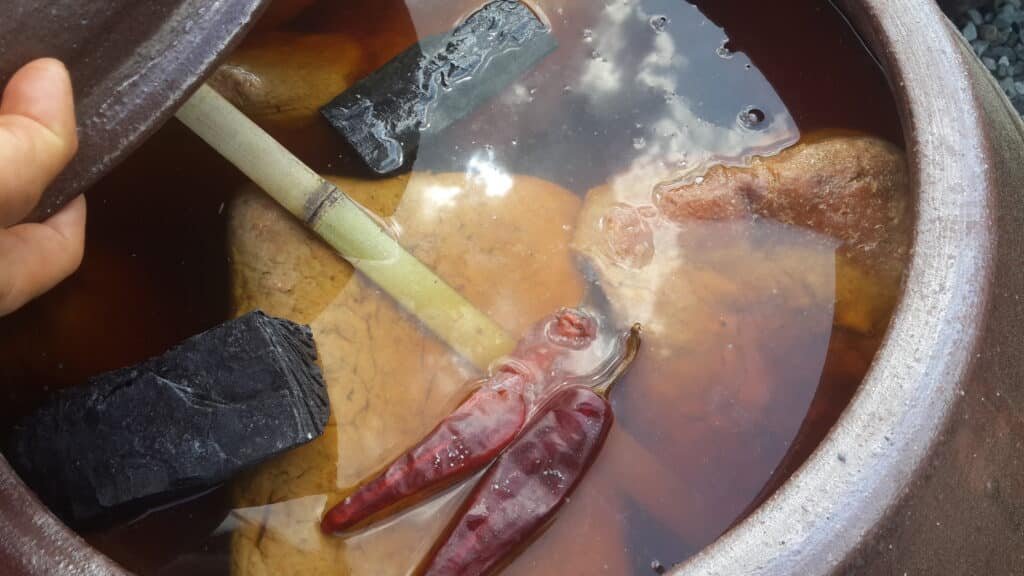
In this investigation
Long before humans could see a yeast cell or name a bacterium, they were already managing microbial ecosystems. Milk became yogurt and cheese. Grain became bread, beer and sour porridge. Soybeans became miso, soy sauce, tempeh and natto. Cabbage became sauerkraut or kimchi. Fish, meat, cassava, tea, cacao and countless local staples were transformed by controlled microbial growth.
Fermentation is sometimes described today as an ancient health secret. That framing captures only a small part of the story. For most of human history, the immediate advantages were more practical and sensory: food lasted longer, dangerous or unpalatable raw materials could become usable, seasonal abundance could be carried forward, textures softened or rose, flavours deepened, alcohol appeared, and difficult ingredients became different foods altogether. Health effects were real in some cases, but “probiotic optimization” is a modern category that cannot simply be projected backward.
What fermentation actually is
The modern scientific definition is broader than the narrow biochemical definition of fermentation. An expert panel convened by the International Scientific Association for Probiotics and Prebiotics defined fermented foods and beverages as foods made through desired microbial growth and enzymatic conversions of food components. That definition deliberately includes processes driven by lactic-acid bacteria, yeasts, acetic-acid bacteria, bacilli and filamentous fungi.
The word desired matters. Spoilage and fermentation both involve microorganisms changing food. The difference is that fermentation steers those changes toward an outcome humans want. A souring milk that becomes a safe, palatable cultured product is different from milk decomposing unpredictably. A cabbage brine that acidifies under lactic-acid bacteria is different from vegetables rotting in uncontrolled conditions.
Traditional fermenters did not need germ theory to make that distinction. They could learn from smell, taste, texture, temperature, season, vessel, salt concentration, successful starter material and repeated household experience. Fermentation was microbiology practiced empirically before microbiology existed as a science.
THE RECORD
Fermentation is not one invention and probably has no single birthplace. Archaeology, historical texts and living food traditions instead show repeated domestication of microbial processes wherever humans stored carbohydrate-, protein- or sugar-rich foods under conditions that allowed useful microbes to flourish.
Accident probably came before control
Microorganisms colonize food whether humans understand them or not. Crushed fruit ferments when yeasts encounter its sugars. Wet grain supports microbial growth. Milk changes rapidly after milking. A salted vegetable mixture selects for organisms that tolerate salt. Once people stored food in vessels, sacks, pits, skins, baskets or jars, they repeatedly created environments in which microbial transformation could occur.
The first successful ferment did not need to be planned. It only needed to be noticed. If a changed food smelled pleasant, caused no obvious harm, lasted longer or produced an attractive intoxicating effect, people could reproduce the circumstances. Repetition could gradually turn chance into technique: use this vessel, keep it warm, add salt, retain a little from the previous batch, wait until it smells like this, stop when it tastes like that.
This pathway helps explain why fermentation appears across societies without requiring a single ancient discovery transmitted intact around the world. Microbes were everywhere, stored food was common, and the useful transformations were observable.
Archaeology: fermentation deep in the Neolithic
Direct archaeological evidence is difficult because fermented foods are perishable. Pottery residues can sometimes preserve chemical traces that survive where the original food does not. One of the best-known examples comes from Jiahu, an early Neolithic settlement in China’s Henan province. Chemical analysis of residues absorbed into pottery indicated a mixed fermented beverage made from rice, honey and fruit as early as the seventh millennium BCE.
That finding does not establish the world’s first fermentation. Older practices could have left no detectable trace, and different regions almost certainly experimented independently. What Jiahu does establish is that deliberate fermentation was already sophisticated thousands of years before written microbiology, and that fermented beverages could carry social, ritual and medicinal significance alongside nutritional or preservative value.
Other archaeological and historical evidence places fermented dairy, beer, wine, leavened bread and regional ferments deep in early agricultural societies. Fermentation and agriculture likely reinforced one another. Agriculture created surpluses of grain, milk, fruit and other substrates that benefited from processing; fermentation converted those surpluses into foods with new storage, sensory and social properties.
Why preservation mattered so much
Without refrigeration, a surplus could become a liability. Fresh milk spoils quickly. Harvested vegetables are seasonal. Cooked grain is wet and microbially vulnerable. Meat and fish deteriorate. Fermentation offered one of several preservation strategies alongside drying, salting, smoking, cooling, sugaring and later canning.
Microbes can preserve food by changing its chemistry. Lactic-acid bacteria convert carbohydrates into organic acids that lower pH. Yeasts convert sugars into ethanol and carbon dioxide. Acetic-acid bacteria can produce acetic acid. Some bacteria produce bacteriocins and other inhibitory compounds. Salt, low water activity, acid, alcohol and competitive microbial communities can work together to make conditions less hospitable to many pathogens and spoilage organisms.
This does not mean every ferment is automatically safe. It means successful food traditions often selected conditions that reliably pushed microbial ecology in a safer direction. The knowledge was operational rather than molecular: a community might not know why a sour brine resisted spoilage, but generations could know the salt level, vessel and timing required to make it work.
Fermentation as ecological control
A fermenting food is an ecosystem. At the beginning, many microorganisms may be present from the raw material, water, hands, utensils, vessels and environment. As fermentation proceeds, the environment changes. Acid accumulates. Oxygen falls or rises depending on the process. Salt selects for tolerant species. Sugars are consumed. Temperature and moisture favour some organisms over others.
This produces microbial succession: one community changes the environment, allowing another to dominate. Modern sequencing techniques reveal that apparently simple household ferments can contain complex, changing populations. Traditional techniques often work because their conditions repeatedly select communities with useful functional properties.
Industrial starter cultures make that selection more explicit. Instead of relying entirely on microbes already present in ingredients and equipment, producers add defined organisms chosen for acidification, flavour, texture, gas production, enzyme activity or safety. The principle is continuous with traditional practice even when the degree of control is much greater.
Fermentation did more than keep food from rotting
Preservation is a powerful explanation, but it cannot explain every ferment. Some fermented foods are consumed quickly. Some require more labour than fresh alternatives. Some survive because people prefer the transformed flavour even when preservation is no longer necessary.
Microbial metabolism creates acids, alcohols, esters, aldehydes, peptides and many other compounds that change aroma and taste. Enzymes break down proteins, carbohydrates and fats. Gas can leaven dough or batter. Soybeans become soft, savoury or sticky. Milk becomes tangy and thick. Cacao and coffee fermentation helps generate precursors essential to flavours developed later during roasting.
Once a fermented flavour becomes culturally valued, the process no longer needs preservation as its only justification. Cheese continues in refrigerated societies because cheese is a desired food. Sourdough survives because people value its flavour and texture. Soy sauce is not merely preserved soybean; it is a condiment with properties created by fermentation.
The nutritional transformation is real—but food-specific
Fermentation can change nutrition in several ways. Microbial enzymes may partially break down carbohydrates and proteins. Some organisms synthesize vitamins or bioactive compounds. Acidification can alter mineral solubility. Fermentation of grains and legumes can reduce phytate, which otherwise binds minerals. Certain traditional processes reduce naturally occurring toxins or antinutritional compounds.
Those changes are not universal. A fermented food is not automatically more nutritious in every dimension than its raw ingredients. Microorganisms can consume nutrients as well as produce them. Processing after fermentation may kill microbes, remove compounds or add salt, sugar or fat. A wine and a yogurt are both fermented, but that label tells us very little about their overall nutritional value.
Recent human evidence also adds caution to simple mechanistic claims. A 2026 systematic review of intervention studies on fermented breads and iron found a plausible mechanism through phytate reduction and some acute improvements in non-haem iron availability, but long-term effects on iron status were inconsistent. A biochemical mechanism can therefore be genuine without guaranteeing a clinically important outcome in free-living humans.
Fermentation could make dangerous plants edible
Some raw materials contain compounds that require processing before safe consumption. Bitter cassava is a well-known example because it contains cyanogenic glycosides. Fermentation, soaking and related processing can reduce these compounds. Similar principles apply to other plant foods in which microbial activity helps reduce antinutritional or irritating components.
This is one of fermentation’s most important historical advantages: it expanded the usable food landscape. A crop need not be ideal in its raw state if processing can transform it. That matters especially in environments where reliable calories were more important than culinary novelty.
Bread: fermentation as texture engineering
Leavened bread illustrates a different function. Yeast and lactic-acid bacteria generate gases and acids that transform a dense mixture of flour and water into an aerated structure. Fermentation contributes flavour, dough properties and preservation, but the most visible transformation is physical: dough rises.
Importantly, most bread does not contain live fermentation microbes when eaten because baking kills them. It remains a fermented food because microorganisms performed the transformation during production. This single example is enough to show why “fermented” and “contains live probiotics” cannot be synonyms.
Dairy: microbes solved a storage problem and created new foods
Milk is nutrient-rich and highly perishable. Fermentation acidifies it and can inhibit many competing organisms. Yogurt, cultured milks and cheeses also separate, concentrate or transform milk components in ways that improve portability and storage. For pastoral communities, those changes could convert a rapidly spoiling liquid into foods that travelled farther and lasted longer.
Lactic-acid bacteria also metabolize some lactose, which can make certain cultured dairy foods easier for some people with lactose maldigestion to tolerate than an equivalent amount of fresh milk. Here the biological benefit is plausible and supported for particular products, but it still should not be generalized to every ferment.
Alcohol: fermentation changed society as well as food
Alcoholic fermentation deserves separate treatment because ethanol is not merely a preservative or flavour compound. It changes consciousness. That made fermented beverages socially, ritually and politically important in many societies. Feasting, offerings, hospitality, medicine, taxation and status could all become entangled with brewing and winemaking.
Archaeological evidence from Jiahu demonstrates how early fermented beverages could occupy multiple roles at once. The historical importance of alcohol, however, should not be converted into a health claim. Ethanol has well-established dose-dependent harms. A food technology can be culturally transformative without being medically beneficial.
Asia’s fermentation landscapes show how many solutions microbes offered
Across Asia, fermentation technologies diversified around local staples. Soybeans support mould-, yeast- and bacterial fermentations such as miso, soy sauce, tempeh and natto. Rice and other cereals became alcoholic beverages, vinegars, breads, porridges and batters. Fish could be fermented with salt. Vegetables could be acidified. Tea leaves and cacao-like processes used controlled microbial or enzymatic transformation to build flavour.
The diversity argues against a single “fermentation health philosophy.” People were solving many different problems: preservation, flavour, digestibility, scarcity, ritual needs, transport and culinary identity. Microbes were tools before they were organisms anyone could name.
Africa, Europe and the Americas developed their own microbial cuisines
Africa has extensive traditions of fermented cereals, cassava, dairy and beverages. Europe developed sourdoughs, cheeses, beers, wines, cured-fermented meats and fermented vegetables. The Americas produced fermented maize, cassava, cacao and agave beverages among many other regional foods. These traditions differ enormously in organisms, substrates and social meaning.
Cross-cultural recurrence is therefore strong evidence for fermentation’s practical utility. It is not evidence that all cultures discovered the same health mechanism. Similar ecological problems can generate convergent technologies without shared theory.
Fermented does not mean probiotic
This is the most important modern correction. A probiotic is a live microorganism that, when administered in adequate amounts, confers a health benefit on the host. That definition requires more than the presence of microbes. The organism must be defined and the benefit demonstrated.
Many traditional ferments contain variable, incompletely characterized microbial communities. Some have no live microbes at consumption because they are baked, roasted, filtered, pasteurized or distilled. Others contain live organisms but lack strain-specific clinical evidence. The 2021 ISAPP consensus therefore explicitly concluded that “fermented food” and “probiotic food” should not be used interchangeably.
THE EVIDENCE
Fermentation itself is an exceptionally well-supported food technology: microorganisms transform chemistry, acidity, texture, flavour and often preservation. The claim that every fermented food is a probiotic or delivers the same gut-health benefit is not supported.
What about the microbiome?
Modern interest in fermented foods has shifted toward the gut microbiome. This is scientifically plausible. Fermented foods can carry live microbes, microbial metabolites and food components altered by fermentation. Any of these could interact with resident gut organisms or the immune system.
A frequently cited 2021 randomized prospective study assigned healthy adults to a high-fibre diet or a high-fermented-food diet for seventeen weeks. The fermented-food arm included eighteen participants. Increasing fermented-food intake was associated with greater microbiota diversity and decreases in several inflammatory markers.
The result is intriguing but should remain in proportion. It was a small study, it tested a dietary pattern containing multiple fermented foods, and it does not establish that every traditional ferment will reproduce the same effect. It is evidence worth following, not permission to turn the whole category into medicine.
Do the microbes permanently colonize the gut?
Not necessarily. Microorganisms consumed in fermented foods may survive gastrointestinal passage for different lengths of time, interact transiently with resident microbes and host tissues, or fail to establish long-term residence. Permanent colonization is not required for a microbe or microbial product to influence physiology.
This distinction matters because marketing often implies that eating fermented food simply “adds good bacteria” to the intestine. Gut ecology is more complex. The effect depends on the organisms, dose, food matrix, resident microbiome, host and duration of consumption.
Why fermented foods can be safer—and why they can still go wrong
Proper fermentation can strongly suppress undesirable microbes. Low pH, organic acids, alcohol, salt, reduced water activity and bacteriocins create multiple barriers. Long histories of safe use support many established processes.
But “natural” is not a safety guarantee. Low-acid products can support pathogens if processing fails. Contaminated raw materials can carry hazards into a ferment. Some microorganisms can produce histamine, tyramine or other biogenic amines. Filamentous-fungus fermentations require strains that do not produce dangerous mycotoxins. Fermented fish, meats and vegetables can be hazardous when recipes, temperatures, salt levels or hygiene are badly controlled.
Traditional knowledge often contains safety controls embedded in recipe rather than explanation: minimum salt, particular containers, boiling steps, discarding abnormal batches, seasonal timing or back-slopping only from successful batches. Modern food microbiology can explain why many of those controls work and where they are insufficient.
Fermentation and the problem of retrospective genius
Because microbial mechanisms are now well understood, fermentation invites a seductive story: ancient people supposedly knew probiotics, microbiomes, bacteriocins, vitamin biosynthesis and mineral chelation long before science. That overstates what historical evidence can show.
People did know effects. They knew a batter rose, a milk soured pleasantly, a drink intoxicated, a vegetable lasted, a bean became more palatable. Practical knowledge can be highly sophisticated without containing the modern mechanism. We should not diminish traditional expertise by forcing it to masquerade as molecular biology.
The achievement is impressive enough on its own: cultures built reproducible microbial technologies through observation, inheritance and adaptation. Modern science explains parts of those technologies; it does not need to rewrite their inventors as microbiologists using different vocabulary.
Starter cultures were domestication by another name
Many fermentations depend on carrying a successful microbial community from one batch to the next. Sourdough starter, yogurt inoculum, koji, kefir grains and other culture systems make microorganisms inheritable partners in food production. Even when the organisms were invisible, the starter was visible and its performance could be judged.
This is a form of domestication. Humans altered environments so that selected microbial communities repeatedly delivered desired traits. Over generations, both practices and microbes could adapt. Industrial fermentation later isolated strains and standardized conditions, but it built on a much older insight: yesterday’s successful fermentation can seed tomorrow’s.
Fermentation helped societies turn ecology into cuisine
Local fermented foods are often maps of local resources. Where milk was abundant, cultures developed dairy fermentations. Where rice dominated, rice ferments proliferated. Soybean-growing regions developed ways to transform a hard, protein-rich legume. Coastal communities fermented fish. Cool climates, warm climates, salt availability and vessel technology all influenced which microbial processes were practical.
That is why fermentation is not merely a list of recipes. It is a relationship between ecology, staple crops, household labour and microorganisms. The same broad principle—steer microbial growth—produces radically different cuisines because the substrates and environments differ.
Why humans kept fermenting after refrigeration
If fermentation were only a preservation technology, refrigerators should have made much of it obsolete. Instead many fermented foods remain culturally central and commercially important. Preservation solved the first problem; preference created a second reason to continue.
Fermentation creates foods that cannot be replicated simply by keeping the raw ingredient fresh. Fresh milk is not cheese. Soybeans are not miso. Grape juice is not wine. Flour paste is not sourdough bread. The transformation became part of what people wanted to eat.
Modernity has therefore separated some fermentation traditions from the survival pressures that originally favoured them without erasing their sensory and social value.
The health claim should be made at the food level
“Eat fermented foods because fermentation is healthy” is too broad to be scientifically precise. A better question is: what does evidence show for this particular food, made by this particular process, consumed in this amount by this population?
Yogurt has a different evidence base from kimchi. Sourdough has different mechanisms from kefir. Fermented vegetables can contain substantial salt. Alcoholic ferments introduce ethanol. Some cheeses are nutrient-dense but energy- and sodium-rich. A beneficial microbial metabolite does not erase the rest of the food matrix.
This food-level approach protects both science and tradition. It allows strong evidence where it exists without granting the entire category an undeserved medical halo.
Could fermentation have improved food security?
Very plausibly. Preservation reduces losses. Detoxification expands edible resources. Fermentation can make staples more palatable and sometimes improve nutrient accessibility. A stable fermented product can be stored or transported farther than a highly perishable raw ingredient. These advantages would be especially important where harvests were seasonal and storage infrastructure limited.
But the scale of the benefit varied. Fermentation cannot preserve every food indefinitely, and poorly controlled processes can waste food rather than save it. It belonged to a portfolio of strategies that also included drying, salting, smoking, cool storage, cooking and trade.
Fermentation also created social time
Many ferments demand waiting. A starter must mature. A batter rises overnight. Cheese ages. Soy ferments develop over weeks or months. Alcoholic beverages can become tied to feast cycles. This delay can coordinate household and community labour and attach foods to seasons, celebrations and identity.
Once a fermented food becomes associated with a ritual or place, maintaining the process becomes cultural preservation as well as food preservation. Recipes can encode family lineage, caste or occupational knowledge, religious rules, regional identity and hospitality.
What modern science has confirmed
Modern microbiology strongly confirms the core practical observations behind fermentation. Desired microbes can acidify food, generate alcohol, produce inhibitory compounds, transform toxins or antinutrients, modify texture, create flavour and sometimes improve nutrient availability. Sequencing now reveals microbial succession that traditional fermenters managed without being able to observe the organisms themselves.
Science has also confirmed that fermentation is not one mechanism. Lactic fermentation differs from alcoholic fermentation; mould-driven koji differs from yogurt; acetic-acid fermentation differs from sourdough. The organisms, pathways and outcomes vary widely.
What modern science has not confirmed
It has not confirmed that all fermented foods are probiotics. It has not shown that every traditional ferment improves the microbiome. It has not established that health was the original reason humans fermented food. It has not shown that live microbes are required for every benefit, because many fermented foods are eaten after the organisms have been killed or removed.
And it has not turned fermentation into a licence for unsafe home experimentation. The fact that an ancient method can work does not mean any improvised microbial process is safe.
Fermentation before pottery is possible—but hard to prove
Archaeological dates should not be mistaken for invention dates. The Jiahu residues are direct evidence because porous pottery preserved chemical signatures that researchers could analyze thousands of years later. Human beings could have fermented foods in skins, gourds, wooden containers, pits, baskets or other organic vessels much earlier, but those containers rarely survive. Fermented foods themselves are even less likely to leave a recognizable archaeological trace.
This creates a preservation bias. Technologies that leave stone tools, bones or pottery are easier to date than technologies based on microbes and perishable materials. The responsible claim is therefore that fermentation is demonstrably ancient, not that the oldest surviving residue marks the first time humans discovered it.
Milk fermentation may have solved a biological problem as well as a storage problem
Fresh milk contains lactose. In populations with low adult lactase persistence, large quantities of fresh milk can be difficult to digest. Fermentation by lactic-acid bacteria consumes part of the lactose, while some cultured dairy products also carry microbial beta-galactosidase activity into the digestive tract. Cheese-making can remove much of the lactose with whey and during ageing. These transformations can make dairy foods easier to tolerate than fresh milk for some people.
This does not mean prehistoric herders deliberately engineered fermented dairy as a solution to lactase genetics. The historical pathway may have involved storage, taste and convenience first. But once the transformed product was easier to consume and store, biological tolerance could reinforce cultural preference. Fermentation could therefore interact with human genetics and subsistence without anyone understanding the molecular mechanism.
Grain fermentation turned hard seeds into very different foods
Cereal grains are durable in dry storage but require processing to become appealing staples. Grinding, soaking and fermenting can change their texture, acidity and cooking behaviour. Sourdough organisms acidify dough and produce flavour; yeasts produce carbon dioxide that expands bread; cereal porridges can become sour, more aromatic and sometimes easier to digest. Brewing converts grain starch into fermentable sugars and eventually alcohol.
These transformations show why fermentation cannot be reduced to preservation. Dry grain is already relatively stable. Fermenting it often serves a different purpose: creating textures, flavours, digestibility or intoxication that the raw grain cannot provide. In agricultural societies, fermentation enlarged the culinary possibilities of the staple itself.
Legume fermentation tackled a different set of constraints
Legumes are valuable sources of protein but can contain compounds that affect palatability, digestion or mineral availability. Fermentation can activate microbial and endogenous enzymes that reduce some phytate and oligosaccharides, alter proteins and create strong savoury flavours. Asian soybean fermentations demonstrate how dramatically one ingredient can be transformed: tempeh, miso, natto and soy sauce use different organisms and produce completely different structures and flavours.
There is no single “soy fermentation mechanism.” Tempeh relies heavily on filamentous fungi that bind beans into a cake. Natto is associated with Bacillus fermentation and its characteristic sticky polymers. Miso and soy sauce use mould-driven koji stages followed by complex microbial maturation. Calling all of them “probiotic soy” obscures the actual technology.
Vegetable fermentation is controlled competition
Fresh vegetables carry diverse microorganisms from soil, water, handling and air. Salting and submersion reshape that community. Salt inhibits many competitors while lactic-acid bacteria tolerate the conditions well enough to multiply. As they convert sugars to organic acids, pH falls and the environment becomes increasingly hostile to many spoilage organisms.
Successful vegetable fermentation therefore does not require sterile ingredients. It requires a process that reliably lets desirable organisms win the ecological competition. This is one reason traditional rules about salt concentration, keeping vegetables under brine and using clean vessels have practical microbiological value even when their inventors could not see the microbes involved.
Fish and meat fermentation demanded tighter control
Animal foods are rich in protein and moisture and can support dangerous pathogens. Traditional fermented fish and meat systems therefore commonly combine salt, drying, acidification, smoking, spices or controlled ageing. In some products, microbes contribute desirable acids and flavours; in others, enzymatic breakdown during curing may matter as much as classic fermentation.
These foods are a reminder that “traditional fermentation” is not automatically safe outside the process that created it. Reducing salt, shortening drying, changing temperature or sealing a food differently can alter the microbial ecology enough to create new hazards. Copying a flavour without copying the safety hurdles can be dangerous.
Why vessels mattered
Containers are part of fermentation technology. A vessel determines oxygen exposure, drainage, temperature stability, surface area and which resident microbes can repeatedly seed new batches. Ceramic jars, wooden barrels, skin bags, bamboo, gourds and buried pots all create different microenvironments. Some vessels can develop stable house microbiota that influence future ferments.
The invention and spread of pottery probably expanded opportunities for controlled food fermentation because durable, washable containers could hold liquids and semi-solid foods for long periods. Pottery also happens to preserve chemical residues for archaeologists, making vessel technology important both to ancient fermenters and to modern evidence about them.
Back-slopping made invisible organisms reproducible
One of the most consequential traditional techniques is back-slopping: adding a portion of a successful previous ferment to a new batch. This increases the starting population of organisms already adapted to the food and process. The desired community can then acidify or transform the new batch faster than a completely spontaneous fermentation.
Back-slopping is a bridge between spontaneous fermentation and modern starter culture. It does not identify strains or guarantee a pure culture, but it makes microbial performance inheritable. Over repeated cycles, communities that thrive under human-selected conditions can become remarkably stable. Traditional cooks were therefore selecting ecosystems even without knowing that selection was occurring at the microbial level.
Domesticated microbes changed alongside humans
Some food-fermentation organisms show signs of adaptation to human-made environments. Traits useful in sourdough, dairy, brewing or koji production can be favoured when humans repeatedly propagate successful cultures. This is analogous to domestication in plants and animals, although microbes reproduce and exchange genes on much shorter timescales.
The result is co-development: humans modify environments and select microbial performance, while microbial capabilities shape which foods humans can reliably produce. Fermentation is therefore not just processing an ingredient. It is a long relationship among people, substrates, tools and evolving microbial communities.
Fermentation can reduce waste without making food immortal
Food-loss reduction is one of fermentation’s strongest modern sustainability arguments. Turning perishable milk into cultured products or surplus vegetables into stable ferments can extend usable life. Fermentation can also valorize ingredients that would otherwise be discarded, and some processes require less energy than freezing or canning.
But shelf-life extension is finite. Fermented foods still spoil. Oxygen, temperature, packaging and post-fermentation contamination matter. Some products require refrigeration after fermentation; others are shelf-stable only because multiple hurdles such as low pH, salt and low water activity operate together. “Fermented” is not a permanent preservation state.
Taste may have been as powerful as survival
Humans repeatedly choose foods for pleasure even when a plainer alternative would supply the same calories. Fermentation creates sourness, umami, aroma, effervescence, alcohol, softness, stickiness and complex aged flavours. Once people learned to value those sensory changes, preserving food was no longer the only reason to ferment it.
This helps explain why elaborate ferments persist in wealthy societies with refrigeration. Blue cheese, kimchi, sourdough, chocolate, coffee, wine, soy sauce and many other products are not technological fossils. Their fermented identity is the point. Modern consumers often pay more for the transformed flavour.
Fermented foods can contain microbial products even when microbes are dead
Heat treatment may kill the organisms that performed fermentation without erasing all the compounds they made. Organic acids, peptides, transformed plant chemicals and other microbial metabolites can remain in the food. This is one reason a biological effect, where demonstrated, does not always require living microbes at the moment of consumption.
That point also clarifies the difference between probiotics and fermented foods. Probiotic claims specifically concern live microorganisms with demonstrated benefit. Fermentation can alter a food through live organisms during production and leave a nutritionally different product even after those organisms are removed or killed.
The gut microbiome story is still developing
The 2021 Cell trial is important because it moved beyond speculation and measured a dietary intervention in humans. Yet eighteen participants in the fermented-food arm cannot settle the entire field. The foods were diverse, participants were healthy adults and the intervention increased overall fermented-food intake rather than testing one traditional item in isolation.
Larger and longer studies are needed to determine which foods, microbial communities or metabolites matter, whether benefits persist, how responses vary among individuals and whether similar effects occur in people with specific diseases. The correct scientific posture is promising but unfinished.
Industrial standardization changes the ecology
Commercial producers often use defined starter cultures because predictability matters at scale. Rapid acidification can reduce contamination risk; known strains produce consistent flavour and texture; controlled temperature and sanitation reduce batch failure. Pasteurization and packaging can further stabilize the product.
Standardization has trade-offs. A traditional spontaneous ferment may contain greater microbial diversity than a tightly controlled industrial product, but diversity is not automatically a health advantage and inconsistency is not automatically authenticity. Industrial and household systems simply optimize different priorities: predictability, safety, local flavour, cost or continuity.
Fermentation is not the same as rotting
The joke that fermented food is “controlled rot” is memorable but imprecise. Both spoilage and fermentation involve microbial metabolism, yet the human intention and process ecology differ. Spoilage produces changes that make food unacceptable or unsafe. Fermentation steers microbial activity toward a desired transformation under conditions intended to suppress undesirable competitors.
The boundary can fail. A ferment can spoil when process conditions drift. That is why experienced makers use sensory cues, timing, salt, acidity, temperature and hygiene. Modern testing adds pH meters, microbiological assays and hazard-control plans to the same basic objective: keep the desired ecological trajectory on course.
Fermentation and cultural inheritance
A starter can be inherited like a recipe. Families, bakeries and communities may maintain sourdough cultures, dairy inocula or other fermentation practices over long periods. The continuity is biological and cultural at once: techniques are taught while microbial communities are physically transferred.
This makes fermented foods unusually rich forms of intangible heritage. Their identity may depend not only on ingredients but on timing, vessel, climate, local organisms and tacit skill. Industrial replication can imitate flavour, yet the traditional process may carry social meaning that cannot be reduced to chemistry.
Can fermentation make a poor diet healthy?
No. A fermented food exists inside an overall dietary pattern. Fermenting a food does not erase excessive alcohol, salt, sugar or saturated fat. A sugary fermented beverage remains sugary; an alcoholic ferment carries ethanol-related risk; a very salty pickle remains a substantial sodium source.
This is why category-level health halos are misleading. Fermentation can improve specific properties while leaving other nutritional concerns unchanged. A strong evidence culture asks what changed, by how much, and whether that change matters in humans at realistic serving sizes.
What traditional fermentation genuinely anticipated
Traditional practice anticipated modern process control in a practical sense. Fermenters manipulated inoculum, temperature, oxygen, moisture, salt, acidity, vessel and time. They recognized successful sensory endpoints and failure states. They developed repeatable systems without instruments.
What they did not need to anticipate was the vocabulary of genes, metabolites, microbiomes or probiotics. Treating modern terms as hidden ancient concepts adds little. The empirical achievement stands on its own: reliable control of invisible biological agents through accumulated observation.
Fermentation can preserve calories that would otherwise disappear
Food security is not only about producing calories; it is about preventing them from being lost before people can eat them. A milk surplus that spoils within hours is less useful than a cultured product that remains edible longer. A vegetable harvest that collapses in storage has less value than one converted into an acidic ferment. Fermentation can therefore increase the effective yield of agriculture without increasing the biological yield of the field or herd.
This distinction is important when discussing the Neolithic. Farming created periodic abundance as well as new storage problems. Fermentation belonged to a wider processing toolkit—drying, salting, grinding, heating and storage architecture—that converted harvests into dependable food systems.
Microbial metabolism can change toxicity in both directions
Traditional fermentation is often praised for detoxifying foods, and there are real examples. Microbial and enzymatic processing can reduce cyanogenic compounds in cassava or decrease selected antinutritional factors in grains and legumes. But microbes can also generate undesirable metabolites when the wrong organisms or conditions dominate.
Biogenic amines such as histamine and tyramine can accumulate in some cheeses, meats, vegetables, soy products and wines. Filamentous fungi outside controlled food strains can produce mycotoxins. Alcoholic fermentation intentionally produces ethanol, which carries dose-dependent health risks. Fermentation therefore changes chemical risk; it does not simply remove it.
Why “wild fermentation” still needs rules
Spontaneous fermentation is sometimes marketed as letting nature take over, but successful traditional practice is rarely passive. Salt levels, vessel cleanliness, temperature, oxygen exposure, ingredient quality and fermentation time all constrain which organisms succeed. A maker who ignores these controls is not following a purer ancient method; they are removing the safeguards that made the method reproducible.
Modern home fermentation can be safe when validated recipes and appropriate hygiene are used. The historical lesson is not that microbes should be left uncontrolled. It is that control can be achieved through ecology as well as sterilization.
Fermentation can preserve cultural biodiversity too
Industrial food systems tend to standardize ingredients, strains and sensory profiles because consistency lowers cost and simplifies quality control. Traditional ferments often preserve local crop varieties, regional microbial communities and specialized skills. A cheese tied to a mountain pasture or a grain ferment tied to a local cereal may maintain more than a recipe; it can maintain an agricultural landscape.
This cultural value should not be confused with a claim that every traditional process is microbiologically superior. Heritage and safety are different dimensions. The strongest future for many ferments may combine traditional identity with modern hazard control.
Why fermentation remains scientifically interesting
Fermented foods sit at the intersection of microbial ecology, chemistry, nutrition, anthropology and food engineering. They are unusually useful natural laboratories because communities of bacteria, yeasts and fungi transform complex food matrices in ways that can be measured from genes to metabolites to sensory experience.
New sequencing and metabolomic tools are revealing which organisms are active rather than merely present, how communities succeed one another, and which compounds survive digestion. This research may identify useful health effects, but its value does not depend on proving that every ancient ferment was medicinal. Understanding a technology accurately is more valuable than retrofitting it into a wellness slogan.
The central historical insight is selection without visibility
Humans could not see microorganisms until microscopy and could not explain fermentation mechanistically until modern chemistry and microbiology. Yet long before either development, they repeatedly selected conditions under which particular microbial communities produced reliable results. That is an extraordinary form of practical knowledge.
The achievement does not require the claim that ancient people understood bacteria. It shows something broader about technological intelligence: people can learn to control a system through repeatable outcomes long before they possess a theory of the hidden agents inside it.
What survives scrutiny?
- Humans have deliberately fermented foods and beverages for thousands of years, with direct archaeological evidence reaching deep into the Neolithic.
- Fermentation probably emerged repeatedly rather than from one single invention.
- Preservation was a major advantage because acid, alcohol, salt, reduced water activity and microbial competition can suppress many spoilage organisms and pathogens.
- Fermentation also created flavour, texture, leavening, intoxication, detoxification and new culinary identities.
- Microbial activity can reduce some antinutritional compounds and alter nutrient availability, but effects vary by food and process.
- Some fermented foods contain live microbes; others do not.
- A fermented food is not automatically a probiotic food.
- A small randomized human trial supports potential microbiome and immune effects from a high-fermented-food dietary pattern, but evidence should not be generalized to every traditional ferment.
- Fermentation can improve food safety when properly controlled, but poorly controlled fermentation can create microbiological or chemical hazards.
- Modern microbial mechanisms explain why traditional techniques work without proving that ancient fermenters possessed modern microbiological theory.
Fermentation is also a way of managing uncertainty
Before thermometers, pH meters and microbiological cultures, food preservation depended on recognising patterns. Fermentation converted invisible biological uncertainty into sensory checkpoints: smell, bubbles, sourness, texture, vessel pressure and time. A household did not need to identify Lactobacillus to know that a familiar souring sequence usually led to a stable product while a putrid odour did not.
This kind of embodied process knowledge deserves to be taken seriously on its own terms. It is neither random folklore nor hidden laboratory science. It is repeated empirical learning under conditions where failure had immediate consequences.
Industrial fermentation did not replace tradition—it standardized parts of it
Modern food production isolates starter cultures, measures acidity, controls temperature and tests contamination. These interventions reduce batch-to-batch variability and improve safety at scale. Yet many of the target outcomes are inherited from traditional foods: the same sourness, aroma, texture or preservation effect is reproduced with tighter control.
The continuity matters. Fermentation’s history is not a story in which science discovered that tradition was secretly correct in every detail. It is a story in which modern microbiology explained why some inherited practices were reproducible, identified where they were unsafe, and made the process easier to control.
The category will keep changing
Future fermented foods may use engineered starter cultures, precision fermentation, controlled consortia or microbes selected for specific metabolites. That does not erase the older category. It extends the same basic human strategy: recruit microorganisms to perform useful chemical work on food.
Fermentation is still evolving as a research category
Researchers now study fermented foods not only as preservation systems but as sources of microbial metabolites, transformed food matrices and transient live microbes. These newer questions are valuable, yet they should remain connected to product-specific evidence. A kimchi trial does not automatically establish a yogurt effect, and a kefir finding cannot be generalized to sourdough.
The future evidence base will be strongest when fermentation is treated as a process family rather than a single health intervention. That approach respects both the diversity of traditional foods and the precision required by modern nutrition science.
Why food-specific evidence matters
Fermentation is a process category, not a single nutrient. The strongest modern research therefore asks what happened to a particular food under a particular fermentation and what outcome was measured. That standard prevents evidence from one product being used to market another simply because both are fermented.
It also protects traditional diversity. Yogurt, tempeh, kimchi, sourdough and fermented cassava do not need to share one universal health mechanism in order to be scientifically interesting or culturally valuable.
The Tradivior Evidence Profile
Historical Authenticity — Strong. Archaeology, historical records and living traditions document fermentation across regions and millennia. Chemical residue evidence from Neolithic Jiahu demonstrates deliberate fermented beverage production by the seventh millennium BCE.
Original-Purpose Evidence — Strong. Preservation, sensory transformation, intoxication, detoxification, resource extension and cultural use are historically plausible and repeatedly documented functions. No single universal motive explains every ferment.
Scientific Mechanism — Strong. Microbial growth and enzymatic conversion can acidify food, generate ethanol and gases, produce antimicrobial compounds, alter nutrients, reduce selected antinutrients and transform texture and flavour.
Experimental Evidence — Moderate. Food microbiology strongly demonstrates mechanisms, and human trials support benefits for selected fermented foods and dietary patterns. Clinical evidence across the entire category remains heterogeneous and sparse outside better-studied products such as cultured dairy.
Cross-Cultural Evidence — Strong. Independent and transmitted fermentation traditions occur across Africa, Asia, Europe, the Americas and Oceania using cereals, dairy, legumes, vegetables, fruits, fish and meat.
Modern Relevance — Strong. Fermentation remains important for food quality, preservation, sustainability, culinary identity and research into diet–microbiome interactions, provided food-specific evidence and safety controls are respected.
The Tradivior Conclusion
Historically Practical. Humans did not need to understand microorganisms to discover fermentation. They needed only to notice that certain controlled transformations made foods last longer, taste better, rise, intoxicate, soften, become safer or become edible in new ways—and then reproduce the conditions. Modern microbiology strongly validates those practical observations. What it does not validate is the modern tendency to call every fermented food a probiotic or to assume ancient people fermented primarily for gut health. Fermentation’s real historical achievement is more impressive: cultures learned to domesticate invisible microbial ecosystems through accumulated observation, creating technologies that expanded food security and cuisine thousands of years before the organisms themselves could be seen.
Continue investigating
Sources & further reading
- Marco ML, Sanders ME, Gänzle M, et al. “The International Scientific Association for Probiotics and Prebiotics (ISAPP) consensus statement on fermented foods.” Nature Reviews Gastroenterology & Hepatology. 2021;18:196–208. doi:10.1038/s41575-020-00390-5.
- McGovern PE, Zhang J, Tang J, et al. “Fermented beverages of pre- and proto-historic China.” Proceedings of the National Academy of Sciences. 2004;101(51):17593–17598. doi:10.1073/pnas.0407921102.
- Wastyk HC, Fragiadakis GK, Perelman D, et al. “Gut-microbiota-targeted diets modulate human immune status.” Cell. 2021;184(16):4137–4153.e14. doi:10.1016/j.cell.2021.06.019.
- Hill C, Guarner F, Reid G, et al. “The International Scientific Association for Probiotics and Prebiotics consensus statement on the scope and appropriate use of the term probiotic.” Nature Reviews Gastroenterology & Hepatology. 2014;11:506–514.
- Tamang JP, Watanabe K, Holzapfel WH. “Diversity of microorganisms in global fermented foods and beverages.” Frontiers in Microbiology. 2016;7:377.
- Steinkraus KH. Handbook of Indigenous Fermented Foods. 2nd ed. Marcel Dekker, 1996.
- Nikolaou A, Assunção R, Cvetković S, et al. “Effects of sourdough- or regular-bread fermentation, and phytate reduction on iron bioavailability, absorption, and iron status in humans: a systematic review of intervention studies.” Frontiers in Nutrition. 2026;13:1778997.
Continue exploring
Historically Practical
Why Did Humans Boil Food?
Boiling transformed human diets by making grains, pulses, roots, meat and water safer and softer in a single vessel. Heat kills most foodborne microbes and moist cooking improves digestibility, but…
Historically Practical
Why Did Pickling Become a Global Preservation Strategy?
Pickling became global because acidity is a powerful preservation tool. Fermented pickles create acid through lactic-acid bacteria; vinegar pickles add it directly. Both can be safe when properly controlled, but…
Historically Practical
Why Did Humans Dry Food in the Sun?
Sun drying preserved food by removing the water microbes need to grow. The mechanism is robust and ancient, but drying is not sterilization: contamination, mould, nutrient loss and poor storage…

Historically Practical
Why Did Humans Smoke Food?
Smoking preserved food by combining drying, heat and antimicrobial smoke compounds—and then survived because people came to value the flavour. Modern evidence also shows a trade-off: smoke can deposit carcinogenic…
Picked for your curiosity
Enable JavaScript to build a reading profile and see recommendations.