 tradivior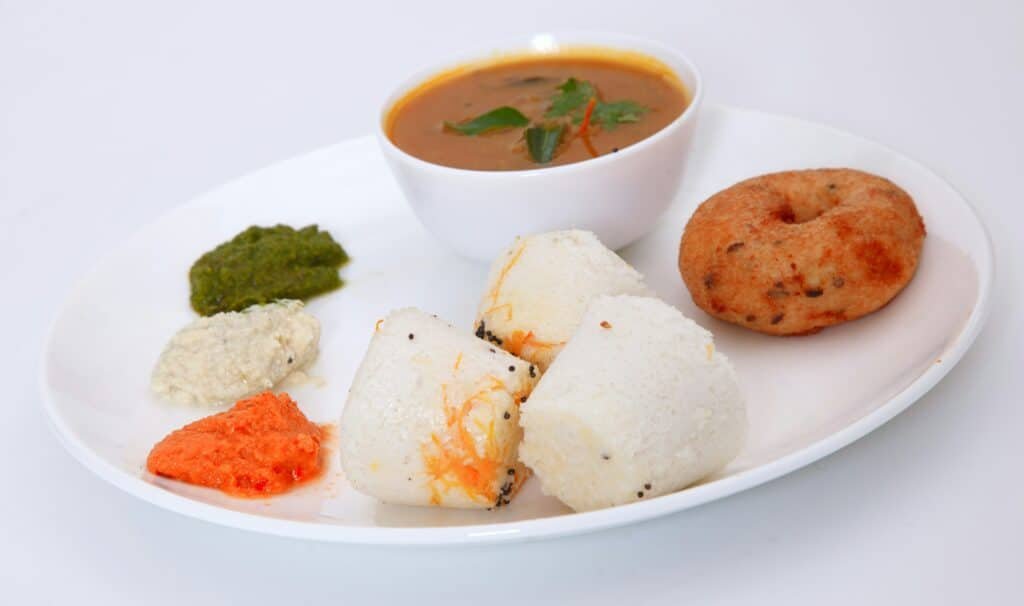
In this investigation
An idli looks simple: rice, black gram, water, salt, time and steam. A dosa begins with much the same logic before the batter meets a hot griddle. Yet between grinding and cooking, the batter becomes an active microbial community. It acidifies, traps gas, changes aroma, modifies starches and proteins, and develops the texture that makes idli soft and dosa characteristically tangy.
Modern explanations sometimes turn this into a sweeping claim that South Indians invented idli and dosa as probiotic foods designed for gut health. The evidence supports something more precise and more interesting. Fermentation is essential to the traditional sensory and technological identity of these foods, and it produces measurable biochemical changes. But the historical record does not show that the process was created from knowledge of the microbiome, vitamin synthesis or modern nutritional science.
The historical puzzle: old name, evolving food
Foods evolve more easily than names suggest. Kannada literature contains a reference to iddalige around 920 CE, and later medieval texts describe preparations with related names. Those references are important evidence that an idli-like food has deep roots in southern India. But they should not be treated as a photograph of the modern breakfast plate.
Descriptions associated with the early references do not consistently contain the three features that now define a standard idli: a rice–black gram mixture, prolonged natural fermentation and steaming into a soft cake. Historical food scholarship therefore treats the modern form as the result of culinary evolution rather than a recipe frozen unchanged for a millennium.
Several origin theories have been proposed, including possible influence from Southeast Asian fermentation techniques. These remain debated. The safest conclusion is narrower: southern Indian cooks developed and stabilized a remarkably successful rice–legume fermentation tradition over centuries, while the exact route by which the modern formula emerged is uncertain.
THE RECORD
Medieval textual references establish ancestry for idli-like foods, but they do not prove that today’s fermented rice–urad, steamed idli recipe existed unchanged in the earliest references. Culinary continuity and recipe evolution can coexist.
Why rice and black gram make such an effective pair
Traditional idli batter combines a cereal and a pulse with different physical properties. Rice supplies abundant starch and contributes structure. Black gram, or urad dal, contributes protein and components that help the batter hold water and gas. Grinding creates a hydrated matrix in which microorganisms can grow and fermentation products can accumulate.
The exact rice-to-dal ratio varies by household, ingredient and desired product. Soaking and grinding are also not trivial steps: they hydrate the grains, alter particle size, release nutrients and determine how much air and water the batter can retain.
Idli and dosa then diverge partly through cooking and batter handling. Idli depends heavily on a batter capable of expanding and retaining gas before being set by steam. Dosa batter is spread thin and cooked on a hot surface, where crispness and browning become important. The shared fermentation gives both acidity and flavour, but the final texture is created by different thermal processes.
The batter ferments without a laboratory starter
Traditional batter is commonly fermented spontaneously. Microorganisms arrive on the rice and dal, in water, on utensils and from the preparation environment. Under warm, moist conditions, selected organisms multiply rapidly and change the batter.
Older microbiology studies often emphasized a small set of organisms. Modern molecular methods reveal a more complex succession. A 2019 study using culture-dependent and culture-independent techniques found that lactic-acid bacteria dominated the bacterial community and that Weissella became particularly important as fermentation progressed. The important lesson is not one “magic bacterium,” but a community whose composition changes through time.
This succession helps explain why household batter can be robust without using a commercial inoculum. Acid-producing microbes make the environment progressively more favourable to organisms adapted to acidity and less favourable to many competitors.
Acidification is one of the major transformations
As lactic-acid bacteria metabolize available carbohydrates, organic acids accumulate and pH falls. The batter tastes sourer, its aroma changes and its microbial ecology shifts. Acidification also contributes to food safety by making the environment less hospitable to many undesirable microorganisms.
This is a classic example of fermentation turning microbiology into practical kitchen feedback. A cook does not need a pH meter to notice that a properly fermented batter smells and tastes different from freshly ground batter. Sensory cues become proxies for microbial progress.
Gas makes idli rise
The second visible transformation is leavening. Fermentative metabolism generates gases that become trapped in the batter. A well-prepared urad component helps stabilize bubbles, so the volume increases. Steaming then sets that aerated structure into the soft, porous crumb associated with idli.
This is an important correction to explanations that focus only on nutrition. Fermentation persists because it is a food-engineering step. Without microbial acidification and leavening, the characteristic product changes dramatically.
Fermentation changes proteins and carbohydrates
Microbial and endogenous enzymes act on macromolecules during fermentation. Studies of idli batter report increases in soluble compounds, free amino acids and enzyme activity as fermentation proceeds. Complex substrates are partly broken down into smaller molecules, contributing to flavour and potentially affecting digestibility.
Fermentation can also reduce some oligosaccharides and antinutritional compounds in cereal–legume systems. Lactic fermentation may lower phytate, which can bind minerals. These mechanisms are plausible and well established in many grain and pulse fermentations.
But “more digestible” should not automatically be translated into “better for every metabolic condition.” Rapid starch digestion can raise post-meal blood glucose. Studies of Indian foods show that idli’s glycaemic response can be moderate to high depending on formulation, processing, serving and population. Fermentation does not magically cancel the carbohydrate load of rice.
What happens to vitamins?
Microorganisms can synthesize or alter B vitamins and other micronutrients during food fermentation, and older idli studies report increases in selected water-soluble vitamins under particular conditions. This is one reason fermentation can improve the nutritional profile of a cereal–pulse batter.
However, exact values vary with ingredients, organisms, temperature, duration and analytical methods. Claims that every bowl of batter acquires a fixed vitamin increase are not justified. Cooking after fermentation also matters because heat can reduce some heat-sensitive compounds.
Is idli a probiotic food?
Not in the strict scientific sense simply because its batter ferments. Probiotics are live microorganisms that confer a demonstrated health benefit when administered in adequate amounts. A naturally fermented batter contains live microbes before cooking, but idli is steamed and dosa is cooked on a hot griddle. Those heat treatments greatly reduce or eliminate the live organisms responsible for fermentation.
The food remains fermented because microbes performed the transformation. It does not automatically remain a live-culture food, and it cannot be called probiotic merely because lactic-acid bacteria were present in the batter.
THE EVIDENCE
Idli fermentation is microbiologically well demonstrated: lactic-acid bacteria dominate, pH falls and the batter leavens. Nutritional composition can change. The weaker claim is that cooked idli delivers probiotic organisms or that fermentation makes it universally metabolically superior.
Why fermentation improves flavour
Freshly ground rice and black gram batter is comparatively bland. During fermentation, acids and volatile metabolites create sourness and aroma. Enzymatic reactions release smaller flavour precursors. Cooking then adds another layer: steaming preserves a delicate fermented profile in idli, while griddle cooking of dosa introduces browning and toasted flavours.
This sensory payoff may be as important historically as any nutritional change. Traditions survive because people enjoy the foods they produce.
Why warm South Indian kitchens favour the process
Temperature strongly affects fermentation rate. Warm ambient conditions favour rapid growth of the organisms that drive traditional batter fermentation. A recipe that works overnight in a warm climate may take much longer in a cold kitchen.
This environmental fit likely helped stabilize the practice. Fermentation technology is always partly ecological: a useful process must work under the temperatures, ingredients, water conditions and household schedules available to cooks.
A household technology can be sophisticated without written microbiology
Traditional idli and dosa making contains multiple control points: ingredient ratio, soaking duration, grind size, water addition, salt, batter consistency, vessel size, temperature, fermentation time and cooking method. Experienced cooks adjust these variables when weather or ingredients change.
That is genuine technical knowledge. But it is phenomenological knowledge—knowledge of what works—not evidence that earlier cooks understood bacterial succession, organic-acid pathways or mineral chelation. Recognizing the distinction avoids two errors at once: dismissing traditional practice as accidental, and exaggerating it into modern biochemistry written in ancient disguise.
Did fermentation “complete” the protein?
Rice and pulses have complementary nutritional strengths. Legumes generally provide more lysine than cereals, while cereals contribute relatively more sulfur-containing amino acids. Combining staple grains and pulses can therefore improve the overall amino-acid pattern of a meal.
Fermentation may further alter amino-acid availability, but it is misleading to say ancient cooks deliberately engineered “complete protein” according to modern amino-acid science. The combination could have become established for agriculture, cost, taste, texture, satiety and culinary performance long before amino acids were known.
What about antinutrients?
Phytate and some fermentable oligosaccharides are often discussed in relation to pulses and grains. Fermentation can reduce concentrations of selected antinutritional factors through microbial enzymes and acidification. That can improve mineral accessibility or tolerance in some food systems.
The effect should be described quantitatively rather than mythically. “Fermentation reduces some antinutrients” is defensible. “Fermentation removes all antinutrients and unlocks every nutrient” is not.
Idli and dosa are not nutritionally identical
They may begin with similar batter, but cooking changes the final food. Idli is steamed with little or no cooking fat. Dosa is spread thin and cooked on a hot griddle, often with oil or ghee. Water loss, browning, surface area and serving accompaniments all affect energy density and glycaemic response.
It is therefore poor nutrition science to make a health claim about “fermented batter” and assume it applies identically to every final preparation.
The diabetes myth needs particular caution
Because idli is steamed and fermented, it is sometimes marketed online as inherently ideal for diabetes. The evidence does not justify that blanket claim. Human and in-vitro studies have found substantial variation in glycaemic index depending on grain type, formulation and processing, with some standard rice-based preparations producing relatively rapid glucose availability.
Fermentation can improve digestibility while simultaneously making starch more accessible. “Easy to digest” and “low glycaemic” are not synonyms. For metabolic health, portion size, rice type, pulse proportion, accompaniments, fibre and individual response matter.
Why the process survived industrialization
Refrigeration removed some of the preservation pressure that once favoured fermentation, but it did not remove the desire for idli and dosa. The process survived because the fermented batter is integral to texture, flavour and identity.
Modern wet grinders, packaged batter, refrigeration and commercial production have changed scale and convenience. Yet the basic microbial transformation remains recognizable. This is a hallmark of a resilient traditional technology: it adapts to new infrastructure without losing the function that defines the food.
Why the same batter can fail from one day to the next
Traditional fermentation is sensitive to temperature, water, grain age, salt and the microbial community carried by ingredients and equipment. A batter that rises quickly in warm weather may remain sluggish in a cold kitchen. Too much water can weaken gas retention; too little can restrict microbial movement and alter texture. Household knowledge therefore includes diagnosis as much as recipe.
This variability is one reason commercial packaged-batter production requires tighter process control. Manufacturers monitor ingredient quality, grind size, temperature, acidity and refrigeration so that a naturally variable biological process produces a predictable food.
Fermentation and steaming solve different problems
Fermentation creates acid, gas and flavour; steaming sets the aerated batter and cooks starch and protein. The final softness of idli is therefore not a fermentation effect alone. It emerges from the interaction between microbial leavening, the foaming properties of black gram, particle size, water and heat.
Dosa demonstrates the same principle from the opposite direction. A related fermented batter is spread into a thin film, where rapid water loss and surface browning create crispness. One fermentation platform can therefore support very different foods because cooking determines how the fermented matrix is finally structured.
What the tradition teaches about “functional foods”
Idli is often called a functional food because fermentation changes the substrate in potentially useful ways. That label is reasonable when it refers to measurable food chemistry, but it becomes misleading when it implies a clinical treatment. The strongest evidence concerns the process itself—acidification, leavening, microbial succession and compositional change—not prevention or cure of disease.
That distinction allows the food to be appreciated without overselling it. A traditional fermented breakfast can be nutritious, convenient and technically sophisticated without needing to carry claims that exceed the evidence.
Why black gram is unusually valuable for idli structure
Black gram is not simply a protein supplement added to rice. During wet grinding it creates a viscous, aeratable matrix that helps incorporate and retain gas. This physical property is central to the soft porous texture of idli. A successful recipe therefore combines microbial gas production with ingredient functionality.
That explains why substitutions can produce edible fermented cakes while still changing volume, crumb and mouthfeel. The traditional pairing is technologically coherent even before nutritional arguments are considered.
A mature batter is an endpoint, not simply a number of hours
Household instructions often say to ferment “overnight,” but experienced cooks judge the result by rise, aroma, acidity and texture because time alone is unreliable. Warm weather accelerates fermentation; cold conditions slow it. The practical endpoint is a batter whose microbial and physical changes are appropriate for cooking.
That sensory judgement is a form of process monitoring. Modern production replaces part of it with temperature and pH measurement, but the underlying problem is the same: deciding when a biological transformation has progressed far enough.
What survives scrutiny?
- Idli-like foods have medieval textual ancestry in southern India, but the earliest references should not be assumed to describe the exact modern rice–urad, fermented and steamed recipe.
- Traditional idli and dosa batter is a genuine natural fermentation dominated by lactic-acid bacteria and a changing microbial community.
- Fermentation lowers pH and contributes to flavour, microbial stability and batter ecology.
- Gas production and the physical properties of black gram help create the leavened structure essential to idli.
- Fermentation can change free amino acids, vitamins, phytate and other nutritional components, but the magnitude varies.
- Cooked idli and dosa are fermented foods but are not automatically probiotic foods because cooking kills most fermentation organisms.
- Fermentation can improve digestibility without guaranteeing a low glycaemic response.
- The rice–pulse pairing has nutritional advantages, but there is no evidence ancient cooks consciously designed it using modern amino-acid theory.
- The strongest historical explanation is practical culinary evolution: fermentation made the batter sour, aerated, workable, distinctive and reproducible.
The strongest lesson is process control
Idli and dosa also show how household fermentation depends on conditions rather than on a single fixed recipe. A batter can fail to rise in a cold kitchen, over-ferment in extreme heat, or behave differently when rice variety, urad quality, water chemistry or grind size changes. Experienced cooks compensate by changing soaking, grinding, water and fermentation time.
That adaptive skill is central to the tradition. The scientific insight is not that one ancestral recipe was universally optimal, but that cooks learned to manage a dynamic microbial and physical system using observable cues long before those variables could be measured instrumentally.
The modern takeaway is therefore strongest at the level of food technology: controlled natural fermentation can transform a cereal–pulse batter in reproducible ways. Health claims should remain secondary and outcome-specific, while the culinary mechanism itself is among the best-supported examples in the Tradivior collection.
The Tradivior Evidence Profile
Historical Authenticity — Strong. Idli-like foods are documented in medieval South Indian literature, and fermented rice–legume batters are firmly established in regional culinary tradition.
Original-Purpose Evidence — Moderate. Culinary function, leavening, flavour, digestibility and practical household food processing are strongly plausible, but the exact historical pathway from early idli-like foods to the modern recipe remains debated.
Scientific Mechanism — Strong. Modern microbiology directly demonstrates lactic-acid-bacterial succession, acidification and leavening in idli batter, along with biochemical changes during fermentation.
Experimental Evidence — Moderate. Laboratory and food-science studies document fermentation changes well. Direct long-term human health trials of traditional idli or dosa as interventions are limited, and glycaemic effects vary by formulation.
Cross-Cultural Evidence — Moderate. Fermented cereal–legume batters have analogues in other cuisines, while idli and dosa remain particularly associated with South Indian culinary development.
Modern Relevance — Strong. The process remains widely used and offers a clear example of household fermentation technology whose culinary mechanisms are well supported by modern science.
The Tradivior Conclusion
Historically Practical. South Indians fermented batter for idli and dosa because fermentation transformed the food in useful and desirable ways: it acidified the mixture, generated flavour, altered texture and, especially for idli, helped create an aerated batter that could steam into a soft cake. Modern microbiology strongly validates these mechanisms and shows additional nutritional changes. What the evidence does not support is the claim that the tradition was invented as a probiotic programme or that fermentation automatically makes the final food low-glycaemic or medically superior. The achievement is culinary biotechnology developed through practice: cooks learned to manage a microbial process long before they could name the organisms doing the work.
Continue investigating
Sources & further reading
- Sonawane SK, Arya SS, et al. “Diversity and succession of microbiota during fermentation of the traditional Indian food idli.” Applied and Environmental Microbiology. 2019;85:e00368-19.
- Tamang JP. “‘Ethno-microbiology’ of ethnic Indian fermented foods and alcoholic beverages.” Journal of Applied Microbiology. 2022.
- Soni SK, Sandhu DK. “Fermentation of Idli: effects of changes in raw material and physico-chemical conditions.” Journal of Cereal Science. 1989;10(3):227–238.
- Ghosh D, Chattopadhyay P. “Preparation of idli batter, its properties and nutritional improvement during fermentation.” Journal of Food Science and Technology. 2011;48:610–615.
- Balasubramanian S, Viswanathan R. “Properties of idli batter during its fermentation time.” Journal of Food Processing and Preservation. 2007;31:32–40.
- Achaya KT. Indian Food: A Historical Companion. Oxford University Press, 1994.
- Marco ML, Sanders ME, Gänzle M, et al. “The ISAPP consensus statement on fermented foods.” Nature Reviews Gastroenterology & Hepatology. 2021;18:196–208.
- Indian Council of Medical Research–National Institute of Nutrition researchers. “Carbohydrate profiling and glycaemic indices of selected traditional Indian foods.” Indian Journal of Medical Research. 2022.
Continue exploring

Evidence Supported
Why Do Cultures Set Aside Days to Remember the Dead?
From Pitru Paksha and Qingming to Día de Muertos and All Souls’ Day, cultures repeatedly create calendar time for the dead. Tradivior will compare how recurring remembrance renews kinship, grief…
Partially Supported
Why Do People Keep Ashes, Relics and Memorial Objects?
Hair, ashes, bones, clothing, photographs and relics allow the dead to remain materially present. Tradivior will examine why objects carry memory so powerfully and how continuing bonds differ from pathological…

Historically Practical
Why Do Cultures Preserve the Dead?
Mummification, embalming, freezing, smoking and desiccation reflect very different beliefs about bodies and afterlives. Tradivior will compare preservation traditions with the chemistry of decomposition and the practical limits of each…

Primarily Symbolic/Cultural
Why Do People Change Names, Clothes or Homes After Marriage?
Marriage often transforms identity through surname changes, new dress, residence, kinship terms or household membership. Tradivior will investigate why marriage needs visible social consequences beyond the ceremony itself.
Picked for your curiosity
Enable JavaScript to build a reading profile and see recommendations.