 tradivior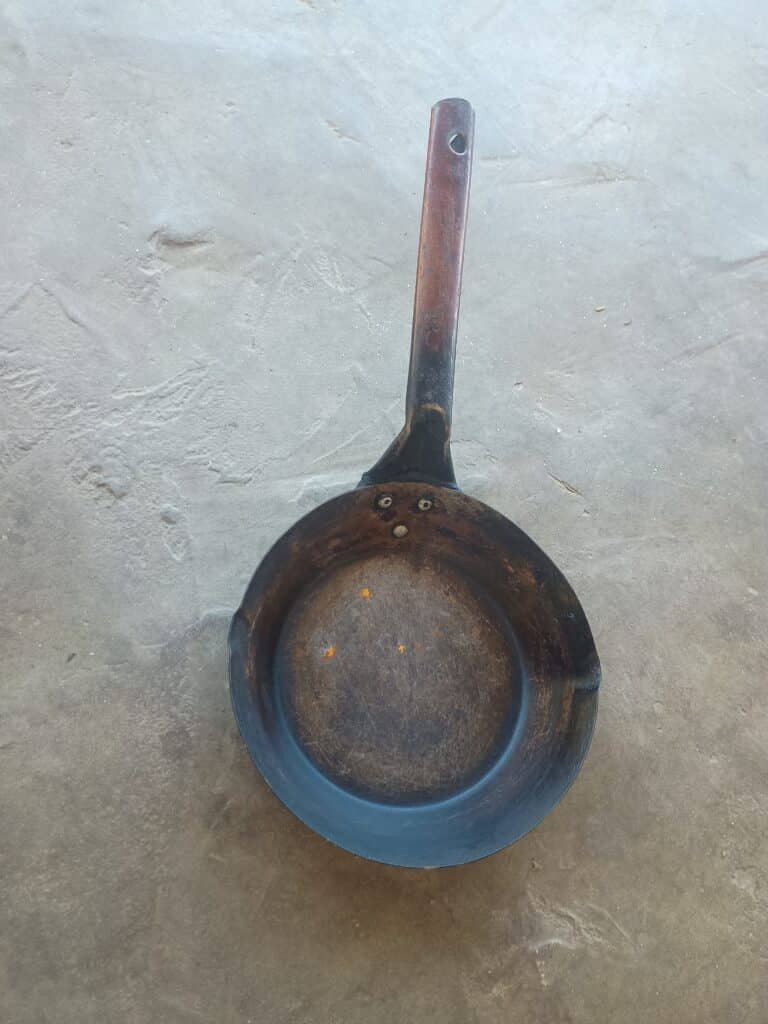
In this investigation
An iron kadai can become part of the meal. Not as visible flakes of metal, but as dissolved iron transferred during cooking. Acidic foods, long cooking times and high moisture can increase that transfer. This is one of the rare traditional cookware claims with a clear, measurable nutritional mechanism.
The historical question is different. Iron vessels became valuable because they were durable, heat-tolerant and well suited to frying, roasting, tempering and simmering. Modern evidence that they can increase the iron content of food does not prove that Indian cooks originally adopted kadai as an anti-anaemia intervention.
Why iron cookware was useful
Iron can withstand high heat and repeated mechanical use. A kadai’s curved shape works for frying, sautéing, reducing sauces and tempering spices. Once ironworking became established, durable cooking vessels offered advantages over fragile earthenware for many tasks.
Cast and wrought iron also retain substantial heat, making them useful for browning and frying when properly preheated.
THE RECORD
Iron cookware’s historical adoption is easily explained by durability and cooking performance. Nutritional iron transfer is real, but historical intent should not be inferred from a mechanism measured much later.
Food can dissolve iron from the pan
When food contacts iron, small amounts can dissolve into the cooking medium. Acid accelerates the reaction, so tomato, tamarind and other acidic foods often acquire more iron than dry or neutral foods. Longer contact, more moisture and newer or less-seasoned surfaces can also increase transfer.
The amount is therefore highly variable. Saying “iron cookware adds iron” is accurate; saying “every meal gets a fixed dose” is not.
Is the transferred iron absorbable?
Much of the transferred iron is non-haem iron, whose absorption depends on the meal. Vitamin C and acidity can enhance absorption, while phytate and some polyphenols can reduce it.
This means cookware cannot be evaluated independently of diet. Iron entering a tomato-based dish with vitamin-C-rich ingredients may be more available than iron entering a high-phytate meal.
THE EVIDENCE
A 2021 systematic review found that iron cookware or iron ingots generally increase the iron content of food and can improve bioavailability; some studies reported higher haemoglobin, while others found small or inconsistent effects. The mechanism is stronger than the clinical certainty.
What human trials show
The systematic review identified thirteen eligible studies. Four reported significant increases in haemoglobin, while others found smaller changes. Across studies, food iron generally increased when cooked with iron vessels or ingots.
Variation is expected because baseline iron deficiency, diet, adherence, cooking style and infection all affect haemoglobin. A cookware intervention cannot correct every cause of anaemia.
Why acidic Indian foods can show large increases
Indian cuisines frequently use tomato, tamarind, kokum, curd or other acidic ingredients. Acid promotes iron dissolution. Wet dishes cooked for longer periods may therefore take up substantially more iron than quickly fried dry foods.
This makes the nutritional effect cuisine-specific. A dry roti reheated briefly on iron will not acquire the same amount as a sour curry simmered in it.
Seasoning changes the surface
Traditional iron cookware is often seasoned with oil, creating polymerized layers that reduce sticking and corrosion. A well-seasoned pan may transfer less iron than a bare reactive surface, although some transfer can still occur.
This creates a culinary trade-off: the surface treatment that improves cooking performance can reduce direct metal-food contact.
More iron is not always better
Iron deficiency is common, but some people accumulate excess iron because of genetic conditions, repeated transfusions or other disorders. For most healthy people, ordinary culinary use of iron cookware is not a major toxicity concern, but using cookware as a deliberate iron intervention should not replace diagnosis when anaemia is suspected.
Anaemia can result from iron deficiency, vitamin deficiencies, infection, inflammation, blood loss or inherited disorders. Haemoglobin alone does not identify the cause.
Iron cookware does not “fortify” every nutrient
The specific validated effect is iron transfer. Claims that iron cookware broadly increases immunity, balances hormones or “adds minerals” in a nutritionally comprehensive way go beyond the evidence.
Keeping claims narrow makes the genuine finding more credible.
Why iron can change colour and taste
Reactive iron can darken some foods and interact with tannins or polyphenols. Very acidic foods left in uncoated iron for long periods can develop metallic notes. Traditional cooks often learned which dishes suit the vessel and which do not.
This practical knowledge likely influenced vessel choice independently of nutrition.
Cast iron and wrought iron are not identical
Different iron cookware contains different carbon content, thickness and surface structure. Cast iron is generally thicker and stores heat well; wrought or spun iron can be lighter and more responsive. Kadai construction varies across manufacturers.
Research results from one vessel therefore should not be assumed to apply quantitatively to every iron pan.
Could iron cookware help public health?
Because iron pots are reusable and do not require daily tablets, researchers have explored them as low-cost strategies in populations with iron deficiency. The evidence is promising enough to justify further study, especially where diets are low in bioavailable iron.
But effects are less predictable than standardized fortification or supplementation. Public-health programmes need measurable dose, adherence and population targeting.
Historical intent remains uncertain
It is tempting to say Indian ancestors “knew iron kadai prevented anaemia.” There is no need to make that leap. A durable vessel could be selected for thousands of practical reasons while incidentally providing a nutritional benefit.
Traditions often contain consequences their practitioners did not formulate in modern biochemical language. A real effect does not prove the modern mechanism was the original rationale.
Iron migration depends heavily on the food
Iron does not move from cookware into every dish at the same rate. Acidity, water content, cooking time, temperature and how much of the food contacts the pan all matter.
Tomato, tamarind and other acidic ingredients can increase iron dissolution, while dry frying or very short cooking may transfer little. A single number for “iron added by an iron kadai” is therefore misleading.
Food chemistry determines whether the extra iron is usable
Iron released from cookware enters the meal mainly as non-haem iron. Its absorption is then influenced by the rest of the plate. Vitamin C can increase absorption, while phytates in grains and pulses and some polyphenols can reduce it.
This means iron transfer and iron nutrition are two different steps. A food can contain more iron after cooking without the body absorbing all of that increase.
Systematic reviews show promise, not certainty
A 2021 systematic review found thirteen studies evaluating iron cookware or iron ingots. Several reported increased iron content in food, and some found improved haemoglobin, while other studies showed only minor or inconsistent changes.
An earlier systematic review of randomized trials reached a similar conclusion: iron pots may help reduce iron deficiency in some settings, but effectiveness depends on compliance, age, infection burden and how regularly households actually use the cookware.
Public-health usefulness depends on whether people like the pot
Community interventions fail when cookware is too heavy, unfamiliar, difficult to clean or incompatible with local stoves and recipes. A theoretically effective pot that sits unused does not improve haemoglobin.
This is why iron cookware is best understood as a possible low-cost fortification strategy, not a substitute for diagnosis, supplements, fortified foods or treatment of blood loss and infection.
Indian acidic cooking can increase transfer substantially
Many Indian dishes include tomatoes, tamarind, curd or other acidic ingredients, and some are simmered for long periods. Those conditions can increase iron migration from an uncoated iron surface.
This creates a plausible nutritional contribution, particularly in plant-based diets where non-haem iron intake and absorption may already be limiting. The size of the contribution still varies meal by meal.
Seasoning changes reactivity
Repeated heating with oil creates polymerized layers on iron cookware that reduce sticking and protect the surface from rust. Those layers can also reduce direct contact between acidic food and bare iron.
A heavily seasoned kadai may therefore transfer less iron than a newer or more reactive surface. Culinary maintenance and nutritional transfer can pull in opposite directions.
Rust is not the intended source of dietary iron
Small surface rust can usually be scrubbed away and the pan re-seasoned, but a badly corroded vessel should not be treated as a health supplement. Rust changes surface integrity and can affect flavour and cooking performance.
The useful mechanism is controlled dissolution of iron during cooking, not eating flakes of corrosion.
Iron deficiency has causes cookware cannot fix
Heavy menstrual bleeding, gastrointestinal blood loss, hookworm, malaria, pregnancy, poor intake, malabsorption and chronic disease can all contribute to anaemia. Some of these require urgent or specific treatment.
An iron kadai can modestly enrich food while leaving the underlying cause untouched. Persistent anaemia therefore needs clinical evaluation rather than culinary treatment alone.
Not all anaemia is iron deficiency
Vitamin B12 or folate deficiency, inherited haemoglobin disorders, inflammation and kidney disease can also lower haemoglobin. Giving more iron when iron stores are adequate may not help and can sometimes obscure diagnosis.
This is another reason iron cookware should remain a food-level strategy rather than a medical prescription.
More iron is not desirable for everyone
People with haemochromatosis or other iron-loading conditions need to avoid unnecessary iron accumulation. Although cookware contributes far less iron than medicinal supplements, the direction of effect still matters.
Universal claims that iron cookware is healthier for every household ignore this variability.
Iron can catalyse oxidation in some foods
Iron is chemically reactive and can promote oxidation of fats or pigments under some conditions. This can alter colour or flavour, especially in acidic or delicate foods.
The darkening of some dishes cooked in iron is therefore ordinary food chemistry, not evidence that the meal has become toxic or unusually medicinal.
Cast iron and traditional kadai surfaces differ
Cast iron is thick and brittle, while some traditional iron cookware is forged or wrought and may be thinner and more responsive to heat. Their surface area, thickness and seasoning affect both cooking and iron release.
Research using one type of iron vessel should not automatically be generalized to every kadai sold under the same cultural label.
Thermal performance is a separate reason to keep iron cookware
Heavy iron retains heat well, which can help searing, frying and maintaining temperature when food is added. That culinary performance may explain continued use even where nobody is thinking about iron nutrition.
Historical persistence does not require ancient cooks to have known about haemoglobin. A pan can survive because it cooks well and only later be recognized as a source of dietary iron.
Soap does not automatically ruin a seasoned pan
Modern mild dish detergents do not contain the harsh lye once associated with stripping seasoning. Gentle washing, thorough drying and light re-oiling can keep iron cookware sanitary without destroying the cooking surface.
Avoiding all soap is therefore more tradition than necessity, especially when the pan has held greasy or strongly flavoured food.
The most defensible modern claim is modest fortification
Iron cookware can increase the iron content of some foods, and in some populations that may contribute to improved iron status. The effect is strongest when the cookware is used regularly with compatible recipes and when iron deficiency is actually present.
That is a meaningful nutritional mechanism. It is stronger than the claim that iron cookware improves every nutrient, detoxifies food or should replace iron therapy.
Cooking in iron is not equivalent to taking an iron tablet
Medicinal iron provides a measured dose in a defined chemical form. Cookware releases a variable amount that depends on recipe and surface condition. That variability makes the pan unsuitable for treating moderate or severe iron deficiency where a clinician needs a predictable dose.
Its value is more like incidental fortification: a background contribution that can improve dietary iron exposure over time.
Iron cookware can be nutritionally useful without being the historical reason for its use
There is little evidence that traditional Indian households chose iron kadai because they understood anaemia or iron biochemistry. Durability, heat performance, local metalworking and cuisine are sufficient historical explanations.
The nutritional effect can be a real modern discovery layered onto an older technology rather than proof of lost scientific knowledge.
Vitamin C can make an iron-kadai meal more nutritionally effective
Because cookware iron is non-haem iron, pairing the meal with vitamin-C-rich foods can increase absorption. Lemon, amla, guava, tomatoes and other sources of ascorbic acid can reduce ferric iron to a form more readily absorbed in the intestine.
Tea or coffee consumed with the meal can reduce non-haem iron absorption because polyphenols bind iron. The nutritional effect of an iron pan therefore depends not only on the vessel but on the whole meal pattern.
For households that already use iron cookware, this background fortification can be a useful nutritional bonus. For someone with diagnosed anaemia, however, the priority remains identifying the cause and using a treatment whose dose and effectiveness can be monitored.
That makes iron cookware a useful background contributor to dietary iron—not a measured therapy.
Its contribution is modest but real when used regularly.
That is still nutritionally useful.
What survives scrutiny?
- Iron cookware is historically practical because it is durable and performs well at high heat.
- Iron can transfer from cookware into food during cooking.
- Acidity, moisture, cooking duration and surface condition strongly affect transfer.
- The transferred iron can be nutritionally available.
- A 2021 systematic review found increases in food iron and mixed but sometimes positive effects on haemoglobin.
- Iron cookware cannot treat every cause of anaemia.
- There is no strong evidence that Indian cooks originally adopted kadai specifically as an iron-deficiency treatment.
- Ordinary culinary use is different from prescribing cookware as a medical intervention.
The Tradivior Evidence Profile
Historical Authenticity — Strong. Iron cookware has a long history in South Asian and global cooking traditions.
Original-Purpose Evidence — Moderate. Durability and cooking performance are clear; deliberate nutritional fortification as the original motive is not established.
Scientific Mechanism — Strong. Acid-dependent dissolution of iron into food is directly measurable and well understood.
Experimental Evidence — Moderate. Food-content changes are robust; human haemoglobin outcomes are promising but inconsistent across studies.
Cross-Cultural Evidence — Strong. Iron cookware is used in many cuisines, and nutritional-transfer studies come from multiple populations.
Modern Relevance — Strong. Iron cookware remains useful and can contribute dietary iron, especially in acidic wet dishes, but should complement rather than replace appropriate nutrition and medical care.
The Tradivior Conclusion
Evidence Supported. Cooking in iron cookware can increase the iron content of food, and some human studies show improvements in haemoglobin or iron status. The effect varies with food chemistry and cooking method, so an iron kadai is not a standardized supplement. The historical adoption of iron cookware is better explained by durability and culinary performance than by proven ancient knowledge of anaemia. This is a strong example of a traditional technology with a genuine modern nutritional benefit that should be acknowledged without rewriting its origin story.
Continue investigating
Sources & further reading
- Sharma S, Khandelwal R, Yadav K, et al. “Effect of cooking food in iron-containing cookware on increase in blood hemoglobin level and iron content of the food: A systematic review.” 2021;11(2):994–1005. PMID 34290890.
- Geerligs PP, Brabin BJ, Omari AAA. “Food prepared in iron cooking pots as an intervention for reducing iron deficiency anaemia in developing countries: a systematic review.” Journal of Human Nutrition and Dietetics. 2003.
- Brittin HC, Nossaman CE. “Iron content of food cooked in iron utensils.” Journal of the American Dietetic Association. 1986.
Continue exploring

Evidence Supported
Why Do Oral Traditions Use Rhythm and Melody to Remember?
Epic poems, genealogies, prayers and work knowledge often survive through metre, rhyme, melody and formula. Tradivior will examine how oral cultures engineered memory before writing was widespread.
Evidence Supported
Why Do Drums Drive Trance and Procession?
Drumming can organize marching, dance, ritual possession and communal excitement with extraordinary efficiency. Tradivior will examine how rhythm entrains movement and attention without assuming that every drum tradition aims at…

Evidence Supported
Why Do Humans Dance in Ritual?
Ritual dance can celebrate, mourn, heal, initiate, possess, court and remember. Tradivior will compare dance traditions and ask how coordinated movement changes identity, emotion and group cohesion.
Partially Supported
Why Do Religions Use Bells and Gongs?
Bells and gongs announce sacred time, mark transitions and command attention across Asia, Europe and beyond. Tradivior will compare their histories and test claims about resonance, brain waves and cleansing…
Picked for your curiosity
Enable JavaScript to build a reading profile and see recommendations.