 tradivior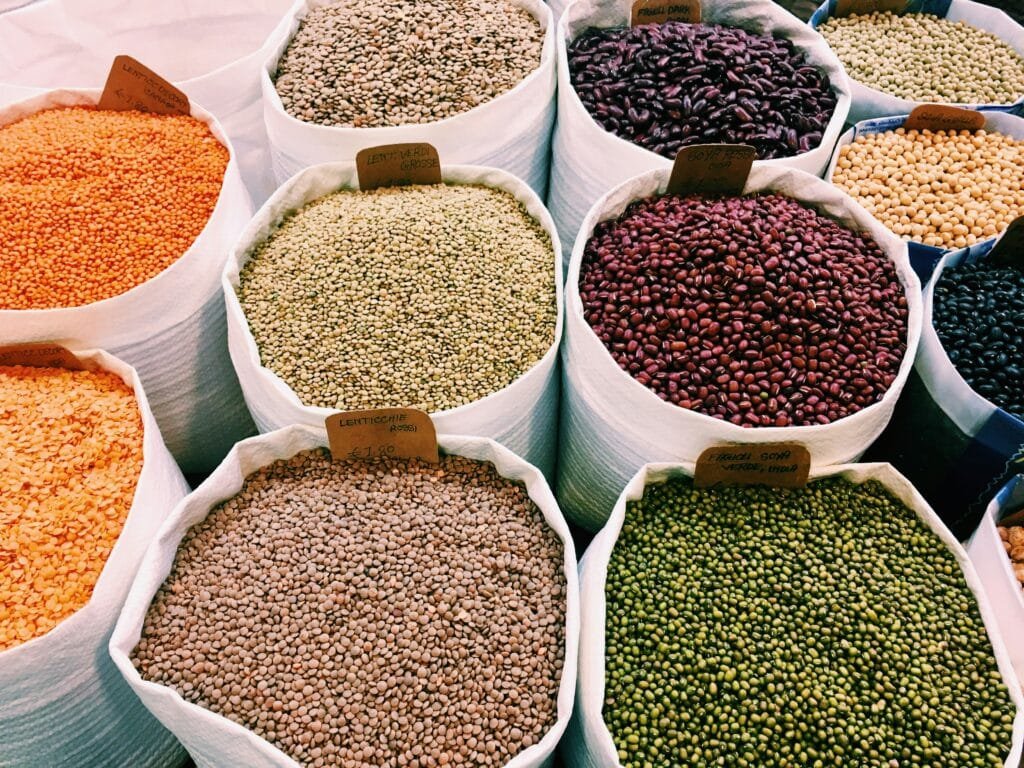
In this investigation
Rice and dal, maize and beans, couscous and chickpeas, bread and lentils: the pairing repeats so often that it looks almost designed. Cereals supply abundant carbohydrate and much of the world’s staple energy. Pulses add protein, fibre, minerals and nutrients that cereal-heavy diets can lack. Their proteins also complement each other in a meaningful biochemical sense.
But the historical explanation should remain grounded. Farmers and cooks did not need to know the word “lysine” to discover that grains and pulses were productive crops, stored well, tasted good together and supported people better than a monotonous staple alone. Nutritional complementarity can be a real consequence without being the original theory.
Why cereals became staple foods
Wheat, rice, maize, millet, sorghum and other cereals are efficient sources of storable carbohydrate. Dry grain is portable, divisible, seedable and relatively durable. Agriculture could therefore organize around cereal surpluses.
The nutritional weakness of relying too heavily on one cereal is equally important: protein quality, micronutrients and dietary diversity can become limiting.
Why pulses fit the system
Beans, lentils, peas, chickpeas, cowpeas and other grain legumes provide substantially more protein than most cereals and are rich in lysine, an essential amino acid often relatively limited in cereal proteins. Pulses are themselves commonly lower in sulfur-containing amino acids such as methionine.
Combining the two can therefore produce a more balanced amino-acid pattern than either food alone.
THE RECORD
Grain–pulse combinations are historically widespread because agriculture, storage, affordability and cuisine made them natural partners. Modern amino-acid science explains one important benefit; it does not prove ancient recipe design by protein chemistry.
What “complementary protein” really means
Human proteins require indispensable amino acids in appropriate proportions. If one essential amino acid is present in too little quantity relative to need, it becomes limiting for efficient protein use.
FAO nutrition guidance has long noted that cereal proteins tend to be limited in lysine, while many legumes are richer in lysine but relatively limited in sulfur amino acids. A mixed diet can therefore improve overall protein quality.
THE EVIDENCE
Complementary amino-acid patterns between cereals and pulses are well established. Modern DIAAS and PDCAAS work confirms that some blends improve protein quality. The benefit depends on the actual foods, ratio, digestibility and total protein intake.
Complementarity does not require eating both foods in the same mouthful
Older nutrition advice sometimes insisted that complementary plant proteins must be combined at each meal. The body maintains an amino-acid pool and can integrate intake across the day. A varied diet can therefore provide complementary amino acids without precise meal-by-meal pairing.
Traditional dishes often do combine them in one meal, but that culinary pattern is convenient rather than metabolically mandatory at every bite.
The ratio still matters
A tiny spoonful of dal beside a large plate of rice is not nutritionally equivalent to a more pulse-rich meal. Protein quality and total protein both matter.
Studies of cereal–legume complementary foods show that some traditional blends remain limited in protein quality or energy density and may require optimization for young children. Tradition creates useful patterns, not guaranteed nutritional perfection.
Pulses add fibre and slower-digesting carbohydrate
Legumes usually contain more fibre and resistant starch than refined cereals. Their starch is often digested more slowly, which can blunt post-meal glucose responses compared with an equivalent meal dominated by rapidly digestible starch.
Adding pulses can therefore improve a meal beyond protein complementarity.
Antinutrients complicate the story
Raw pulses contain phytate, protease inhibitors, lectins and other compounds that can reduce digestibility or mineral absorption. Soaking, cooking, sprouting and fermentation can substantially reduce many of these.
The nutritional value of a grain–pulse combination therefore depends on processing as well as ingredients.
Agricultural complementarity may be as important as nutritional complementarity
Legumes form symbioses with nitrogen-fixing bacteria and can contribute to crop rotations that support soil fertility. Cereal–legume agriculture can therefore diversify both field ecology and diet.
Farmers may have valued pulses for agronomic and economic reasons long before anyone formulated their amino-acid value.
Why the pattern appears globally
Staple grains are cheap sources of energy; pulses are among the cheapest durable sources of concentrated plant protein. Where animal foods were scarce or expensive, the pairing was especially useful.
Independent cuisines could therefore converge on grain-plus-legume meals without sharing a nutritional theory.
Indian rice and dal is one version, not the universal template
North India may pair wheat breads with chickpeas, lentils or kidney beans; South India combines rice with sambar or other pulse preparations; millet traditions pair local grains with legumes. The general pattern is flexible.
Regional agriculture determines which cereal and which pulse become partners.
“Complete protein” is often oversimplified
Foods are not simply complete or incomplete in a binary sense. They contain varying amounts of all amino acids, and protein quality depends on digestibility as well as composition.
A grain–pulse meal can improve the amino-acid balance, but overall nutritional adequacy still requires enough energy, micronutrients and food diversity.
Cereals and pulses solve different amino-acid limitations
Many cereal proteins are relatively low in lysine, while several pulse proteins provide more lysine but can be relatively limited in sulfur-containing amino acids such as methionine. Combining them can improve the overall amino-acid balance of the diet.
This complementary pattern is real nutritional chemistry. It does not mean every grain–pulse pair is automatically “perfect protein,” because digestibility, proportions and the specific foods still matter.
Complementarity works across the day, not only in one bite
The old nutrition rule that plant proteins must be carefully combined at the same meal is too rigid for most healthy adults. The body maintains amino-acid pools and can use protein eaten across meals.
Eating rice at lunch and pulses later can still contribute to adequate protein quality as long as total energy and protein intake are sufficient. Traditional paired dishes remain convenient, not biochemically mandatory at every mouthful.
The ratio changes the quality of the blend
A bowl containing a large amount of refined rice and a spoonful of dal is nutritionally different from a meal with substantial pulses. The pulse fraction affects protein, fibre, micronutrients and glycaemic response.
Laboratory work using DIAAS and related protein-quality measures confirms that the amino-acid score of cereal–pulse blends changes with their proportions. “Rice plus dal” therefore describes a category, not a fixed nutritional result.
Pulses improve more than protein quality
Lentils, chickpeas, peas and beans contribute fibre, folate, potassium, magnesium and slowly digested carbohydrate. Those features can lower the glycaemic impact of a meal compared with eating refined starch alone.
The health value of grain–pulse meals is therefore broader than amino-acid complementarity.
Whole grains and refined grains should not be treated as equivalent
Whole grains retain bran and germ, supplying more fibre, micronutrients and phytochemicals. Refined grains lose much of that material during milling.
A traditional meal based on polished white rice can still benefit from pulses, but it should not be described as nutritionally identical to a whole-grain–pulse combination.
Soaking, fermenting and cooking change digestibility
Pulses contain phytates, tannins and protease inhibitors that can reduce mineral or protein availability. Soaking, germination, fermentation and adequate cooking can reduce some of these antinutritional factors.
Traditional processing therefore interacts with the nutritional quality of the grain–pulse system rather than merely improving taste.
“Antinutrient” is not a synonym for poison
Phytates can reduce absorption of iron, zinc and calcium in a meal, especially when diets are monotonous and mineral intake is low. At the same time, phytate and polyphenols have biological effects that are not simply harmful.
The practical issue is dietary context. A varied diet with adequate minerals handles these compounds differently from a subsistence diet dependent on one poorly processed staple.
Vitamin C can offset part of the iron problem
Non-haem iron from pulses is absorbed better when the meal contains vitamin C. Tomatoes, citrus, amla, guava and other fruits or vegetables can therefore improve the iron value of a cereal–pulse meal.
Meal design matters more than labelling pulses as either iron-rich or iron-blocking.
Agricultural complementarity may have helped create the dietary pattern
Legumes can form symbiotic relationships with nitrogen-fixing bacteria, improving soil nitrogen and making them useful in crop rotations. Cereals, meanwhile, provide high energy yield and store well.
A farming system that alternates or combines grains and pulses can therefore create a food combination that is nutritionally complementary because it was first agriculturally complementary.
Storage made both categories reliable staples
Dry grains and dry pulses can be stored for months when protected from moisture and pests. This made them unusually useful for households facing seasonal harvests and uncertain supply.
The pairing therefore solved a food-security problem as well as a nutritional one.
Every region created its own grain–pulse solution
Rice and dal, khichdi, idli with pulse-based batter, maize and beans, wheat and chickpeas, couscous and legumes, and many other combinations appear across the world.
The recurrence supports the idea that staple crops and legumes fit one another economically and nutritionally, without implying that societies consciously calculated amino-acid scores.
Fermented combinations can improve texture and nutrient accessibility
Fermented rice–pulse batters such as idli and dosa undergo acidification and microbial enzymatic changes that can reduce some antinutrients and alter digestibility.
This is a different mechanism from simple protein complementarity and shows why processing should be considered separately from ingredient pairing.
Protein adequacy still depends on total intake
An ideal amino-acid ratio cannot compensate for very low total protein or energy intake. Children, pregnant people, older adults and those recovering from illness may have higher needs.
Traditional staple–pulse systems work best when portions are adequate and diets also include other nutrient sources.
Modern plant-based diets can use the same principle without copying one cuisine
People can combine grains, legumes, nuts, seeds and soy products across the day to achieve high-quality plant protein. The exact traditional pairing is flexible.
The enduring principle is diversity across plant protein sources, not obedience to one canonical ratio.
The strongest historical conclusion is convergence, not foresight
Traditional populations did not need knowledge of lysine or methionine to discover that grains and pulses together were filling, affordable, storable and agriculturally practical.
Modern nutrition later revealed that the same combination also improves amino-acid balance. That is a genuine scientific convergence without requiring a claim of ancient protein chemistry.
Protein quality changes with age and total diet
Children, pregnant people and older adults may have higher protein needs relative to body size or may benefit from more leucine-rich, digestible protein. A grain–pulse meal can contribute substantially, but the adequacy of the whole day still matters.
This is especially important in older adults, where low total protein intake and low energy intake can contribute to muscle loss even when amino-acid complementarity is theoretically good.
Digestibility matters alongside amino-acid pattern
Plant proteins can be less digestible than many animal proteins because of fibre and antinutritional factors. Cooking, fermentation and milling can improve digestibility but may also remove fibre or micronutrients.
The nutritional value of grain–pulse diets therefore depends on preparation as well as ingredient pairing.
Energy adequacy determines whether protein can be used efficiently
When total calorie intake is too low, some dietary protein is oxidized for energy instead of being available for tissue maintenance and growth. A cereal–pulse pattern can therefore look adequate on paper while still failing in a food-insecure household.
Protein quality should be interpreted alongside total energy, micronutrients and infection burden rather than in isolation.
Children need proportionately more than adults
Growing children require adequate essential amino acids and total protein, and small stomach capacity can make bulky high-fibre diets challenging if food is scarce. Dense complementary foods, dairy, eggs or other protein sources can matter depending on household diet.
Traditional grain–pulse meals can form an excellent base while still needing age-appropriate portions and diversity.
Soy complicates the simple cereal-versus-pulse rule
Soy protein has a relatively strong essential-amino-acid profile and high protein density compared with many pulses. Traditional East Asian diets therefore solved plant-protein quality differently from South Asian rice-and-dal systems.
This reinforces the broader conclusion: there are many successful plant-protein architectures, and no single staple combination is nutritionally mandatory.
For public health, the key advantage of grain–pulse systems is that they combine affordability, storage stability, agricultural practicality and improved protein quality in one food pattern. That is more robust than calling any single pairing “complete protein.”
Protein quality becomes more important when total intake is marginal
In a well-fed adult consuming enough total protein from several sources, small differences in amino-acid score matter less. In children, older adults or food-insecure populations, low total intake can make protein quality more consequential.
This is why cereal–pulse complementarity has greatest practical importance when the diet depends heavily on plant staples and contains limited animal-source protein.
Digestibility differs between raw ingredients and cooked meals
Protein-quality measurements depend not only on amino-acid composition but on how much of that protein is digested and absorbed. Cooking usually improves pulse digestibility by denaturing protease inhibitors and softening plant structures.
Overcooking or severe processing can also alter some amino acids, so the nutritional result belongs to the prepared food, not merely the raw grain and pulse listed on paper.
Older adults may need a larger pulse portion than tradition suggests
Ageing muscle becomes less responsive to small protein doses. A meal dominated by rice with a thin serving of dal may not provide enough high-quality protein for optimal muscle maintenance in an older adult.
Modern adaptation can preserve the traditional pairing while increasing the pulse fraction, adding dairy, soy or eggs where culturally acceptable, and combining the meal with resistance exercise.
The global recurrence is more convincing than any claim of ancient amino-acid knowledge
Maize and beans, rice and lentils, wheat and chickpeas, and other cereal–legume combinations emerged independently because the crops store well, complement farming systems and make filling meals.
Modern nutrition later revealed the amino-acid advantage. That is a strong case of empirical convergence without requiring lost biochemical theory.
What survives scrutiny?
- Grain–pulse combinations recur across traditional cuisines worldwide.
- Cereal proteins are often relatively low in lysine, while pulses are richer in lysine and relatively lower in sulfur amino acids.
- Combining the two can improve protein quality.
- Exact benefit depends on ratio, digestibility, processing and total protein intake.
- Complementary proteins do not have to be eaten in the same mouthful to be useful.
- Pulses also add fibre, resistant starch and micronutrients to cereal-heavy meals.
- Traditional blends are not always nutritionally complete, especially for young-child feeding.
- There is no evidence traditional cooks consciously designed these combinations using modern amino-acid science.
The Tradivior Evidence Profile
Historical Authenticity — Strong. Grain–pulse meals are deeply embedded in food traditions across Asia, Africa, Europe and the Americas.
Original-Purpose Evidence — Strong. Agricultural availability, cost, storage and culinary complementarity are direct explanations.
Scientific Mechanism — Strong. Amino-acid complementarity and pulse fibre/starch effects are well established.
Experimental Evidence — Strong. Protein-quality studies directly measure improved amino-acid scores in appropriate cereal–pulse blends.
Cross-Cultural Evidence — Strong. Similar pairings arise independently across continents.
Modern Relevance — Strong. Grain–pulse meals remain affordable, sustainable and nutritionally valuable foundations of plant-forward diets.
The Tradivior Conclusion
Evidence Supported. Traditional grain–pulse pairings have a genuine nutritional advantage: their amino-acid profiles can complement one another, while pulses add fibre and nutrient density to cereal-heavy meals. What should not be claimed is that ancient cooks deliberately engineered lysine and methionine balance. The more likely history is practical convergence—crops that stored well, grew within local farming systems, were affordable and tasted good together also happened to solve a real nutritional problem.
Continue investigating
Sources & further reading
- FAO. Human Nutrition in the Developing World, sections on protein quality and cereal–legume complementarity.
- Han F, Moughan PJ, Li J, et al. “The Complementarity of Amino Acids in Cooked Pulse/Cereal Blends and Effects on DIAAS.” Plants. 2021;10:1999.
- Messina MJ. “Starchy legumes in human nutrition, health and culture.” World Review of Nutrition and Dietetics. 1994.
- Kurpad AV, et al. “Dietary Protein and the Health-Nutrition-Agriculture Connection in India.” Journal of Nutrition. 2017.
Continue exploring

Partially Supported
Why Do Humans Repeat Rituals?
Rituals repeat because fixed sequences create predictability, memory, identity and coordination. Experiments suggest ritualized repetition can regulate anxiety and social connection, while mantra repetition shows small benefits for psychological distress;…

Primarily Symbolic/Cultural
Why Do Humans Make Offerings to the Sacred?
Offerings make relationships with gods, ancestors and sacred powers materially visible. Gifts can express reciprocity, devotion, gratitude, sacrifice and group commitment; costly-signalling models illuminate some public effects but cannot substitute…

Partially Supported
Why Do Festivals Bring Entire Communities Together?
Festivals concentrate shared time, symbols, music, food and synchronized action, making community membership unusually visible. Research links co-participation and synchrony with stronger social ties, but cohesion can be inward-facing and…
Primarily Symbolic/Cultural
Why Do Humans Hold Funerals?
Funerals transform death from a private loss into a publicly recognized social transition. Archaeology shows deep roots for mortuary ritual, while anthropology and grief research support roles in social support,…
Picked for your curiosity
Enable JavaScript to build a reading profile and see recommendations.