 tradivior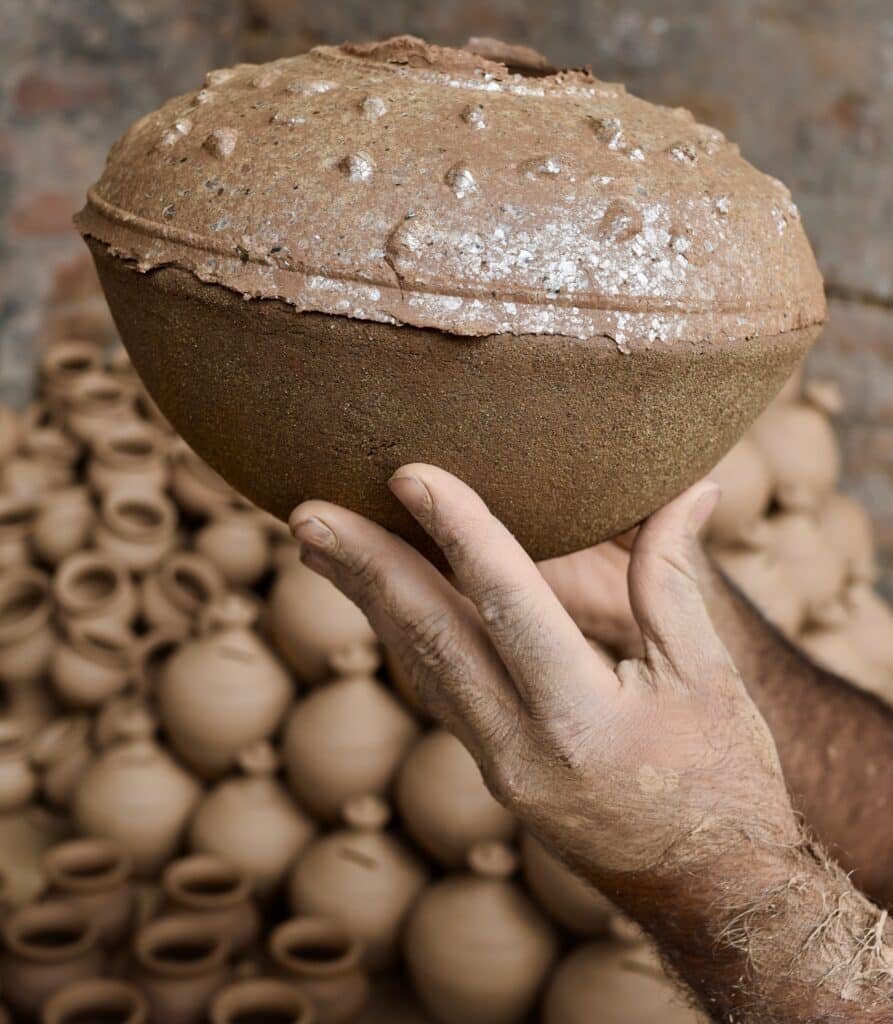
In this investigation
Pottery changed the human kitchen because a fireproof container changes what food can become. Before durable cooking vessels, roasting and direct-fire methods dominated many settings. A clay pot could hold water, grain, pulses, meat and vegetables over heat long enough to simmer, boil and stew. It made hard seeds softer, extracted flavours into broth and allowed ingredients to cook together.
Modern wellness claims often add more: clay supposedly “alkalizes” acidic food, removes toxins, preserves all nutrients, adds ideal minerals or creates uniquely healthy cooking through “earth energy.” Some traditional clay cooking does have distinctive thermal and moisture behaviour, but those stronger claims are not well established and can distract from pottery’s genuine technological importance.
Why pottery was revolutionary
Archaeological pottery appears independently in multiple regions, with some of the oldest known ceramic vessels dating to hunter-gatherer contexts in East Asia before the spread of agriculture. Later farming societies used pottery extensively for storage, cooking and fermentation.
A container that survives repeated heating allows foods to cook in water for long periods. That expands the range of edible ingredients and makes soups, porridges, stews and boiled staples practical.
THE RECORD
Clay pots became widespread because they were locally manufacturable, heat-resistant containers that enabled boiling, simmering, storage and transport. Their civilizational importance does not depend on proving a hidden detox mechanism.
Clay heats differently from thin metal
Ceramic materials generally conduct heat less rapidly than metals. A thick earthenware vessel therefore warms more slowly and distributes temperature differently. Once hot, its thermal mass can retain heat and sustain gentle cooking after the flame is reduced.
This can favour slow simmering and reduce rapid temperature swings. The exact effect depends on clay composition, wall thickness, firing temperature, glaze and stove.
Porosity can influence moisture
Unglazed earthenware is porous. Water can migrate into pore spaces and evaporate from outer surfaces. In some vessels this creates evaporative cooling during storage; in cooking it can influence moisture exchange and how steam circulates.
But not all clay cookware is porous. Glazes seal surfaces, and high-fired ceramics can behave very differently from low-fired earthenware. “Clay pot” is a material category, not one standardized thermal instrument.
Slow cooking changes texture more than it creates mystical chemistry
Low, sustained heat can soften collagen in meat, gelatinize starch, hydrate pulses and blend flavours. Similar outcomes can be achieved in metal cookware under comparable time and temperature conditions.
The pot matters because it makes certain heat profiles easy to maintain—not because clay automatically produces a biologically superior meal.
THE EVIDENCE
Clay cookware has genuine material properties: low thermal conductivity relative to metal, high thermal mass and, in unglazed ware, porosity. These can change heating and moisture. Claims of universal detoxification or clinically meaningful alkalization are not comparably supported.
Does clay “alkalize” food?
Some clays contain alkaline minerals, and measurable ion exchange or mineral leaching can occur depending on composition, acidity and firing. But that does not establish a health benefit. The human stomach is strongly acidic, blood pH is tightly regulated and the body does not become “alkaline” because a meal was cooked in earthenware.
A change in a food’s pH is a chemistry observation; “alkalizing the body” is a separate medical claim and is not supported by normal physiology.
Mineral transfer is variable and not necessarily beneficial
Food-contact materials can release minerals. The amount depends on the clay source, glaze, firing, food acidity, temperature and duration. Some transferred elements may be nutritionally harmless or trivial. Others can be toxic.
This variability makes it inappropriate to describe all clay cookware as a safe mineral supplement.
Lead-glazed pottery is the major safety warning
The U.S. FDA warns that some traditional or improperly fired lead-glazed ceramics can release lead into food. Acidic foods are particularly capable of extracting metals. Lead exposure is especially dangerous for children and during pregnancy, and there is no known safe level of lead exposure.
Properly manufactured, food-safe ceramicware can bind glaze components effectively. The risk is therefore not “clay is toxic”; it is that unregulated materials and inadequate firing can make some vessels unsafe.
Cadmium can be another glaze hazard
Cadmium compounds have been used in pigments and can also leach from improperly manufactured decorative ceramicware. Food-contact pottery should therefore come from reliable producers using compliant glazes.
Decorative pottery not certified for food use should not be repurposed for cooking or storage merely because it looks traditional.
Thermal shock is a practical limitation
Earthenware can crack when moved abruptly between very different temperatures. Traditional cooks often heat clay vessels gradually or soak some porous pots before use. These practices manage material stress rather than nutritional chemistry.
Clay storage can cool water through evaporation
Porous earthenware water pots can allow a small amount of water to seep toward the exterior and evaporate. Evaporation consumes heat, cooling the remaining water. The effect is stronger in hot, dry air with good airflow.
This is a real physical mechanism and a good example of traditional material design exploiting climate without electricity.
Why clay remained culturally important after metal cookware
Metal pots are tougher and often more responsive to heat, yet clay cooking survived because it creates valued textures, aromas and serving traditions. Regional dishes are sometimes defined partly by the vessel in which they are cooked.
Like smoking and fermentation, a technology can outlive its original practical necessity because cuisine absorbs the sensory outcome.
Clay vessels changed cooking before they changed cuisine
Before durable pottery, boiling grains, pulses and stews required baskets, skins, heated stones or other indirect methods. A fired clay vessel could hold water over heat and made long simmering much easier.
That technological change expanded what people could cook: tougher grains, legumes, broths and mixed dishes became more practical. The historical importance of clay therefore begins with heat-resistant containment, not with a special mineral effect.
Thick earthenware changes the rate of heating
Compared with thin metal cookware, many clay pots heat more slowly and distribute heat differently. The vessel can buffer sudden temperature changes and keep food simmering gently once hot.
This can be useful for legumes, stews and foods that benefit from gradual cooking. It does not mean clay automatically cooks “more evenly” than every metal pan; shape, thickness, burner size and stirring still matter.
Porosity can change moisture loss
Unglazed earthenware is porous. During cooking, some water can move into the vessel wall and evaporate from the outside. This can modestly alter humidity, evaporation and the way a dish concentrates.
Glazed pottery behaves differently because the glaze seals many pores. Claims about “breathing clay” therefore should specify whether the vessel is actually unglazed.
Slow cooking changes texture through ordinary food chemistry
Long moist heating softens plant cell walls, gelatinizes starch, denatures proteins and allows flavours to diffuse between ingredients. These effects explain the tenderness of slow-cooked beans, meat and grains.
Clay can be a good vessel for that process because of its thermal mass, but the chemistry comes from time, temperature and moisture rather than from the pot transmitting a unique “earth energy.”
Clay does not reliably “alkalize” every meal
Some unglazed clays contain minerals that can influence the pH of water or acidic foods slightly, but the effect depends on the geology, firing temperature and surface treatment of the vessel.
There is no universal rule that clay cookware neutralizes harmful acidity in food or changes the body’s acid–base balance. Blood pH is tightly regulated by the lungs and kidneys, not by whether lunch was cooked in earthenware.
Mineral migration can be beneficial, irrelevant or hazardous
Clay contains minerals, and small amounts can migrate into food. Whether this matters nutritionally depends on the specific element, its chemical form and the amount released.
It is therefore unsafe to describe all mineral transfer as “natural fortification.” Iron or calcium may be benign in one vessel, while lead, cadmium or other contaminants can be dangerous in another.
Lead-glazed pottery is the central safety warning
Lead compounds have historically been used in ceramic glazes because they help lower firing temperatures and produce attractive surfaces. If the glaze is poorly formulated or inadequately fired, lead can remain available to leach into food.
FDA guidance specifically warns that traditional pottery can release lead, particularly when manufacturing quality is uncertain. Acidic foods can increase leaching, and washing or boiling the vessel cannot remove lead that is built into an unsafe glaze.
“Lead-free” labels are useful only when production is controlled
Regulators have documented cases in which pottery marketed as lead-free still contained extractable lead because kilns or manufacturing environments were contaminated from earlier lead-glaze use.
This means trust should rest on reliable manufacturing and food-contact testing rather than on appearance, age or a handwritten claim from a seller.
Cadmium is another glaze contaminant worth knowing
Bright ceramic colours can involve metal-containing pigments, and cadmium contamination is regulated in food-contact ceramicware in several jurisdictions. Chronic cadmium exposure can harm the kidneys and bones.
Modern food-safe ceramics are designed to limit such migration. Decorative or ornamental pottery should not be assumed safe for cooking merely because it resembles ordinary cookware.
Acidic foods are the best stress test for a questionable glaze
Tomato, tamarind, vinegar, citrus and other acidic ingredients can increase metal leaching from unstable ceramic surfaces. Long storage in the vessel can extend the contact time further.
This is why old, cracked, unknown or decorative glazed pottery is a poor choice for acidic cooking or storage when food-safety certification is uncertain.
Unglazed does not automatically mean contaminant-free
Removing glaze eliminates one common source of lead, but the underlying clay itself can contain naturally occurring metals depending on where it was mined. Traditional potters also vary in firing conditions and additives.
A food-contact vessel should therefore be judged by actual material quality, not by a simple “natural versus glazed” distinction.
Seasoning clay pots is mainly about handling and porosity
Many cooks soak a new pot, simmer starch water or gradually heat it before regular use. Such practices can hydrate pores, remove loose dust and reduce the risk of sudden cracking.
They should not be described as neutralizing heavy metals or permanently sterilizing unsafe ceramic material. Seasoning can improve use; it cannot repair a hazardous glaze.
Thermal shock is the practical weakness of earthenware
Clay is brittle. Rapid transitions from refrigerator to flame, cold water onto a very hot pot or intense uneven burner heat can create stress and cracking.
Traditional gradual heating and cooling rules therefore have a clear materials-science rationale even when they were transmitted simply as kitchen practice.
Clay water pots cool through evaporation
Porous earthenware can slowly wick water to the outer surface, where evaporation removes heat. The cooling effect is stronger in hot, dry air and weaker in humid conditions.
This is a genuine low-energy technology. It does not require electricity, though the stored water still needs to be microbiologically safe.
Taste differences can be real without being mystical
Slow evaporation, browning at the hot surface, retained steam and gradual heating can alter flavour and texture. Some unglazed vessels may also contribute subtle mineral notes.
These sensory differences are enough to explain why cooks remain attached to particular clay vessels. “Better taste” does not require the claim that clay preserves a food’s life force.
The safest modern clay pot is deliberately unromantic
For regular cooking, a vessel should be made for food use, come from a reliable manufacturer, use food-safe glaze where glaze is present, and be free of cracks or decorative-only warnings.
This keeps the thermal and culinary advantages of clay while applying modern contaminant controls that historical potters could not measure.
The earliest cooking pots were not simply a by-product of farming
One of the most important corrections to the old story of pottery is that ceramic cooking vessels did not necessarily appear only after settled agriculture. Some of the earliest well-studied pottery traditions come from hunter-gatherer societies in East Asia. Chemical analysis of Incipient Jōmon pottery from Japan, dating roughly 15,000–11,800 years before present, recovered lipids from aquatic organisms. In other words, these vessels were not just symbolic containers or storage jars: they were being used to process food long before farming became the dominant way of life in the region.
This matters for the Tradivior question because it changes the likely original purpose. Pottery was valuable because it expanded a community’s cooking toolkit. A heat-resistant container made sustained boiling, simmering and wet cooking far easier than roasting food directly over fire. The historical case for clay therefore does not need a later nutritional theory to explain its adoption. It already had an obvious practical advantage.
Pottery changed which foods could be processed and how they could be combined
Archaeological residue studies show that the usefulness of pottery went beyond a single ingredient or cuisine. Research on prehistoric Saharan vessels has identified plant processing, while protein and lipid work on ceramic vessels from Çatalhöyük has found evidence for cereals, pulses, dairy and meat products. These methods are imperfect snapshots of past meals, but together they show that ceramic vessels became flexible technologies for combining ingredients that otherwise required very different preparation methods.
That flexibility helps explain why clay cooking became culturally persistent. A pot can transform dry grain with water, soften pulses, extract flavours into broths, cook animal foods gently, and combine ingredients into stews or porridges. None of these effects belongs uniquely to clay once metal cookware exists, but ceramic vessels made them achievable with locally available materials in societies that had no industrial metal supply.
There is no single thermal personality called “clay”
Modern material science complicates popular claims that every clay pot cooks in one special way. Thermal conductivity depends on mineral composition, firing temperature, porosity, density and the inclusions or temper mixed into the clay. Experimental and archaeometric studies show that these variables can substantially alter how quickly a vessel transfers heat and how well it survives repeated heating and cooling.
Traditional potters were therefore not merely shaping earth. They were selecting and processing a material whose behaviour could be tuned. Sand, crushed ceramic, shell, shale and other tempers can change strength and thermal-shock performance; surface treatments can alter permeability and heating effectiveness. The scientific story is not “clay is always better than metal.” It is that different ceramic recipes create different cooking tools, and generations of craft practice could preserve effective recipes without requiring a modern theory of thermal conductivity.
Slow heating is a cooking characteristic, not automatic evidence of better nutrition
Many modern descriptions of earthenware jump from slower heat transfer to claims that clay “preserves nutrients,” “detoxifies food” or makes meals inherently healthier. The first step of that argument may be reasonable for a particular vessel: thick, porous ceramic often responds to heat more slowly than thin metal. The second step does not follow automatically. Nutrient retention depends on the food, temperature, cooking time, water volume, oxygen exposure and whether cooking liquid is consumed or discarded.
A clay pot can be excellent for dishes that benefit from gradual heating and moisture retention, but comparable low-temperature cooking can be achieved in other cookware. Tradivior should therefore separate a real material property from a universal health claim. The scientific mechanism is strongest for heat transfer, moisture behaviour and texture—not for broad claims of detoxification or superior nutrition.
Food residue trapped in pottery gives archaeology an unusually direct window into ancient cooking
Unglazed pottery absorbs fats into microscopic pores, while charred residues can remain attached to vessel surfaces. Modern analytical methods can recover and identify some of these molecules thousands of years later. Controlled cooking experiments have also shown why interpretation must be cautious: absorbed residues may represent a mixture of repeated cooking events rather than one final meal.
This evidence is valuable precisely because it helps distinguish what people actually cooked from what later texts or modern enthusiasts say they cooked. It is one of the clearest examples of Tradivior’s historical rule: a modern mechanism and a historical practice must be established independently. Archaeological chemistry can show use; it cannot by itself tell us what prehistoric cooks believed about the vessel.
The strongest modern safety lesson concerns glaze chemistry, not tradition itself
The safety discussion deserves more than a generic warning. Lead- and cadmium-containing glazes can release metals into food when ceramicware is poorly formulated, inadequately fired, damaged or used with foods that promote leaching. FDA guidance treats this as a genuine food-contact risk rather than a theoretical concern.
Recent evidence continues to reinforce that distinction. A 2026 controlled study comparing traditional lead-glazed ceramic pots with glass cookware found lead leaching into foods cooked in the lead-glazed vessels, while the glass comparison did not show the same pattern. The practical conclusion is not to reject clay cookware. It is to use food-safe ceramicware from reliable manufacturers and to avoid decorative, damaged, antique or unverified glazed pottery for cooking when its composition is unknown.
Clay cookware is not ideal for every cooking task
Earthenware heats slowly and can crack under sudden high heat, so it is poorly suited to some forms of rapid searing, tossing or extreme temperature change. Metal pans are better tools for many of those jobs.
This is why traditional kitchens often used multiple materials—clay, iron, bronze, stone and later steel—rather than one supposedly perfect vessel. Material choice followed the dish.
Storage and cooking should be distinguished
A clay water pot uses evaporation beneficially, while storing acidic cooked food for long periods in uncertain pottery may increase contaminant migration. The same material can be well suited to one task and poorly suited to another.
Traditional expertise often consisted of knowing which vessel belonged with which food, not believing that clay was universally superior.
What survives scrutiny?
- Pottery was a foundational cooking technology that enabled boiling, simmering, storage and fermentation.
- Clay generally heats more slowly than metal and can retain heat well.
- Unglazed earthenware can be porous, affecting moisture exchange and evaporative cooling.
- Slow cooking can improve texture and flavour, but comparable heat profiles can be achieved with other materials.
- Claims that clay cookware detoxifies food or “alkalizes the body” are unsupported.
- Mineral leaching varies by clay, glaze, firing and food chemistry.
- Improperly fired lead- or cadmium-containing glazes can contaminate food.
- Food-contact pottery should come from reliable manufacturers and decorative ware should not be assumed safe for cooking.
The Tradivior Evidence Profile
Historical Authenticity — Strong. Ceramic cooking vessels are archaeologically ancient and cross-cultural.
Original-Purpose Evidence — Strong. Containing liquids, boiling, simmering, storage and food processing are direct technological functions.
Scientific Mechanism — Strong. Heat transfer, thermal mass, porosity and evaporative cooling are well understood material properties.
Experimental Evidence — Moderate. Materials and food-science studies characterize heat transfer and leaching, while clinical superiority over other cookware is not established.
Cross-Cultural Evidence — Strong. Earthenware cooking traditions developed across East Asia, South Asia, Africa, Europe, the Americas and elsewhere.
Modern Relevance — Moderate. Clay cookware remains useful for culinary and cultural reasons, provided products are food-safe and claims stay grounded.
The Tradivior Conclusion
Historically Practical. Humans cooked in clay because pottery created durable vessels for boiling, simmering and storage using locally available material. Its thermal mass and, in some vessels, porosity can genuinely shape cooking. The more spectacular modern claims—detoxification, universal alkalization and guaranteed mineral enrichment—are not supported. Clay’s real contribution is technological and culinary, and safe modern use depends on knowing what the pot and glaze are made from.
Continue investigating
Sources & further reading
- Craig O, Saul H, Lucquin A, et al. “Earliest evidence for the use of pottery.” Nature. 2013;496:351–354. doi:10.1038/nature12109.
- Dunne J, Mercuri AM, Evershed RP, et al. “Earliest direct evidence of plant processing in prehistoric Saharan pottery.” Nature Plants. 2017;3:16194. doi:10.1038/nplants.2016.194.
- “Ancient proteins from ceramic vessels at Çatalhöyük West reveal the hidden cuisine of early farmers.” Nature Communications. 2018;9:4064.
- “The effect of mineralogy, microstructure and firing temperature on the effective thermal conductivity of traditional hot processing ceramics.” Applied Clay Science. 2017;135:260–270.
- Schiffer MB. “The influence of surface treatment on heating effectiveness of ceramic vessels.” Journal of Archaeological Science. 1990;17(4):373–381. doi:10.1016/0305-4403(90)90002-M.
- Collado-López S, et al. “Lead leaching during the cooking of traditional recipes in lead-glazed ceramic versus glass pots: a health risk assessment.” Journal of Food Composition and Analysis. 2026; article 109548. doi:10.1016/j.jfca.2026.109548.
- Rice PM. Pottery Analysis: A Sourcebook. University of Chicago Press.
- Jordan P, Zvelebil M, eds. Ceramics Before Farming: The Dispersal of Pottery Among Prehistoric Eurasian Hunter-Gatherers.
- U.S. Food and Drug Administration. “Questions and Answers on Lead-Glazed Traditional Pottery.”
- U.S. Food and Drug Administration. “Lead in Food and Foodwares” and “Cadmium in Food and Foodwares.”
Continue exploring
Partially Supported
Why Do Humans Repeat Rituals?
Rituals repeat because fixed sequences create predictability, memory, identity and coordination. Experiments suggest ritualized repetition can regulate anxiety and social connection, while mantra repetition shows small benefits for psychological distress;…

Primarily Symbolic/Cultural
Why Do Humans Make Offerings to the Sacred?
Offerings make relationships with gods, ancestors and sacred powers materially visible. Gifts can express reciprocity, devotion, gratitude, sacrifice and group commitment; costly-signalling models illuminate some public effects but cannot substitute…
Partially Supported
Why Do Festivals Bring Entire Communities Together?
Festivals concentrate shared time, symbols, music, food and synchronized action, making community membership unusually visible. Research links co-participation and synchrony with stronger social ties, but cohesion can be inward-facing and…
Primarily Symbolic/Cultural
Why Do Humans Hold Funerals?
Funerals transform death from a private loss into a publicly recognized social transition. Archaeology shows deep roots for mortuary ritual, while anthropology and grief research support roles in social support,…
Picked for your curiosity
Enable JavaScript to build a reading profile and see recommendations.