 tradivior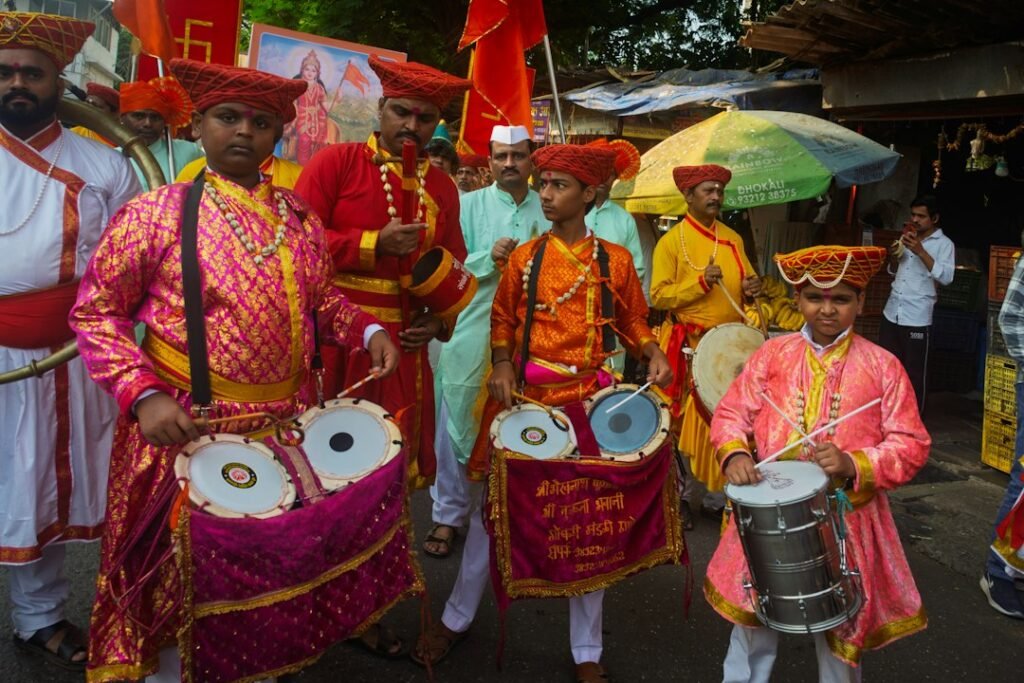
In this investigation
New Year festivals cluster around seasonal turning points because calendars do more than count days. They divide social time into meaningful chapters. When the environment itself changes—winter ending, spring beginning, rains arriving, fields being harvested or daylight shifting—a society has an obvious moment at which to declare that one cycle has closed and another has begun.
There is no universal New Year date because human communities have lived under different climates, agricultural systems and calendar traditions. What recurs is the need for a shared reset point.
A year is an astronomical cycle, but a New Year is a cultural decision
Earth’s orbit around the Sun gives the physical basis for a year. Human societies decide where within that cycle the year should begin.
That starting point can be placed near a solstice, equinox, new moon, harvest, spring onset, religious event or administrative convention.
Seasonal turning points are easy to remember
A New Year tied to visible environmental change is cognitively convenient. Longer days, first flowers, harvest completion or the return of rain makes the transition tangible.
Before printed calendars, clocks and digital reminders, recurring natural events helped anchor social time.
Spring is a particularly common reset
Many cultures associate spring with renewal because vegetation resumes growth, temperatures rise and agricultural work intensifies.
Nowruz, celebrated across Iran and Central Asia, is tied to the spring equinox and explicitly frames the year as a renewal of nature and social life.
But winter can also mark renewal
In other calendars the new year falls near the darkest part of the annual cycle. The return of increasing daylight can carry symbolic power precisely because it follows seasonal decline.
Winter New Years therefore need not contradict the “renewal” theme. Renewal can begin from dormancy rather than visible abundance.
Agricultural societies often connect New Year and harvest
Where food production dominates the economy, the end of one agricultural cycle creates a natural accounting point. Grain has been gathered, debts may be settled and labour patterns change.
Harvest-linked New Years can therefore combine gratitude, redistribution and planning for the next cycle.
Rainfall can function like a seasonal boundary
In monsoon climates, the arrival or retreat of rain may matter more than temperature. Regional New Year customs can therefore align with agricultural preparation rather than with a European-style spring.
This is why “seasonal” must be understood locally.
Lunar calendars complicate seasonal alignment
A purely lunar year is shorter than the solar year. Without correction, months drift through the seasons.
Lunisolar calendars solve this by occasionally adding an extra month or other adjustment, preserving the seasonal position of festivals and New Year observances.
Intercalation is a technological achievement
Keeping lunar months aligned with the solar year requires sustained astronomical observation and calendrical calculation.
This is an example where religious calendars genuinely depended on technically sophisticated astronomy without turning every associated ritual into astronomy.
New Year creates a synchronized social reset
A shared calendar boundary allows households, governments, temples, merchants and communities to begin accounting periods together.
Tax cycles, contracts, school schedules and ritual obligations can all become easier when a population agrees on one reset point.
Why cleaning appears in so many New Year traditions
Physical cleaning provides a visible metaphor for temporal renewal. Dust, broken objects and clutter are removed while old obligations are symbolically closed.
The behaviour can also have ordinary hygienic or household benefits, but its ritual meaning exceeds housekeeping.
Debt settlement and reconciliation fit the same logic
If a new year is supposed to begin “clean,” unresolved social obligations become awkward. Traditions therefore often encourage paying debts, forgiving quarrels or visiting relatives.
The calendar provides a socially recognized moment when people can reset relationships without needing a unique reason.
Feasting turns a date into collective memory
Food, music, dress and public ritual make the calendar boundary emotionally memorable. A simple administrative date becomes a lived event.
This is one reason New Year celebrations persist even when people no longer depend directly on the original seasonal economy.
Why fireworks, noise and light appear
Loud sounds and bright displays dramatize transition. In some traditions they are interpreted as protective actions against harmful beings; in others they are primarily celebratory.
The sensory intensity marks the boundary unmistakably.
New Year rituals often combine future hope with retrospective accounting
People review the old year and make plans for the next. Modern resolutions are one version of this deeper pattern.
Psychologists sometimes describe such landmarks as “fresh start” moments because temporal boundaries can motivate people to reinterpret past failures as belonging to an earlier period.
The fresh-start effect is real but limited
Research on temporal landmarks suggests that birthdays, Mondays, semesters and New Year can temporarily increase goal initiation.
That does not mean the date itself changes behaviour magically. The boundary changes how people mentally categorize time.
Collective rituals strengthen synchronization
If millions of people mark the same boundary, individual plans become socially reinforced. Businesses close, families gather and institutions shift calendars together.
This creates a stronger reset than a private date would.
Why different societies choose different New Years
Climate, agriculture, religion, political authority and inherited calendars all matter. A date can survive long after its original environmental fit weakens.
Calendars are conservative institutions: once linked to law, ritual and identity, changing them can be socially costly.
Political power often standardizes the year
Rulers and states benefit from common calendars for taxation, administration and recordkeeping. Religious and political New Years can therefore merge or compete.
Modern national calendars often coexist with older ritual calendars rather than replacing them entirely.
What happens when a festival no longer matches the season?
Calendrical drift, migration and climate change can separate ritual timing from the environmental conditions that once accompanied it.
A community may continue celebrating the same date because inherited meaning becomes more important than local ecology.
Migration shows that ritual time can detach from climate
A spring festival carried from one hemisphere to another may occur in autumn. The ritual survives because community memory travels more easily than the original season.
This is strong evidence that seasonal origin and later function are not the same thing.
Climate change introduces a new mismatch
Flowering, harvest and rainfall timing are already shifting in many regions. Fixed festival dates may therefore align less closely with the ecological events they once accompanied.
This does not make the festival less authentic; it shows how cultural calendars can outlive stable climate patterns.
New Year is therefore partly an information system
A calendar boundary tells a society when to reset records, repeat rituals, visit kin and begin planning. Its power comes from shared agreement.
Seasonal cues make that agreement easier to anchor, but the institution can later persist independently.
What survives scrutiny?
- There is no universal New Year date because calendars begin their annual cycle at culturally chosen points.
- Seasonal transitions provide memorable and practical anchors for annual renewal.
- Spring, harvest, winter and rainfall can all serve as locally meaningful reset points.
- Lunisolar calendars require real astronomical correction to preserve seasonal alignment.
- New Year rituals can coordinate administration, family life, debt settlement and collective planning.
- Temporal landmarks can produce a measurable “fresh start” effect on goal initiation.
- Festival dates can persist after their original environmental alignment weakens.
- Seasonal usefulness should not be confused with one universal ecological origin for all New Year traditions.
The Tradivior Evidence Profile
Historical Authenticity — Strong. New Year observances tied to different calendrical and seasonal points are extensively documented worldwide.
Original-Purpose Evidence — Strong. Renewal, calendrical reset, agricultural transition, religious commemoration and administrative coordination are explicit purposes.
Scientific Mechanism — Moderate. Seasonal cues, temporal landmarks, memory and social synchronization help explain why reset points are effective.
Experimental Evidence — Moderate. Psychology supports temporal-landmark and fresh-start effects, though particular festivals arise from broader history.
Cross-Cultural Evidence — Strong. Annual reset rituals occur across many unrelated societies.
Modern Relevance — Strong. New Year remains one of the most powerful global examples of collective time coordination.
The Tradivior Conclusion
New Year festivals cluster around seasonal turning points because humans need shared boundaries in time, and environmental change provides one of the clearest boundaries available.
The strongest interpretation combines ecology, astronomy and social coordination without reducing ritual to any one of them. Seasonal transitions help societies know when to reset; religion and culture determine what that reset means.
Continue exploring
Read the related investigations on Indian lunisolar calendars, festivals and lunar calendars, and monsoon calendars and rituals.
Sources & further reading
- Dai H, Milkman KL, Riis J. “The Fresh Start Effect: Temporal Landmarks Motivate Aspirational Behavior.” Management Science. 2014.
- UNESCO materials on Nowruz and seasonal cultural traditions.
- Comparative scholarship on lunar, solar and lunisolar calendars.
- Ethnographic literature on New Year ritual, renewal and calendrical transition.
Continue exploring
Why Do People Keep Ashes, Relics and Memorial Objects?
Hair, ashes, bones, clothing, photographs and relics allow the dead to remain materially present. Tradivior will examine why objects carry memory so powerfully and how continuing bonds differ from pathological…
Why Do Cultures Set Aside Days to Remember the Dead?
From Pitru Paksha and Qingming to Día de Muertos and All Souls’ Day, cultures repeatedly create calendar time for the dead. Tradivior will compare how recurring remembrance renews kinship, grief…
Why Do Cultures Preserve the Dead?
Mummification, embalming, freezing, smoking and desiccation reflect very different beliefs about bodies and afterlives. Tradivior will compare preservation traditions with the chemistry of decomposition and the practical limits of each…

Why Do People Change Names, Clothes or Homes After Marriage?
Marriage often transforms identity through surname changes, new dress, residence, kinship terms or household membership. Tradivior will investigate why marriage needs visible social consequences beyond the ceremony itself.
Picked for your curiosity
Enable JavaScript to build a reading profile and see recommendations.