 tradivior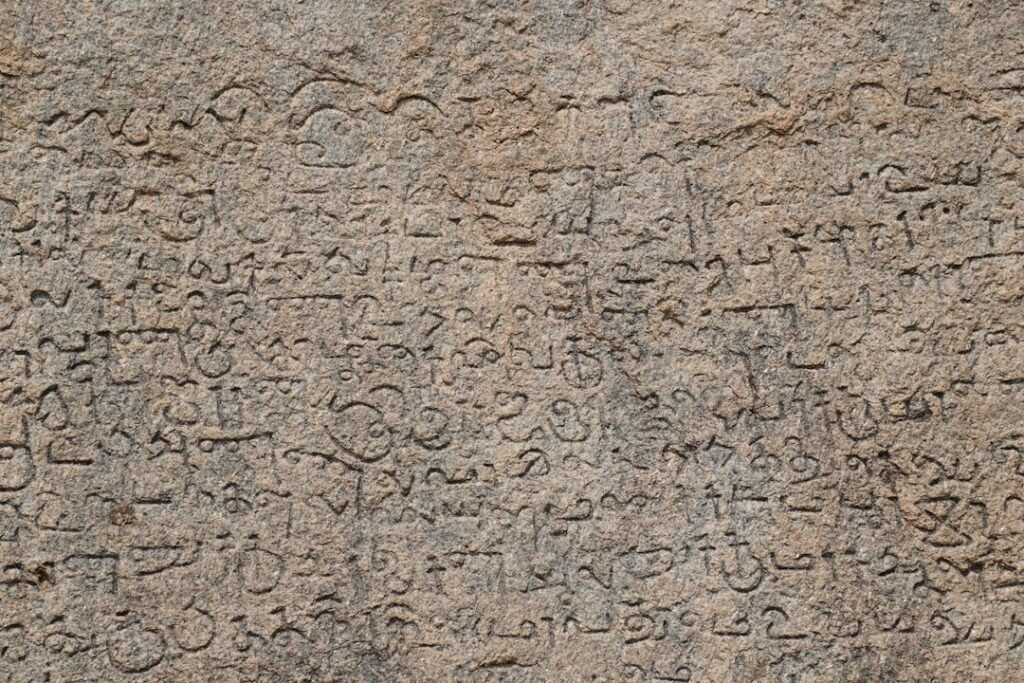
In this investigation
Place-value numerals transformed mathematics because the position of a digit began to carry magnitude. The same small set of symbols could represent units, tens, hundreds and far larger numbers simply by where each symbol was written.
That sounds ordinary today because positional notation is invisible infrastructure. Historically, it was a profound compression technology for numbers.
Non-positional systems require many conventions
Roman numerals, for example, combine symbols with fixed values. Large calculations become cumbersome because notation does not map neatly onto columns of powers.
Positional systems make written algorithms much easier.
Place value means position changes value
In 505, the first 5 means five hundreds while the last means five units. The symbol is the same; its location supplies the multiplier.
This dramatically reduces the number of symbols needed.
Zero solves the empty-column problem
Without a placeholder, 505 could collapse visually toward 55. Zero preserves the empty tens position.
This is why zero and place value reinforce one another.
India developed the decimal positional system that became globally dominant
South Asian inscriptions and mathematical texts document the maturation of decimal place-value numerals that are ancestors of modern Hindu-Arabic notation.
The system later travelled through the Islamic world into Europe.
Why base ten?
Human counting traditions frequently use ten because people have ten fingers, although other bases such as 20, 60 and mixed systems also developed.
Decimal place value is historically dominant, not mathematically inevitable.
Written algorithms become systematic
Column addition works because digits of the same place align. Carrying and borrowing exploit powers of ten.
Multiplication and division can likewise be decomposed into repeated place-based steps.
The notation democratizes calculation
A compact algorithm can be taught and reproduced without relying on a counting board or extensive memorized conversion rules.
This does not mean literacy became universal, but the system scales efficiently.
Trade and administration benefit
Merchants, astronomers, tax officials and engineers all gain from compact representation of large numbers.
Adoption therefore spread through practical institutions as well as scholarly mathematics.
Al-Khwarizmi helped transmit Indian methods
Medieval Arabic mathematical works explained calculation with Indian numerals. The Latinized term “algorithm” ultimately derives from al-Khwarizmi’s name.
This transmission history shows that mathematical systems become global through translation and institutional adoption.
Fibonacci promoted the numerals in Latin Europe
Leonardo of Pisa’s Liber Abaci in 1202 demonstrated the practical power of the numeral system for commerce and calculation.
European uptake remained gradual because familiar systems and institutions do not disappear immediately.
Place value enables decimal fractions
Once positions represent powers of ten, the same principle can extend to tenths, hundredths and smaller units.
This eventually supports modern measurement, finance and science.
It also prepares the ground for algebraic abstraction
Efficient notation reduces the cognitive burden of arithmetic, freeing mathematicians to work on relationships rather than numeral manipulation alone.
Good notation can therefore change what kinds of problems are practical to solve.
Place value is not uniquely decimal
Computers use positional notation too, but usually in binary internally. A 1 in different binary positions represents different powers of two.
The underlying insight is positional magnitude, not decimal digits specifically.
What survives scrutiny?
- Positional notation compresses number representation dramatically.
- Zero preserves empty positions and makes notation unambiguous.
- Indian decimal place-value numerals were decisive ancestors of modern global notation.
- Islamic mathematicians transmitted and developed calculation with Indian numerals.
- Place value simplifies arithmetic algorithms, fractions and later mathematical work.
- Other bases are possible; positional notation is the deeper principle.
The Tradivior Evidence Profile
Historical Authenticity — Strong. Inscriptions and mathematical texts document the development and transmission of positional numerals.
Original-Purpose Evidence — Strong. Efficient calculation and notation are explicit.
Scientific Mechanism — Strong. The formal mathematical advantages are exact.
Experimental Evidence — Strong. Computational efficiency can be directly demonstrated.
Cross-Cultural Evidence — Strong. Positional systems appeared in several forms, while the Hindu-Arabic decimal lineage became globally dominant.
Modern Relevance — Strong. Nearly all modern arithmetic and digital computation depends on positional representation.
The Tradivior Conclusion
Place value transformed mathematics because notation stopped being a passive way to record numbers and became an active computational tool.
By combining a small digit set, positional magnitude and zero, Hindu-Arabic numerals made arithmetic compact, teachable and scalable. Their global spread is one of history’s clearest examples of notation changing thought.
Sources & further reading
- Histories of Indian mathematics and the Hindu-Arabic numeral system.
- Al-Khwarizmi’s works on calculation with Indian numerals.
- Fibonacci. Liber Abaci. 1202.
- Studies of positional notation in Babylonian, Indian and other traditions.
Continue exploring
Partially Supported
Why Do People Keep Ashes, Relics and Memorial Objects?
Hair, ashes, bones, clothing, photographs and relics allow the dead to remain materially present. Tradivior will examine why objects carry memory so powerfully and how continuing bonds differ from pathological…

Primarily Symbolic/Cultural
Why Do People Change Names, Clothes or Homes After Marriage?
Marriage often transforms identity through surname changes, new dress, residence, kinship terms or household membership. Tradivior will investigate why marriage needs visible social consequences beyond the ceremony itself.

Evidence Supported
Why Do Humans Fear Ageing Yet Honour Elders?
Age can bring prestige, authority and memory while also attracting fear of frailty and dependency. Tradivior will compare societies that honour elders with those that valorize youth and ask what…

Evidence Supported
Why Does Parenthood Change Social Identity?
Becoming a parent often changes status, obligations, kin relations and personal identity far beyond childcare itself. Tradivior will examine why societies ritualize parenthood and what psychological research says about this…
Picked for your curiosity
Enable JavaScript to build a reading profile and see recommendations.