 tradivior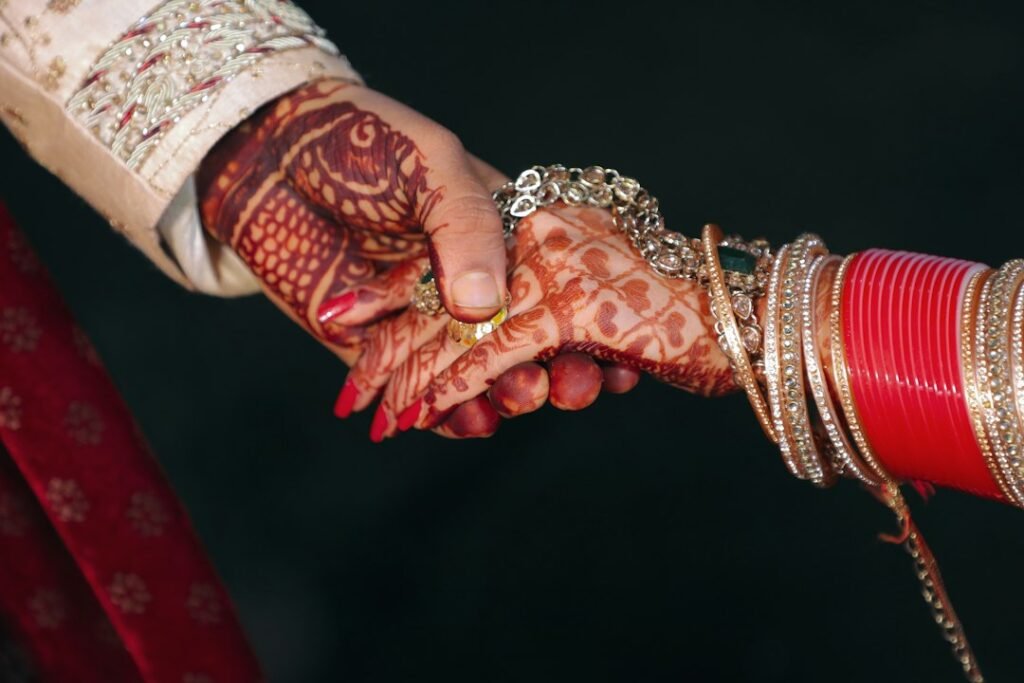
In this investigation
In much of modern popular culture, marriage is imagined as the final stage of a private romantic relationship: two people meet, fall in love and then decide whether to marry. For most of human history, that sequence was far from universal. Marriage often began as a negotiation among families because the consequences of marriage extended far beyond the couple.
A marriage could transfer property, labour, inheritance rights, political loyalty, ritual status and obligations between kin groups. It could determine where a woman lived, which lineage children belonged to, who cared for ageing parents and how land remained within a family. Under those conditions, parents and relatives had strong incentives to participate in spouse selection.
That history does not make every arranged marriage benign. Family involvement ranges from suggestion to overwhelming coercion. Some couples exercise meaningful veto power; others do not. Any evidence-led investigation therefore has to separate arranged marriage from forced marriage and avoid assuming that one label describes the same level of autonomy everywhere.
Arranged marriage is not one institution
At one end of the spectrum, families identify possible partners, introduce them and allow the two adults to decide. At the other, relatives make the decision and refusal may carry punishment, exclusion or violence. Between those extremes are many hybrids.
Modern Indian families may use relatives, matrimonial websites or community networks to identify potential partners while giving the prospective couple weeks or months to interact. Other marriages remain strongly controlled by parents. Treating both as identical because relatives were involved obscures the most important variable: how much meaningful choice the spouses had.
THE CENTRAL DISTINCTION
Arrangement describes who participates in partner selection. Coercion describes whether a person can freely refuse. The two can overlap, but they are not synonyms.
Marriage historically linked families, not just individuals
Anthropologists repeatedly emphasize that marriage often creates relationships between kin groups. Parents gain in-laws. Lineages exchange obligations. Property may change hands. Children become members of particular descent systems.
From this perspective, allowing two individuals to choose entirely on private preference can appear risky to a family whose economic and social future is affected by the marriage.
Alliance can be as important as affection
Marriage has long been used to stabilize relationships between families, clans and political houses. Aristocratic dynasties arranged marriages to secure territory and alliance. Small-scale societies could use marriage to reduce conflict between lineages. Merchant families could create commercial partnerships through marriage.
Love might develop within those unions, but alliance often came first as an institutional purpose.
Property gives families a powerful reason to control marriage
When land, livestock or businesses are inherited through kinship, marriage affects where property flows. A spouse can bring wealth into the family, take wealth out or change the inheritance claims of future children.
Jack Goody’s comparative work on inheritance and marriage demonstrated strong connections between property systems, dowry, marriage forms and kinship organization across Eurasia and Africa. The specific patterns are debated, but the larger point remains: marriage rules often make sense only when property transmission is considered.
Dowry and bridewealth are not interchangeable
Marriage transfers can move in different directions. Dowry generally refers to wealth transferred with the bride or from her family, while bridewealth involves transfers from the groom’s side to the bride’s family or kin.
These systems serve different legal and social functions in different societies. Reducing all marriage payments to “buying a bride” misses the diversity of property rights, inheritance and compensation systems—while also risking romanticization of arrangements that can become exploitative.
Caste makes Indian arranged marriage especially distinctive
In much of South Asia, marriage historically helped reproduce caste boundaries. Endogamy—marriage within a recognized social group—allowed communities to maintain status, occupation, ritual identity and kinship networks across generations.
Research on marital change in India shows that arranged marriage remained closely tied to caste and patrilineal family organization through the twentieth century. Family participation made it easier to screen potential spouses for caste, religion, region, language, status and family reputation.
Kinship rules can specify who is preferred as well as who is forbidden
Marriage systems are not only about avoiding close relatives. Some cultures prefer particular categories of cousins while prohibiting others. In parts of South India, cross-cousin or uncle-niece marriage has historically existed, while North Indian systems often apply very different kinship rules.
These patterns show why “arranged marriage in India” is too broad a unit. Regional kinship systems can produce opposite ideas about which relative is an appropriate spouse.
Parents possess information that individuals may not have
In tightly connected communities, families know reputations, debts, conflicts and histories that young adults may not. Parent involvement can therefore function as information gathering.
A match is evaluated not only for attraction but for household compatibility: how the families treat women, whether there is alcoholism or violence, whether finances are stable, how care obligations will be distributed and whether religious or social expectations align.
But family information can also reproduce prejudice
The same screening system can exclude partners because of caste, class, religion, skin tone, disability, occupation or family reputation. Family involvement is not inherently wiser than individual choice.
It can bring useful social information while also enforcing inherited inequality.
Arranged marriage distributes risk across the family
When parents participate in choosing a spouse, they also become invested in making the marriage work. Relatives may mediate disputes, provide money, assist with childcare or house the couple.
This family support can stabilize marriages that would otherwise collapse under temporary stress. The same support network can also pressure people to remain in harmful marriages to protect family reputation.
Marriage stability is not the same as marital quality
Low divorce rates are sometimes cited as proof that arranged marriages are more successful. That inference is unsafe. Divorce rates depend on legal access, economic independence, stigma, child custody, family pressure and gender norms as well as relationship satisfaction.
A marriage can be stable because the couple is content or because leaving is extremely costly. Stability therefore cannot serve as a universal proxy for happiness.
THE EVIDENCE RULE
When comparing marriage systems, researchers must distinguish relationship satisfaction from duration. Cultural barriers to divorce can make unhappy marriages look “successful” if success is measured only by survival.
Romantic love is not absent from arranged marriages
People in arranged marriages can fall deeply in love. The sequence may differ: commitment first, intimacy later. Some couples develop affection through shared life rather than premarital courtship.
This makes simplistic comparisons between “love marriage” and “loveless arranged marriage” inaccurate. Arrangement describes partner-selection process, not emotional outcome.
Love marriage is not purely individual either
Even self-chosen relationships are shaped by family, education, neighbourhood, religion, class and dating markets. People disproportionately meet partners within social circles already structured by background.
The difference between marriage systems is therefore often one of degree: how explicit is family control, how wide is the pool and who has final veto power?
India is moving toward hybrid partner choice rather than simple Westernization
Large-scale demographic research examining Indian marriages from 1970 to 2012 found change, but not a simple replacement of arranged marriage. Women increasingly participated in choosing husbands, spouses were more likely to meet before the wedding and intercaste marriage rose somewhat.
Yet parental involvement remained substantial. The emerging pattern often involved joint choice: parents identify or approve candidates while young adults gain greater say.
Choice can increase without the family disappearing
This hybrid model is important because debates often assume only two options: parents decide everything or the couple decides everything.
Many modern families operate between those poles. Adults may reject candidates, communicate privately, meet repeatedly and still value parental participation.
Autonomy is one of the strongest predictors of whether arrangement becomes harmful
If a person can freely refuse, family assistance can reduce search costs and provide social information. If refusal brings threats, violence, confinement or severe punishment, the institution crosses into coercion.
This boundary is morally and legally crucial. Forced marriage is a violation of autonomy regardless of whether a culture also has consensual arranged marriages.
Women historically faced different stakes from men
Patrilocal marriage often required women to move into the husband’s household, adapt to new relatives and depend economically on the marital family. Men might remain near parents, land and established social networks.
That asymmetry means “family choice” can have different consequences by gender.
Gender hierarchy can magnify the costs of low autonomy
Recent literature reviews in India find that women in more strongly arranged or patriarchal marital settings may report lower adjustment or satisfaction, particularly where premarital interaction and decision-making power are limited.
These findings should not be universalized to every arranged marriage, but they reinforce a broader principle: partner-selection systems cannot be evaluated independently of gender power.
Family support can improve marital resilience
Family involvement can provide practical buffers. Relatives may contribute housing, childcare, finance and mediation.
Those resources can improve relationship stability and reduce stress, especially in societies where welfare systems are limited.
The same family can undermine the marriage
Interference from parents or in-laws can increase conflict. Couples may struggle to establish boundaries when major decisions remain subject to extended-family approval.
Family embeddedness is therefore neither automatically protective nor harmful. The quality and limits of involvement matter.
Compatibility screening can reduce some kinds of conflict
Arranged systems often prioritize similarity in religion, language, education, class or family expectations. Similarity can reduce disputes over ritual, money, residence or childrearing.
But maximizing similarity can also reinforce social segregation and prevent relationships across caste or religious boundaries.
Individual attraction solves a different problem
Romantic choice prioritizes personal chemistry and emotional attachment. Those factors matter greatly for relationship quality.
But attraction alone does not guarantee agreement about finances, family obligations or parenting. Different marriage systems emphasize different information at the selection stage.
Long courtship provides information that families cannot substitute for
Time spent together allows prospective spouses to observe conflict style, emotional regulation, reliability and everyday compatibility.
Traditional arranged systems that severely restrict premarital interaction remove this source of information. Modern hybrid systems often reintroduce it while retaining family participation.
Marriage markets can be highly strategic
Families may evaluate education, occupation, income, caste, migration prospects, reputation, horoscope, health and property.
This can resemble a market, but human beings are not commodities. Problems arise when the screening process reduces a person to salary, appearance, skin tone or family assets.
Matrimonial websites digitized arrangement rather than eliminating it
Online matrimonial platforms allow families and individuals to search large databases using filters that reproduce older selection criteria: caste, religion, profession, education, location and language.
Technology expands the pool while preserving the logic of family-mediated matching.
Dating apps and matrimonial apps increasingly overlap
Young adults may use digital platforms privately while later involving families, or families may suggest profiles that the adults then evaluate themselves.
These hybrid practices make the categories “arranged” and “love” increasingly porous.
Caste endogamy remains one of the clearest costs of arrangement
Family-controlled spouse selection can preserve caste boundaries more effectively than free individual interaction. This is historically one reason arranged marriage has been central to caste reproduction.
That institutional function must be stated directly. A practice can provide family support and still reproduce structural inequality.
Honour can turn private choice into collective conflict
Where family reputation depends on marital conformity, individual partner choice can be interpreted as defiance affecting the whole kin group.
In extreme cases, families or communities use threats or violence to enforce marriage norms. Those outcomes are not an inevitable feature of all arranged marriage, but they reveal the danger of placing collective honour above individual consent.
Child marriage must be separated from adult arranged marriage
Historically, some arranged systems paired children or adolescents before they could meaningfully consent. Modern legal and human-rights standards treat child marriage as a distinct concern because age limits autonomy and increases health, educational and economic risks.
The fact that many contemporary arranged marriages occur between consenting adults does not erase the historical overlap with child marriage in some societies.
Consanguineous marriage can serve family strategy but changes genetic risk
Some arranged systems prefer cousin marriage because it keeps property and trust within known kin networks. Such marriages may strengthen existing family alliances.
At the same time, repeated close-relative marriage increases the probability that recessive genetic disorders will be expressed. Cultural and biomedical questions therefore intersect.
Astrology and compatibility systems add another decision layer
In parts of South Asia, horoscope matching may influence arranged marriage decisions. Families can use it as an additional screen for compatibility or auspicious timing.
Astrology may reduce anxiety by creating a structured decision rule, but controlled evidence does not establish astrological matching as a reliable predictor of marital success.
Modern marital satisfaction research is difficult to compare
Studies of arranged versus love marriages face serious confounding. Couples differ in age, education, urbanization, religion, socioeconomic status, gender norms and divorce accessibility.
People also define marital satisfaction differently across cultures. A relationship valued for duty, stability and family harmony may be evaluated differently from one centred on individual emotional fulfilment.
No robust evidence shows that arranged marriage is universally happier
Popular claims sometimes cite small studies suggesting love grows in arranged marriages while declining in love marriages. Those findings are too limited and context-specific to support a universal rule.
Modern literature is mixed. Autonomy, equality, communication and social support appear more informative than the arrangement label alone.
Nor does self-choice guarantee relationship success
Romantic relationships can involve poor judgement, coercion, violence or incompatibility. Individual choice is ethically important because it preserves autonomy, not because individuals always choose perfectly.
The comparison should therefore not be “wise parents versus irrational lovers” or “oppressive tradition versus perfect romance.” Both systems can fail for different reasons.
Autonomy and support can coexist
The most promising hybrid systems preserve the family’s informational and support role while giving the adults genuine veto power and time to evaluate compatibility.
In that model, relatives act as matchmakers and advisors rather than final authorities.
The moral issue is not whether parents have an opinion
Families inevitably have opinions about intimate relationships. The crucial question is what happens when the adult disagrees.
Advice becomes coercion when refusal is not safe or socially survivable.
Economic modernization changes the bargaining structure
Education, urban employment and women’s earnings increase the practical ability of adults to resist family pressure. Migration also weakens village-level surveillance and expands potential partner networks.
These changes help explain the growth of hybrid and self-choice marriages without requiring family influence to disappear entirely.
Women’s education has especially large consequences
Education can delay marriage, increase employment options and expand social networks. It can also increase women’s bargaining power in partner choice.
But education does not automatically eliminate caste, dowry or family pressure. Social institutions can adapt around modern credentials rather than vanish.
Arranged marriage remains adaptive because it changes form
If arranged marriage required parents to select an unknown spouse without consultation, it would likely decline more sharply under modern conditions. Instead, many families adapt by increasing meetings, allowing vetoes and involving the couple in the search.
This institutional flexibility helps explain persistence.
Diaspora communities create new hybrids
Migrant families may maintain preferences for religion, caste or language while children grow up in societies emphasizing individual dating and partner choice.
Negotiated systems emerge: introductions through family networks, online searches, supervised meetings or couples who choose partners and later seek parental approval.
Legal systems increasingly centre consent
Modern law in many countries recognizes adult consent as the defining boundary between legitimate marriage and forced marriage.
This shift does not require rejecting family involvement. It establishes that the people entering the marriage must remain the final decision-makers.
Why families still participate even when children are economically independent
Marriage remains emotionally and socially consequential for parents. In many societies, spouses become part of the extended family rather than forming a fully independent household.
Parents therefore continue to care about compatibility because they expect long-term interaction with the new spouse and future grandchildren.
Relationship science points toward processes rather than labels
Across marriage systems, satisfaction depends on communication, conflict management, sexual compatibility, financial stress, division of labour, respect and social support.
How the couple met matters, but what happens after marriage remains crucial.
A relationship can develop intimacy after commitment
Arranged marriage reminds researchers that romantic intensity is not the only pathway to attachment. Shared goals, repeated cooperation and mutual care can build affection over time.
That fact should not be twisted into an argument against premarital choice. It simply shows that human attachment is developmentally flexible.
Culture shapes what people expect marriage to provide
In individualist settings, spouses may expect the marriage to provide companionship, personal fulfilment, emotional disclosure and sexual exclusivity. In more collectivist settings, marriage may also be judged by family harmony, duty and continuity.
Comparing satisfaction scores without understanding those expectations can be misleading.
The institution survived because it solved real coordination problems
Arranged marriage allowed families to coordinate kinship, inheritance, property, status, religion and alliance in one decision. That made it especially functional in agrarian and lineage-based societies.
The practice did not need to be romantically optimal to persist; it needed to serve the institutions around it.
Those surrounding institutions are now changing
Where individuals earn their own income, live independently and rely less on lineage property, family control over marriage becomes less economically necessary.
That does not eliminate cultural attachment to parental approval, but it changes the balance of power.
European elites also treated marriage as dynastic strategy
Arranged marriage is often discussed as though it belonged mainly to South Asia or the Middle East. European aristocratic history shows otherwise. Royal and noble marriages were routinely negotiated around succession, territory, military alliance and inheritance. Personal affection could matter, but it existed inside a political institution.
For ruling houses, the spouse of one prince or princess could change the balance of power across kingdoms. The family therefore could not treat marriage as a private romantic decision without risking land, title or diplomatic alliance.
This comparison matters because it removes the false contrast between a romantic West and an arranged East. The modern Western ideal of companionate marriage emerged historically rather than describing Europe across all periods.
Chinese lineage systems also connected marriage to ancestor, property and family continuity
In imperial and late-imperial Chinese society, marriage commonly linked patrilineal families. Parents and matchmakers often played central roles, while household continuity, ancestor worship, property and reproduction shaped spouse selection.
The bride commonly entered the husband’s family system, making marriage a transfer between households rather than simply the creation of an independent couple. Compatibility therefore included family reputation, economic standing and the ability of the union to continue the lineage.
As in India, modernization did not instantly erase family involvement. Twentieth-century reforms expanded individual choice while family expectations remained influential in many settings.
Islamic marriage law distinguishes family involvement from the bride’s consent
Muslim societies have historically contained many arranged marriage practices, but Islamic legal traditions developed detailed rules concerning guardianship, contract and consent. Those rules vary by legal school, time and jurisdiction.
This is another reason arranged marriage should not be equated automatically with forced marriage. A guardian may participate in negotiation while the marriage contract still requires consent under the relevant legal interpretation. Historical practice, of course, has not always matched legal ideals.
The distinction between norm and practice is critical: legal texts can establish what consent was supposed to mean without proving that every family respected it equally.
Matchmakers reduce search costs in large but socially constrained marriage markets
Where acceptable partners must satisfy many conditions—religion, caste, lineage, language, class, geography, education—the search problem becomes complex. Matchmakers, relatives and community brokers solve that problem by filtering candidates.
From an economic perspective, this reduces search costs. From a sociological perspective, it also reinforces the boundaries being filtered. The same institution that efficiently finds a “compatible” spouse can make social divisions more durable.
Modern algorithms inherit the logic of old matchmakers
Matrimonial websites and apps appear technologically modern, but their filter systems often reproduce older social categories. Users can search by education, occupation, religion, language, location and sometimes caste or community.
The algorithm has replaced part of the human matchmaker’s labour while preserving the basic logic: define acceptable traits, narrow the pool, then evaluate candidates.
This is a useful reminder that modernization does not necessarily eliminate tradition. It can digitize it.
Family approval can function as social insurance after marriage
When two families jointly approve a marriage, both sides may feel invested in its survival. That can increase practical support during illness, unemployment, childbirth or conflict.
But social insurance comes with governance. The same relatives providing financial help may expect influence over residence, childrearing or household decisions. Support and control often travel together.
Modern couples increasingly negotiate the boundaries of family involvement
One of the most consequential shifts is not simply who chooses the spouse but what happens afterward. Couples may accept parental matchmaking while insisting on independent residence, joint financial decisions or freedom from routine in-law intervention.
This creates a new hybrid: family-assisted partner selection combined with a more autonomous marital household.
The future of arranged marriage may depend on preserving support while reducing coercion
Arranged marriage persists because families still provide information, networks and support. The parts under greatest pressure are those that restrict adult refusal, enforce status boundaries or make one spouse structurally subordinate.
An institution can therefore survive by changing its power structure. Parents can introduce without commanding. Communities can support without policing. Couples can accept advice without surrendering consent.
That transformation explains why “arranged marriage” in many urban settings increasingly resembles assisted matching rather than unilateral parental selection.
What survives scrutiny?
- Arranged marriage is historically widespread and cannot be reduced to a uniquely Indian institution.
- Marriage historically linked families, property and political alliances as well as individuals.
- Arranged marriage exists on a spectrum from consensual family introduction to coercive control.
- Forced marriage must be distinguished ethically and legally from consensual arranged marriage.
- Property, inheritance, caste, clan and kinship systems strongly shaped family interest in spouse selection.
- Family involvement can provide information, resources and post-marital support.
- The same involvement can reproduce caste exclusion, gender hierarchy and pressure to remain in harmful relationships.
- Low divorce rates do not by themselves prove high marital satisfaction.
- Modern India shows increasing joint parent-child partner selection rather than a simple shift from arranged to “Western” love marriage.
- Autonomy, gender equality, communication and support appear more important to relationship quality than the label arranged versus love alone.
- Hybrid systems can preserve useful family support while giving adults meaningful veto power.
- Contemporary persistence reflects institutional adaptation: arranged marriage increasingly incorporates meetings, digital search and individual choice.
The Tradivior Evidence Profile
Historical Authenticity — Strong. Family-mediated marriage is extensively documented across agrarian, aristocratic and lineage-based societies.
Original-Purpose Evidence — Strong. Alliance, property, inheritance, caste, clan continuity, religion and family strategy are well documented motives.
Scientific Mechanism — Moderate. Social support, information sharing, autonomy, gender power and conflict provide plausible mechanisms shaping marital outcomes.
Experimental Evidence — Limited. Most evidence comparing marriage-selection systems is observational and strongly confounded by social context; causal claims should remain cautious.
Cross-Cultural Evidence — Strong. Arranged and family-mediated marriage appears in many historical societies, though rules and levels of consent differ.
Modern Relevance — Strong. Family-assisted matching remains widespread and is evolving into hybrid forms that combine kin involvement with individual choice.
The Tradivior Conclusion
Historically Practical—with outcomes determined by autonomy and power. Arranged marriage became common because marriage historically joined families, property and kinship systems, not only romantic partners. Family participation could reduce search costs, provide social information and mobilize support after marriage. But the same institution could enforce caste boundaries, gender hierarchy and coercion. Modern research does not support a simple claim that arranged marriages are happier or more stable because they are arranged. The strongest predictor of whether family involvement is constructive is whether adults retain meaningful choice, safety and equality. Arranged marriage survives scrutiny as a social coordination system—not as evidence that families should override individual consent.
Continue investigating
- Why Did Joint Families Become Common in South Asia?
- Why Do Kinship Systems Give Different Roles to Maternal and Paternal Relatives?
- Why Do Humans Organize Themselves Into Castes, Clans and Lineages?
Sources and further reading
- Goody J. “Inheritance, Property, and Marriage in Africa and Eurasia.” Sociology. 1969;3(1).
- Parkin R. “Arranged marriages: Whose choice and why? Reflections on the principles underlying spouse selection worldwide.” History and Anthropology. 2021;32(2):271–287.
- “Understanding Arranged Marriage: An Unbiased Analysis of a Traditional Marital Institution.” International Journal of Law, Policy and the Family. 2021;35(1):ebab005.
- Allendorf K, Pandian RK. “The Decline of Arranged Marriage? Marital Change and Continuity in India.” Population and Development Review. 2016/2017. PMCID: PMC5362258.
- Allendorf K. “Schemas of Marital Change: From Arranged Marriages to Eloping for Love.” 2016. PMCID: PMC4852488.
- Anthropological scholarship on marriage alliance, kinship, bridewealth, dowry and caste endogamy.
- Mulchandani CDM. “Gender Differences in Marital Adjustment among Love and Arranged Marriage Couples: A Literature Review.” International Journal of Indian Psychology. 2025.
- Contemporary demographic and sociological research on spouse choice, premarital interaction, caste endogamy and hybrid marriage systems in India.
Continue exploring
Why Do People Keep Ashes, Relics and Memorial Objects?
Hair, ashes, bones, clothing, photographs and relics allow the dead to remain materially present. Tradivior will examine why objects carry memory so powerfully and how continuing bonds differ from pathological…

Why Do Cultures Set Aside Days to Remember the Dead?
From Pitru Paksha and Qingming to Día de Muertos and All Souls’ Day, cultures repeatedly create calendar time for the dead. Tradivior will compare how recurring remembrance renews kinship, grief…
Why Do Cultures Preserve the Dead?
Mummification, embalming, freezing, smoking and desiccation reflect very different beliefs about bodies and afterlives. Tradivior will compare preservation traditions with the chemistry of decomposition and the practical limits of each…

Why Do People Change Names, Clothes or Homes After Marriage?
Marriage often transforms identity through surname changes, new dress, residence, kinship terms or household membership. Tradivior will investigate why marriage needs visible social consequences beyond the ceremony itself.
Picked for your curiosity
Enable JavaScript to build a reading profile and see recommendations.