 tradivior
In this investigation
The South Asian joint family is often described as an ancient cultural preference for “living together.” That description is too shallow. Joint households became durable because kinship, inheritance, residence, labour and care were historically organized in ways that made co-residence useful—and sometimes difficult to avoid.
A joint family could pool agricultural work, keep ancestral property under collective control, support widows and older adults, raise children collectively and preserve obligations between brothers after marriage. But it could also concentrate authority, reduce privacy, subordinate younger members and distribute domestic labour unequally.
The institution therefore survived not because South Asian families were naturally more harmonious than others, but because family structure was closely tied to the way property, work, marriage and social security were organized.
There was never one South Asian joint-family model
“Joint family” can refer to several arrangements: parents living with married sons and grandchildren, married brothers sharing one household, kin sharing property but maintaining partly separate kitchens, or a wider corporate family spread across connected houses.
Regional variation is fundamental. Much of North India historically emphasized patrilineal descent and patrilocal residence. Parts of South India developed different marriage and kinship patterns, including close-kin marriage. Matrilineal systems such as the Nair taravad in Kerala followed still another logic.
THE FIRST RULE
The joint family is a broad institutional family, not one timeless household blueprint shared by every South Asian community.
Patrilocal marriage helped keep adult sons together
In many South Asian communities, a married woman traditionally moved to her husband’s household while the husband remained near or inside his parental home. This residence rule creates a structural tendency toward joint households: sons remain, daughters usually leave, and daughters-in-law enter.
The pattern links household structure directly to marriage. A son does not automatically form a new residence when he marries. Instead, marriage can enlarge the existing household.
Patrilineal inheritance reinforced the same direction
Where ancestral property passes mainly through male lines, brothers have a material reason to remain connected. Land, houses, livestock and business capital may be owned jointly or treated as family property even when individual members contribute different amounts of labour.
Traditional Mitakshara Hindu law, influential across much of India, historically recognized sons as coparceners in joint ancestral property. Colonial and later courts repeatedly had to decide how collective family rights interacted with emerging individual rights.
A joint household can be a property corporation
Thinking of the family only as an emotional unit misses its economic role. A joint family may own land, houses, shops or business assets collectively. The household head manages resources on behalf of a wider group.
This arrangement can make separation expensive. If brothers divide households, they may also have to divide land, tools, animals, irrigation rights, business capital and debts.
Agriculture rewarded labour pooling
Traditional agriculture often requires large bursts of labour at planting and harvest. Livestock need daily care. Irrigation, transport, threshing and storage demand coordination.
The Census of India’s historical analysis of household structures explicitly identified agriculture, patrilocality and early marriage as major reasons joint households became common. A larger household could supply labour internally and support members who were temporarily unable to work.
Labour pooling also spreads risk
If one adult falls ill, another can work. If one brother migrates for wages, others can maintain the land. If harvest income falls, salary income from another member may support the household.
The joint family therefore acts partly like an informal insurance system. Risk is shared across related adults instead of falling entirely on one nuclear household.
Joint families could protect economically vulnerable members
Historical descriptions repeatedly note the security joint households could provide to widows, older adults, children, disabled relatives and members without independent income.
Before pensions, disability insurance and formal welfare systems were widespread, kinship was one of the main institutions available to absorb dependency.
Care obligations became built into residence
Co-residence makes care easier to organize because the person needing help is physically present. Older adults can assist with childcare while younger adults provide income, transport and physical support.
Modern research still finds that intergenerational support in South Asia commonly takes financial, emotional and practical forms. Living together does not guarantee good care, but it makes help more immediately available.
THE EVIDENCE
Co-residence can improve access to assistance and social support, especially for older adults. Relationship quality, autonomy and household conflict determine whether that proximity becomes protective or stressful.
The household also transmitted skills and social identity
Family occupations were often learned inside the household. Farming, trade, craft, ritual and business knowledge could pass between generations without formal schooling.
The joint family therefore transmitted more than property. It transmitted caste identity, family reputation, religious routines, language, recipes, business contacts and rules of conduct.
Merchant families used kinship as business infrastructure
Joint-family logic was not limited to agriculture. South Asian commercial history includes family firms in which brothers, sons and other male relatives pooled capital and managed enterprises across regions.
Kinship could reduce the problem of trust in environments where formal contracts were limited or expensive to enforce. Family members were connected by reputation, inheritance and long-term obligation.
Collective property also created internal disputes
Joint ownership does not eliminate competition. Brothers may contribute unequally, disagree about investment or want different shares of property. Family firms can face conflicts between business partners and heirs.
Historical legal scholarship shows that colonial courts repeatedly encountered disputes over the rights of joint families, individual heirs and commercial partners. Collective ownership was economically useful precisely because valuable assets were at stake.
Partition was built into the system
Joint families were not expected to remain permanently undivided in every case. Property could be partitioned and brothers could establish separate households.
This means the institution should be understood dynamically. Families expand through marriage and birth, remain joint for a period, divide, and sometimes form new joint households in the next generation.
The death of a parent often changes the balance
Parents can provide authority and a reason for adult brothers to remain together. After the older generation dies, disputes about control and inheritance may become more visible.
Some households continue under an eldest brother or collective arrangement; others partition. The apparent “decline” of one joint family can therefore coexist with the formation of new ones elsewhere.
Hierarchy was part of the institution, not an accidental flaw
Joint households often assign authority by gender, generation and marital status. Senior men may control major property decisions. Senior women may control domestic labour and food distribution.
Younger adults gain security but may surrender autonomy. Collective responsibility works because individuals accept that some decisions belong to the household rather than to themselves alone.
Women often bore the greatest adjustment cost
Patrilocal marriage typically asks a bride to leave her natal family and enter a household where relationships and hierarchy already exist. Her husband may remain surrounded by his parents and siblings while she enters as a newcomer.
Research on rural Indian joint households shows that daughters-in-law can occupy very different levels of status depending on age, motherhood, seniority and the presence of other women in the household.
Joint living can generate both childcare support and gender pressure
Grandmothers and sisters-in-law can provide childcare that enables younger women to work. Recent rural Indian research shows that intergenerational household dynamics can shift childcare support and women’s labour supply.
But the same household can intensify expectations around sons, fertility, domestic labour and obedience. Support and constraint can operate simultaneously.
Son preference is linked to the joint-family structure
In patrilineal and patrilocal systems, sons are expected to remain connected to parental property and elder care, while daughters commonly move to their marital households.
This gives sons particular economic and ritual value. The pattern does not explain every form of son preference, but it helps show why inheritance and residence systems can reinforce gender inequality.
Regional kinship differences complicate every generalization
South Indian kinship systems historically differed from much of North India in marriage rules, proximity to natal kin and women’s access to supportive relatives. Some communities practised cross-cousin marriage or matrilineal inheritance.
These differences affect how easily women maintain natal-family ties after marriage and how property moves between generations.
Matrilineal systems show that co-residence does not require patriliny
The Nair taravad and other matrilineal traditions demonstrate that large kin households can be organized around a different descent logic. Property and belonging may follow the maternal line rather than the father’s.
This is crucial evidence against treating the North Indian patriarchal joint family as the timeless South Asian norm.
Colonial law did not simply preserve tradition
British colonial courts tried to convert varied family practices into administrable legal categories. In doing so, they sometimes hardened concepts such as the Hindu joint family into formal property doctrine.
Legal decisions had to determine when property was joint, when a member could alienate assets and how inheritance should work. Colonial governance therefore both documented and reshaped family institutions.
Individual property rights gradually challenged collective control
Historical work on colonial succession law shows a long tension between the rights of the collective joint family and expanding testamentary or individual rights.
Commercialization also complicated family property. When some members became creditors, traders or professionals, equal collective claims could conflict with unequal economic contribution.
Modern inheritance reform changed the gender balance
Post-independence inheritance reforms, including major changes to Hindu succession law, expanded daughters’ property rights. These reforms altered the legal foundation of traditional male-only coparcenary systems.
Law does not instantly change family practice, but it changes the bargaining environment in which joint property is divided and inherited.
Urban employment weakens the economic reason for co-residence
A salaried worker in a distant city does not need brothers in the same way a farming household needs coordinated field labour. Migration separates work from ancestral property.
Education and professional employment also create new income sources that belong more clearly to individuals than to the family estate.
Housing changes the feasibility of the joint household
A courtyard compound can accommodate multiple married couples more easily than a two-bedroom urban apartment. Modern housing therefore changes family form even when cultural preferences remain.
Some families respond by living in adjacent flats, different floors or the same neighbourhood rather than one kitchen.
The joint family may fragment spatially without disappearing socially
Separate residence does not necessarily mean weak kinship. Adult children may send money, provide daily care, share business assets or make major decisions collectively while maintaining separate homes.
This is why household statistics alone cannot capture every form of family interdependence.
Older adults still depend heavily on intergenerational support
Modern Indian research continues to show high levels of co-residence between older parents and adult children. A 2026 study of living arrangements and property ownership notes that more than four in five older adults live with children or extended kin in the research literature it reviews.
The persistence reflects both cultural expectation and the practical reality that pensions, formal elder care and assisted-living systems remain unevenly available.
Co-residence does not guarantee better health
A nationally representative study using the India Human Development Survey found complex associations between living arrangements and older adults’ health. Selection matters: people may move in with children because they are already unwell.
This makes simple claims such as “joint families make elders healthier” difficult to establish causally.
Relationship quality matters more than household size alone
Living with relatives can reduce loneliness and improve practical support. It can also increase conflict, surveillance and loss of privacy.
The modern evidence therefore points away from one ideal household form. Good relationships in a smaller family can outperform a conflict-ridden joint household, and vice versa.
Crowding should not be confused with joint-family culture
A large household occupying a spacious ancestral compound is not equivalent to three generations forced into a small urban flat. Both count as multigenerational living but create very different levels of privacy and stress.
Modern housing research therefore needs to distinguish family structure from inadequate space.
Joint families can reduce childcare costs
Grandparents and other relatives can provide childcare without formal payment. This can make employment easier for parents and reduce the vulnerability created by school closures, illness or irregular work schedules.
But unpaid care is still labour. Its cost may be absorbed by older women or daughters-in-law rather than disappearing.
Family firms keep joint-family logic alive
South Asian businesses still commonly involve siblings, parents and children. Kinship can support trust, patient capital and succession.
The same structure can generate conflict when professional roles, inheritance and family hierarchy collide. Family-business governance is a modern version of an old problem: how do relatives share productive assets without allowing every disagreement to become a family crisis?
Modern joint households can form for entirely new reasons
High housing costs, migration, childcare expenses and elder-care needs can make multigenerational living economically attractive even to families that do not regard the joint family as a traditional ideal.
A practice can therefore persist through both cultural continuity and modern economic pressure.
The institution is resilient because it is modular
Families can remain financially joint while living separately. They can share childcare but not income. They can own ancestral property jointly but maintain separate kitchens.
This flexibility helps explain why the “joint family” has not simply disappeared under modernization. Its components can be rearranged.
The romantic ideal hides unequal power
Public nostalgia often emphasizes warmth, shared meals and children growing up with grandparents. Those benefits can be real.
But the same historical institution could limit women’s inheritance, subordinate younger adults, enforce marital conformity and make privacy difficult. Evaluating the tradition requires holding both realities at once.
The nuclear-family ideal also has costs
Moving from joint to nuclear households can increase privacy and autonomy while placing more childcare, elder care and financial risk on fewer adults.
No family form eliminates trade-offs. Institutions distribute burdens differently rather than making them disappear.
Why the joint family became common
The strongest explanation is institutional alignment. Patrilocal marriage kept sons near parents. Patrilineal inheritance kept property in male kin groups. Agriculture rewarded labour pooling. Joint ownership reduced fragmentation. Kin provided care and risk sharing. Family firms benefited from trusted networks.
When several systems point in the same direction, co-residence becomes durable without requiring a single cultural command that “families must live together.”
What survives scrutiny?
- Joint-family systems in South Asia were diverse rather than one uniform household type.
- Patrilocal marriage and patrilineal inheritance strongly encouraged married sons to remain connected to parental households and property.
- Agriculture and family businesses benefited from pooled labour, capital and risk sharing.
- Joint households provided informal welfare for children, widows, older adults and relatives without independent income.
- Collective property could preserve family assets but also generated disputes over contribution, authority and inheritance.
- Regional kinship systems differ substantially; matrilineal and South Indian patterns challenge any single North Indian model.
- Colonial law both recognized and reshaped the legal concept of the joint family.
- Modern inheritance reform, migration, salaried employment and urban housing have weakened some reasons for co-residence.
- Intergenerational living can provide care and support, but outcomes depend on relationship quality, privacy, gender power and adequate space.
- The institution persists partly because its components—shared property, care, finance and residence—can now be separated and recombined.
The Tradivior Evidence Profile
Historical Authenticity — Strong. Joint and multigenerational family systems are extensively documented across South Asian history, law, census records and ethnography.
Original-Purpose Evidence — Strong. Property, inheritance, agriculture, residence, care, family business and kinship obligations provide well-documented institutional functions.
Scientific Mechanism — Moderate. Risk pooling, social support, shared care, privacy loss, hierarchy and conflict provide credible mechanisms for modern household outcomes.
Experimental Evidence — Limited. Most modern evidence is observational, and selection into particular living arrangements makes causal interpretation difficult.
Cross-Cultural Evidence — Strong. Extended and multigenerational households appear widely, while the specifically South Asian joint family reflects regional inheritance and kinship systems.
Modern Relevance — Strong. Intergenerational living remains common and continues to provide care, housing and economic support even as residence patterns diversify.
The Tradivior Conclusion
Historically Practical. Joint families became common in South Asia because several institutions reinforced one another: patrilocal marriage, patrilineal inheritance, collective property, agriculture, family enterprise and kin-based care. Co-residence made economic and social sense in settings where land, labour and welfare were organized through relatives. But the same system could concentrate authority, restrict women’s autonomy and generate intense conflict. The joint family survives scrutiny as a historically effective system of resource pooling and social security—not as proof that one household form is inherently more moral or psychologically healthy than another.
Continue investigating
- Why Did Extended Families Share Kitchens and Courtyards?
- Why Did Arranged Marriage Become Common Across Many Societies?
- Why Do Kinship Systems Give Different Roles to Maternal and Paternal Relatives?
Sources and further reading
- Census of India. Household Structures in India. Historical demographic analysis of joint and nuclear household forms.
- Roy T, Swamy AV. Law and the Economy in Colonial India. University of Chicago Press; 2016. Chapter: “Succession of Property: Joint versus Individual Right.”
- Roy T. Company of Kinsmen: Enterprise and Community in South Asian History 1700–1940. Oxford University Press; 2010.
- Trautmann TR, ed. Kinship and History in South Asia. University of Michigan; open-access edition 2020.
- Samanta T, Chen F, Vanneman R. “Living Arrangements and Health of Older Adults in India.” Journals of Gerontology Series B. 2015;70(6):937–947. doi:10.1093/geronb/gbu164.
- “Mothers’ Social Status and Children’s Health: Evidence from Joint Households in Rural India.” 2023. PMCID: PMC10355193.
- “Families in Southeast and South Asia.” Annual Review of Sociology. Review of family and living-arrangement trends in the region.
- “Living arrangements and property ownership among families in India.” Frontiers in Sociology. 2026.
- “Son preference, intergenerational household dynamics, and women’s mental health in India.” Journal of Development Economics. 2026;183:103867.
- Historical and anthropological literature on Hindu joint-family law, Mitakshara coparcenary, matriliny, patrilocal residence and South Asian kinship.
Continue exploring
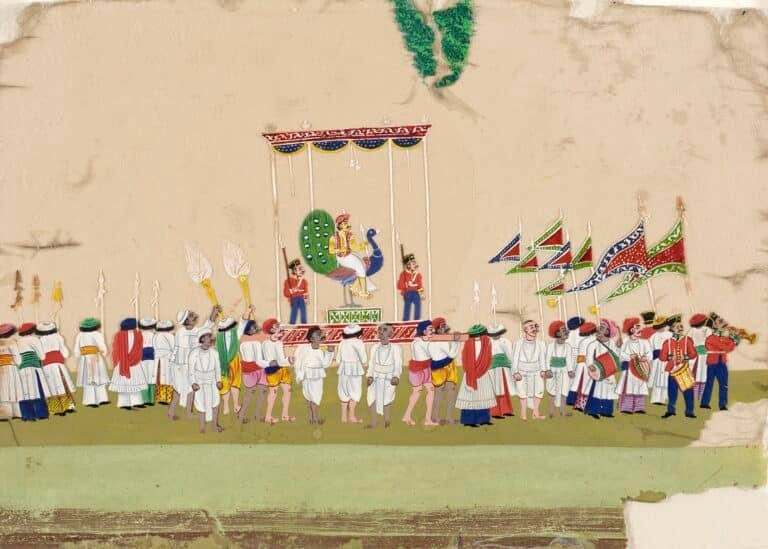
Partially Supported
Why Do Religious Processions Take Sacred Things Into the Street?
Religious processions move sacred presence, symbols and communities through public space. They can expand shared identity through coordinated movement and visibility, but the same public occupation can mark boundaries and…
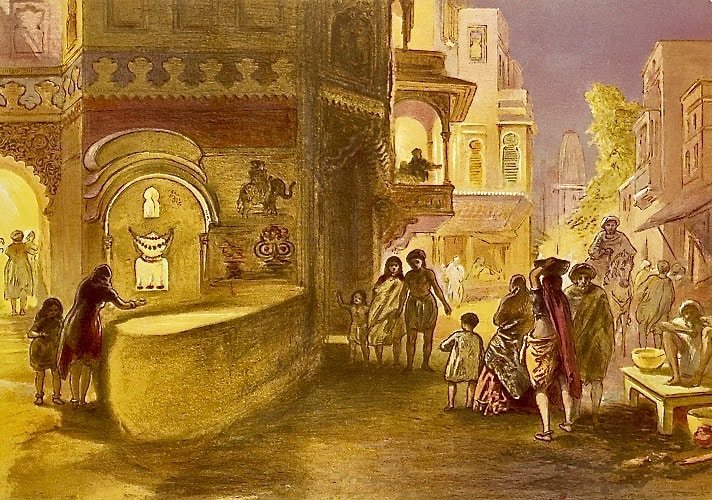
Primarily Symbolic/Cultural
Why Is Diwali Built Around Light?
Diwali’s lamps are historically and religiously meaningful symbols whose interpretations vary across Hindu, Jain, Sikh and regional traditions. Light makes sacred time visible and transforms homes and streets; modern science…
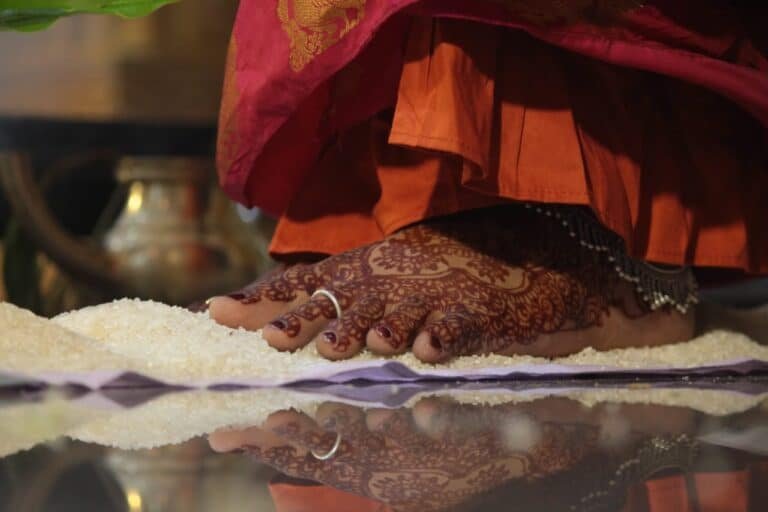
Primarily Symbolic/Cultural
Why Did Indians Circle Sacred Fire at Weddings?
Sacred fire in Hindu weddings is historically a witness, offering medium and divine presence rather than a hidden biomedical technology. Circumambulation and vows make marriage public, memorable and religiously binding;…
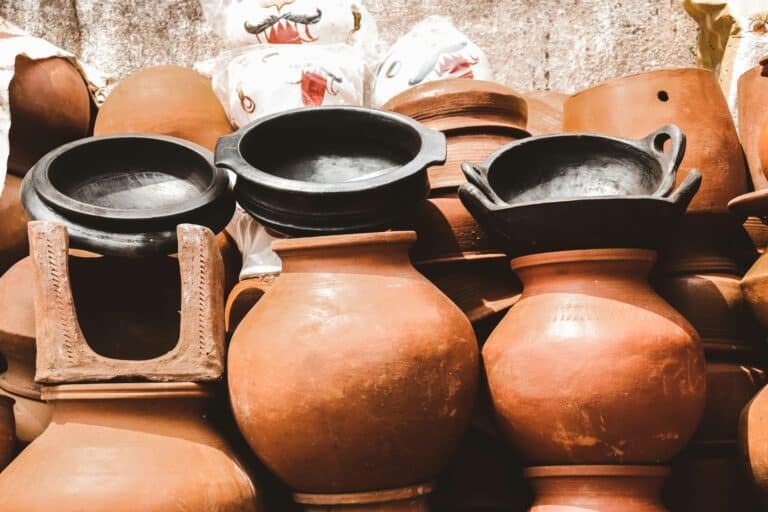
Historically Practical
Why Did Humans Boil Food?
Boiling transformed human diets by making grains, pulses, roots, meat and water safer and softer in a single vessel. Heat kills most foodborne microbes and moist cooking improves digestibility, but…
Picked for your curiosity
Enable JavaScript to build a reading profile and see recommendations.