 tradivior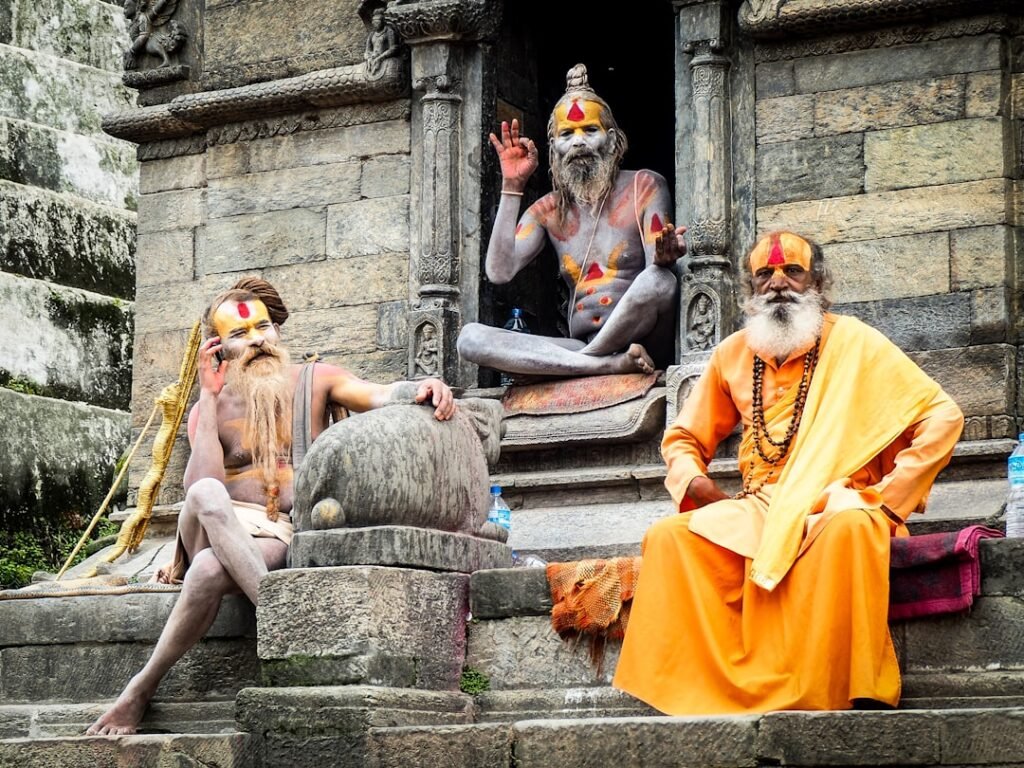
In this investigation
Across religions, some of the most committed practitioners deliberately give up things most people work to obtain: food, sex, possessions, comfort, sleep, privacy, status or ordinary family life. Hindu sannyasins, Jain mendicants, Buddhist monastics, Christian monks and nuns, Sufi ascetics and other renunciants all developed traditions in which less could become spiritually more.
This is one of the hardest religious behaviours to explain through simple utility. If comfort is desirable, why would people voluntarily reject it? The answer is not that all ascetics secretly discovered a universal health protocol. Asceticism is a family of practices whose goals include liberation, discipline, holiness, detachment, penitence, concentration, service and freedom from worldly attachment.
Asceticism is not one thing
Fasting, celibacy, silence, poverty, solitude, sleep restriction, simple clothing and bodily discipline can all be ascetic, but traditions combine them differently. A Jain monk’s radical non-possession, a Christian monastic vow of poverty and a Hindu renunciant’s withdrawal from household life are not historically interchangeable.
Any scientific account must therefore begin with difference rather than assuming a single “ascetic mechanism.”
Why renunciation has spiritual power
Ordinary life is organized around acquisition and attachment: food, shelter, sexuality, possessions, reputation and family obligations. Renunciation reverses that logic. By voluntarily reducing dependency on these things, the ascetic demonstrates that spiritual goals outrank ordinary incentives.
That reversal can make commitment unusually visible. A belief that costs nothing is easy to profess. A belief that reshapes diet, sleep, money, clothing or relationships is harder to fake.
Costly signalling is one modern explanation
Evolutionary and social-scientific theories of religion propose that costly practices can signal commitment to a group. If a ritual requires real sacrifice, people unwilling to bear the cost are less likely to imitate it for long.
Recent reviews find that religious signals can affect how others perceive trustworthiness and commitment, though evidence that costly practice universally makes people more prosocial is mixed. Cost can strengthen identity without guaranteeing virtue.
Credibility-enhancing displays
Another framework asks how people decide whether teachers genuinely believe what they preach. A leader who advocates simplicity while living luxuriously sends a different signal from one who accepts the same sacrifices expected of followers.
Ascetic practice can therefore make belief credible. This does not mean practitioners are consciously signalling. A behaviour can have social consequences without signalling being its subjective purpose.
Self-control is plausible—but not automatic
Religiousness is associated with self-control in many studies, and longitudinal evidence suggests that sustained religious practice and institutional participation can contribute to self-regulation over time. But laboratory activation of religious ideas does not reliably produce immediate increases in self-control.
This distinction fits asceticism. Years of following demanding rules may train habits of restraint. A single fast or night of silence does not magically build willpower.
Why fasting became ascetic
Food is biologically necessary and socially rewarding, making voluntary restriction a powerful signal of priority. Fasting can express penitence, purification, non-attachment, mourning, devotion or preparation.
Modern fasting research shows that some structured fasting protocols can affect weight, glucose regulation and metabolic markers. Those effects vary by protocol and population and do not prove religious fasting originated as metabolic medicine.
When fasting becomes dangerous
Prolonged or poorly managed fasting can cause dehydration, hypoglycaemia, nutrient deficiency, fainting and medication-related complications. Pregnant people, children, older adults and those with certain illnesses may face particular risk.
Most religious traditions developed exemptions or adaptations for illness and vulnerability. Those accommodations undermine the idea that suffering itself is always the goal.
Celibacy changes social investment
Celibacy redirects time, sexuality and family obligations. In monastic institutions, it can make practitioners more available to communal life, worship, scholarship or service.
It can also create psychological strain when compulsory, poorly supported or culturally stigmatized. There is no universal evidence that sexual abstinence is medically superior to healthy consensual sexual life.
Poverty and non-possession
Voluntary poverty challenges the idea that security comes from accumulation. In Jain, Buddhist, Christian and other monastic systems, limiting possessions can reduce distraction and dependence on status goods.
But voluntary poverty practiced inside a supportive institution is fundamentally different from involuntary poverty. The latter is associated with stress, insecurity and poor health. Romanticizing deprivation because monks choose simplicity would be ethically and scientifically wrong.
Silence as discipline
Periods of silence can reduce social stimulation and make habitual speech more visible. Traditions use silence for contemplation, restraint, retreat and sometimes penance.
Reduced speech may support reflection, but prolonged isolation can also worsen rumination or distress in some people. Context and choice are critical.
Solitude is not the same as loneliness
Ascetic solitude is usually structured and meaningful. A hermit or retreatant may understand withdrawal as spiritual work. Loneliness, by contrast, involves unwanted disconnection.
Modern psychology shows that chosen solitude and unwanted isolation can have very different effects. This distinction helps explain why voluntary retreat may feel restorative while social abandonment is harmful.
Sleep restriction is especially risky
Night vigils and reduced sleep appear in many ascetic traditions. Temporary wakefulness can intensify attention, emotion and altered experience, especially when combined with fasting and prayer.
But chronic sleep deprivation impairs cognition, mood, metabolism and immune function. Spiritual meaning does not cancel the physiology of sleep.
Pain and bodily austerity
Some ascetic practices deliberately include discomfort. Pain can symbolize discipline, penitence or detachment from bodily desire.
Modern medicine provides no basis for assuming that self-inflicted pain is generally health-promoting. Where practices risk tissue damage, infection or long-term injury, spiritual framing does not remove the harm.
Why hardship can strengthen identity
Difficult practices create memorable boundaries between insiders and outsiders. A rule that requires sacrifice can strengthen identification with the community because participants repeatedly invest in membership.
Recent reviews of religious signalling suggest that high-cost practices can strengthen religious identity, though the social effects are not uniformly prosocial and may include in-group favouritism.
Asceticism and status: renouncing status can create status
There is a paradox in ascetic life. A person may renounce prestige and then acquire prestige precisely because of that renunciation. Communities often admire those who give up comfort.
This does not make asceticism hypocritical. It shows that human social systems can reward visible self-denial even when the practitioner claims no interest in reward.
Institutional support changes the cost
A monk who owns little may live inside a monastery that provides food, shelter, healthcare and community. This makes monastic poverty different from homelessness.
Scientific comparisons must therefore include institutional context. The same material simplicity can be safe within a supportive community and dangerous without one.
Jain asceticism: restraint taken to extraordinary depth
Jain mendicant practice is among the most rigorous traditions of non-possession and non-harm. Food, travel, clothing and movement can all be restricted in order to reduce attachment and violence.
The logic is religious and karmic, not biomedical. Modern ecological interpretations can draw from it, but should not rewrite the original goal as sustainability science.
Buddhist monastic restraint
Buddhist monastic codes regulate possessions, food, sexuality and conduct in order to support liberation, community discipline and reduced attachment. Different Buddhist traditions interpret and implement these rules differently.
Again, restraint can have practical side effects—routine, lower consumption, fewer family obligations—but those are not sufficient explanations of the monastic ideal.
Christian monastic asceticism
Christian monasticism developed traditions of fasting, celibacy, vigils, poverty and obedience. In some periods extreme self-denial was celebrated; in others institutions moderated austerity through rules designed to make communal life sustainable.
The history therefore shows continuous negotiation between spiritual intensity and bodily limits.
Sufi zuhd and the critique of worldly attachment
Islamic ascetic traditions often emphasize zuhd, detachment from excessive worldly attachment, while mainstream Islamic teaching generally rejects monastic withdrawal as a universal ideal.
This distinction is useful because asceticism can mean disciplined simplicity without total social withdrawal.
Why extreme practices attract followers
A practitioner who withstands hunger, cold, silence or celibacy may be perceived as unusually committed. This can generate authority.
Costly-signalling theory helps explain the perception, but authority can also become dangerous if endurance is mistaken for moral infallibility.
Asceticism can be exploited
Communities can pressure individuals into deprivation, sleep loss, fasting or obedience. What is meaningful when voluntarily chosen can become abuse when coerced.
Consent, capacity and institutional accountability therefore matter. A historical tradition does not exempt a practice from ethical review.
Does renunciation improve self-control?
There is plausible evidence that sustained religious environments and practices can strengthen self-regulation over time, but causation is complex. People with high self-control may also be more likely to sustain demanding religious commitments.
Asceticism should therefore be understood as a training environment for restraint, not as a scientifically proven method for producing superior willpower.
The “hormesis” temptation
Modern wellness culture sometimes explains ancient austerities through hormesis: small stressors supposedly strengthen the organism. Heat, cold, fasting and exercise can indeed produce adaptive responses under controlled conditions.
But hormesis is dose-specific. A mild stressor can be adaptive while a large one is harmful. Invoking hormesis does not validate extreme deprivation or prove historical practitioners designed asceticism around cellular stress pathways.
When less really can help
Some forms of voluntary simplification can reduce distraction, spending or overconsumption. Structured fasting can help some adults under appropriate conditions. Retreat can interrupt compulsive routines. Silence can create reflective space.
These benefits are specific and conditional. They do not establish that maximal deprivation produces maximal health.
What modern asceticism looks like outside religion
Digital detoxes, minimalist living, cold exposure, extreme endurance events and restrictive diets often borrow the emotional logic of asceticism: voluntary discomfort promises clarity, discipline or authenticity.
The resemblance is useful because it shows ascetic motivation has not disappeared. It has migrated into secular self-optimization.
Why deprivation can feel clarifying
Reducing choices simplifies the environment. A monastery with fixed meals, clothing and schedule removes many daily decisions. That can lower decision load and redirect attention.
But reduced choice is not universally liberating. For some people, rigid environments increase distress. Individual differences matter.
Asceticism and altered states
Fasting, sleep loss, isolation, repetitive prayer and sensory restriction can alter perception and emotion. Intense ascetic settings may therefore generate visions, absorption or experiences interpreted as spiritual.
Such states can be meaningful without proving supernatural causation. They can also become medically dangerous if severe deprivation is involved.
Why traditions often moderate extremes
Religious institutions frequently develop rules that restrain individual zeal. Scheduled meals, community supervision and exemptions for illness can prevent ascetic practice from becoming self-destructive.
This historical moderation is evidence that traditions themselves recognized a difference between discipline and reckless harm.
What science should not say
Science should not claim that ancient ascetics discovered autophagy, dopamine fasting, neuroplasticity or hormesis unless historical evidence actually supports those ideas. Modern mechanisms can explain effects without becoming ancient motives.
Nor should research conclude that because one form of restriction has benefits, all religious deprivation is healthy.
Asceticism is therefore best understood as disciplined subtraction. It removes ordinary rewards so that another goal can dominate attention. Sometimes that produces clarity, identity or self-control; sometimes it produces avoidable harm. The difference depends on what is renounced, for how long, under whose authority, and with what safeguards.
Institutional moderation is part of the history
Ascetic traditions often develop rules precisely because individual zeal can outrun safety. Monastic schedules regulate meals, sleep, work and authority; teachers may limit fasting or solitude; exemptions appear for illness or age. These safeguards are not evidence of weak commitment. They are evidence that sustainable discipline requires boundaries.
This historical moderation is important for modern readers attracted to extreme practice. Copying one dramatic austerity without the institution, training or supervision that once surrounded it may reproduce the cost while losing the protective structure.
Consent separates discipline from coercion
Voluntary renunciation can be meaningful because the practitioner chooses to accept a cost for a valued goal. Forced deprivation is different. Compulsory fasting, sleep restriction, celibacy or social isolation can become abuse when refusal is punished or informed consent is absent.
Any modern assessment of ascetic practice must therefore ask not only what the body undergoes, but who chose it, who supervises it and whether the person can stop safely.
What survives scrutiny?
Ascetic practices can train sustained restraint, simplify environments, intensify identity and make religious commitment unusually visible. Some specific forms—such as carefully structured fasting or retreat—can have measurable effects under the right conditions.
But deprivation is dose-dependent and context-dependent. Sleep loss, extreme fasting, pain, isolation or coerced celibacy can cause harm. Asceticism should not be romanticized as a universal wellness technology.
The Tradivior Evidence Profile
Historical Authenticity — Strong. Ascetic renunciation is deeply documented across multiple religious traditions.
Original-Purpose Evidence — Strong. Liberation, holiness, detachment, penitence, discipline and devotion are explicit historical purposes.
Scientific Mechanism — Moderate. Self-regulation, reduced choice, signalling, habit formation, social identity and physiological stress responses offer plausible mechanisms.
Experimental Evidence — Limited to Moderate. Evidence exists for some component practices, while asceticism as a whole is too heterogeneous for one verdict.
Cross-Cultural Evidence — Strong. Renunciation appears across religions but with substantially different doctrines and rules.
Modern Relevance — Moderate. Voluntary simplicity and disciplined restraint remain meaningful, but extreme deprivation requires safety and context.
The Tradivior Conclusion
Partially Supported. Ascetics renounce comfort because deprivation can embody detachment, discipline and costly commitment to a sacred goal. Modern research makes it plausible that sustained religious discipline can shape self-regulation and group identity. But deprivation is not inherently healthy, and the evidence does not support retrofitting ancient asceticism as a secret programme of hormesis, autophagy or neuroscience. Its primary logic is religious and ethical; its physiological effects depend on dose, practice and person.
Sources and further reading
- Marcus ZJ, McCullough ME. Review of religion and self-control, 2021.
- Northover SB et al. Religious signaling and prosociality: A review of the literature. 2024.
- Research comparing costly signalling and credibility-enhancing displays in religious practice.
- Historical scholarship on Hindu, Jain, Buddhist, Christian and Islamic ascetic traditions.
- Clinical and systematic-review literature on specific practices such as fasting, sleep deprivation and social isolation.
Continue exploring

Partially Supported
Why Is the Ganga Sacred?
The Ganga is river, goddess, pilgrimage route, purifier and national symbol. Tradivior will trace how these layers developed and evaluate modern claims about unusual self-purifying properties without confusing microbial findings…

Why Do Cultures Set Aside Days to Remember the Dead?
From Pitru Paksha and Qingming to Día de Muertos and All Souls’ Day, cultures repeatedly create calendar time for the dead. Tradivior will compare how recurring remembrance renews kinship, grief…

Why Do People Keep Ashes, Relics and Memorial Objects?
Hair, ashes, bones, clothing, photographs and relics allow the dead to remain materially present. Tradivior will examine why objects carry memory so powerfully and how continuing bonds differ from pathological…

Why Do Cultures Preserve the Dead?
Mummification, embalming, freezing, smoking and desiccation reflect very different beliefs about bodies and afterlives. Tradivior will compare preservation traditions with the chemistry of decomposition and the practical limits of each…
Picked for your curiosity
Enable JavaScript to build a reading profile and see recommendations.