 tradivior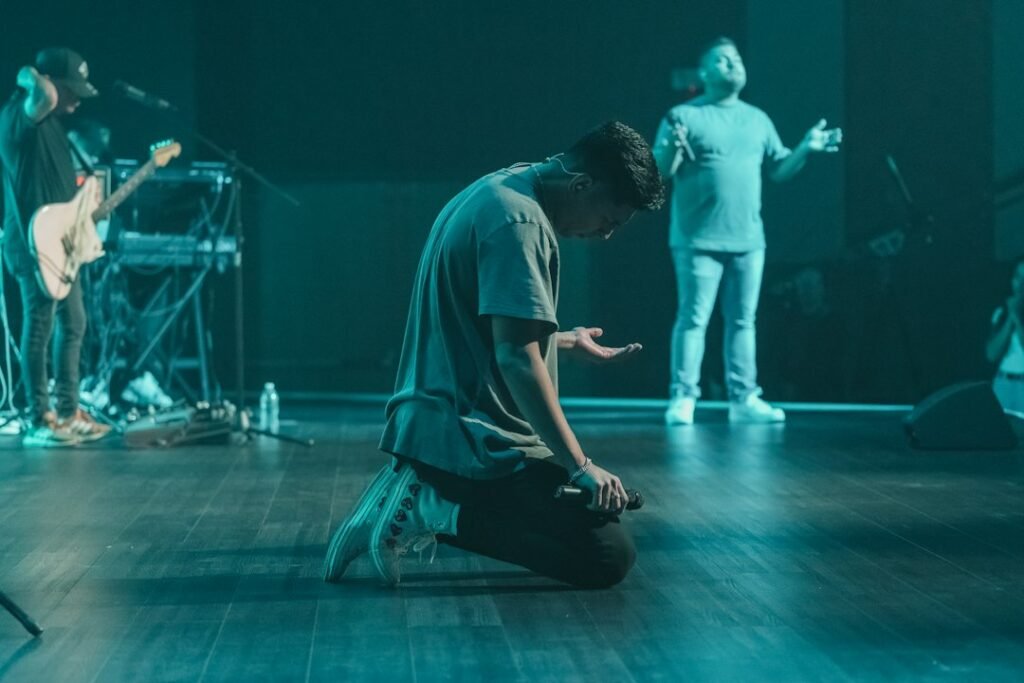
In this investigation
Christian worship is not performed by the mind alone. Bodies stand, kneel, bow, sit, process, raise hands and trace the sign of the cross. These actions can look like secondary decoration around prayer, yet historically they have carried theological meaning of their own.
Modern psychology adds another layer: posture can influence emotional tone, attention and social meaning. But the evidence does not support a simplistic claim that one posture produces one universal mental state. A 2024 preregistered study across Christians, Muslims and Hindus found that prayer posture affected emotion and prayer content, while religious context substantially changed those effects.
Standing came first in many Christian settings
Early Christian worship often used standing as a normative posture, particularly in communal prayer. Standing could signify readiness, dignity, resurrection hope and participation in public worship. It also fit inherited Jewish and Mediterranean religious practices in which standing before God or authority was familiar.
This matters because modern assumptions often treat kneeling as the default Christian posture. Historically, posture varied by period, liturgical season, region and denomination.
Why kneeling became powerful
Kneeling compresses the body downward and visibly lowers status. In social life, such postures can communicate submission, supplication or respect. Christianity made use of those associations in prayer, penitence and devotion.
The psychological interpretation is plausible: a body placed in a lower, constricted posture can reinforce feelings or meanings associated with humility and supplication. Yet religious context is crucial. The 2024 cross-religious posture study found that posture effects were not uniform across traditions, which warns against turning embodiment into a universal formula.
Kneeling is learned as much as it is embodied
A child raised in a church learns that kneeling means prayer, penitence or reverence because the community repeatedly pairs the posture with those meanings. That learned association becomes part of the posture’s effect.
This is why biomechanics alone cannot explain religious posture. A person kneeling to tie a shoe does not automatically enter a state of humility. Meaning emerges from posture plus context, memory and expectation.
Why Christians stand
Standing can signify attentiveness, proclamation, respect or readiness. In many liturgical traditions, congregations stand for particular readings, prayers or creedal statements. The body communicates that this moment differs from passive listening.
From a cognitive perspective, changing posture also marks transitions. Moving from sitting to standing can reset attention because the sensory and motor state changes. This is a plausible secondary effect, not evidence that liturgy was designed around modern attention science.
The sign of the cross
The sign of the cross condenses theology into gesture. A worshipper traces the central symbol of Christianity over the body, often while invoking the Trinity. The gesture can mark prayer, blessing, entry into worship, protection, remembrance or identity depending on tradition.
Its power comes partly from repetition. A highly practiced gesture can become an automatic cue that shifts attention into a religious frame. It also makes identity visible in public and private settings.
Gesture as portable memory
The sign of the cross requires no book, building or instrument. It can be performed almost anywhere. This makes it a compact memory technology: doctrine is attached to a repeated motor sequence.
Motor memory is durable. Repeated gestures can survive even when verbal recall weakens, which helps explain why ritual actions often remain emotionally powerful over decades.
Posture and emotion
Embodiment research proposes that bodily states can influence emotion and cognition rather than merely express them. In the 2024 study of 2,458 participants in the United States, Turkey and India, expansive upward prayer postures were associated with more positive emotion and praise-focused prayer, while downward constrictive postures were associated with less dominance and different prayer content.
Crucially, these patterns were moderated by religious context. Some postures considered positive in one tradition were unfamiliar or inappropriate in another. That is exactly what we should expect if bodily effects interact with cultural learning.
Why bowing and kneeling can communicate before words
Posture is social communication. A lowered body can signal deference before any sentence is spoken. In prayer, the imagined or believed audience is divine rather than human, but the communicative logic remains meaningful.
This does not imply that believers are unconsciously imitating court etiquette. Religious postures develop within their own histories. Social communication provides one mechanism by which those postures can become intelligible and emotionally potent.
Why liturgical movement matters
Christian worship often moves people through postures in sequence rather than holding one posture indefinitely. Sit, stand, kneel, process, bow, turn, receive. These transitions give worship a physical grammar.
A repeated grammar helps participants anticipate what comes next and coordinate with others. Ritual psychology identifies social connection, emotion regulation and performance regulation as major functions of repeated ritual structure.
Collective posture and group identity
When a congregation stands or kneels together, synchronized movement makes belonging visible. People do not merely hear a shared creed; they enact it simultaneously.
Research on synchrony suggests that coordinated action can strengthen affiliation and perceived unity. This need not be the historical origin of Christian posture to help explain why communal embodied worship feels different from solitary belief.
Variation across churches
Christian communities differ widely in how often worshippers kneel, stand, bow or make the sign of the cross. That diversity shows that posture is learned within a tradition rather than governed by one universal bodily rule.
Do these postures have health benefits?
Standing, kneeling and rising involve movement, but Christian liturgical postures should not be treated as exercise prescriptions. For some older adults or people with joint pain, kneeling can be difficult, and many churches provide alternatives.
What neuroscience can and cannot add
Religious postures change sensory input and motor activity, so differences in brain state are unsurprising. No imaging result can show that one posture is spiritually superior or that historical worshippers designed it to target a neural circuit.
Why ritual posture survives
Posture survives because it communicates reverence, organizes group action, marks transitions, stores memory in the body and distinguishes sacred action from ordinary behaviour. Those functions are enough to explain persistence without hidden anatomy or energy claims.
The historical caution: meaning changed across centuries
Christian posture never developed in a single straight line. Standing, kneeling, bowing and crossing the body changed in frequency and meaning as liturgies evolved, monastic traditions spread, penitential practices intensified and denominations later diverged.
That variation is evidence in itself. If one posture carried a fixed physiological function, we would expect greater uniformity. Instead, posture tracks theology, custom and institutional history.
The strongest modern evidence is about interaction, not inevitability
A 2024 PLOS ONE study of prayer postures across Christian, Muslim and Hindu participants found that posture could influence emotional experience and prayer content, but the effects depended substantially on religious context. Downward and constrictive postures were often associated with humility, submission or less dominance; upward and expansive postures were more often associated with positive affect and praise.
The important result is not that science has discovered the hidden purpose of kneeling. It is that bodies, learned meanings and religious expectations interact. A posture carries different psychological weight when a community has spent years teaching what that posture means.
What survives scrutiny?
- Standing was an important early Christian prayer posture and remains central in many traditions.
- Kneeling became associated with penitence, supplication, humility and reverence, but its use varies widely across denominations and periods.
- The sign of the cross functions as embodied theology, identity and ritual cue rather than as a demonstrated physiological intervention.
- Modern embodiment research supports the idea that posture can affect emotion, attention and perceived dominance or humility.
- Those effects are not universal: cultural and religious learning strongly shape how a posture is experienced.
- Collective postures can reinforce synchrony, group identity and transitions within worship.
- Claims that Christian postures were deliberately designed to activate specific nerves, brain regions or energy pathways are not supported by the historical evidence.
The Tradivior Evidence Profile
Historical Authenticity — Strong. Standing, kneeling, bowing and the sign of the cross are well documented within Christian liturgical history, although their distribution varies by period and tradition.
Original-Purpose Evidence — Strong. Reverence, penitence, proclamation, prayer, blessing and visible confession of faith are explicit religious meanings.
Scientific Mechanism — Moderate. Embodied cognition and social-signalling research make it plausible that posture influences affect, attention and perceived hierarchy, but effects depend heavily on context.
Experimental Evidence — Moderate. Recent cross-religious experimental work supports measurable posture effects while also showing that they are not culturally uniform.
Cross-Cultural Evidence — Strong. Bowing, kneeling, standing and other forms of bodily deference occur in many religious and secular systems, but local meanings differ.
Modern Relevance — Strong. These practices remain widespread, while accessibility adaptations demonstrate that bodily form is important without being absolute.
The Tradivior Conclusion
Christian kneeling, standing and crossing are best understood as embodied religious language. They organize worship, communicate reverence, mark transitions and place doctrine into repeatable movement.
Modern psychology helps explain why repeated postures can feel emotionally and socially powerful, but it does not reveal a hidden scientific code behind the liturgy. The strongest explanation is historical and cultural: communities repeatedly pair bodily forms with theological meanings until the body itself becomes part of prayer.
Sources and further reading
- Van Cappellen P, Edwards ME, Kamble SV, et al. Kneel, stand, prostrate: The psychology of prayer postures in three world religions. PLOS ONE. 2024;19(8):e0306924.
- Early Christian liturgical and patristic sources on standing, kneeling and prayer posture should be read alongside later denominational practice because no single posture was universal across Christian history.
- Denominational liturgical manuals and historical studies of the sign of the cross provide the strongest evidence for how particular churches interpret the gesture.
Continue exploring
Partially Supported
Why Do People Keep Ashes, Relics and Memorial Objects?
Hair, ashes, bones, clothing, photographs and relics allow the dead to remain materially present. Tradivior will examine why objects carry memory so powerfully and how continuing bonds differ from pathological…
Evidence Supported
Why Do Cultures Set Aside Days to Remember the Dead?
From Pitru Paksha and Qingming to Día de Muertos and All Souls’ Day, cultures repeatedly create calendar time for the dead. Tradivior will compare how recurring remembrance renews kinship, grief…
Historically Practical
Why Do Cultures Preserve the Dead?
Mummification, embalming, freezing, smoking and desiccation reflect very different beliefs about bodies and afterlives. Tradivior will compare preservation traditions with the chemistry of decomposition and the practical limits of each…
Primarily Symbolic/Cultural
Why Do People Change Names, Clothes or Homes After Marriage?
Marriage often transforms identity through surname changes, new dress, residence, kinship terms or household membership. Tradivior will investigate why marriage needs visible social consequences beyond the ceremony itself.
Picked for your curiosity
Enable JavaScript to build a reading profile and see recommendations.