 tradivior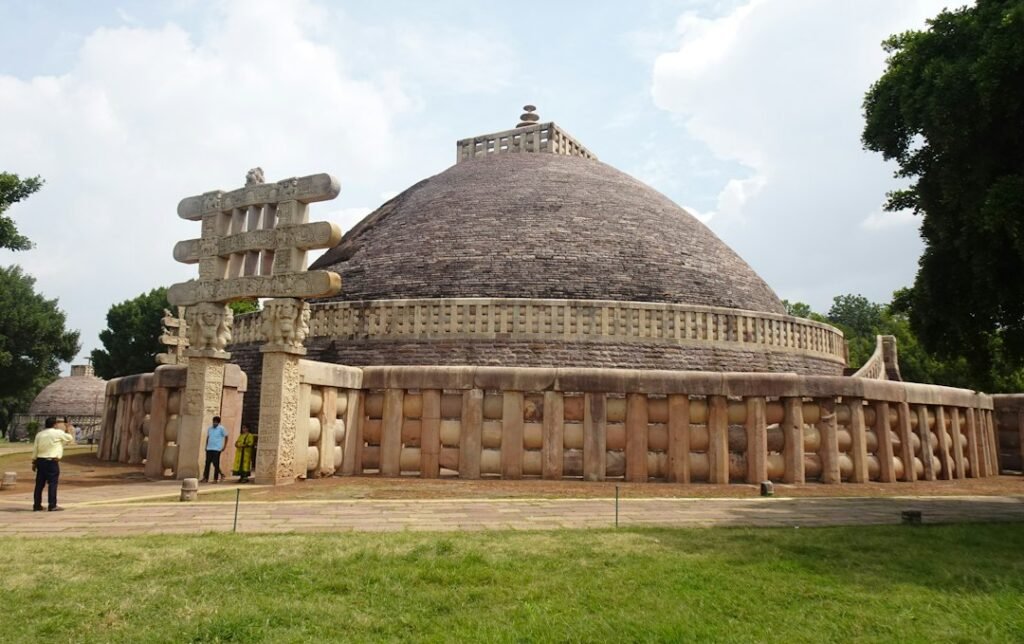
In this investigation
Walking around something sacred is one of the most widespread ritual movements in the world. Hindus perform pradakshina or parikrama around temples, shrines, sacred mountains and trees. Buddhists circumambulate stupas, monasteries and mountains. Jains circle temples and sacred sites. Muslims perform tawaf around the Kaaba during pilgrimage. Other traditions also preserve forms of ritual circling.
At first glance, the act looks almost too simple to require explanation. Why walk in a circle when one could simply stand, pray and leave? The answer lies in the relationship between movement and sacred space. Circumambulation does not merely acknowledge a sacred centre intellectually; it organizes the whole body around it.
A sacred centre changes how space is used
Ordinary movement tends to be linear: from door to destination, from one task to the next. Circumambulation deliberately interrupts that efficiency. The route returns to where it began. Progress is measured not by leaving the centre behind, but by repeatedly maintaining a relationship to it.
This makes the sacred object or place the organizing reference point. Architecture, route and body become part of one ritual system.
Why clockwise?
In many Hindu and Buddhist traditions, circumambulation proceeds clockwise so the sacred centre remains on the right. The right side has auspicious associations in several South Asian ritual systems. But direction is not universal. Bon traditions, for example, may circumambulate in the opposite direction.
This variation is a useful warning against pseudo-physical explanations involving Earth’s magnetic field or one universally beneficial direction. If different traditions authorize opposite directions, the strongest explanation is ritual convention and cosmology rather than hidden geophysics.
Hindu parikrama turns landscape into theology
Hindu circumambulation can occur at the scale of a small shrine or an entire sacred landscape. Around Govardhan Hill in Braj, for example, the route links stories of Krishna to specific places encountered by the walking body. Scholarship on the region describes sacred landscape as something enacted through movement rather than only imagined through text.
The pilgrim does not simply learn that a landscape is sacred. Walking around it repeatedly turns geography into embodied memory.
Buddhist circumambulation combines movement, recitation and merit
At Buddhist sacred sites, circumambulation may be accompanied by mantra, prayer beads, prayer wheels or prostration. The movement therefore belongs to a larger ritual ecology rather than functioning as isolated exercise.
In Tibetan practice, kora around monasteries or mountains can express reverence, accumulate merit and connect participants to local sacred geography. Contemporary studies show that younger practitioners may reinterpret the experience while continuing the route, demonstrating that living tradition can change meaning without abandoning form.
Tawaf is similar in movement but not identical in meaning
Islamic tawaf around the Kaaba is another powerful example of circling a sacred centre, but comparison must be cautious. Similar geometry does not make the theology equivalent. Tawaf belongs to the specific ritual logic of Hajj and Umrah and to Islamic sacred history.
The useful comparative insight is narrower: humans repeatedly use circular movement to establish relationship with a sacred centre. What that centre means remains tradition-specific.
Movement helps create place memory
Spatial memory is strengthened by movement through landmarks and repeated routes. Circumambulation exploits this ordinary cognitive capacity. The body repeatedly encounters the same centre from changing angles while preserving the route’s overall structure.
This can make sacred geography unusually memorable. A site becomes known not only by looking at it but by moving around it.
Repetition transforms route into ritual
One circuit can be a walk. Repeated circuits become something else. Repetition reduces novelty, stabilizes pacing and allows prayer or recitation to become synchronized with movement.
Ritual research suggests that repeated structured action can regulate emotion and strengthen social connection. Circumambulation is therefore well suited to combine movement with attention and collective identity.
The circle creates a boundary
Circling can also mark what lies inside as special. The route distinguishes centre from periphery. In some historical traditions, circumambulation could consecrate, protect or greet a place by tracing its boundary.
This boundary-making function remains psychologically powerful even when no physical barrier exists. Repeated movement can make an invisible sacred perimeter socially real.
Why effort matters
Some circumambulations are easy; others involve hours or days of walking. The harder the route, the more effort becomes part of devotion. Mountain circuits in Tibet, long parikramas in India and major pilgrimage routes can require endurance, weather exposure and physical sacrifice.
Effort can intensify meaning because costly action signals commitment to oneself and others. Yet costly-signalling theory should remain an external explanatory model, not be mistaken for the practitioners’ own religious purpose.
Does walking itself provide health benefits?
Of course. Walking improves cardiovascular fitness, mobility and metabolic health when performed at sufficient duration and intensity. Long pilgrimage circuits can contribute substantial physical activity.
But this does not establish that circumambulation was invented to provide exercise. Historical traditions explain the practice through reverence, merit, pilgrimage, sacred geography and devotion. The health effect is real but secondary.
Why moving together matters
At busy sacred sites, people move in the same direction around a shared centre. Even without perfect synchrony, collective flow creates a visible sense of common purpose.
Research on coordinated movement shows that synchrony can strengthen affiliation and group identity. Circumambulation provides a naturally recurring environment for that kind of coordination.
Sacred movement can become political movement
Circumambulation is not always politically neutral. Recent scholarship on parikrama in Ayodhya shows how ritual routes can become entangled with legal claims, tourism projects and majoritarian definitions of sacred space.
This is important because sacred geography can include and exclude. A ritual that strengthens belonging for one group can also reinforce territorial claims over a shared landscape.
Why orientation is culturally learned
The felt correctness of clockwise or counterclockwise movement is learned through tradition. Once learned, reversing direction can feel wrong even when the physical route is identical.
This demonstrates how cultural rules become embodied. The body acquires a sense of ritual orientation that feels intuitive because it has been practiced repeatedly.
Circumambulation and attention
Circular walking can narrow attention by limiting navigational uncertainty. The route is simple and repetitive, leaving cognitive space for mantra, prayer, visualization or contemplation.
But crowding, heat, noise and fatigue can also fragment attention. Sacred movement is not automatically meditative.
What modern science should not claim
There is no credible need to explain circumambulation through magnetic fields, clockwise energy vortices or universal directional physiology. The existence of meaningful counterclockwise traditions directly challenges such universal physical claims.
Spatial cognition, place attachment, walking physiology and collective movement already provide strong modern explanations for secondary effects.
Living tradition adapts
Contemporary pilgrimage research shows that younger participants can reinterpret circumambulation through heritage, identity, tourism or personal spirituality while preserving the route. This is a reminder that traditions survive partly because they can accumulate new meanings.
Continuity therefore does not require unchanged belief. The movement itself can remain a durable container for evolving interpretation.
Circumambulation can turn story into geography
Sacred routes often link narrative to place. A pilgrim hears that an event happened at a hill, tree, shrine or riverbank and then physically passes those locations in sequence. Repetition turns narrative order into spatial order.
This is especially visible in Braj, where Krishna traditions are mapped onto a lived landscape. Scholarship on the region describes circumambulation as an enacted way of inscribing sacred memory into the body. The route therefore operates like a moving archive.
Why circles feel different from straight routes
A straight path emphasizes destination. A circular route emphasizes relation to a centre. The pilgrim may end where the walk began, but the completed circuit carries ritual meaning because the centre was kept continuously within the route’s logic.
This makes circumambulation a strong example of how geometry can become symbolic without requiring mystical physics. The circle is meaningful because of how movement is organized around the sacred object.
Why direction can become non-negotiable
Once a community learns that the sacred centre should remain to a particular side, reversing direction can feel disrespectful or ritually incorrect. This is not evidence of a universal physical force; it is evidence that social rules can become embodied intuitions.
The contrast between clockwise Tibetan Buddhist kora and counterclockwise Bon practice is especially instructive. Opposite directions can both be meaningful because each is embedded in a different ritual tradition.
Circumambulation and place attachment
Repeated walking around a mountain, temple or shrine can deepen familiarity with the site. Contemporary research on Tibetan mountain circumambulation reports that participants often prioritize sacred mountains close to home and connect them to identity, memory and emotional belonging.
Place attachment provides a modern psychological concept for this relationship. It does not replace sacred interpretation, but it helps explain why routes become part of personal identity rather than remaining tourist paths.
The body learns the route
Experienced pilgrims often know a sacred circuit procedurally: where to slow, where to stop, where to bow, where to recite, where to make an offering. This knowledge may be difficult to capture in a map because it includes timing and action, not just location.
Such route knowledge demonstrates how cultural memory can be stored in movement. The body becomes a repository of sequence.
Why crowd flow matters
At major sacred sites, thousands of people may move along the same circuit. Shared directional flow can reduce collision and make crowd movement more predictable, though congestion and crowd crush remain real risks.
It would be an overreach to claim that crowd management was the origin of circumambulation. But once a ritual route becomes standardized, it can have practical organizational consequences.
Environmental consequences can be positive or negative
Sacred routes can strengthen attachment to landscapes and motivate conservation, but heavy pilgrimage can also produce erosion, waste, traffic and water stress. The environmental effect depends on scale and management.
This is another reason not to romanticize tradition. A sacred landscape is not automatically protected simply because people revere it.
Why political claims can attach to routes
A parikrama can define a territory by walking it. Once a route is repeated publicly, boundaries that were previously conceptual become visible. Contemporary scholarship on Ayodhya shows how ritual circuits can become entangled with legal, political and tourism claims over urban space.
This does not invalidate the religious practice. It shows that sacred movement can acquire political consequences because bodies moving through space make claims legible.
Why the health explanation is secondary
A long circumambulation can easily provide thousands of steps and meaningful cardiovascular activity. Yet if the practice were fundamentally an exercise prescription, sacred centre, direction and prayer would be unnecessary. Their persistence demonstrates that walking is serving a ritual relationship rather than simply delivering physical activity.
The health benefit is therefore best understood as incidental or secondary: real for many participants, historically insufficient as an origin explanation.
How a future study could test the psychological effect
Researchers could compare the same walking distance performed as sacred circumambulation, ordinary exercise and sightseeing. Measures of memory, place attachment, perceived meaning, social connection and affect could help identify what the ritual frame adds beyond walking itself.
This kind of design would respect the distinction between motor activity and sacred interpretation instead of assuming one explains the other.
Circumambulation can structure communal memory
When families and communities repeat the same circuit year after year, the route accumulates intergenerational memory. Older participants teach younger ones where to stop, what story belongs to a landmark and which gestures accompany each point.
This makes the path socially durable. Even when buildings change or urban development alters the surroundings, the remembered sequence can preserve an older sacred map. Ritual walking therefore links memory to territory in a way ordinary sightseeing rarely does.
Why sacred movement can survive modernity
Contemporary practitioners may combine devotion with tourism, fitness, heritage or personal reflection. That mixture does not necessarily mean the ritual has disappeared. Living traditions often add motivations rather than replacing older ones completely.
The persistence of circumambulation among younger Tibetan practitioners illustrates this adaptive capacity: the same route can carry inherited religious meaning and newer forms of identity or place attachment at once.
Circumambulation and ritual pacing
Walking a circuit imposes a temporal structure on devotion. The route takes time, and repeated laps can divide a ritual into measurable units without clocks. This can help organize recitation, vows or offerings while also creating a natural beginning and end.
Because the route is externally visible, it can also make commitment legible to others. A person who completes a long circuit has publicly invested time and effort. That social visibility may strengthen perceived seriousness, although it should not be confused with the practitioner’s own theological explanation.
For future research, GPS tracking and experience sampling could examine how attention, fatigue and place attachment change across a circuit. Such work could distinguish physical exertion from the psychological contribution of sacred context.
Because the route is repeated across generations, circumambulation can also act as a mnemonic map for oral tradition: stories, shrines and stopping points become easier to remember because they are tied to a physical sequence.
That combination of movement, memory and sacred centre is enough to explain the practice without invoking universal energetic geometry.
What survives scrutiny?
Circumambulation is a deeply authentic ritual strategy for organizing bodies around sacred centres. It can strengthen place memory, create collective flow, embody reverence and turn landscape into practiced sacred geography.
Walking also provides ordinary health benefits, but those benefits do not explain the historical origin of the ritual. Directional-energy claims remain unsupported.
The Tradivior Evidence Profile
Historical Authenticity — Strong. Circumambulation is well documented across Hindu, Buddhist, Jain, Islamic and other ritual traditions.
Original-Purpose Evidence — Strong. Reverence, merit, pilgrimage, sacred orientation and boundary-making are historically visible purposes.
Scientific Mechanism — Moderate. Walking, spatial memory, place attachment, repetition and collective movement provide plausible secondary mechanisms.
Experimental Evidence — Limited to Moderate. General research on walking, synchrony and ritual is relevant, but direct controlled circumambulation studies are limited.
Cross-Cultural Evidence — Strong. Circular sacred movement recurs widely, while direction and theology vary.
Modern Relevance — Strong. Circumambulation remains a living practice at major sacred sites worldwide.
The Tradivior Conclusion
Historically Practical and Primarily Symbolic/Cultural. Devotees circumambulate sacred places because movement makes sacred centrality tangible. The body repeatedly maps itself around shrine, stupa, mountain or sanctuary, turning belief into spatial practice. Modern science can explain benefits of walking, place memory and collective movement, but not claims about one universally beneficial direction or hidden energy.
Sources and further reading
- Sinha A. Research on the sacred landscape of Braj and circumambulatory enactment.
- Jacobsen KA. Research on parikrama and sacred space in Ayodhya, 2024.
- Contemporary research on Tibetan sacred-mountain circumambulation, 2026.
- Scholarship on Buddhist pilgrimage and circumambulation at sacred sites.
- Hobson NM et al. The Psychology of Rituals.
Continue exploring
Why Do People Keep Ashes, Relics and Memorial Objects?
Hair, ashes, bones, clothing, photographs and relics allow the dead to remain materially present. Tradivior will examine why objects carry memory so powerfully and how continuing bonds differ from pathological…
Why Do Cultures Set Aside Days to Remember the Dead?
From Pitru Paksha and Qingming to Día de Muertos and All Souls’ Day, cultures repeatedly create calendar time for the dead. Tradivior will compare how recurring remembrance renews kinship, grief…
Why Do Cultures Preserve the Dead?
Mummification, embalming, freezing, smoking and desiccation reflect very different beliefs about bodies and afterlives. Tradivior will compare preservation traditions with the chemistry of decomposition and the practical limits of each…

Why Do People Change Names, Clothes or Homes After Marriage?
Marriage often transforms identity through surname changes, new dress, residence, kinship terms or household membership. Tradivior will investigate why marriage needs visible social consequences beyond the ceremony itself.
Picked for your curiosity
Enable JavaScript to build a reading profile and see recommendations.