 tradivior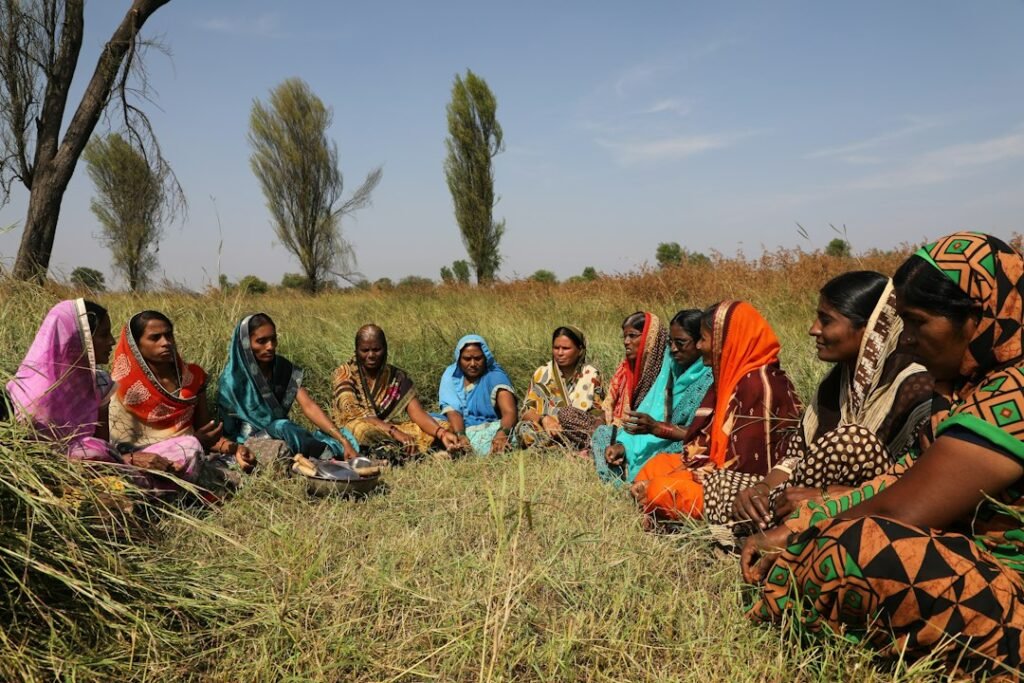
In this investigation
In many societies, age itself creates authority. Elders speak first, sit in honoured places, receive special greetings, bless younger relatives, control ancestral property or settle disputes. Their advice may be sought even when younger people are more educated in formal terms.
This pattern is often explained as simple respect for age, but seniority becomes powerful for concrete reasons. Older adults historically accumulated memory, kinship knowledge, property, ritual experience and political relationships. In environments where knowledge was transmitted orally, surviving into later life could itself indicate unusual experience.
Yet age-based respect and age-based authority are not the same thing. A society can value older people without giving them veto power over younger adults. Tradivior therefore has to separate dignity from gerontocracy.
Age is one of the easiest social ranks to recognize
Human societies need ways to organize precedence. Age is visible, cumulative and difficult to fake. Unlike wealth or office, everyone moves through age grades if they survive.
This makes seniority a convenient basis for deciding who speaks first, who sits where or who receives deference when other status differences are unclear.
THE BASIC LOGIC
Age can function as social shorthand for accumulated experience—but only imperfectly. Years lived and wisdom are correlated culturally, not guaranteed individually.
Oral societies give memory unusual value
Before written archives, digital records and formal bureaucracies, communities depended more heavily on living memory. Older adults could remember earlier droughts, migrations, boundary disputes, genealogies, remedies and ritual precedents.
A person who remembered what happened forty years earlier possessed information unavailable to most younger people.
Traditional ecological knowledge often accumulates over decades
Farmers, pastoralists, fishers and forest communities learn not only average conditions but rare ones. An elder may have experienced an exceptional flood, crop failure or disease outbreak that younger adults have never seen.
This gives long experience practical value when communities face low-frequency events.
Genealogy can turn age into political knowledge
In kin-based societies, knowing who is related to whom affects marriage, inheritance and alliance. Elders often preserve genealogies and histories of obligation.
That knowledge can make them useful mediators in disputes where younger people know only the immediate conflict.
Property often accumulates with age
Older household members may control land, houses, livestock or family businesses. Deference can therefore reflect economic authority as much as moral respect.
A patriarch or matriarch who controls inheritance can influence marriage, residence and work decisions throughout the extended family.
Respect can be reinforced by dependence
Younger adults who expect to inherit family property have incentives to maintain good relationships with senior relatives.
This does not mean affection is false. Emotional attachment and material dependence can coexist.
Ancestor-oriented religions increase the symbolic importance of seniors
In traditions where ancestors remain morally important, living elders sit closest to the ancestral past. They may know lineage rituals, names and obligations and may eventually become ancestors themselves.
Respect for elders can therefore connect present family hierarchy to a longer sacred genealogy.
Confucian traditions formalized filial respect
Confucian ethics place strong emphasis on filial piety, family obligation and respect for seniority. The parent-child relationship becomes a model for wider moral order.
But filial piety is more complex than unquestioning obedience. Classical and modern interpretations include care, gratitude, remembrance and moral responsibility as well as deference.
Respect for age is also prominent in South Asian family systems
Many South Asian households organize seating, greeting, decision-making and ritual precedence by age. Younger people may touch elders’ feet, seek blessings or use more respectful forms of address.
Seniority operates alongside gender, caste, kinship and economic status. An older person may receive deference without necessarily holding authority in every domain.
Touching feet turns hierarchy into a visible exchange
When a younger person bows or touches an elder’s feet, bodily height expresses deference. The elder often responds with a blessing.
The ritual is reciprocal in form: respect moves upward, goodwill or blessing moves downward.
Age grades can organize entire political systems
Some African and other societies historically organize people into age sets or age grades that move collectively through stages of responsibility.
Political authority can therefore depend on having passed through recognized age stages rather than simply on chronological age.
Gerontocracy emerges when seniority controls decision-making
Respect becomes gerontocracy when older people hold disproportionate political, economic or family authority because of age.
This can stabilize institutions by preserving experience and continuity. It can also slow adaptation and exclude younger adults from meaningful power.
THE DISTINCTION
Respecting older people protects dignity. Treating age as automatic proof of competence is a separate claim and is not scientifically justified.
Experience improves some decisions but not all abilities
Age can improve pattern recognition in familiar domains. An experienced farmer, doctor, craftsperson or mediator may recognize situations faster because of accumulated examples.
Other capacities, including processing speed and some forms of working memory, can decline with age. Expertise is domain-specific rather than a universal property of being older.
Wisdom is not identical to intelligence
Psychological research on wisdom emphasizes judgement, perspective-taking, uncertainty and balancing interests rather than raw memory or speed.
Some older adults develop these capacities strongly; others do not. Age creates opportunity for experience, not a guarantee of reflective judgement.
Elders can reduce conflict by remembering longer time horizons
Younger people may see a dispute as new. Older relatives may remember previous conflicts, marriages, promises or earlier compromises.
This can make senior mediators valuable when social relationships extend across generations.
Long memory can also preserve old grievances
Experience is not always reconciliatory. Elders may maintain caste, clan, ethnic or family conflicts that younger people would prefer to leave behind.
Institutional memory can preserve wisdom and prejudice alike.
Intergenerational cooperation benefits both sides
Older adults can provide childcare, knowledge, property and social connections. Younger adults can provide physical assistance, income and technological knowledge.
Respect norms help stabilize this exchange by recognizing that dependency changes across the life course.
Filial obligation can reduce loneliness
Comparative research in China and Denmark shows the importance of family ties, generativity and intergenerational connection for older adults’ well-being.
Respect that includes genuine contact and participation can support belonging. Symbolic reverence without meaningful involvement may not.
Positive views of ageing can have measurable effects
Psychological research shows that age stereotypes influence how people interpret their own ageing. Positive and negative stereotypes can affect motivation, behaviour and some health-related outcomes.
A systematic review of interventions targeting age stereotypes found that many studies reported improvements in physical function, physical activity or self-perceptions of ageing, though the evidence base remains heterogeneous.
Negative ageism has measurable health costs
A major systematic review covering more than seven million participants across forty-five countries found widespread associations between ageism and worse health outcomes.
This is an important modern reason to preserve dignity toward older adults even where traditional authority structures are no longer appropriate.
Respect can become infantilization
Older people are sometimes treated as fragile, incapable or childlike under the language of care. Decisions may be made for them “out of respect.”
That paternalism can reduce autonomy. Genuine respect includes the right to make choices, including choices younger relatives dislike.
Gerontocracy can suppress younger expertise
When age alone determines authority, younger adults with relevant knowledge may be ignored. This becomes especially costly during rapid technological or economic change.
An elder may know the village’s water history better; a younger engineer may understand the new pump better. Effective institutions need both forms of expertise.
Rapid change reduces the predictive value of old experience
Experience is most useful when current conditions resemble past conditions. Climate change, migration, digital technology and new markets can make earlier strategies less reliable.
This does not make elders irrelevant; it changes which forms of knowledge remain transferable.
Property reform changes senior authority
When younger adults earn independent salaries and inherit property rights directly, they depend less on an elder-controlled family estate.
Economic independence can therefore weaken gerontocratic authority even when ritual respect persists.
Pensions can transform family power
An older person with a pension or savings may retain bargaining power within the household. An elder without income may depend heavily on adult children despite strong cultural norms of respect.
Honorific treatment and actual material power do not always align.
Age norms can constrain elders too
Prescriptive stereotypes tell older people how they are supposed to behave: quiet, dignified, nonsexual, retired, conservative or dependent.
Respect can therefore become another way of limiting behaviour if elders are punished for acting “too young” or refusing traditional roles.
Older adults are not one category
A sixty-year-old working professional and a ninety-five-year-old with severe frailty have very different abilities and needs.
Modern ageing research increasingly emphasizes heterogeneity rather than treating chronological age as a complete description of competence.
Respect survives best when detached from automatic obedience
Many modern families preserve respectful language, greetings and care obligations while allowing younger adults greater freedom in marriage, work and residence.
This separates the dignity of elders from the older expectation that senior relatives must control every family decision.
Intergenerational institutions can preserve useful knowledge
Community councils, oral-history projects, apprenticeships and family storytelling can preserve elder knowledge without requiring gerontocratic control.
The goal is not to replace youth with age or age with youth, but to retain information that would otherwise disappear.
Why special deference persists
Seniority remains socially powerful because it combines several signals: survival, experience, ancestry, family continuity and accumulated contribution.
Even when property and political authority shift toward younger generations, rituals of respect can remain because they acknowledge what older people have already given to the group.
What survives scrutiny?
- Elder deference appears widely but varies in intensity and institutional form.
- Older adults historically accumulated valuable memory, ecological knowledge, genealogy, property and social relationships.
- Patrilineal and ancestor-oriented systems can give elders particular ritual and household authority.
- Confucian filial piety formalized care and respect for parents and seniors but should not be reduced to blind obedience.
- Age can be a useful proxy for experience in stable domains, but it is not automatic proof of wisdom or competence.
- Intergenerational cooperation can support childcare, elder care, knowledge transfer and social continuity.
- Positive views of ageing are associated with beneficial psychological and health-related outcomes in some research.
- Ageism is associated with substantial health and well-being costs across many countries.
- Gerontocracy can preserve experience but also suppress younger expertise and autonomy.
- Modern societies can preserve dignity and intergenerational respect without making age an automatic source of decision-making authority.
The Tradivior Evidence Profile
Historical Authenticity — Strong. Age-based deference and elder authority are extensively documented across family, political and religious systems.
Original-Purpose Evidence — Strong. Knowledge, lineage continuity, property, ritual seniority, mediation and intergenerational obligation are well-documented functions.
Scientific Mechanism — Moderate. Experience accumulation, stereotype embodiment, intergenerational support and social status provide plausible mechanisms for both benefits and costs.
Experimental Evidence — Moderate. Age-stereotype and ageing research provides experimental and longitudinal evidence, while historically specific elder-authority systems are mainly observational.
Cross-Cultural Evidence — Strong. Elder respect appears widely, though gerontocratic authority is far from universal.
Modern Relevance — Strong. Population ageing makes dignity, ageism, intergenerational care and the limits of age-based authority increasingly important.
The Tradivior Conclusion
Historically Practical and Partially Supported. Elders received special deference because age often brought valuable knowledge, property, lineage memory and social experience. Respect norms also help sustain intergenerational care and protect older adults from social devaluation. Modern evidence supports the harms of ageism and the potential value of positive views of ageing, but it does not justify treating chronological age as automatic proof of wisdom or competence. The tradition survives scrutiny best when respect protects dignity and knowledge without turning seniority into unquestionable authority.
Continue investigating
- Why Do Humans Bow, Fold Hands, Kiss or Shake Hands in Greeting?
- Why Did Namaste Become a Gesture of Respect in India?
- Why Did Joint Families Become Common in South Asia?
Sources and further reading
- Confucian classical and modern scholarship on filial piety, family obligation and age hierarchy.
- Ren P, et al. “Filial Piety, Generativity and Older Adults’ Wellbeing and Loneliness in Denmark and China.” Applied Research in Quality of Life. 2022;17(5):3069–3090. PMID: 35469258.
- Levy BR. “Stereotype Embodiment: A Psychosocial Approach to Aging.” 2009/2010. PMID: 20802838.
- Dionigi RA. “Stereotypes of Aging: Their Effects on the Health of Older Adults.” Journal of Geriatrics. 2015;954027.
- Knight RL, et al. “Do age stereotype-based interventions affect health-related outcomes in older adults? A systematic review and future directions.” British Journal of Health Psychology. 2022;27(2):338–373. PMID: 34254707.
- Chang ES, et al. “Global reach of ageism on older persons’ health: A systematic review.” PLOS ONE. 2020. PMCID: PMC6961830.
- Rothermund K, de Paula Couto MCP. “Age stereotypes: Dimensions, origins, and consequences.” Current Opinion in Psychology. 2024;55:101747. PMID: 38035656.
- Overman MJ, Hopkins L, Evans K. “Associations between older adults’ attitudes to ageing, mental health, and quality of life: a systematic review.” European Journal of Ageing. 2026. PMID: 42426362.
- Cross-cultural anthropological literature on gerontocracy, age grades, elder councils and traditional ecological knowledge.
Continue exploring
Why Do People Keep Ashes, Relics and Memorial Objects?
Hair, ashes, bones, clothing, photographs and relics allow the dead to remain materially present. Tradivior will examine why objects carry memory so powerfully and how continuing bonds differ from pathological…

Why Do Cultures Set Aside Days to Remember the Dead?
From Pitru Paksha and Qingming to Día de Muertos and All Souls’ Day, cultures repeatedly create calendar time for the dead. Tradivior will compare how recurring remembrance renews kinship, grief…

Why Do Cultures Preserve the Dead?
Mummification, embalming, freezing, smoking and desiccation reflect very different beliefs about bodies and afterlives. Tradivior will compare preservation traditions with the chemistry of decomposition and the practical limits of each…

Why Do People Change Names, Clothes or Homes After Marriage?
Marriage often transforms identity through surname changes, new dress, residence, kinship terms or household membership. Tradivior will investigate why marriage needs visible social consequences beyond the ceremony itself.
Picked for your curiosity
Enable JavaScript to build a reading profile and see recommendations.