 tradivior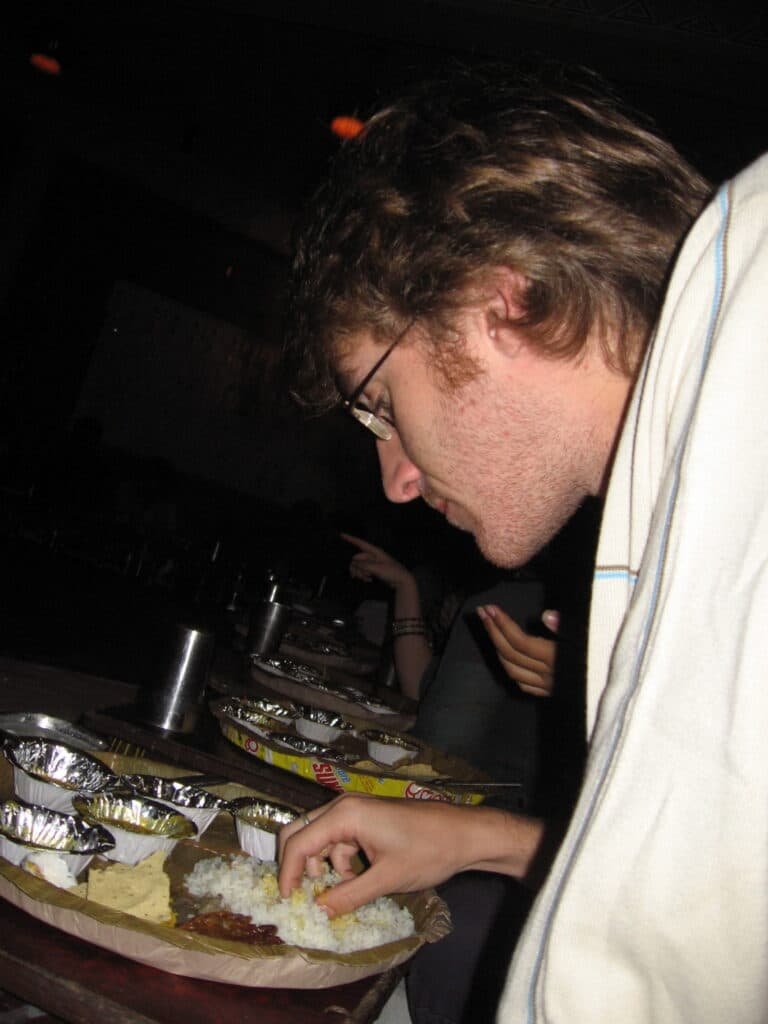
In this investigation
In many Indian meals, the hand does more than transport food to the mouth. It mixes rice with dal, folds roti around vegetables, gathers chutney into a bite, tests temperature and controls the ratio of components. The technique can look simple only to someone who has not learned it.
Modern explanations sometimes say Indians ate with their hands because the five fingers correspond to five elements, because fingertips stimulate digestive fire, or because touching food sends a unique signal to the stomach. These ideas belong to contemporary cultural and Ayurvedic interpretations, but they should not be presented as established biomedical mechanisms. The historical and culinary explanation is already substantial without them.
Indian food often arrives as components, not preassembled bites
A thali may contain grain or bread, dal, vegetables, curd, pickle, chutney and other accompaniments. The eater creates the balance bite by bite. Fingers can combine small amounts with fine control that would be awkward with a knife and fork.
Flatbreads also function as edible tools. A piece of roti can be torn, folded and used to lift a dry or sauced preparation. This reduces the need for separate utensils because the cuisine itself includes an edible interface.
THE RECORD
Indian hand-eating is best understood as a culinary system: food forms, serving styles, floor or plate arrangements, washing customs and right-hand etiquette evolved together.
The right hand is a rule of purity and etiquette
Across many Indian communities, the right hand is preferred for eating while the left is reserved for tasks considered unclean. The rule is cultural rather than universal, and practice varies by region and religion, but its persistence shows that hand-eating is governed by explicit etiquette.
Washing before and after meals is therefore not an optional addition to the system. Cleanliness practices are part of what makes direct eating socially acceptable.
Touch provides information before the bite
Rice consistency, roti softness, the viscosity of dal and the temperature of curry can all be felt directly. Modern sensory research confirms that tactile cues can influence food perception and emotional response.
Direct touch can therefore plausibly make eating feel more integrated or satisfying. That is a sensory explanation, not a claim that fingertips release digestive enzymes.
Five fingers and five elements: meaningful symbolism, weak physiology
Popular accounts often map the thumb and fingers to the five mahabhutas—earth, water, fire, air and space—and argue that joining them around food creates energetic balance. Such mappings may be spiritually or culturally meaningful within particular interpretive traditions.
Modern anatomy does not provide evidence that each finger carries a distinct elemental physiological function or that combining them during eating improves nutrient absorption. Tradivior should therefore preserve the symbolism without relabelling it as proven neuroscience.
THE EVIDENCE
Touch is genuinely part of multisensory eating and can change food evaluation in experiments. Claims that the Indian five-finger technique activates a unique digestive or elemental pathway are not experimentally established.
Does touching food prepare digestion?
The body does begin responding to food before nutrients reach the intestine. Sight, smell, taste and anticipation can trigger cephalic-phase responses. It is reasonable that tactile interaction contributes to the broader sensory context.
But the existence of anticipatory digestion does not show that eating with the fingers produces clinically superior digestion compared with utensils. No robust human evidence demonstrates such an advantage.
Mixing at the plate is a culinary advantage
Indian meals often let the diner control moisture and intensity. More dal can soften rice; curd can cool chilli; pickle can sharpen a bland bite. Fingers allow rapid adjustment to personal preference.
This helps explain why the practice persists even among people fully familiar with spoons and forks. The hand is not merely traditional—it can be better suited to the meal architecture.
Temperature sensing can prevent unpleasant bites
Freshly cooked rice and curry can be very hot. Touching and mixing allow heat to dissipate and provide an immediate warning before food reaches the mouth. That is a real physiological advantage of sensory feedback, though a modest one.
Could hand-eating increase mindfulness?
People often describe the practice as more attentive because each bite is assembled manually. This could increase awareness of texture and pace for some diners. Yet direct-touch experiments have sometimes increased consumption by making food more enjoyable.
Mindfulness should therefore not be assumed. It depends on how a person eats, not merely whether a spoon is absent.
Hygiene is non-negotiable
Hands carry microorganisms from surfaces, toilets, phones, animals and other people. WHO recommends handwashing with soap before preparing or eating food and after toilet use. Traditional washing customs and modern hand hygiene point in the same direction.
Long nails, rings and inadequate washing can trap contamination. The health comparison is therefore not “traditional hand versus modern fork,” but clean hand versus contaminated hand and clean utensil versus contaminated utensil.
Shared-plate etiquette limits contamination
In communal meals, many Indian etiquette systems distinguish the fingers used to touch shared serving vessels from those contacting food that has touched the mouth. Rules vary, but the underlying social concern is recognizable: avoid transferring saliva into communal food.
This is another reminder that direct eating traditions include hygiene boundaries, not indiscriminate contact.
Colonial ideas about cutlery distorted the comparison
European dining etiquette became associated with refinement during colonial modernity, and direct eating could be stereotyped as unsophisticated. That judgment confuses one cultural technology with universal progress.
India already had complex rules of serving, purity, sequence, hospitality and hand use. Cutlery changes the tool, not the existence of etiquette.
Regional India contains many eating systems
There is no single Indian meal. Banana-leaf meals in the south, rice-based eastern cuisines, roti-dominant northern meals, tribal foodways, Muslim traditions, coastal seafood cultures and urban restaurant styles all organize hand use differently.
Even within one family, spoons may be used for some foods and fingers for others. The tradition is flexible rather than doctrinally utensil-free.
Indian hand-eating is a learned technique, not simply the absence of cutlery
Eating rice, dal, vegetables, chutney and curd with one hand requires coordination. The fingers mix components in controlled proportions, compress loose grains into a manageable bite and guide food into the mouth without smearing the whole palm.
This technique is taught socially. Children learn how much of the hand should touch food, how large a bite should be and how to keep serving vessels clean. In that sense, hand-eating is a culinary skill rather than a default behaviour.
The right-hand rule combines practicality, symbolism and sanitation history
In many Indian communities, the right hand is reserved for eating and other auspicious or socially clean actions, while the left hand is associated with toilet hygiene and tasks considered impure. The rule is cultural and religious, but it also creates a behavioural separation between different categories of hand use.
That separation does not replace handwashing. A designated eating hand can still carry pathogens. Its significance lies in etiquette and purity classification, not in automatic sterility.
Rice-based meals make the hand especially functional
A spoon can lift cooked rice efficiently, but the hand can simultaneously mix rice with dal, rasam, sambar, ghee, pickle or vegetable in ratios adjusted bite by bite. The diner can make one mouthful wetter, spicier or milder than the next.
This adaptability helps explain why hand-eating remained strongly associated with Indian meals even after metal spoons were readily available.
Roti, dosa and other breads function as tools
Flatbreads can tear, fold, pinch and scoop, allowing the diner to handle curries without a separate utensil. The hand and bread work as a single tool system.
This is a recurring human solution seen in many bread-eating cultures. It reduces dependence on tableware and fits food traditions in which edible starches are designed to carry sauces and accompaniments.
Banana-leaf meals amplify the logic of tactile eating
In South Indian ceremonial meals, dishes may be placed at specific positions on a banana leaf and served in sequence. The diner mixes selected components by hand while servers add portions.
The leaf, serving order and hand technique form one cultural system. Evaluating the fingers alone misses how utensil, plate and meal structure evolved together.
Touch gives immediate information about temperature
Freshly cooked rice, dal and curry can be hot enough to burn the mouth. Fingers are highly sensitive to temperature and can detect excessive heat before a bite is taken.
This is a genuine practical advantage, especially when meals are served directly from a hot vessel. It does not require the stronger claim that touching food initiates a unique digestive reflex.
Mixing by hand can standardize texture for the individual
Indian meals often combine dry, wet, crisp, soft, sour and spicy components. The diner can alter texture by crushing, mixing or folding before the bite enters the mouth.
This makes the eater an active final-stage food preparer. In a cuisine built around modular dishes rather than fully plated compositions, that final customization is part of the meal.
The “five elements in the five fingers” explanation is symbolic, not anatomical
Popular Ayurvedic and spiritual accounts often associate the five fingers with the five great elements. As symbolism, this can make hand-eating meaningful and memorable.
There is no anatomical evidence that each finger channels a distinct element into food or that touching food with all five fingers creates a measurable nutritional effect. The symbolic explanation should be presented as symbolism rather than hidden physiology.
Claims about digestive enzymes beginning in the fingers are unsupported
Digestion does begin before food reaches the stomach through sight, smell, saliva and cephalic-phase responses. But these processes are triggered by the sensory anticipation of food, not by enzymes released from fingertips.
The hands can increase sensory engagement with a meal, which may influence attention and expectation. That is very different from saying that the fingers biochemically prepare digestion.
Mindfulness depends on behaviour, not merely on the utensil
Using the hand can make texture and portioning more noticeable, and some people experience this as slower or more attentive eating. But a person can also eat rapidly with the fingers while distracted by a phone or conversation.
Mindful eating is therefore better understood as attention to hunger, pace and sensory experience. Hand-eating can support that attention without guaranteeing it.
Hygiene depends on clean hands, nails and serving boundaries
Short clean nails reduce places where dirt and microbes can accumulate. Rings and bracelets can retain food or interfere with washing. In communal meals, diners should avoid returning a food-covered hand into shared serving bowls.
Traditional etiquette often already contains such boundaries. Modern microbiology strengthens the reason for them.
Water and soap matter more than whether the meal uses a spoon
Handwashing before eating is the decisive safety step. If safe water is unavailable, the health risk comes from sanitation infrastructure rather than from cultural preference for hand-eating itself.
This is especially important when interpreting historical practice. A hand-eating tradition in a community with rigorous washing customs is not epidemiologically equivalent to eating with visibly dirty hands.
Colonial dining etiquette reclassified cultural difference as hierarchy
European colonial observers often treated cutlery use as a marker of refinement and direct hand contact as evidence of backwardness. Such judgements reflected European social codes more than objective hygiene science.
Modern India still carries some of this status layering: cutlery may be preferred in formal settings while hand-eating remains normal at home or for specific dishes. The contrast is social as well as practical.
Indian restaurants abroad show how traditions adapt
Restaurants serving Indian food globally usually provide spoons and forks while allowing diners to use bread or fingers if they choose. The cuisine survives because its core flavours and combinations do not depend on policing one eating method.
This flexibility suggests the tradition is durable precisely because hand-eating is a culturally preferred technique, not a biological requirement.
The scientific case is strongest where culture and function overlap
Hand-eating is well suited to foods that must be mixed, torn, scooped and temperature-tested. It also increases tactile involvement and can heighten sensory awareness.
The evidence does not support claims that Indian hands uniquely improve metabolism, activate digestive fire or transmit elemental energy. The practice is already interesting without those additions.
Etiquette can preserve cleanliness even when the meal is tactile
Many Indian households distinguish the fingers used for eating from the parts of the hand used to hold cups, pass vessels or touch communal serving spoons. Such rules reduce the chance that food-coated fingers contaminate shared objects.
These practices demonstrate that hand-eating was never synonymous with indiscriminate touching. It developed alongside boundaries about purity, sharing and hospitality.
The most credible modern case for Indian hand-eating is therefore culinary and sensory. It gives the diner fine control over mixing, heat and texture and fits foods designed for tactile manipulation. Hygiene depends on washing and etiquette; digestion does not depend on fingers. That conclusion preserves the sophistication of the practice without turning symbolic explanations into anatomy.
The practice is culturally specific, functionally sophisticated and medically neutral when hygiene is good.
What survives scrutiny?
- Hand-eating is deeply embedded in many Indian culinary traditions.
- Indian meal architecture often makes fingers practical for mixing and assembling bites.
- Touch contributes meaningful sensory information about texture and temperature.
- Modern studies show tactile cues can affect liking and consumption, though evidence is limited.
- Claims that the five fingers correspond to distinct physiological elements are not established by modern science.
- There is no robust evidence that hand-eating uniquely improves digestion or nutrient absorption.
- Right-hand etiquette and washing practices are important cultural components.
- Hand hygiene is essential because contaminated hands can transmit foodborne pathogens.
- Hand-eating can remain culturally meaningful and practically effective without needing a medical justification.
The Tradivior Evidence Profile
Historical Authenticity — Strong. Eating with the hand is a long-standing and widespread Indian culinary practice governed by regional etiquette.
Original-Purpose Evidence — Strong. Cuisine design, practical manipulation, purity customs and social etiquette explain the practice better than modern digestive claims.
Scientific Mechanism — Moderate. Touch influences sensory perception and temperature awareness; unique elemental or digestive pathways are unsupported.
Experimental Evidence — Limited. Behavioural studies support tactile effects on food experience, but direct clinical comparisons of Indian hand-eating and utensils are lacking.
Cross-Cultural Evidence — Strong. Direct hand-eating exists globally, showing that India is a distinctive elaboration of a wider human practice.
Modern Relevance — Strong. The practice remains practical and culturally important when hygiene is maintained.
The Tradivior Conclusion
Primarily Symbolic/Cultural. Indians traditionally ate with their hands because Indian foods, serving styles and etiquette made the hand an effective dining tool. Touch genuinely enriches sensory experience and gives precise control over each bite. The stronger modern claims—that five fingers activate five physiological elements or uniquely switch on digestion—lack convincing evidence. The tradition does not need those claims to be valuable. It is a sophisticated culinary practice whose benefits are sensory, practical and cultural, provided the hands are clean.
Continue investigating
Sources & further reading
- Pramudya RC, Seo HS. “Hand-Feel Touch Cues and Their Influences on Consumer Perception and Behavior with Respect to Food Products.” Foods. 2019;8(7):259.
- Madzharov AV. “Self-Control and Touch.” Journal of Retailing. 2019;95(4):170–185.
- Spence C. “Interacting with food: Tasting with the hands.” International Journal of Gastronomy and Food Science. 2022;30:100620.
- World Health Organization. Handwashing and Five Keys to Safer Food guidance.
- Achaya KT. Indian Food: A Historical Companion. Oxford University Press, 1994.
Continue exploring

Partially Supported
Why Do Humans Repeat Rituals?
Rituals repeat because fixed sequences create predictability, memory, identity and coordination. Experiments suggest ritualized repetition can regulate anxiety and social connection, while mantra repetition shows small benefits for psychological distress;…

Primarily Symbolic/Cultural
Why Do Humans Make Offerings to the Sacred?
Offerings make relationships with gods, ancestors and sacred powers materially visible. Gifts can express reciprocity, devotion, gratitude, sacrifice and group commitment; costly-signalling models illuminate some public effects but cannot substitute…

Partially Supported
Why Do Festivals Bring Entire Communities Together?
Festivals concentrate shared time, symbols, music, food and synchronized action, making community membership unusually visible. Research links co-participation and synchrony with stronger social ties, but cohesion can be inward-facing and…
Primarily Symbolic/Cultural
Why Do Humans Hold Funerals?
Funerals transform death from a private loss into a publicly recognized social transition. Archaeology shows deep roots for mortuary ritual, while anthropology and grief research support roles in social support,…
Picked for your curiosity
Enable JavaScript to build a reading profile and see recommendations.