 tradivior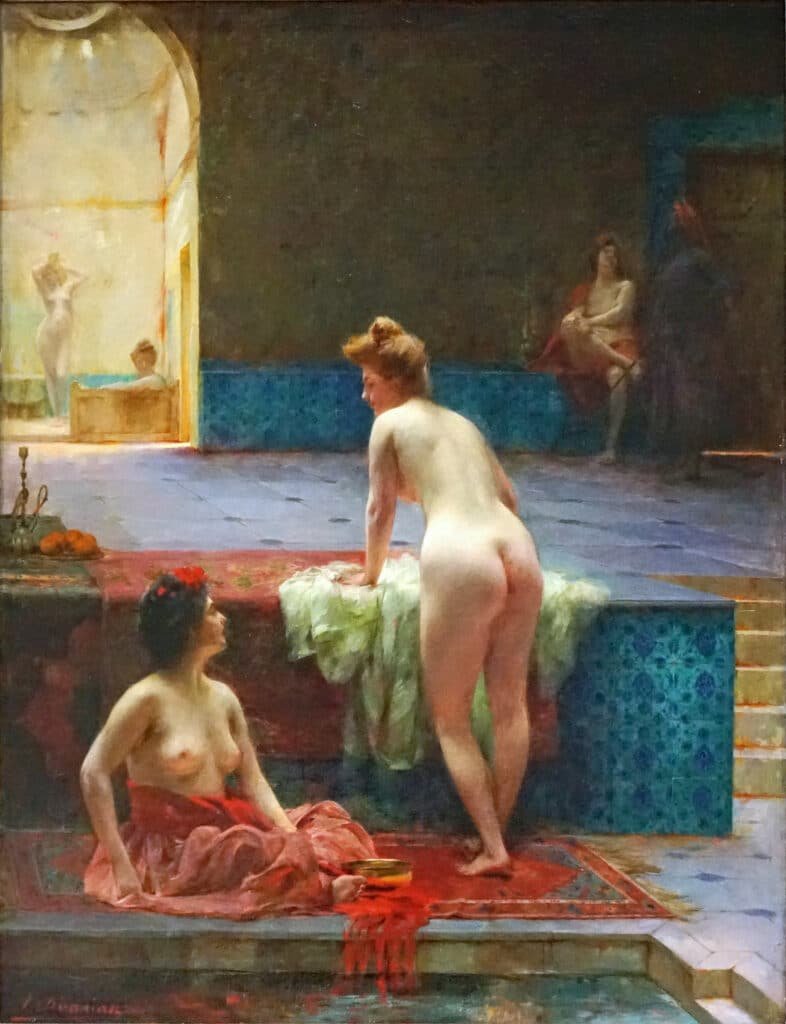
In this investigation
The hammam became one of the most recognizable institutions of cities from North Africa to Anatolia and beyond. But it was neither invented from nothing by Islam nor merely a Roman bath with a new name. Muslim societies inherited older bathing technologies, reshaped them around new religious and social requirements, and turned the public bath into an institution with a distinctive life of its own.
The bath existed before the hammam
Public bathing has a deep Mediterranean and Near Eastern history. Roman and Byzantine cities built elaborate bathhouses long before the Islamic conquests. Early Islamic communities in Arabia did not initially possess hammams on the later urban scale. As Muslim rule expanded into territories with established bathing infrastructure, those buildings and technologies became part of a new cultural landscape.
Modern scholarship therefore describes the hammam as a history of inheritance and transformation. Roman-Byzantine bathing forms, regional building traditions and Islamic rules interacted. The result spread across an enormous geography and later reached particularly elaborate forms in Ottoman cities.
Why Islam gave public bathing new importance
Islamic religious life gives water an explicit role in ritual purification. Wudu involves washing specified parts of the body before prayer under relevant conditions, while ghusl requires full-body washing in particular circumstances. Public hammams were not necessary for every ablution, but in cities without private bathrooms they could provide infrastructure for full washing as well as ordinary cleanliness.
This religious context did not make bathhouses uncomplicated sacred spaces. Muslim jurists and moral authorities also worried about nudity, modesty, luxury and conduct inside public baths. Historical regulations attempted to reconcile a useful urban institution with religious expectations.
THE RECORD
Early Islamic bath culture grew through contact with existing Roman, Byzantine, Sasanian and regional traditions. Islamic requirements of purification helped make bathing important, while legal and moral rules reshaped how the inherited institution operated.
Architecture turned water into a sequence
The hammam typically organized bathing through rooms of changing temperature rather than a single pool. Visitors undressed, moved through progressively warmer spaces, washed, sweated, rested and sometimes received scrubbing or massage. Heated floors, furnaces, water systems and domed interiors made the bath an engineered environment.
The Islamic hammam also differed from some Roman bathing practices in its emphasis on washing with flowing or poured water rather than relying on immersion in a shared pool. Architecture therefore responded not only to climate and technology but to changing concepts of acceptable cleansing.
A bathroom became a social institution
For centuries, bathing was not primarily private. Hammams served as meeting places where people exchanged news, rested and socialized. Their importance was particularly significant where domestic plumbing was limited. They could also become settings for events associated with marriage, childbirth and other transitions.
Women and men generally used baths at different times or in separate facilities. For women in particular, the hammam could provide a socially sanctioned public environment beyond the household, although access and conduct were also constrained by gender norms.
Was the hammam a public-health technology?
Partly—but the modern phrase can mislead. Bathhouses enabled large urban populations to wash when private bathing facilities were scarce. Medieval writers explicitly discussed removing sweat and bodily dirt, and authorities regulated baths as part of urban life. That is genuine practical hygiene.
Yet communal bathing also created potential routes for infection. Historical authorities eventually worried about contagious disease in bathhouses, and later sanitary administrations introduced inspection and disinfection measures. Warmth and washing are not sterilization. A public bath can improve access to cleanliness while simultaneously creating risks if water, surfaces or practices are poorly managed.
THE EVIDENCE
The hammam clearly supported bodily cleanliness and access to bathing. Calling it a modern sanitary system, however, would overstate the case: historical baths mixed practical hygiene with ritual, medicine, social life and their own public-health risks.
What about steam and heat as medicine?
Premodern medical traditions attributed physiological effects to heat, sweating and bathing, and physicians sometimes prescribed baths. Modern research can separately examine heat exposure and hydrotherapy, but it cannot validate an entire historical medical theory simply because warmth affects circulation or subjective wellbeing.
The hammam experience also bundles multiple exposures: heat, humidity, washing, scrubbing, rest, social interaction and sometimes massage. Any modern health claim must identify which component is actually being tested.
Why did the institution spread so successfully?
The hammam solved several urban problems at once. It supplied bathing infrastructure, supported religiously meaningful washing, offered warmth and body care, created a social venue and could generate income within the city. An institution with many functions has more ways to survive than one built for a single ritual.
Its spread also followed cities, empires and architectural exchange. The Ottoman hammam is therefore one chapter in a much longer story, not the origin of every Islamic public bath.
The hammam was an urban service before it was a wellness destination
For much of its history, the public bath served people whose homes did not contain private plumbing or large supplies of heated water. A hammam concentrated furnaces, water storage, drainage, attendants and bathing rooms into shared infrastructure.
This made frequent full-body washing practical in dense cities without requiring every household to duplicate an expensive heating system. The institution’s spread therefore reflects urban engineering as much as religious preference.
Roman and Byzantine bathing provided an architectural inheritance
Islamic public baths did not emerge from nothing. Across the eastern Mediterranean and Near East, earlier Roman and Byzantine bath traditions had already developed heated-room sequences, furnaces, water systems and communal bathing architecture.
The hammam transformed that inherited technology within new religious, social and urban contexts rather than simply copying the Roman thermae unchanged.
The room sequence turns bathing into controlled thermal exposure
Traditional hammams often lead bathers from a cooler changing area into progressively warmer rooms and then back toward cooling and rest. Heated stone surfaces, humid air and water create a different sensory environment from a quick modern shower.
Gradual transitions may feel more tolerable than sudden exposure to intense heat, but the exact temperatures and architecture vary by region and period. “The hammam” is a family of bath traditions rather than one standardized thermal protocol.
Islamic purity law increased demand for reliable washing spaces
Islam requires ritual ablution before prayer and full-body washing after certain states. A hammam was not required for every ablution, and ritual purity is not identical to ordinary hygiene, but urban bathhouses could make full washing more accessible.
This created a strong institutional fit: older bath technology met a religious culture in which washing had recurring legal and devotional importance.
Public bathing was also a gendered social world
Many hammams operated separate times or spaces for women and men. For women whose movement in public could otherwise be restricted, the bath could provide an important setting for socializing, celebrating births or marriages, exchanging news and assessing potential marriage connections.
These social functions help explain why the hammam remained important even when the physical act of washing could theoretically occur elsewhere.
Bath attendants turned washing into skilled labour
Scrubbing, massage, hair care, shaving and other services could be performed by attendants whose work made the bath more than a room with hot water. The institution supported specialized occupations and local economies.
This labour dimension matters historically because public bathing depended on people who heated water, maintained boilers, cleaned rooms and served customers.
Steam does not “open pores” in the literal sense
Popular spa language often says heat opens pores so toxins can leave. Skin pores do not open and close like valves. Heat increases skin blood flow and sweating, while moisture and washing soften surface oils and keratin.
That can make cleansing feel easier, but sweating is primarily a thermoregulatory process, not a major route for removing environmental toxins from the body.
Heat can relax muscles and temporarily change circulation
Warm environments cause vasodilation and increase skin blood flow. Many people experience reduced muscle stiffness and subjective relaxation after hot bathing. Balneotherapy research supports symptom relief for some musculoskeletal conditions, although much of that evidence concerns repeated mineral-water treatment rather than ordinary hammam visits.
The physiological effect is therefore plausible but should remain proportionate: a hot bath can feel restorative without being a treatment for every chronic disease.
Shared bathing also creates infection-control challenges
Warm, wet public environments require careful cleaning and ventilation. Fungal skin infections, contaminated surfaces and poorly maintained water systems can spread disease if hygiene is inadequate.
Historical public-health value and modern infection-control requirements are not contradictory. Shared bathing can improve access to washing while simultaneously requiring maintenance to keep the institution safe.
The bathhouse depended on enormous energy inputs
Heating large quantities of water and masonry required fuel. In some cities, bath furnaces consumed substantial wood or other combustible material, tying hammam operation to urban fuel markets and environmental pressures.
Modern heritage baths face the same basic engineering problem in a different form: how to preserve thermal experience while reducing energy waste.
Architecture protected privacy while preserving sociability
Entrances, changing rooms, bent corridors and interior chambers could separate the bath from the street visually while still accommodating many people inside. The building therefore mediated between modesty and communal activity.
This is one reason hammams became architecturally distinctive civic institutions rather than simple pools.
Why hammams declined with domestic plumbing
When households gained reliable hot water, showers and bathrooms, the hammam lost its monopoly on convenient washing. Many public baths closed or shifted toward heritage, leisure and tourism.
This decline supports the practical-infrastructure explanation: when the original household need disappeared, only baths with strong social, aesthetic or cultural value remained competitive.
The modern spa version can distort the historical institution
Luxury hotels often market hammam-inspired treatments as exotic wellness experiences. Historical baths, by contrast, were ordinary urban infrastructure used by broad segments of society.
Remembering that everyday function prevents a working social institution from being reduced to scented steam, marble and massage for tourists.
Heat exposure is not safe for everyone
Very hot, prolonged bathing can lower blood pressure, cause dehydration or provoke dizziness. People with unstable cardiovascular disease, severe heat intolerance or certain medical conditions may need individualized advice.
Traditional use involved familiarity and social supervision; modern visitors should not interpret intensity as proof of greater benefit.
The hammam’s strongest legacy is institutional
The bathhouse connected hygiene, religion, architecture, labour and sociability in one place. That combination explains its remarkable durability more convincingly than a single medical mechanism.
Modern thermal research can validate some effects of heat and immersion, but the institution mattered because it solved several urban problems simultaneously.
Scrubbing is effective because it is mechanical exfoliation
Kese mitts and related bath tools remove superficial scale and loosen debris through friction. The immediate smoothness after a hammam therefore has a straightforward skin-surface explanation.
Excessive friction can also irritate skin, especially in eczema or after shaving. More visible skin removal is not evidence of deeper cleansing.
The hammam also functioned as a place of life-cycle ritual
Bath visits could accompany weddings, childbirth and other transitions, especially in Ottoman and related traditions. The bath therefore provided a semi-public setting in which bodily preparation and social ceremony overlapped.
This helps explain why private plumbing did not immediately make the institution culturally redundant.
Ventilation distinguishes pleasant humidity from unsafe heat stress
A hot humid room limits evaporative cooling, so body temperature can rise even without extreme air temperature. Adequate ventilation, hydration and opportunities to leave the hot room are practical safety controls.
The traditional sequence of rooms can therefore be understood partly as pacing exposure rather than proving that longer heat is better.
Public baths also depended on rules of cleanliness
Shared facilities only work when users and attendants maintain norms around washing, towels, waste and bodily behaviour. Hammam etiquette therefore served social order and practical sanitation at the same time.
Modern spas often inherit the visible architecture while hiding this institutional labour. Clean water, surface disinfection, ventilation and trained staff are what allow a communal bath to remain safe at high turnover.
The hammam’s history argues against a simple “detox spa” story
Its success came from combining urban water infrastructure, ritual washing, affordable access, skilled bathing services and social life. Heat and steam mattered, but they were only one layer.
Reducing the institution to sweating out toxins replaces a rich historical explanation with a weak physiological claim.
The enduring achievement of the hammam was not simply heat: it was turning water, architecture, labour and social norms into reliable shared urban bathing.
Modern heritage baths can therefore preserve architecture, washing sequences and sociability while using contemporary water treatment, ventilation and infection control. Preservation of culture does not require preservation of older sanitation limits.
Its future depends on keeping both functions visible.
What survives scrutiny?
- Public bathing in the Islamic world inherited and transformed older Mediterranean and regional bath traditions.
- Islamic requirements surrounding purification strengthened the cultural importance of access to washing.
- Hammams supplied practical urban hygiene before private plumbing became widespread.
- They were also social, economic, ceremonial and sometimes medical spaces.
- Historical concerns about modesty and morality show that their adoption was negotiated rather than automatic.
- Communal baths could create infection risks as well as cleanliness benefits.
- Modern claims about heat or steam should be assessed separately from the historical institution as a whole.
The Tradivior Evidence Profile
Historical Authenticity — Strong. Hammams are extensively documented across the medieval and early-modern Islamic world.
Original-Purpose Evidence — Strong. Cleanliness, ritual purification, social use and body care are clearly documented functions.
Scientific Mechanism — Moderate. Washing, heat and removal of bodily dirt have straightforward physical effects, but historical medical theories should not be equated with modern physiology.
Experimental Evidence — Limited. Modern studies of heat, bathing and hydrotherapy do not directly test the complete historical hammam institution.
Cross-Cultural Evidence — Strong. The hammam itself emerged from extensive cultural exchange and belongs to a much wider human history of communal bathing.
Modern Relevance — Moderate. Hammams remain culturally meaningful and can provide relaxation and bathing, while contemporary hygiene standards remain essential.
The Tradivior Conclusion
Historically Practical. Hammam culture spread because Muslim societies took an older urban technology and made it serve a new combination of needs: washing, ritual purification, social life, body care and civic infrastructure. Its success is evidence of cultural adaptation rather than a single invention. The bath genuinely improved access to cleanliness, but it was not a magically sterile public-health system; its history includes both hygienic benefits and communal risks.
Continue investigating
Sources & further reading
- Julie Peteet, The Hammam through Time and Space, 2024.
- Elizabeth Williams, “Baths and Bathing Culture in the Middle East: The Hammam,” Metropolitan Museum of Art.
- Research on bathing culture and hammams in early Islamic history, Marmara University, 2022.
- Oxford Academic, “Governing Water and Public Health in a Muslim City: Cairo in the Thirteenth and Fourteenth Century.”
- Encyclopaedia Iranica, “Bathhouses.”
Continue exploring
Partially Supported
Why Did Traditional Medicine Classify the Body Into Systems?
Ayurveda, Chinese medicine, Greco-Arabic medicine and other traditions organized illness through coherent but very different models of the body. Tradivior will ask what these systems achieved clinically and where modern…
Primarily Symbolic/Cultural
Why Do Societies Create Prohibitions Around Sacred Days, Places and Objects?
Sacred time and space are often protected by rules about work, food, touch, speech or access. Tradivior will investigate how prohibitions create boundaries and commitment, and when they also conserve…
Primarily Symbolic/Cultural
Why Do Menstrual Taboos Appear Across Cultures?
Menstruation has been treated as sacred, dangerous, polluting, powerful or private in different societies. Tradivior will investigate why restrictions emerged and distinguish rest or privacy from exclusion that harms health…
Primarily Symbolic/Cultural
Why Are Certain Spaces or People Considered Polluting?
Ideas of contamination often extend far beyond dirt or microbes to death, sexuality, caste, food and sacred boundaries. Tradivior will compare ritual pollution systems with modern disgust science without equating…
Picked for your curiosity
Enable JavaScript to build a reading profile and see recommendations.