 tradivior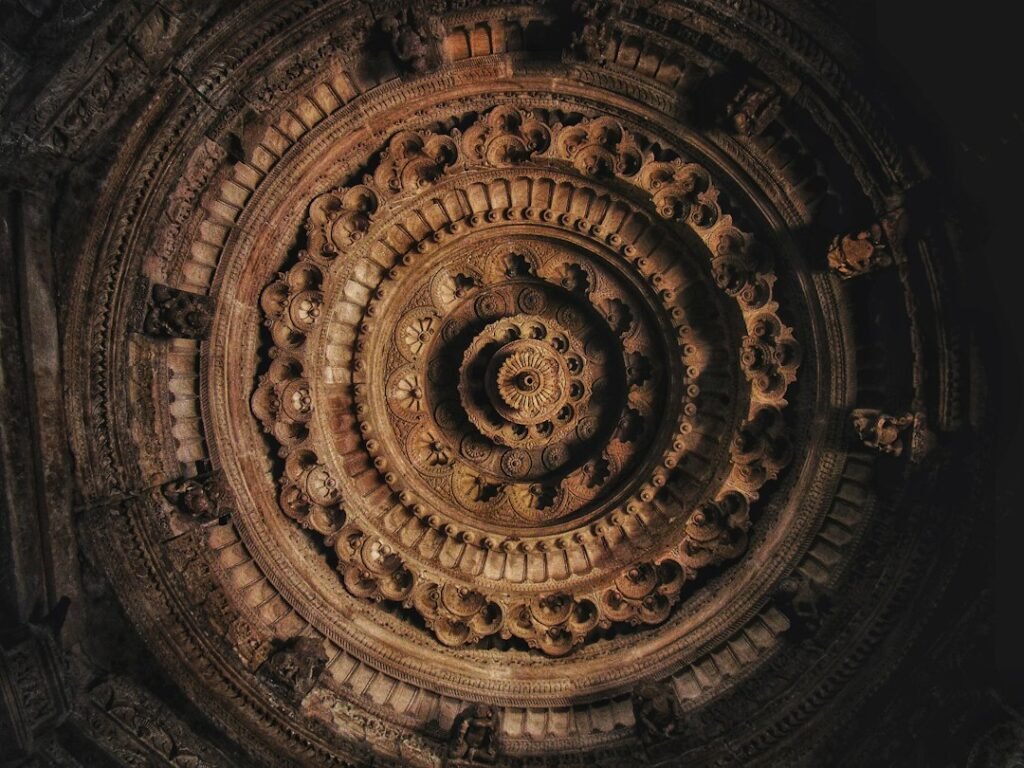
In this investigation
A stepwell begins with a simple problem: the water table is below ground. In dry and seasonally variable regions, people need a reliable way to reach water as its level rises and falls. A staircase descending toward a well or reservoir solves that problem directly.
What makes Indian stepwells extraordinary is what happened next. Functional access routes became multi-storey subterranean architecture. Pillared pavilions, carved walls, shrines, resting platforms and sculptural programs transformed some water structures into public monuments.
A stepwell follows the water table rather than ignoring it
Ordinary wells provide access through a vertical shaft. Stepwells add a descending path so people can approach the water directly as its level changes. This is particularly useful where groundwater fluctuates seasonally.
THE INFRASTRUCTURAL LOGIC
The steps are not ornamental additions to a well. They are the core mechanism that allows human access to a variable water level.
Stepwells are especially associated with western India
Gujarat and Rajasthan are particularly famous for elaborate stepwells, though related forms occur elsewhere. These regions face strong seasonal heat and irregular rainfall, making shaded below-ground water access especially valuable.
The tradition developed over centuries
UNESCO describes stepwells as a distinctive form of subterranean water-resource and storage system on the Indian subcontinent. The most monumental examples belong to later historical periods when patrons combined hydraulic engineering with sophisticated stone construction and sculpture.
Rani-ki-Vav represents the mature monumentality of the form
Rani-ki-Vav at Patan in Gujarat, built in the eleventh century, is among the most celebrated surviving examples. UNESCO describes it as both a functional water-management structure and an “inverted temple” celebrating the sanctity of water.
Its descending corridor, pavilion levels, tank and deep well shaft show how a utilitarian structure could become an architectural sequence.
The architecture moves downward rather than upward
Many monumental buildings assert themselves by rising above the landscape. A stepwell creates drama in the opposite direction. From ground level, the structure may appear modest before opening into a progressively deeper architectural world.
Descending toward water creates a natural ritual sequence
Movement down a long stair changes temperature, light and enclosure. The water becomes increasingly central as the visitor approaches it. Religious interpretation can therefore emerge from the physical experience itself: descent, purification, water and return upward already form a powerful symbolic sequence.
Water infrastructure could become sacred without ceasing to be practical
South Asian religions repeatedly attach purity, fertility and auspiciousness to water. Stepwells could include shrines and sculptures that made those meanings explicit. But sanctity did not replace utility: a sacred water structure still supplied communities with water.
Patronage made water provision a public moral act
Funding wells, tanks and stepwells could generate prestige and religious merit. Providing water in a dry region visibly benefited residents, travellers and animals, allowing patrons to combine philanthropy, commemoration, piety and public status.
Women were important patrons of stepwells
Some famous stepwells are associated with female patrons. Rani-ki-Vav itself is traditionally linked to Queen Udayamati and memorializes King Bhima I. Water patronage could give elite women an avenue for memorial and religious public works.
Stepwells served social life as well as water collection
Fetching water is repetitive daily labour. A large shaded stepwell naturally becomes a place where people meet, wait, rest and exchange information. Users responsible for household water collection could spend significant time there, making the stepwell a social environment as well as infrastructure.
Travellers and merchants also benefited. Reliable water points across hot regions supported movement, animals and trade.
Depth creates a measurable thermal advantage
Below-ground spaces are less exposed to direct solar radiation and large daytime temperature swings. Massive stone and earth provide thermal buffering. Recent architectural research confirms that medieval Indian stepwells can create meaningfully cooler microclimates than exposed surface conditions.
THE SCIENCE
The cooling effect does not require hidden ancient air-conditioning technology. Shade, thermal mass, reduced solar gain, depth and moisture are sufficient physical mechanisms.
Shade matters before evaporation is considered
Deep walls and pavilions block direct sunlight for much of the day. Surfaces that remain shaded absorb less solar heat than exposed ground. This alone can make the lower levels more comfortable in summer.
Thermal mass slows temperature change
Stone and surrounding earth absorb and release heat slowly, reducing rapid fluctuations compared with light surface structures. The result is a more stable environment, especially at greater depth.
Water can contribute additional evaporative cooling
Where exposed water evaporates, some heat is removed from the local environment. The magnitude depends on humidity, airflow and exposed surface area. Evaporation therefore contributes to cooling but should not be treated as the sole explanation for the microclimate.
The staircase creates thermal zoning
Moving downward means moving through different combinations of shade, air movement, stone exposure and proximity to water. Users can occupy different levels according to season and water availability.
Pavilions turn circulation into habitable space
Monumental stepwells often include pillared pavilions where users can pause. These create shade and social space within the descent, supporting resting, meeting and ritual as well as access to water.
Decoration converts infrastructure into civic memory
Hundreds of sculptures at Rani-ki-Vav transform the descent into an iconographic program. Religious, mythological and secular imagery turns a water system into a cultural archive and signals that water management was important enough to deserve artistic excellence.
An “inverted temple” is an interpretation grounded in actual form
UNESCO uses the phrase “inverted temple” for Rani-ki-Vav because the architectural sequence descends toward water while carrying dense sacred imagery. The phrase is useful when treated as description rather than proof that every stepwell was conceived according to one ritual blueprint.
Not every stepwell was monumental
Surviving celebrated examples can distort our view. Many water structures were simpler and primarily functional. Monumentality reflects patronage, wealth, location and status rather than the minimum technical requirements of accessing groundwater.
The most elaborate stepwells demonstrate surplus investment
A community does not need thousands of sculptures to reach groundwater. Decoration therefore tells us about values beyond hydraulics: memory, merit, identity and prestige.
Groundwater change can make the architecture obsolete
A stepwell depends on local hydrology. If the water table shifts or a river changes course, the structure may cease functioning as intended. Rani-ki-Vav itself no longer functions as a water source after historical changes to the Saraswati River system.
Modern piped water weakened the old use pattern
Municipal pipes and pumps reduce the need to descend physically to groundwater. Many stepwells therefore lost their everyday function in the modern era. When use disappears, maintenance often declines and pollution can increase.
Abandonment reveals how infrastructure depends on social routines
A water structure survives best when people need it, clean it and regulate its use. Once those routines disappear, even sophisticated architecture can deteriorate. Conservation therefore requires more than restoring stone; it requires understanding the vanished water system and social practices around it.
Stepwells remain relevant to climate-responsive design
Contemporary architects study stepwells because their below-ground spaces demonstrate passive thermal principles that remain useful. Shade, thermal mass, earth coupling and evaporative effects can reduce dependence on mechanical cooling when adapted carefully.
Copying the form is not enough
A decorative staircase descending into a courtyard is not automatically climate-responsive. Thermal performance depends on orientation, depth, materials, airflow and moisture. Traditional architecture is useful when its mechanisms are understood rather than aesthetically imitated.
Water security remains the deeper lesson
Stepwells remind modern cities that water infrastructure can be civic architecture rather than hidden engineering. They made the availability, depth and social importance of water physically visible.
Water access also required social rules
A communal stepwell only works when users regulate access, cleanliness, maintenance and repair. In practice, water architecture is inseparable from water governance. Communities had to decide who maintained the structure, how contamination was prevented, when repairs were funded and how access was organized during scarcity.
This social layer helps explain why water structures so often accumulated ritual rules, patron inscriptions and community memory. Architecture could store water, but institutions had to keep the system usable.
What survives scrutiny?
- Stepwells are a distinctive South Asian form of subterranean water infrastructure.
- The staircase provides practical access to groundwater as its level changes seasonally.
- Western and northern India’s climate made shaded below-ground water access particularly valuable.
- Monumental stepwells combined water management with patronage, religion, social gathering and artistic display.
- Rani-ki-Vav is a highly developed eleventh-century example combining hydraulic function with temple-like architecture and sculpture.
- Women were important patrons of some stepwells, complicating assumptions about elite public architecture.
- Depth, shade, thermal mass and water create a real passive-cooling microclimate.
- Recent architectural research confirms the cooling performance of medieval stepwell environments.
- Not every stepwell was monumental; elaborate decoration reflects surplus patronage rather than hydraulic necessity.
- Modern groundwater change and piped water can make stepwells obsolete even when the architecture survives.
- Traditional stepwells offer useful principles for climate-responsive design, but those principles must be understood technically rather than copied superficially.
The Tradivior Evidence Profile
Historical Authenticity — Strong. Stepwells are extensively documented archaeologically and architecturally across India, especially in Gujarat and Rajasthan.
Original-Purpose Evidence — Strong. Groundwater access, storage, public use, patronage and ritual functions are directly supported by surviving structures and inscriptions.
Scientific Mechanism — Strong. Depth, shade, earth coupling, thermal mass and evaporation provide clear passive-cooling mechanisms.
Experimental Evidence — Moderate to Strong. Modern architectural studies confirm meaningful thermal advantages in stepwell environments.
Cross-Cultural Evidence — Moderate. Subterranean water structures exist elsewhere, but the monumental stepped-well tradition is especially characteristic of the Indian subcontinent.
Modern Relevance — Strong. Stepwells remain relevant to water heritage, passive cooling, climate adaptation and public-space design.
The Tradivior Conclusion
Evidence Supported. Indian stepwells became monumental because vital water infrastructure accumulated additional social functions: patronage, ritual, memory, rest, trade and artistic display. Their environmental performance is also real. Descending below ground creates shade and thermal stability, while water and massive masonry contribute to cooler microclimates. The sophistication lies in combining hydraulic necessity with architecture and public life—not in hidden technology. Stepwells survive scrutiny as one of South Asia’s clearest examples of infrastructure becoming culture.
Continue investigating
- Why Did Traditional Communities Build So Many Water-Harvesting Systems?
- Why Did Communities Protect Water Sources Through Ritual Rules?
- Why Did Courtyard Houses Appear Across Hot Climates?
Sources and further reading
- UNESCO World Heritage Centre. “Rani-ki-Vav (the Queen’s Stepwell) at Patan, Gujarat.” World Heritage List.
- UNESCO New Delhi. “Rani-ki-Vav (The Queen’s Stepwell).” 2024.
- “Passive cooling techniques in medieval Indian stepwells.” Frontiers of Architectural Research. 2024;13(6):1447–1460. doi:10.1016/j.foar.2024.03.014.
- ICOMOS evaluation documentation for Rani-ki-Vav, including comparative analysis of Indian stepwells.
- Architectural and historical scholarship on stepwells of Gujarat, Rajasthan and northern India.
- Research on groundwater architecture, passive cooling and climate-responsive traditional construction.
Continue exploring
Partially Supported
Why Do Religious Processions Take Sacred Things Into the Street?
Religious processions move sacred presence, symbols and communities through public space. They can expand shared identity through coordinated movement and visibility, but the same public occupation can mark boundaries and…
Primarily Symbolic/Cultural
Why Is Diwali Built Around Light?
Diwali’s lamps are historically and religiously meaningful symbols whose interpretations vary across Hindu, Jain, Sikh and regional traditions. Light makes sacred time visible and transforms homes and streets; modern science…

Primarily Symbolic/Cultural
Why Did Indians Circle Sacred Fire at Weddings?
Sacred fire in Hindu weddings is historically a witness, offering medium and divine presence rather than a hidden biomedical technology. Circumambulation and vows make marriage public, memorable and religiously binding;…
Historically Practical
Why Did Humans Boil Food?
Boiling transformed human diets by making grains, pulses, roots, meat and water safer and softer in a single vessel. Heat kills most foodborne microbes and moist cooking improves digestibility, but…
Picked for your curiosity
Enable JavaScript to build a reading profile and see recommendations.