 tradivior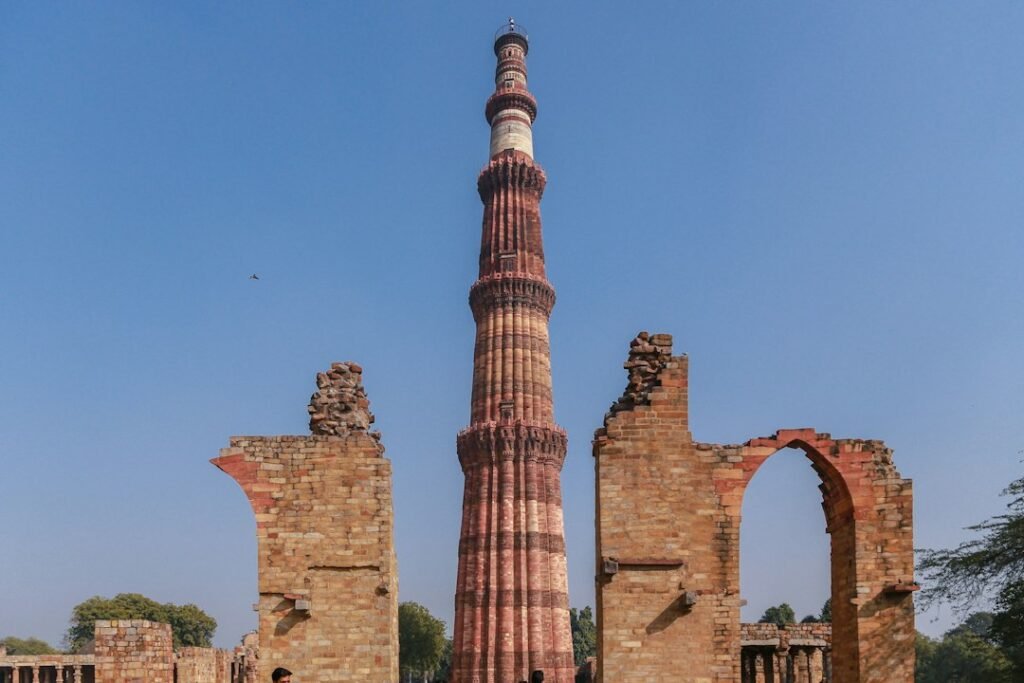
In this investigation
The Iron Pillar of Delhi resists corrosion because its material composition, manufacturing history and environment produced an unusually protective rust layer. The pillar is remarkable, but it is not rust-free and it does not require a mysterious lost alloy.
Modern materials science has studied the pillar extensively. The strongest explanations focus on phosphorus-rich wrought iron, slag inclusions, low sulfur and manganese, repeated forge welding and the formation of a stable protective surface film.
The pillar is a massive forged iron object
The Delhi Iron Pillar, now at the Qutb complex, dates broadly to the Gupta period and bears an inscription praising a king usually identified with Chandragupta II.
Its size demonstrates advanced large-scale forging and forge-welding skill.
It is not stainless steel
The material is wrought iron rather than modern stainless steel. It does not contain the high chromium content used in stainless alloys.
Claims that ancient Indians independently invented stainless steel therefore misidentify the material.
The iron contains relatively high phosphorus
Analyses have found phosphorus levels higher than those in many modern irons, alongside low sulfur and manganese.
This composition reflects the ore and ancient smelting process rather than intentional modern alloy design.
Phosphorus influences the corrosion film
Research led by R. Balasubramaniam proposed that phosphorus promotes formation of an adherent passive layer including iron hydrogen phosphate hydrate and other corrosion products.
This layer slows further corrosion by limiting transport of moisture and oxygen to fresh metal.
Slag particles matter too
Ancient wrought iron contains non-metallic slag inclusions distributed through the metal.
These inclusions can influence local electrochemical reactions and the development of the protective film.
Delhi’s environment contributes
Corrosion depends on humidity, rainfall, pollutants and wet-dry cycling. The pillar’s exposure history helped the protective layer stabilize.
The same material in a marine environment might behave differently.
The pillar has corroded
Its surface contains rust and corrosion products. The remarkable feature is the slow overall rate and stable protective layer, not complete immunity.
Calling it “rustproof” oversimplifies the evidence.
Ancient smiths did not need corrosion electrochemistry
They needed good ironmaking and forging practices. The long-term corrosion benefit could emerge from process chemistry without the smiths knowing the modern mechanism.
This distinction respects craftsmanship without projecting modern theory backward.
Large-scale forge welding was itself impressive
The pillar was produced from multiple iron blooms consolidated and welded together.
Creating such a massive object required temperature control, labor organization and skilled hammering.
Why myths arose
Visitors see an ancient iron monument surviving outdoors and naturally assume something extraordinary must have been added to the metal.
The real explanation—materials chemistry interacting with manufacturing and climate—is more subtle but well supported.
What survives scrutiny?
- The Iron Pillar is an exceptional Gupta-period wrought-iron monument.
- It is not stainless steel and is not literally rust-free.
- Relatively high phosphorus and ancient slag-rich iron contribute to protective corrosion behavior.
- A stable passive corrosion layer slows further attack.
- Environmental exposure and wet-dry cycles also matter.
- The smiths’ empirical process can explain the result without assuming modern corrosion theory.
The Tradivior Evidence Profile
Historical Authenticity — Strong. The pillar, inscription and metallurgical evidence are directly available.
Original-Purpose Evidence — Strong for monumental ironworking; Limited for intentional corrosion optimization.
Scientific Mechanism — Strong. Modern corrosion science explains the protective film and material behavior.
Experimental Evidence — Strong. Composition, microstructure and corrosion products have been analyzed directly.
Cross-Cultural Evidence — Moderate. Other ancient irons show durable behavior, but the pillar is unusually famous and well preserved.
Modern Relevance — Strong. It remains important in archaeometallurgy and corrosion research.
The Tradivior Conclusion
The Iron Pillar resists corrosion because ancient manufacturing accidentally or empirically produced a material whose chemistry forms a protective surface under Delhi conditions.
That explanation does not diminish the achievement. The true marvel is skilled large-scale ironworking whose long-term behavior can now be explained by modern materials science.
Sources & further reading
- Balasubramaniam R. Studies of corrosion resistance and passive-film formation on the Delhi Iron Pillar.
- Archaeometallurgical analyses of Gupta-period wrought iron.
- Materials-science literature on phosphorus-rich iron and atmospheric corrosion.
Continue exploring
Partially Supported
Why Do People Keep Ashes, Relics and Memorial Objects?
Hair, ashes, bones, clothing, photographs and relics allow the dead to remain materially present. Tradivior will examine why objects carry memory so powerfully and how continuing bonds differ from pathological…

Primarily Symbolic/Cultural
Why Do People Change Names, Clothes or Homes After Marriage?
Marriage often transforms identity through surname changes, new dress, residence, kinship terms or household membership. Tradivior will investigate why marriage needs visible social consequences beyond the ceremony itself.

Evidence Supported
Why Do Humans Fear Ageing Yet Honour Elders?
Age can bring prestige, authority and memory while also attracting fear of frailty and dependency. Tradivior will compare societies that honour elders with those that valorize youth and ask what…

Evidence Supported
Why Does Parenthood Change Social Identity?
Becoming a parent often changes status, obligations, kin relations and personal identity far beyond childcare itself. Tradivior will examine why societies ritualize parenthood and what psychological research says about this…
Picked for your curiosity
Enable JavaScript to build a reading profile and see recommendations.