 tradivior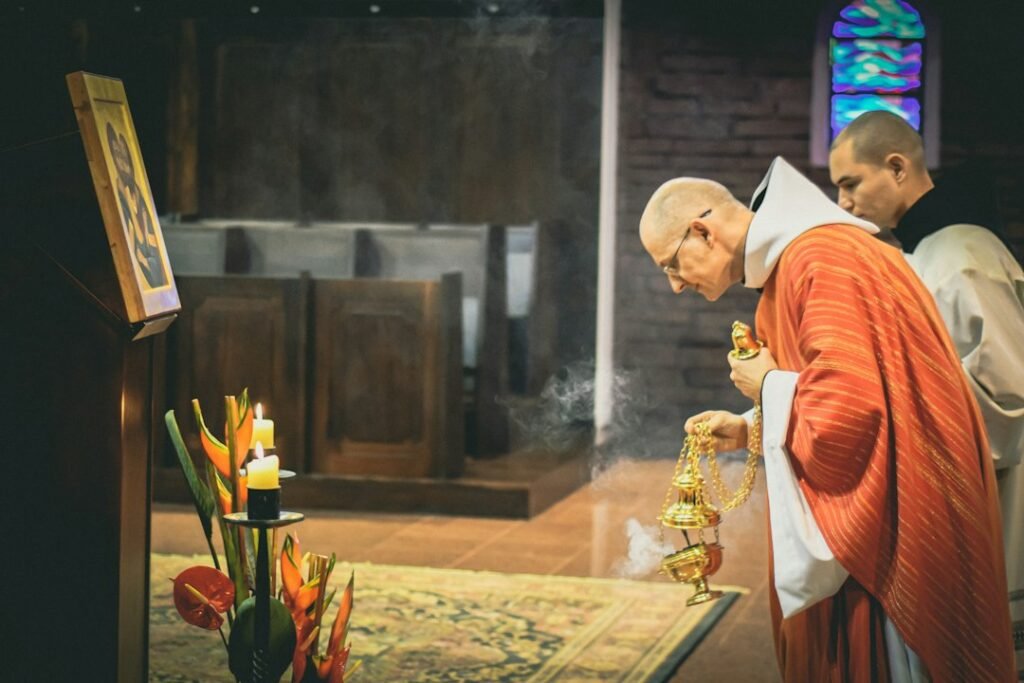
In this investigation
Religious traditions often ask people to do something that ordinary biology resists: remain awake when the body expects sleep. Monks rise in darkness to chant. Worshippers keep vigil before major feasts. Hindu devotees stay awake through sacred nights. Jewish communities study through the night of Shavuot. Pilgrims, mourners and ascetics deliberately extend wakefulness as an offering, discipline or act of expectancy.
The practice can feel powerful. Night removes ordinary activity. Fatigue weakens routine. Hours that usually disappear into sleep become available for prayer, song, study or meditation. But the same condition also alters attention, mood and perception. Modern sleep science therefore gives us a useful warning: unusual experiences during prolonged wakefulness are real, but they should not automatically be treated as evidence that sleep deprivation improves cognition or opens a privileged channel to truth.
A vigil is not simply “staying up late”
Religious vigil normally gives wakefulness a purpose. The participant remains awake in order to pray, wait, remember, study, mourn, celebrate or demonstrate devotion. The lost sleep is therefore embedded in a symbolic structure.
This separates vigil from ordinary insomnia. An insomniac wants to sleep but cannot. A participant in a vigil may feel tired but interprets the wakefulness as chosen sacrifice. The biological state overlaps; the meaning does not.
THE DISTINCTION
Voluntary religious wakefulness is a ritual act. Sleep deprivation is a physiological condition. One can produce the other, but religious meaning and biological effect must be analysed separately.
Christian monasticism made night prayer part of the daily clock
Early Christian monks and nuns organized life around repeated periods of prayer. Historical scholarship on late-antique and medieval monasticism shows that prayer and psalmody were distributed across the day and night, eventually developing into the canonical hours of the Divine Office.
The night office later became associated with Matins or Vigils. It was not an accidental interruption. Waking in darkness embodied the ideal of continual prayer, disciplined the body and distinguished monastic time from ordinary household time.
Christian vigils also transformed waiting into ritual
Outside the monastery, vigils developed around feasts, funerals and sacred commemorations. The Easter Vigil became the most prominent example: worshippers remain awake into the night in expectation of resurrection celebration.
Liturgical scholarship emphasizes that Christian vigil is not merely self-denial. It is expectant waiting. Darkness and wakefulness make time itself part of the ritual drama: the community stays alert because something sacred is anticipated.
Hindu jagran makes wakefulness a devotional offering
South Asian traditions also contain forms of jāgaraṇa or jagran—literally staying awake. All-night devotional singing, worship or storytelling may accompany festivals and deity traditions. Regional forms vary widely.
Ethnographic work in the western Himalayas, for example, describes the Jagra festival of Mahasu and explicitly links the name to jagran, remaining awake through the night. The event is communal, musical and devotional rather than an experiment in sleep loss.
Jewish night study shows how wakefulness can become intellectual devotion
In early modern Jewish mystical circles, the night of Shavuot became associated with extended Torah study. The practice known as Tikkun Leil Shavuot developed particular importance in the sixteenth-century Kabbalistic milieu of Safed and later spread widely.
Here wakefulness is not simply endured; it is filled with study. The night becomes a special interval in which ordinary sleep is exchanged for textual attention and communal religious activity.
Night changes attention before sleep deprivation becomes severe
Even without missing an entire night, human attention changes across the circadian cycle. Darkness reduces ordinary social activity. Environmental stimulation falls. A monastery, temple or household at midnight is not the same attentional environment as the same place at noon.
That quiet can make prayer or chanting feel unusually immersive. The effect does not require sleep loss to be beneficial; it may arise simply because competing demands have been reduced.
Wakefulness itself can become a costly signal of commitment
Rituals often become meaningful partly because they cost something. Fasting costs appetite. Pilgrimage costs time and effort. Vigil costs sleep.
A person willing to remain awake for hours to pray, sing or study demonstrates commitment to the group and to the sacred purpose. This social mechanism can operate even when no hidden health benefit exists.
Sleep science does not support the idea that deprivation sharpens ordinary attention
Modern experimental evidence is remarkably consistent on one point: sleep loss impairs performance. A meta-analysis of short-term total sleep deprivation found measurable declines across several cognitive domains, with especially strong effects on simple attention and vigilance.
A 2017 meta-analysis of experimentally restricted sleep similarly found negative effects on executive function, sustained attention and long-term memory. A newer 2025 meta-analysis of executive functions found slower responses and meaningful impairments in several working-memory and cognitive-flexibility measures after sleep loss.
THE SCIENCE
If a vigil feels mentally intense, that does not mean the brain is objectively performing better. Sustained attention is one of the functions most reliably impaired by inadequate sleep.
Even one short night can impair sustained attention
A 2024 systematic review and meta-analysis examined a single night restricted to roughly two to six hours of sleep. Participants reported substantially greater sleepiness, and sustained-attention tasks showed slower reaction times and more lapses.
Not every cognitive domain was significantly impaired after one restricted night, which is useful nuance. But the result still contradicts the idea that sacrificing sleep reliably creates superior concentration.
Memory formation also suffers when sleep is restricted
Sleep is involved in memory processing and consolidation. A 2024 meta-analytic review pooling dozens of reports found that restricting sleep negatively affected memory formation.
This creates an interesting tension for night study. Staying awake can create more hours in which to read or chant, but learning during those hours may be less efficient and the lost sleep can reduce memory performance. The ritual value of an all-night study session therefore should not be confused with an evidence-based strategy for maximizing academic retention.
Why can exhausted people still report extraordinary clarity?
Subjective intensity and objective performance are different variables. Fatigue can make ordinary stimuli feel unusual. Repetition, darkness, group synchrony, music, fasting and emotional expectation can all amplify the experience of a vigil.
A participant may therefore sincerely feel that the mind has become exceptionally open even while reaction time and sustained attention have objectively worsened. Science does not invalidate the experience; it changes what conclusions can responsibly be drawn from it.
Prolonged sleep deprivation can produce perceptual anomalies
A systematic review of historical sleep-deprivation studies found that extended wakefulness could produce visual distortions, unusual bodily sensations, auditory changes and, with longer deprivation, hallucinations and disordered thinking. Symptoms generally became more severe as time awake increased.
This finding is highly relevant to accounts of visions during extreme ascetic wakefulness. It demonstrates that sleep loss can alter perception. It does not prove that every religious vision is caused by sleep deprivation, nor does it establish that deprivation reveals a more accurate layer of reality.
Altered perception is not the same thing as mystical truth
A physiological mechanism can explain why unusual experiences become more likely without deciding what those experiences mean within a religion. A believer may interpret a vision as revelation; a sleep scientist may identify conditions that increase perceptual instability.
Tradivior’s job is not to erase one language with the other. The scientific claim should remain precise: prolonged wakefulness can distort perception. Whether a particular religious experience has theological meaning lies outside what an experiment can settle.
Ritual structure can partially protect against chaotic wakefulness
Traditional vigils usually do not ask participants to wander aimlessly through the night. They provide songs, readings, prayer cycles, lamps, movement, food rules, teachers and other people.
Structure helps attention remain externally organized even as fatigue rises. Group synchrony may also make wakefulness easier to tolerate. This can explain why a communal vigil feels different from lying awake alone with insomnia.
Night worship can invert ordinary hierarchy
Ordinary daytime life belongs to work, commerce, family obligations and social status. Night ritual creates a temporary counter-time. People who would normally be asleep gather for a different purpose.
This temporal inversion can make the event memorable and liminal. Anthropologically, that may be as important as the lost sleep itself. The sacred time feels different because participants are doing together what ordinary schedules tell them not to do.
Vigils can create collective memory through rarity
An activity repeated every morning can become invisible. An annual night spent awake is difficult to forget. Fatigue, darkness, music, candles, food and the eventual sunrise combine into a distinctive memory.
This helps explain why major vigils cluster around festivals, initiations, mourning and transitions. The unusual schedule marks the event as exceptional.
There is no evidence that routine sleep loss is spiritually or medically necessary
The existence of traditional vigils does not mean chronic sleep restriction is healthy. Repeated inadequate sleep is associated with impaired cognition and broader health risks. A symbolic sacrifice that occurs occasionally is not equivalent to making sleep deprivation a lifestyle.
Many historical monastic systems also balanced night prayer with structured daily routines and, in some cases, opportunities for rest. Traditions themselves often negotiated the tension between devotion and human biological limits.
The modern “sleep less to become enlightened” message reverses the evidence
Some contemporary spiritual rhetoric treats reduced sleep as evidence of advanced practice. That claim deserves particular caution. A person may become accustomed to functioning while tired without eliminating the underlying cognitive cost.
Feeling less bothered by sleepiness is not the same as preserving reaction time, attention or memory. Objective performance should not be inferred from subjective confidence.
Vigil survives scrutiny best as ritualized sacrifice and altered time
The historical record does not require a hidden cognitive benefit to explain why vigils persisted. Wakefulness creates rarity, effort, expectancy and a shared break from ordinary time. It provides extra hours for prayer, song or study and visibly demonstrates commitment.
Sleep loss also changes subjective experience, which can intensify ritual. But the same biology that makes a night feel unusual also impairs attention and can destabilize perception when pushed too far.
What survives scrutiny?
- Religious vigils and night prayer are historically well established across multiple traditions.
- Christian monasticism developed regular nocturnal prayer, while feast vigils turned night into expectant sacred time.
- Hindu jagran traditions use all-night wakefulness as devotional practice in diverse regional settings.
- Jewish Tikkun Leil Shavuot developed as a night of sacred study with important early modern Kabbalistic roots.
- Vigil can function as sacrifice, commitment signal, collective memory and interruption of ordinary time.
- Modern evidence does not show that sleep deprivation improves sustained attention; it generally impairs it.
- Even one restricted night increases sleepiness and attentional lapses on average.
- Sleep restriction can impair memory formation.
- Prolonged deprivation can produce perceptual distortions and hallucinations, but altered perception should not be equated with improved cognition or objective revelation.
- Occasional ritual wakefulness should not be used to justify chronic sleep restriction.
The Tradivior Evidence Profile
Historical Authenticity — Strong. Night prayer, all-night study and devotional vigils are documented across Christian, Hindu, Jewish and other traditions.
Original-Purpose Evidence — Strong. Prayer, expectancy, devotion, sacred study, sacrifice and commemoration are explicit purposes in historical sources.
Scientific Mechanism — Strong. Circadian timing and sleep loss have well-characterized effects on attention, memory, mood and perception.
Experimental Evidence — Strong. Large experimental literatures and multiple meta-analyses demonstrate cognitive costs from total and partial sleep loss.
Cross-Cultural Evidence — Strong. Ritual wakefulness appears in distinct religious traditions, although meanings and schedules differ.
Modern Relevance — Moderate. Vigils remain meaningful as occasional ritual acts, but modern health evidence strongly argues against treating chronic sleep restriction as a cognitive or spiritual optimization strategy.
The Tradivior Conclusion
Primarily Symbolic/Cultural—with strong physiological effects. Religious vigils persist because remaining awake transforms time into sacrifice, expectancy and collective devotion. Sleep loss can intensify subjective experience and, when prolonged, alter perception. But modern evidence consistently shows costs to sustained attention, memory and executive performance. The science therefore explains why vigils can feel unusual without supporting the idea that sleep deprivation makes the mind objectively sharper or spiritually superior. The practice survives scrutiny as ritualized wakefulness, not as a health or cognitive enhancement technique.
Continue investigating
- Why Do Traditions Use Silence as a Discipline?
- Why Do Humans Seek Solitude for Insight?
- Why Do Humans Meditate?
Sources and further reading
- Jeffery P. “Psalmody and Prayer in Early Monasticism.” In: The Cambridge History of Medieval Monasticism in the Latin West. Cambridge University Press; 2020.
- “Keeping Vigil and the Response of a Believer to Grief and Suffering.” Horizons. Discussion of Christian liturgical vigil history.
- Sharabi A. The Biography of a God: Mahasu in the Himalayas. Amsterdam University Press; 2023. Chapter on Jagra and regional ritual practice.
- Faierstein MM. Jewish Customs of Kabbalistic Origin: Their History and Practice. Academic Studies Press; 2013.
- Historical scholarship on Tikkun Leil Shavuot and early modern Jewish nocturnal study.
- Lim J, Dinges DF. “A meta-analysis of the impact of short-term sleep deprivation on cognitive variables.” Psychological Bulletin. 2010. PMID: 20438143.
- Lowe CJ, Safati A, Hall PA. “The neurocognitive consequences of sleep restriction: A meta-analytic review.” Neuroscience & Biobehavioral Reviews. 2017;80:586–604. PMID: 28757454.
- “Impact of one night of sleep restriction on sleepiness and cognitive function: A systematic review and meta-analysis.” Sleep Medicine Reviews. 2024. PMID: 38759474.
- “A systematic and meta-analytic review of the impact of sleep restriction on memory formation.” 2024. PMID: 39427809.
- Cao Y, et al. “The impairments of sleep loss on core executive functions: General and task-specific effects.” Sleep Medicine Reviews. 2025. PMID: 40946426.
- Waters F, et al. “Severe Sleep Deprivation Causes Hallucinations and a Gradual Progression Toward Psychosis With Increasing Time Awake.” 2018. PMID: 30042701; PMCID: PMC6048360.
Continue exploring

Why Do People Keep Ashes, Relics and Memorial Objects?
Hair, ashes, bones, clothing, photographs and relics allow the dead to remain materially present. Tradivior will examine why objects carry memory so powerfully and how continuing bonds differ from pathological…

Why Do Cultures Set Aside Days to Remember the Dead?
From Pitru Paksha and Qingming to Día de Muertos and All Souls’ Day, cultures repeatedly create calendar time for the dead. Tradivior will compare how recurring remembrance renews kinship, grief…
Why Do Cultures Preserve the Dead?
Mummification, embalming, freezing, smoking and desiccation reflect very different beliefs about bodies and afterlives. Tradivior will compare preservation traditions with the chemistry of decomposition and the practical limits of each…

Why Do People Change Names, Clothes or Homes After Marriage?
Marriage often transforms identity through surname changes, new dress, residence, kinship terms or household membership. Tradivior will investigate why marriage needs visible social consequences beyond the ceremony itself.
Picked for your curiosity
Enable JavaScript to build a reading profile and see recommendations.