 tradivior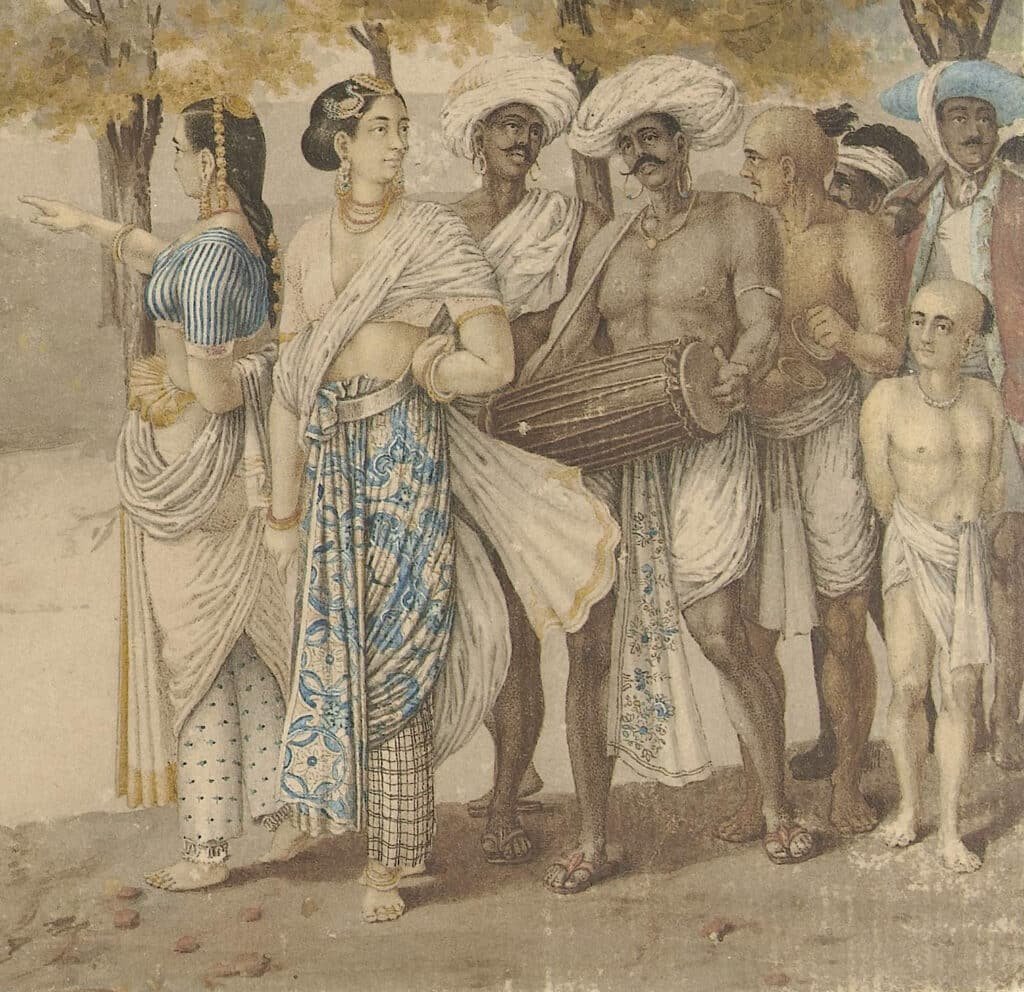
In this investigation
A dead body creates an urgent biological problem and a profound social one. The body must be handled, but the person’s relationships do not disappear at the same speed. Families need to tell others, reorganize roles, remember the dead, manage grief and decide what the death means.
Funerals turn those tasks into shared ritual. Burial, cremation, exposure, mourning clothes, prayer, wakes, lament, procession and memorial meals differ radically across societies, but almost everywhere death becomes more than disposal.
Mortuary ritual is archaeologically deep
Intentional burials and other mortuary practices reach deep into human prehistory. Archaeologists debate what particular burials prove about belief, but structured treatment of the dead shows that human groups invested labour in bodies after biological usefulness had ended.
That investment is one of the strongest signs that death has long carried social and symbolic significance.
THE RECORD
Funerals are not one invention. They are a recurring human response to the need to dispose of a body, acknowledge a changed social world and regulate relationships between the living and the dead.
Death creates social ambiguity
A spouse becomes a widow or widower; children lose a parent; offices and property need successors; obligations change. Ritual gives a public moment when those transitions are acknowledged.
This is why funerals can matter even to people who do not hold strong supernatural beliefs.
Ritual gives grief a schedule
Grief is emotionally unpredictable. Funerals impose sequence: gathering, viewing or prayer, disposal, meal, memorial, anniversary. A person who cannot decide what to do next can follow a culturally familiar script.
Psychological reviews of ritual emphasize emotion regulation as one important function of structured symbolic action.
THE EVIDENCE
Funeral rituals can provide structure, social recognition and support during bereavement. Evidence does not show that one specific ritual form is universally therapeutic or that grief follows a fixed sequence.
Gathering makes support visible
Bereaved people often need practical help as much as words: food, transport, childcare, paperwork and company. A funeral tells a network that support is needed now.
Attendance can therefore function as a public signal that the bereaved are not socially abandoned.
Funerals preserve memory collectively
Eulogies, stories, photographs, songs and prayers turn private memories into shared narrative. The dead person’s life is edited into a form the group can remember.
Anthropological work on grief emphasizes that remembering and relationships with the dead are culturally shaped rather than biologically uniform.
Ritual can define the dead person’s new status
Some traditions imagine the dead as ancestors, souls awaiting judgment, spirits requiring rites, or persons whose bodily life has ended but whose social presence continues. Funerary ritual can mark movement into that new category.
These beliefs should be described theologically and ethnographically, not reduced to psychological coping alone.
Disposal practices solve practical problems too
Burial, cremation and other methods manage decomposition and space differently. Climate, fuel, land, water and law influence what is practical.
The environmental consequences of modern burial and cremation can also differ from their historical forms.
There is no universal “healthy grief” ritual
Some mourners find viewing the body helpful; others do not. Some need large gatherings; others experience them as exhausting. Cultural expectations can support grieving people or pressure them to perform emotion in prescribed ways.
Clinical support should therefore respect ritual preference rather than treating one custom as psychologically necessary.
The continuing-bonds model changed grief theory
Older Western models often emphasized detaching from the dead. Contemporary grief scholarship recognizes that many healthy mourners maintain symbolic relationships through memory, objects, anniversaries and conversation.
Many traditional funerals and memorial systems already assume such continuing bonds.
Funerals can reinforce social hierarchy
Elaborate funerals can display status, lineage and wealth. Monumental tombs make this especially visible archaeologically.
Ritual expenditure can strengthen alliances but also burden families financially.
Collective mourning can become political
Funerals of public figures, martyrs or victims can mobilize identity and protest. Large mourning crowds create shared emotion that may extend beyond private grief.
This demonstrates that funeral ritual can shape group continuity as well as family coping.
Technology is changing funerals, not ending them
Livestreamed services, digital memorial pages and online condolence networks expand attendance when travel is impossible. The form changes, but public recognition of death remains.
The COVID-19 pandemic made the cost of disrupted mourning rituals especially visible to many families.
Why anniversaries matter
Recurring memorial days allow grief to be revisited in a predictable form. Rather than expecting sorrow to disappear, the calendar creates socially permitted moments for remembrance.
This is another example of ritual managing time as much as emotion.
Funeral rituals can fail
Coercive costs, exclusion, conflict over religious form or pressure on bereaved families can turn ritual into additional stress. A ceremony is not therapeutic simply because it is traditional.
The relevant question is whether the ritual supports the people and meanings involved.
Funerals begin with a practical fact: a dead body changes the social world
Death is biological, but a funeral exists because biology alone does not resolve what death does to a human group. A body must be handled, but so must inheritance, authority, memory, household roles, kin obligations and the status of the bereaved. This is one reason mortuary ritual becomes more elaborate as societies become more socially differentiated. Classic cross-cultural archaeological work found that mortuary practices often reflect the social persona of the deceased—the combination of age, sex, rank, kin position and other statuses that mattered while the person was alive.
This does not mean archaeologists can simply read a social hierarchy from a grave. Burial treatment is selective, symbolic and historically contingent. Yet funerals repeatedly become public places where a society tells itself who a person was and what must happen now that the person is gone. A child’s funeral, a monarch’s funeral, a soldier’s funeral and an anonymous pauper burial may all handle the same biological event while communicating very different social facts.
Intentional treatment of the dead predates written religion
The archaeological record shows that deliberate treatment of dead bodies is far older than scriptures, organized priesthoods or states. Researchers debate individual prehistoric burials because a body in a pit does not automatically prove belief in an afterlife. But repeated placement, grave goods, body positioning, pigment use, revisiting of graves and other structured behaviours show that human groups were doing more than disposing of remains randomly.
The safest conclusion is not that a particular prehistoric population held one recognizable modern theology. It is that death had become socially marked. Once the dead are treated differently from ordinary refuse, the group has created a category that requires rules. Those rules may involve reverence, fear, memory, pollution, ancestry, territory or combinations of these. The ritual is historically authentic even when its exact original belief cannot be reconstructed.
Funerary ritual can stabilize social succession
A death creates vacancies. A spouse becomes widowed; heirs acquire property or obligations; a lineage loses an elder; a religious or political office may need a successor. In societies where status is highly formalized, funerals can publicly authorize these transitions. Mourning clothing, seating order, procession position, eulogies, inheritance announcements and ritual roles all reveal who stands where after the death.
This is part of why funerals are often highly scripted. The script reduces ambiguity at a moment when competing interpretations could create conflict. Even in modern secular settings, notices, funeral programs, speakers, pallbearers and family seating quietly map the social world of the deceased. The ceremony does not only remember a person; it reorganizes the living.
Ritual turns private grief into recognized grief
One of the most basic functions of a funeral is public acknowledgement. A person can be devastated by a death while outsiders remain unaware. A funeral tells a network that a loss has occurred and that certain people are bereaved. Attendance, condolences, food, transportation, financial help, childcare and company can then be mobilized around that recognition.
Anthropological work on grief emphasizes that emotions are never expressed in a purely culture-free form. Societies differ in whether open wailing, restraint, silence, music, dancing, bodily display or private withdrawal are considered appropriate. The existence of rules does not prove that everyone feels the same thing. Rather, ritual supplies an accepted public vocabulary through which grief can be shown, contained, shared or sometimes deliberately hidden.
Modern grief science no longer assumes that healing requires detachment
Older Western psychological models often described successful mourning as gradually withdrawing emotional attachment from the deceased. Later scholarship challenged that assumption. Many bereaved people continue healthy symbolic relationships through photographs, anniversaries, dreams, stories, inherited objects, prayer or imagined conversations. These “continuing bonds” are not automatically pathological.
Traditional funeral systems often make continuing bonds explicit. Ancestor rites, memorial days, grave visits, household shrines and recurring prayers do not treat the relationship as simply erased. They transform it. The dead person may no longer participate physically, but remains part of family memory, moral identity or religious cosmology. Modern grief theory therefore sometimes arrives at a conclusion that many ritual systems had long assumed: adaptation can involve changing the relationship to the dead rather than eliminating it.
Ritual creates a sequence when emotion itself has no timetable
Grief rarely follows a clean linear path, yet funerary traditions impose sequence. There may be a vigil, funeral, cremation or burial, meal, a set number of mourning days, anniversaries and later memorial observances. These stages do not force emotion to end, but they tell participants what happens next.
This temporal structure can be socially useful because bereavement is full of decisions made under stress. A ritual calendar externalizes some decisions. The family does not need to invent every action while exhausted. At the same time, rigid timelines can become harmful if they imply that grief should disappear when the prescribed mourning period ends. The evidence supports structure as a resource, not a universal emotional schedule.
Funerals create witnesses to the reality of death
Sudden loss can feel unreal, especially when the mourner was absent at the time of death. Viewing the body, participating in cremation or burial, touching a coffin, seeing a grave closed or witnessing ashes being dispersed can make the transition materially undeniable. Some people find this grounding; others find it distressing, and there is no universal requirement that viewing be psychologically necessary.
The broader function is public witnessing. A community collectively confirms that a life has ended and that the social consequences of that fact are real. This can matter even when the body is absent, as in memorial services after disaster, war or disappearance. Ritual can acknowledge a death that cannot be physically completed in the usual way.
Funeral rites can preserve memory by selecting what a life will mean
Eulogies, songs, photographs, objects, prayers and stories do more than recall facts. They edit a life into a collective narrative. Certain episodes are highlighted, others are omitted, and traits are elevated into themes: generosity, devotion, humour, courage, parenthood, public service, suffering or achievement.
This selective memory is not necessarily deceptive. All collective memory is selective. Funerals are moments when a group decides what it wants to carry forward. The process can help descendants learn family history, but it can also reinforce idealized or contested narratives. The dead cannot negotiate the story being told about them, which makes funeral memory both powerful and politically interesting.
Mourning practices differ because societies imagine the dead differently
A funeral cannot be understood only as grief management because many traditions are primarily concerned with the condition of the dead person. Rites may guide a soul, prevent a dangerous spirit from returning, prepare resurrection, establish an ancestor, purify the household, transfer merit or fulfil obligations believed necessary for the deceased’s onward journey.
These claims cannot be verified by the methods used to study social support or bereavement outcomes. They belong to theology, cosmology and lived religion. Tradivior’s task is to distinguish them clearly rather than silently translating them into psychology. A ritual can have psychological and social consequences while its practitioners understand its main purpose in entirely different terms.
The body itself becomes a powerful cultural symbol
Burial, cremation, exposure, embalming, mummification, water burial and other mortuary treatments reflect different ideas about the body, purity, landscape, resurrection, transformation and remembrance. Practical ecology matters too: available land, fuel, soil, climate and law shape what is possible.
It is therefore risky to explain one disposal method as scientifically superior in every context. Cremation can reduce land use but consumes energy and produces emissions; conventional burial uses land and materials; newer low-impact burial methods alter both. Historical practices emerged under very different ecological constraints. Their meanings cannot be reduced to modern environmental accounting, even though environmental consequences are relevant to present-day choices.
Funerals can strengthen groups—and expose hierarchy
Large funerals create shared attention. Crowds move together, repeat words, sing, cry, eat and remember at the same time. This synchronized behaviour can strengthen a sense of collective identity. It can also display hierarchy. Monumental tombs, elaborate processions, costly feasts and long mourning periods have often signalled rank, wealth or political importance.
Archaeologists have long used mortuary variation cautiously to study social structure because differential burial treatment may reflect unequal status. The same logic is visible today when public figures receive state funerals or military honours unavailable to most people. Funeral ritual can affirm that all humans deserve mourning while simultaneously revealing that societies commemorate some lives more visibly than others.
Public mourning can become a political act
When a death is linked to war, injustice, state violence, activism or national identity, the funeral can become more than a family ceremony. Processions and memorials may transform private sorrow into collective grievance. Martyr funerals, state funerals and mass memorials can define who belongs to a nation, movement or moral community.
This political capacity follows from the same mechanism that makes funerals socially powerful in ordinary life: they gather people around a shared interpretation of a death. Once thousands of people publicly perform the same grief, the event can communicate legitimacy, protest or solidarity. Ritual does not merely reflect society; under some conditions it reorganizes it.
When ritual is blocked, grief may acquire an additional layer of distress
Pandemics, disasters, migration, war and missing bodies can prevent familiar rites. During the COVID-19 pandemic, many families experienced restricted funerals, delayed memorials or remote attendance. Research and clinical observation drew attention to how the absence of ordinary ritual could compound loss for some people by removing social support, witnessing and culturally expected closure points.
That does not prove that every interrupted funeral produces complicated grief. Recent reviews instead support a contextual view: mourning rituals can aid adjustment through family support, continuing bonds, identity and culturally sanctioned expression, but outcomes vary. A 2025 mixed-methods review of East and Southeast Asian mourning literature identified family support, filial piety and continuing bonds among the central themes through which post-funeral rituals can support adjustment.
A 2026 review reinforces the importance of cultural specificity
An integrative review published in 2026 examined grieving and funeral practices across 18 Indigenous groups. Its significance for Tradivior is not that it discovered one universal Indigenous model—quite the opposite. It found recurring components alongside practices specific to particular peoples, underscoring the need for culturally sensitive support rather than imposing a standardized mourning script.
This aligns with the broader anthropological record. Similar functions can emerge through very different forms. One community may gather for prolonged wakes, another may emphasize quiet household mourning, another may sustain the relationship with the dead through ancestor rites. The surface practices differ; the recurring questions involve belonging, obligation, memory, identity and the reorganization of life after loss.
Funeral expense can convert solidarity into coercion
Ritual is not automatically beneficial. Families can face strong expectations to provide large meals, expensive coffins, ceremonial gifts or lengthy public observances. Where status and reputation are tied to funeral scale, bereaved households may incur debt precisely when their emotional and financial resources are already strained.
This is one of the clearest examples of why “tradition survived” is not evidence that every part should be preserved unchanged. The social goal—honouring the dead and gathering support—can remain valuable while costly competitive display is reduced. Cultural continuity can involve reform.
Digital memorials show that the function can survive a change of medium
Livestreamed funerals, online condolence books, memorial pages and archived videos may look radically different from older mortuary practice, yet they perform familiar functions: announcing death, gathering witnesses, preserving memory and allowing geographically distant people to participate. Technology changes the medium more readily than the underlying social problem.
Digital rituals also create new questions. A memorial page can remain visible indefinitely, social-media profiles may persist after death, and algorithms can unexpectedly resurface images or anniversaries. The modern dead can have a continuing digital presence that older cultures managed through graves, household shrines, portraits or oral memory.
The strongest scientific claim is social, not supernatural
Modern evidence can plausibly support several mechanisms: ritual mobilizes social support, creates predictable sequence, legitimizes emotional expression, preserves shared memory and gives continuing bonds culturally accepted forms. These mechanisms can matter greatly. But experimental evidence is much weaker than the historical and cross-cultural record, and no scientific study can validate theological claims about souls, ancestors or afterlives.
Nor should a funeral be treated as a psychological device invented solely to reduce distress. People hold funerals because they believe the dead deserve certain treatment, because families inherit obligations, because religion requires action, because communities recognize loss and because bodies must be handled. The fact that some of these actions also support mourners is an important consequence, not necessarily the original purpose.
Funerals begin with a body but quickly become about relationships
A dead body must be transported, protected, buried, cremated, exposed or otherwise handled. Yet the labour surrounding death far exceeds disposal because a person leaves behind spouses, children, debts, property, offices, promises and memories.
Funeral ritual organizes the social consequences of death at the same time it handles the physical remains.
Mortuary behaviour reaches deep into human prehistory
Archaeologists debate how early deliberate burial should be interpreted, but intentional placement of bodies, grave goods and repeated use of mortuary spaces demonstrate that human groups have long invested effort in the dead after biological life ended.
That investment does not prove one universal belief in an afterlife. It does show that dead bodies became socially meaningful objects rather than ordinary refuse.
Burial can preserve a relationship with place
A grave fixes the dead person to a location that relatives can revisit. Cemeteries create landscapes of ancestry where family history becomes physically visible.
Monuments, names and dates turn individual memory into public record, while repeated visits maintain a continuing relationship with the dead.
Cremation solves a different material problem
Fire rapidly transforms the body and reduces the remains to bone fragments and ash. That can limit the need for long-term burial space and may fit religious ideas about purification, release or transformation.
The same method carries fuel use and air-emission costs. Modern electric or gas cremation changes the technology while leaving the ritual meaning partly intact.
Exposure practices reveal that burial and cremation are not human universals
Some traditions use sky burial, towers of silence or other forms in which bodies are exposed rather than buried or burned. These systems can reflect theology, geography, fuel scarcity or concepts of purity.
The diversity is important because it prevents one disposal method from being treated as the biologically natural human response to death.
Body disposal and pathogen control should not be oversimplified
Popular accounts sometimes claim that corpses automatically cause epidemics. Most bodies after natural disasters do not create major infectious-disease risk unless the person died from a highly transmissible infection or the remains contaminate water or involve specific hazards.
Dignified handling, identification and appropriate infection precautions matter more than panic-driven mass disposal.
The funeral creates a public fact out of a private loss
A family may know immediately that someone has died, while neighbours, colleagues and distant relatives learn over time. Funeral announcements, gatherings and processions synchronize that knowledge.
Once the death is publicly recognized, social roles can begin to change in a coordinated way.
Widowhood, orphanhood and succession are social statuses created by death
One death can create a widow or widower, change guardianship, transfer leadership or alter inheritance. Those consequences require recognition by other people and institutions.
Funeral ritual is therefore part of governance as well as emotion.
Grief does not follow one fixed sequence
Popular culture often describes grief as a predictable progression through stages. In reality, people vary widely in sadness, anger, numbness, relief, yearning and functional recovery.
Funerals should not be judged by whether they move mourners neatly through a universal emotional timetable. Their value is more plausibly in structure, recognition and support.
Ritual supplies structure when decision-making is impaired
Bereavement can disrupt concentration and executive function. A known sequence—washing, gathering, prayer, burial or cremation, meal, memorial—reduces the number of decisions mourners must invent from scratch.
Psychological ritual research identifies emotion regulation and performance regulation as recurring functions of structured symbolic action. citeturn757587search3
The funeral gives grief social permission
In ordinary life, intense crying, withdrawal or silence may violate expectations. At a funeral, those behaviours become socially legible.
Ritual creates a bounded period in which the community acknowledges that ordinary productivity and emotional restraint may temporarily be suspended.
Gathering can mobilize practical support immediately
Relatives and neighbours can bring food, transport visitors, care for children, help with paperwork or simply remain present. These actions convert sympathy into labour.
A funeral functions as a network signal: this household has experienced a loss and may need help now.
Attendance itself can carry meaning
Showing up communicates respect for the dead and solidarity with survivors. Absence can also be interpreted socially, especially in close communities.
This makes funerals powerful but sometimes burdensome: expectations about attendance can create travel, financial and emotional pressure.
Viewing the body can confirm reality for some mourners
Seeing the deceased may help some people absorb the fact of death, especially after sudden loss. For others, viewing can be distressing or culturally inappropriate.
There is no universal psychological requirement to see the body. Preference, condition of the remains and cultural practice all matter.
Washing and dressing the dead can be intimate caregiving
In several traditions, relatives or ritual specialists wash and prepare the body. The act can be understood as a final service of care.
It can also require infection-control precautions depending on the cause of death. Sacred intimacy and occupational safety should not be treated as opposites.
Clothing restores social identity to the body
Uniforms, religious garments, ordinary clothes or special shrouds can tell observers who the deceased was and how the community understands the death.
Dressing turns an anonymous corpse back into a socially recognizable person for the final public encounter.
Eulogies turn biography into collective memory
No life can be narrated completely in a funeral speech. Speakers select episodes, virtues, humour and relationships that will represent the person to the group.
This selective storytelling creates a public memory that may influence how later generations remember the deceased.
Silence can be ritual language too
Not every funeral relies on speeches. Silence, bells, chants, weeping or fixed prayer can communicate seriousness when ordinary conversation feels inadequate.
The form of expression varies; the common function is coordinated attention to loss.
Lament gives intense emotion a recognizable form
Professional or communal lament traditions structure crying, singing and verbal expressions of loss. What might appear uncontrolled from outside can be highly patterned.
Ritualized lament shows that cultures do not simply permit grief; they can teach how grief should sound.
Prescribed mourning clothing makes invisible loss visible
Black clothing, white clothing, torn garments, shaved heads or other markers tell strangers that a person is mourning.
That visibility can invite support and reduce ordinary social expectations, although it can also feel restrictive when mourners prefer privacy.
Mourning periods create a gradual return rather than one abrupt ending
Many traditions distinguish the funeral from later days, weeks or anniversaries. Restrictions may loosen gradually and social activity may return in stages.
This temporal structure fits the reality that grief does not end when the body is buried or cremated.
Continuing bonds changed modern grief theory
Older Western theories sometimes treated healthy mourning as detachment from the dead. Contemporary research recognizes that people may maintain inner relationships through memory, objects, dreams, conversation or ritual.
A 2024 systematic review found continuing bonds can bring both comfort and distress depending on context, relational meaning and uncertainty. citeturn757587search2turn757587search6
Ancestor traditions formalize continuing bonds
Where the dead become ancestors, remembrance is not merely private psychology. Food, prayer, names and anniversaries can make the relationship institutionally recurring.
This provides a cultural model in which maintaining connection is expected rather than viewed as failure to “move on.”
Objects can carry the relationship forward
Photographs, jewellery, clothing, ashes, letters and household possessions can become material anchors for memory. Their value often increases after death because they are no longer replaceable by new interactions.
Keeping such objects can be comforting without implying pathological attachment.
Funerals can also create distress when the ritual conflicts with the mourner
A person may be pressured to view a body, perform expected emotion, host guests or follow a religious ceremony they no longer believe. Ritual then adds obligation to grief.
The fact that funerals can help does not mean more ritual is always better.
Religious explanations can answer questions medicine cannot
Medicine can describe cause of death; religion can address whether the person continues, where they go, how survivors should relate to them and what death means morally.
Those are different categories of question. Scientific evidence can study psychological effects of belief without adjudicating the metaphysical claim.
The funeral is a place where theology becomes embodied
Ideas about soul, resurrection, rebirth, ancestorhood or impermanence become concrete through what happens to the body and what words are spoken around it.
Mortuary ritual therefore teaches doctrine through action rather than abstract explanation.
Cemeteries turn memory into geography
Funerals do not end when the ceremony ends. Burial grounds, cremation sites, memorial walls and ancestral landscapes give grief a location. A grave can become a place where relatives return, children learn family history and anniversaries become spatial as well as temporal. In many societies, the location of the dead also expresses belonging: to a lineage, village, religious community, nation or homeland.
This geographical function helps explain why disputes over burial place can become intense. Where a person is buried may answer questions about where they truly belonged. Migrant families may face difficult choices between burial in the country of residence and repatriation to an ancestral home. The body becomes part of the politics of place.
Funeral objects allow relationships to continue materially
Flowers, photographs, jewellery, clothing, grave goods, ashes, urns and inherited possessions give mourners tangible ways to handle memory. Archaeologists often encounter such objects long after spoken explanations have disappeared. Their presence demonstrates care and selection but does not automatically reveal what every object meant.
In modern life, keepsakes may include a watch, recipe book, voice recording, digital archive or piece of clothing. These objects can function as anchors for continuing bonds. The material form changes across cultures and technologies, but the underlying practice—placing memory into things—recurs widely.
Children are often taught death through ritual before they can understand it abstractly
Funerals can be among a child’s first direct encounters with mortality. Adults decide whether children attend, view the body, participate in prayer, place flowers or hear explanations of death. Cultural norms differ sharply, and no single approach suits every child. Yet ritual can provide concrete actions when abstract explanations are difficult.
This is another example of ritual translating a difficult transition into behaviour. A child may not understand theology or finality in adult terms, but can understand that people are gathering, that a person will not return, that others are sad and that certain actions express care. The usefulness depends on age, preparation, relationship to the deceased and the child’s wishes.
Professionalized death changed who controls the ritual
In many modern societies, death moved from home into hospitals, hospices and institutions, while funeral directors took over tasks once performed by relatives or neighbours. This professionalization can reduce practical burden and improve sanitation, transport and legal compliance. It can also distance families from the physical processes surrounding death.
The change helps explain renewed interest in home funerals, natural burial and family participation in body care. These movements are not simply nostalgic. They reflect a desire by some families to recover agency over rituals that had become outsourced. Whether that is desirable depends on law, safety, preference and local support systems.
The idea of a “good death” shapes the funeral that follows
A funeral is partly an interpretation of how someone died. Peaceful death after a long life, sudden accident, suicide, homicide, war, disaster and death after prolonged illness can produce very different narratives and ritual needs. Stigma or uncertainty may make some deaths harder to discuss publicly, while heroic or sacrificial narratives can intensify collective commemoration.
Recent palliative-care research shows that rituals used around dying and death continue to support identity, belonging, meaning and psychosocial care. A 2026 integrative review distinguished rituals embedded in coherent religious or cultural frameworks from more personal, idiosyncratic rituals. Both can matter, but their meaning depends on whether participants understand and value the symbolism being used.
Funeral ritual can protect identity when a death threatens to erase it
For minority, Indigenous, diasporic or displaced communities, funerals can preserve language, dress, food, music and religious practice under conditions where those markers are otherwise under pressure. Mourning may become one of the few moments when dispersed relatives gather and cultural knowledge is transmitted across generations.
This is why culturally insensitive funeral restrictions can feel like more than inconvenience. They can interrupt a community’s way of recognizing personhood and belonging. The 2026 integrative review of Indigenous grieving practices reinforces that support systems need to understand culturally specific mourning rather than assuming that one generic bereavement model is adequate.
The absence of ritual can itself become meaningful
Not every society requires elaborate funerals, and not every individual wants one. Direct cremation, private burial or minimal ceremony can be chosen deliberately. Refusing a conventional funeral may express secular identity, environmental concern, financial practicality or a wish not to burden relatives.
This reminds us that the underlying human problem is broader than any specific ceremonial form. People need ways to handle the body, acknowledge death, reorganize relationships and decide how memory will be carried forward. A formal funeral is one powerful solution, but not the only possible one.
Environmental concerns are creating new mortuary traditions
Modern burial and cremation systems operate at scales and with materials very different from many historical practices. Embalming chemicals, concrete vaults, imported stone, hardwood coffins, fuel use and cemetery land all create environmental costs. This has encouraged natural burial, biodegradable coffins, conservation cemeteries and other lower-impact alternatives.
These practices demonstrate how traditions evolve. Families can preserve the essential ritual functions—care for the dead, gathering, memorialization and a marked place—while changing the technology of disposal. Environmental adaptation is therefore not necessarily a rejection of funeral tradition; it can be the next stage of it.
Experimental evidence on ritual should be interpreted cautiously
Psychological experiments have found that ritualized behaviour can sometimes reduce feelings of loss or increase a sense of control. Such studies are useful because they test mechanisms rather than merely describing customs. But laboratory rituals are far simpler than actual funerals, which involve relationships, theology, social expectations, money, bodies and community histories.
The experimental literature therefore supports plausibility, not a universal prescription. It is reasonable to say ritual can help organize grief for some people. It is not justified to say every funeral is psychologically necessary, that elaborate ceremony guarantees better outcomes or that a person who rejects ritual is grieving incorrectly.
Across civilizations, the forms differ more than the problems
Hindu cremation, Islamic burial, Christian funerals, Buddhist memorial rites, Jewish mourning, ancestor practices in East Asia, Indigenous mortuary traditions and secular memorials differ profoundly in theology and procedure. Yet they repeatedly address a recognizable cluster of human problems: what to do with the body, how to mark the death, how to support survivors, how to remember, how to redistribute roles and how to place the deceased within a moral or cosmological order.
The recurrence of those problems is stronger evidence than superficial similarities between ceremonies. Tradivior should resist searching for one secret ancient mechanism beneath every funeral. Human societies can independently invent different rituals because death repeatedly creates the same kinds of social disruption.
Hindu cremation places transformation at the centre
Many Hindu traditions prefer cremation and frame the body as temporary while ritual attention turns toward the deceased person’s onward journey and the obligations of survivors. Fire performs both physical transformation and sacred symbolism.
Specific rites vary by region, caste, sect and family. A pan-Indian description should therefore avoid treating one sequence as universal.
Islamic burial emphasizes promptness, simplicity and communal duty
Islamic funerary practice generally includes washing, shrouding, funeral prayer and burial, often as soon as reasonably possible. The simplicity of the shroud contrasts with traditions built around elaborate coffins or monuments.
The system reflects theology, equality before God and communal obligation rather than a hidden hygienic theory of rapid burial.
Christian funerals combine resurrection belief with memory
Christian traditions vary between burial and cremation, formal liturgy and personalized memorial services. Themes of resurrection, eternal life, prayer and remembrance can coexist in the same service.
Modern personalization has expanded eulogies and music while older sacramental or scriptural structures remain important in many denominations.
Buddhist funerals make impermanence explicit
Buddhist mortuary practices vary widely across Asia, but teachings about impermanence, rebirth and attachment often shape how death is interpreted.
Rituals can support the living while also orienting attention toward the deceased person’s karmic transition according to the specific tradition.
Jewish mourning extends far beyond the funeral
Jewish practice structures bereavement through burial, shiva, later mourning periods and recurring remembrance. The calendar creates graduated obligations rather than treating the funeral as the end of mourning.
This provides a clear example of ritual time matching the reality that grief continues after body disposal.
Funeral meals move mourners from formal ceremony toward ordinary life
Shared eating after death occurs in many cultures. A classic study described the funeral meal as a structured group experience serving the needs of the living. citeturn757587search0
The meal restores one of life’s basic rhythms—people eat—while keeping the support network present long enough for conversation and practical help.
Food allows care when language fails
Visitors may not know what to say to someone who has just lost a spouse or child. Cooking, serving and washing dishes provide concrete forms of support.
This converts sympathy into useful labour at a time when the bereaved may have little energy for household tasks.
Memorial charity extends grief into moral action
Donations, feeding poor people, scholarships or service projects dedicated to the deceased transform memory into benefit for others.
Such practices can give mourners an ongoing project without claiming that altruism eliminates grief.
Funeral spending can become a burden on vulnerable families
Coffins, ceremonies, travel, meals, burial plots and public expectations can create substantial costs immediately after a death.
Status competition can magnify those costs. A meaningful funeral does not require financial damage, and traditions often adapt when communities recognize that expectation has overtaken purpose.
Professional funeral industries change who performs the labour
In many modern cities, funeral directors handle body transport, embalming, paperwork and ceremony logistics that relatives or religious communities once managed directly.
This can reduce practical burden while also making death care more commercial and less familiar to families.
Embalming is culturally specific, not medically necessary for every funeral
Chemical preservation can delay decomposition and support viewing or transport, but it is not a universal requirement for safe mourning. Many traditions bury or cremate without embalming.
Environmental and occupational concerns around embalming chemicals have also encouraged interest in simpler forms of body care.
Green burial reopens older questions about land and decomposition
Natural-burial movements seek to reduce embalming, concrete vaults and resource-intensive coffins, allowing the body to decompose more directly in soil.
The movement is modern in organization but often presents itself as a return to simpler burial before industrial funeral infrastructure.
Cremation has environmental trade-offs too
Fuel combustion produces greenhouse gases and air pollutants, with emissions depending on technology and fuel. Electric cremation can shift rather than eliminate environmental cost depending on the electricity source.
Environmental comparison should therefore consider land use, materials, energy and local infrastructure rather than declaring one ritual universally green.
Ashes create new forms of memorial geography
Cremated remains can be buried, kept, scattered or immersed in meaningful places. Families may create memorial sites without a conventional grave.
The portability of ashes changes how memory can be attached to rivers, mountains, homes or multiple locations.
Public funerals can turn private grief into collective identity
Funerals for leaders, activists, soldiers or victims can attract large crowds and become political events. Mourning may express national identity, protest or solidarity.
The same mechanisms of synchrony and shared emotion that support family cohesion can operate at city or national scale.
Mass death creates a different ritual challenge
War, epidemics and disasters can overwhelm normal funeral infrastructure. Families may lose access to bodies, ceremonies or individualized graves.
That disruption can intensify distress because both the death and the expected social response become abnormal.
The COVID-19 pandemic exposed the cost of disrupted funerals
Restrictions on gatherings, travel and contact forced many families to hold small, delayed or virtual funerals. For some, the absence of expected ritual compounded isolation.
Others found new forms of connection through livestreaming and later memorials. The experience showed that ritual form can adapt, but abrupt loss of choice can be painful.
Livestreamed funerals expand attendance while changing presence
Digital participation allows distant, ill or financially constrained mourners to witness a service. It can widen the community beyond the room.
At the same time, watching through a screen may not provide the physical comfort, informal conversation or practical support available in person.
Digital memorials create persistent continuing bonds
Social-media profiles, memorial pages, stored voice messages and photographs can remain accessible for years. The dead continue to appear in digital memories and recommendation systems.
This creates new ethical questions about ownership, privacy and whether platforms should preserve or deactivate a person’s digital presence.
Children need truthful explanation as well as ritual inclusion
Adults sometimes exclude children from funerals in an attempt to protect them. Developmental understanding matters more than a blanket rule.
Age-appropriate explanation and voluntary participation can help children understand what happened, while frightening imagery or forced viewing can be harmful.
Sudden and violent death can change what the funeral needs to do
Accidents, homicide, suicide and disaster can create traumatic imagery, unanswered questions and legal investigations. Ordinary ritual may not be sufficient for the psychological impact.
Trauma-informed support and professional care can coexist with religious mourning rather than competing with it.
Suicide funerals reveal how stigma can obstruct grief
Families bereaved by suicide may face shame, blame or religious uncertainty in addition to loss. When communities avoid speaking about the cause of death, mourners can become socially isolated.
Compassionate ritual can reduce stigma by recognizing the deceased and supporting survivors without simplifying a complex death.
When a body is missing, funeral ritual becomes even more important and difficult
War, disaster and disappearance can leave families without remains or certainty. This creates “ambiguous loss,” where social and biological finality do not align.
Symbolic funerals or memorials may provide recognition even when ordinary body-centred rites are impossible.
Anniversaries organize recurrence instead of demanding closure
Death anniversaries, memorial days and recurring prayers create culturally permitted times to remember. They acknowledge that grief can return without indicating pathology.
Ritual places memory on the calendar rather than expecting it to disappear.
Cemeteries and memorials make communities remember selectively
Whose names receive monuments, whose graves are maintained and whose deaths become public holidays reveal power as well as memory.
Funeral and memorial culture can preserve marginalized histories, but it can also reinforce social hierarchy.
There is no evidence that grief must be “completed”
Healthy adaptation often means learning to live with loss while restoring function, relationships and meaning. Memories can remain emotionally important indefinitely.
A funeral cannot finish grief because that was never its realistic task.
Persistent disabling grief deserves clinical attention
Most bereaved people gradually adapt without psychiatric treatment, but some experience prolonged, intense grief that severely impairs life. Modern diagnostic systems recognize prolonged grief disorder under defined conditions.
Seeking therapy does not mean ritual failed; grief rituals and clinical care address overlapping but different needs.
The strongest funeral is culturally meaningful and practically humane
A useful funeral need not be elaborate. It should provide recognition, dignity, support, space for memory and a form that fits the dead person and survivors.
Its value lies in what it helps a community acknowledge together, not in proving one ritual universally therapeutic.
What survives scrutiny?
- Structured treatment of the dead has deep archaeological roots.
- Funerals solve both practical body-disposal problems and social transition problems.
- Ritual can provide sequence and predictability during emotional upheaval.
- Gathering mobilizes social support for the bereaved.
- Funerals create shared memory and publicly recognize changed relationships.
- There is no single funeral form proven universally best for grief.
- Continuing symbolic bonds with the dead can be compatible with healthy adaptation.
- Funeral expenditure and social expectations can also create burdens.
The Tradivior Evidence Profile
Historical Authenticity — Strong. Mortuary ritual is archaeologically ancient and cross-cultural.
Original-Purpose Evidence — Strong. Disposal, mourning, social recognition, memory and religious transition are direct recurring functions.
Scientific Mechanism — Moderate. Structure, social support and meaning-making have plausible psychological effects.
Experimental Evidence — Limited. Grief and funerals are difficult to randomize; evidence is observational, qualitative and theoretical.
Cross-Cultural Evidence — Strong. Funeral rites occur globally in highly diverse forms.
Modern Relevance — Strong. Funerals continue to support public recognition, memory and support networks.
The Tradivior Conclusion
Primarily Symbolic/Cultural. Humans hold funerals because death disrupts social relationships as well as bodies. Ritual gives grief a public language, mobilizes support, transfers status and preserves memory. These functions are psychologically plausible and ethnographically well documented, but no single ceremony is universally necessary or therapeutic. The enduring value is not one fixed ritual form; it is the shared acknowledgment that a death has changed the community.
Continue investigating
Sources & further reading
- Silverman GS, Baroiller A, Hemer SR. “Culture and grief: Ethnographic perspectives on ritual, relationships and remembering.” Death Studies. 2021;45(1):1–8.
- Felix R, du Plessis E, Jacobs I. “Identifying Indigenous People’s Grieving and Funeral Practices as Components for Establishing a Grief Support Framework: An Integrative Literature Review.” Journal of Psychiatric and Mental Health Nursing. 2026;33(1):155–173. doi:10.1111/jpm.70075.
- “Mourning rituals impact grief outcomes in East and Southeast Asia: A mixed-methods review.” 2025. PMID 40957624.
- Sankar A. “Ritual and dying: a cultural analysis of social support for caregivers.” The Gerontologist. 1991;31(1):43–50. doi:10.1093/geront/31.1.43.
- “Rituals in palliative care: an integrative review.” 2026. PMID 41412754.
- Binford LR. “Mortuary Practices: Their Study and Their Potential.” Memoirs of the Society for American Archaeology.
- Norton MI, Gino F. “Rituals alleviate grieving for loved ones, lovers, and lotteries.” Journal of Experimental Psychology: General. 2014.
- van Gennep A. The Rites of Passage.
- Archaeological literature on mortuary behaviour and intentional burial.
Continue exploring
Partially Supported
Why Do Humans Repeat Rituals?
Rituals repeat because fixed sequences create predictability, memory, identity and coordination. Experiments suggest ritualized repetition can regulate anxiety and social connection, while mantra repetition shows small benefits for psychological distress;…
Primarily Symbolic/Cultural
Why Do Humans Make Offerings to the Sacred?
Offerings make relationships with gods, ancestors and sacred powers materially visible. Gifts can express reciprocity, devotion, gratitude, sacrifice and group commitment; costly-signalling models illuminate some public effects but cannot substitute…
Partially Supported
Why Do Festivals Bring Entire Communities Together?
Festivals concentrate shared time, symbols, music, food and synchronized action, making community membership unusually visible. Research links co-participation and synchrony with stronger social ties, but cohesion can be inward-facing and…
Primarily Symbolic/Cultural
Why Do Mourners Gather to Eat?
Funeral meals recur because grief disrupts ordinary life while food restores routine, gathers supporters and redistributes the work of care. They can create a structured setting for remembrance and social…
Picked for your curiosity
Enable JavaScript to build a reading profile and see recommendations.