 tradivior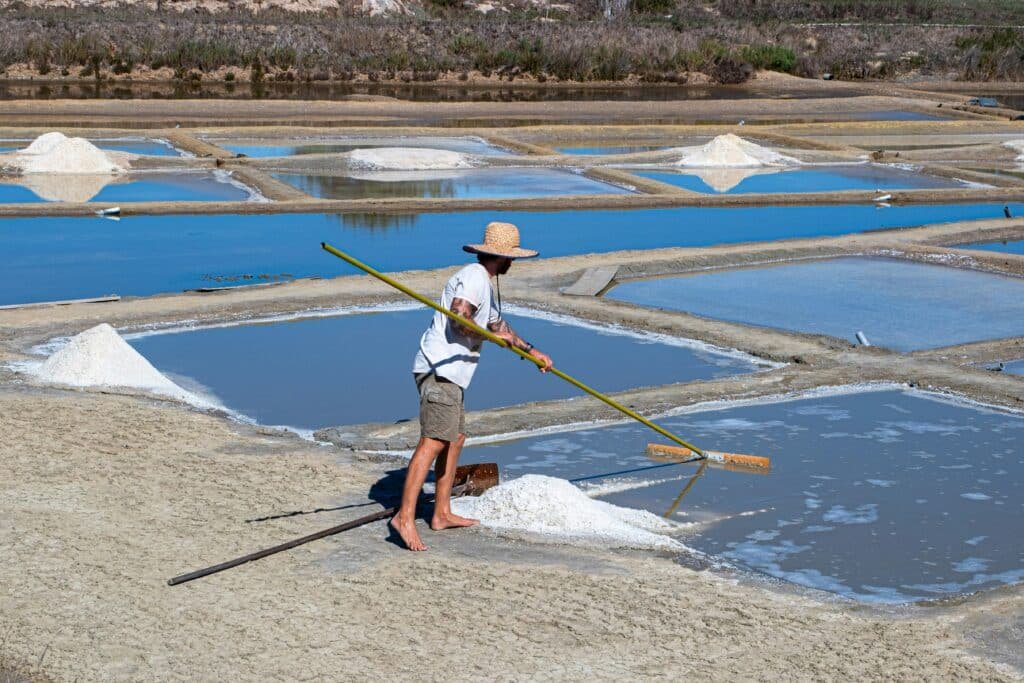
In this investigation
Before refrigeration, salt could turn a race against spoilage into months of storage. Fish caught in abundance, meat from slaughter, vegetables from a harvest and dairy products could all outlast their fresh forms when enough salt was combined with drying, brining, fermentation or curing. This was not a mysterious folk belief. Salt changes the physical environment that microorganisms need in order to grow.
Why salt was so valuable
Fresh food contains water that microbes can use. Food scientists describe the relevant fraction as water activity: the availability of unbound water for microbial growth and chemical reactions. Dissolved sodium and chloride ions associate with water molecules and lower water activity. Salt also creates osmotic stress that can pull water out of microbial cells, slowing or preventing growth.
This gave salt enormous practical value wherever fresh food had to survive travel, winter, seasonal gaps or uncertain harvests. Salting did not require knowledge of bacteria. People could observe the result: properly salted fish, meat or vegetables lasted far longer than untreated equivalents.
THE RECORD
Salt preservation appears across distant food cultures because it solved a recurring material problem: microbes need accessible water, and salt makes that water harder to use while selecting for more salt-tolerant organisms.
Dry salting and brining are related but not identical
Dry salting places salt directly on food, drawing out moisture and creating concentrated brine at the surface. Brining immerses food in salt solution. Both can reduce microbial growth, but the outcome depends on salt concentration, food thickness, temperature, time and whether other hurdles—acidification, drying, nitrite, smoke or refrigeration—are present.
Traditional cured foods often combine several methods because no single barrier is perfect. Salted fish may also be dried. Meat may be salted and smoked. Vegetables may be brined so that lactic-acid bacteria can dominate and acidify the product. What looks like one traditional method is often a carefully layered preservation system.
Salt does not simply “kill all bacteria”
The popular explanation is too absolute. Many microbes are inhibited by high salt, but salt-tolerant organisms can survive and some can grow under conditions that stop others. Modern reviews of salted foods emphasize that sodium chloride alone does not guarantee microbiological safety. Certain pathogens can tolerate substantial salt stress, which is why safe curing depends on the whole process rather than on salt as a magical disinfectant.
This is also why fermented vegetables can use moderate salt rather than extreme salt. The goal can be ecological selection: suppress many spoilage organisms while allowing desirable lactic-acid bacteria to acidify the food.
Salt made trade possible
Preservation changes geography. A highly perishable food is tied to the place and season where it was produced. A salted food can move. Salted fish, cured meat and preserved vegetables could support travellers, soldiers, sailors, pastoral communities and cities separated from production zones.
That economic role helps explain why salt became strategically important in many societies. Its value was not merely flavour. It was infrastructure for keeping calories and protein usable when transport was slow and cold chains did not exist.
The method was lifesaving then and can be excessive now
A preservation technology should be judged in its historical environment. Where refrigeration was absent and food shortages were dangerous, the ability to retain fish, meat or vegetables could outweigh the long-term disadvantages of a salty diet. Modern populations face a different exposure: sodium can come from many manufactured foods every day even when preservation is no longer necessary.
The World Health Organization recommends adults keep sodium below 2 grams per day, equivalent to about 5 grams of salt, because high sodium intake raises blood pressure and cardiovascular risk. That public-health recommendation does not invalidate historical salt preservation. It shows that an old solution to spoilage can become a new problem when the environment changes.
THE EVIDENCE
Salt’s preservation mechanism is strongly supported: it lowers water activity, creates osmotic stress and can work with acidification, drying and other hurdles. The modern trade-off is equally real—habitually high sodium intake increases blood-pressure and cardiovascular risk.
Salt and fermentation often worked together
Brined vegetables reveal why traditional preservation cannot always be divided into separate boxes. Moderate salt concentrations inhibit many unwanted organisms while allowing acid-producing lactic-acid bacteria to proliferate. As acidity increases, preservation becomes a combined effect of salt, low pH and microbial competition.
Cheese, fermented fish, olives, sauerkraut and numerous regional pickles use related hurdle principles in different proportions. The technology is not simply “more salt equals safer.” It is controlled selection.
What about salted meat and cancer?
Modern cancer-prevention evidence adds another distinction. Processed meat includes meat transformed by salting, curing, fermentation, smoking or related processes. Strong evidence links processed meat intake with colorectal cancer, and evidence also links some heavily salt-preserved foods with stomach cancer risk. These observations concern repeated modern dietary exposure, not the question of whether salt successfully preserved food historically.
A practice can therefore be technologically effective and still be nutritionally unsuitable as a daily high-dose habit under modern conditions.
Iodized salt changed the equation again
Modern public health also uses salt as a delivery vehicle for iodine because salt is widely consumed in predictable amounts. This creates an apparent tension: populations are advised to reduce excess sodium while maintaining adequate iodine. Public-health programmes address this by adjusting iodization rather than encouraging high salt intake.
The example shows how one ingredient can simultaneously be a preservative, flavouring, nutrient-delivery vehicle and chronic-exposure concern. Context determines which function matters.
Why fish made salt especially valuable
Fish spoil rapidly because their tissues are moist, nutrient-rich and often carry cold-tolerant microorganisms from aquatic environments. Large seasonal catches therefore created a preservation bottleneck. Salting could draw out water, slow microbial growth and make fish transportable far beyond the coast or river where it was caught.
Many salt-fish traditions are best understood through this logistics problem. The technology converted a highly perishable source of protein into a commodity that could feed inland populations, ships and communities through seasons when fishing was impossible. Drying often reinforced the effect, producing a product that was both salty and low in water activity.
Meat curing added chemistry beyond sodium chloride
Traditional meat curing may use salt alone, but many curing systems also employ nitrate or nitrite, smoke, sugar and drying. These additional hurdles affect colour, flavour, oxidation and microbial safety. It is therefore inaccurate to attribute every property of cured meat to ordinary salt.
The distinction also matters when interpreting health evidence. Processed meat is a broad category containing products made by different combinations of salting, smoking, curing and fermentation. Epidemiological risk associated with processed meat cannot be assigned to one ingredient or mechanism alone.
Cheese shows how salt can manage a microbial ecosystem
In cheese, salt is not merely a preservative added at the end. It affects moisture, enzyme activity, texture and which microorganisms grow during ripening. Too little or too much can change microbial succession and final flavour. Traditional cheese-making therefore uses salt as a process-control variable as well as seasoning.
This again undermines the idea that preservation simply means killing germs. Many traditional foods are stable because producers select a community of useful microbes while suppressing unwanted ones. Salt helps shape that community.
Salt was strategically important because food depended on it
Access to salt deposits, coastal evaporation ponds and trade routes could become economically and politically important because salt stabilized parts of the food supply. States taxed it and merchants moved it long distances. The historical details differ by society, but preservation helps explain why an ordinary mineral could become a major commodity.
For households, the same value operated at a smaller scale. A store of salt could turn a glut of fish, meat or vegetables into future food rather than immediate waste. The value was measured in time.
Why concentration and diffusion matter
Safe preservation depends on salt concentration throughout the food, not simply on a salty surface. Thick pieces require time for salt to diffuse inward. Brines can become diluted as water leaves vegetables. Temperature changes the growth rate of surviving microbes. Product size, ratio and curing time are therefore part of the preservation system.
Modern processors measure salt content, water activity, temperature and sometimes pH rather than relying on taste. Traditional methods sought the same reproducibility through fixed ratios, product dimensions, seasonal timing and repeated experience.
Natural does not mean harmless at any dose
Sodium chloride is naturally occurring, but natural origin says nothing about optimal intake. The same compound that protected households from spoilage can contribute to hypertension when consumed chronically in excess. A preservation benefit and a cardiovascular risk can both be scientifically true because they answer different questions.
This is a recurring Tradivior pattern: technologies should be judged against the problems they originally solved and the exposures they create today. Refrigeration and rapid transport have reduced the need for very salty preservation in many settings.
Can preservation use less sodium now?
Often yes, but simply removing salt from an inherited recipe can change microbial safety, texture and fermentation. Modern producers may compensate with refrigeration, pasteurization, acidification, protective cultures, modified-atmosphere packaging or alternative mineral salts. Reformulation has to be validated as a whole system.
The historical lesson is therefore not “more salt is better.” It is that reliable preservation depends on controlling the microbial environment. Modern technology gives us more ways to do that than earlier cooks possessed.
What survives scrutiny?
- Salting is one of the oldest and most effective preservation methods used across cultures.
- Salt works primarily by reducing water activity, creating osmotic stress and interacting with other preservation hurdles.
- Salt does not sterilize food; salt-tolerant pathogens and spoilage organisms can survive.
- Brining can deliberately select microbes that drive useful fermentation.
- Historically, salting extended seasonal food supplies and enabled transport and trade.
- Modern chronic sodium exposure is a different problem from historical preservation necessity.
- WHO recommends adults consume less than 2 grams of sodium, or about 5 grams of salt, per day.
- Processed and heavily salt-preserved foods should not be assumed healthy simply because the preservation mechanism is effective.
Why salting often changed the food itself
Salt preservation is not merely storage. It changes texture, flavour and sometimes microbial ecology. Muscle proteins lose water and can become firmer. Vegetables soften or ferment. Cheese curds change as salt draws moisture and controls surface microbes. Over time, communities can come to value these transformed foods even when fresh versions are available.
This helps explain why cured fish, salted meat, cheese, olives and pickled vegetables survive refrigeration. Preservation created new culinary identities. A method invented or adopted to prevent loss can remain because people prefer the transformed taste.
Salt was often scarce enough to become political
Because salt was useful for preservation and physiologically necessary in small amounts, control over salt sources could become economically and politically important. States taxed it, merchants transported it and communities organized around mines, pans and trade routes. The history of salt therefore connects food preservation with taxation, empire and labour.
That history also explains why heavily salted foods could persist even where salt was expensive. Preserving a valuable catch or slaughtered animal could justify using a valuable mineral because the alternative was spoilage.
Curing meat adds another layer
Traditional meat curing often uses more than sodium chloride. Nitrate and nitrite, historically present in certain salts and later deliberately controlled, inhibit Clostridium botulinum, contribute cured colour and shape flavour. Modern curing therefore belongs to a broader chemical system than simple salting.
This distinction matters because health risks associated with processed meats may involve several interacting factors: sodium, nitrite-derived compounds, haem iron, smoke and the overall dietary pattern. It is misleading to blame or credit “salt” for every effect of cured meat.
Why desalting before cooking is traditional too
Many salted foods are soaked, rinsed or boiled before eating. These practices reduce salt concentration and can improve texture. In other words, historical cooks often used high salt during storage and then partially reversed the process before consumption.
This is an important counterpoint to claims that traditional diets simply contained extreme sodium by design. Preservation dose and eating dose were not always the same.
Climate changes how much salt is needed
Temperature, humidity and food type alter spoilage risk. A preservation method that works in cold dry weather may fail in a hot humid environment. Salt concentration therefore developed together with local climate and with complementary technologies such as drying or smoking.
Modern cold chains allow producers to reduce salt substantially in many products because refrigeration now performs part of the preservative work once carried by sodium chloride.
The modern sodium problem is mostly chronic exposure
Blood-pressure risk is driven by habitual dietary exposure rather than the historical usefulness of one preserved food. Modern diets can deliver sodium from bread, sauces, restaurant meals, snacks and processed meat every day. The cumulative intake can remain high even when no one is preserving food at home.
This makes sodium reduction a systems problem. Reformulating processed foods, improving labelling and changing default recipes may matter more at population level than asking people to abandon every traditional salted food.
A tradition can remain valuable after its original necessity fades
Salted foods often carry regional identity and memory. Bacalhau, salted fish, cured meats, cheeses and pickles can be festival foods or markers of place. Modern health guidance does not require erasing them. It requires adjusting frequency and portion within a food environment where preservation is no longer the only concern.
The broader lesson is that nutritional judgement should distinguish the engineering problem a tradition solved from the exposure pattern created when that solution becomes an everyday preference.
Why “traditional salt” is not nutritionally special
Modern marketing often contrasts refined table salt with rock salt, sea salt or regionally branded traditional salts and implies that the latter are substantially healthier because they contain trace minerals. Those minerals exist, but usually in quantities too small to offset the dominant exposure: sodium chloride.
For blood pressure and cardiovascular risk, total sodium intake matters far more than whether the crystals are pink, grey or harvested from a particular source. Iodized salt adds an important public-health nutrient, but that benefit still does not require high salt consumption.
Preservation created a sodium problem only after the food environment changed
Historically, a heavily salted food might be eaten alongside unsalted grains, vegetables or fresh foods and only during certain seasons. Modern diets can layer sodium from bread, packaged snacks, sauces, restaurant food, cheese and processed meat in the same day. The exposure pattern is therefore different even when one traditional food remains unchanged.
This distinction is essential when evaluating tradition. The technology that preserved a winter fish supply can be scientifically sound while the modern pattern of eating multiple high-sodium foods every day can still be harmful.
Modern reformulation can preserve the tradition
Refrigeration, vacuum packaging, starter cultures, controlled humidity and shorter distribution chains can reduce the amount of salt needed for some foods. Reformulation does not have to erase traditional flavour; it can redistribute preservation work across several technologies.
The best modern adaptation therefore asks what salt was doing in the original process and whether another safe control can now perform part of that function. This is more useful than either romanticizing old salt levels or abandoning traditional foods entirely.
Why preservation thresholds must be food-specific
The amount of salt needed to stabilize food varies with its composition. A dry cheese, a wet fish fillet, a vegetable brine and a cured sausage do not present the same microbial environment. Fat content, pH, water activity, temperature, competing microbes and package atmosphere all alter the effective threshold.
Traditional recipes often encoded these differences empirically. Modern food science makes them measurable. This is why reducing sodium safely is a formulation problem rather than a matter of simply cutting every historical salt quantity in half.
Salt was one part of a broader preservation portfolio
Households rarely relied on a single preservation method for every food. Grain could be dried, fruit sun-dried, meat smoked, milk fermented and vegetables brined. Salt was powerful because it combined readily with these other techniques. Its historical importance is best understood within that portfolio rather than as a universal solution.
In short, sodium chloride was historically valuable because it could be tuned to a food and combined with other hurdles. That process-specific view is more accurate than treating every salted food as equivalent.
The Tradivior Evidence Profile
Historical Authenticity — Strong. Salting, brining and salt-curing are deeply documented across food cultures and predate refrigeration.
Original-Purpose Evidence — Strong. Extending shelf life, stabilizing seasonal abundance and making transport possible are direct practical functions.
Scientific Mechanism — Strong. Water-activity reduction and osmotic stress are established mechanisms, often combined with acidification, drying or other hurdles.
Experimental Evidence — Strong. Food microbiology extensively characterizes salt tolerance, water activity and preservation, while modern clinical evidence strongly supports sodium reduction for blood-pressure control.
Cross-Cultural Evidence — Strong. Salt preservation appears across meat, fish, dairy and vegetable traditions worldwide.
Modern Relevance — Strong. Salt remains technologically useful, but modern processing permits lower-sodium strategies and makes chronic high intake unnecessary.
The Tradivior Conclusion
Historically Practical. People preserved food with salt because it worked. By lowering water activity, stressing microbial cells and cooperating with drying, fermentation, smoke or acidity, salt could extend the usable life of perishable food dramatically. The mistake is not the old technology; it is assuming that a historically valuable preservation dose should remain a healthy everyday exposure in a world with refrigeration and abundant processed food. Salt preservation is a strong example of a tradition whose original function is scientifically validated while its modern nutritional context has changed.
Continue investigating
Sources & further reading
- Institute of Medicine. Strategies to Reduce Sodium Intake in the United States. National Academies Press, 2010; chapter “Preservation and Physical Property Roles of Sodium in Foods.”
- Lee H, et al. “Sodium Chloride Does Not Ensure Microbiological Safety of Foods: Cases and Solutions.” Advances in Applied Microbiology. 2017;101:1–47.
- World Health Organization. Guideline: Sodium Intake for Adults and Children. WHO, 2012; current WHO healthy-diet guidance retains the <2 g/day sodium benchmark.
- World Cancer Research Fund/AICR. Diet, Nutrition, Physical Activity and Cancer: a Global Perspective, preservation and processing evidence.
Continue exploring
Historically Practical
Why Did Humans Boil Food?
Boiling transformed human diets by making grains, pulses, roots, meat and water safer and softer in a single vessel. Heat kills most foodborne microbes and moist cooking improves digestibility, but…
Historically Practical
Why Did Pickling Become a Global Preservation Strategy?
Pickling became global because acidity is a powerful preservation tool. Fermented pickles create acid through lactic-acid bacteria; vinegar pickles add it directly. Both can be safe when properly controlled, but…

Historically Practical
Why Did Humans Dry Food in the Sun?
Sun drying preserved food by removing the water microbes need to grow. The mechanism is robust and ancient, but drying is not sterilization: contamination, mould, nutrient loss and poor storage…
Historically Practical
Why Did Humans Smoke Food?
Smoking preserved food by combining drying, heat and antimicrobial smoke compounds—and then survived because people came to value the flavour. Modern evidence also shows a trade-off: smoke can deposit carcinogenic…
Picked for your curiosity
Enable JavaScript to build a reading profile and see recommendations.