 tradivior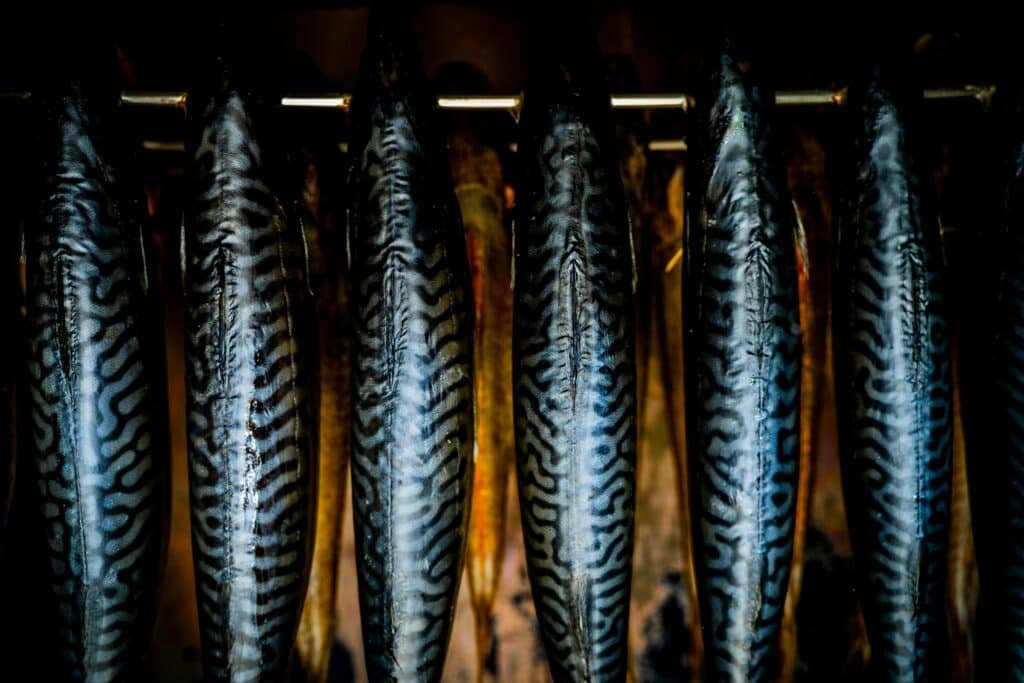
In this investigation
Smoke did two jobs at once: it helped food last, and it made food taste like smoke. Long before refrigeration, meat and fish were hung above fires, in smokehouses or beside hearths where heat, airflow and combustion products changed the food. The result could survive longer than the fresh catch or slaughter—and the flavour became desirable enough to survive even after preservation technology improved.
Smoking is not one mechanism
Traditional smoking preserves through several overlapping effects. Warm air and heat remove moisture. Smoke deposits phenols, organic acids, carbonyls and other compounds on the surface. Some of those compounds inhibit bacteria, yeasts and moulds. In meat and fish, smoking is often combined with salting, curing or drying, creating multiple hurdles to microbial growth.
This matters because the popular phrase “smoke kills bacteria” is too simple. Smoking alone does not sterilize food. Safety depends on temperature, time, food thickness, salt, water activity, storage and the organisms present.
THE RECORD
Smoking appears across geographically distant food traditions because hearths were already central to cooking and warmth. Hanging perishable food where it was repeatedly exposed to heat and smoke naturally created a preservation experiment that could be refined over generations.
Drying may have been the first benefit
Microbial growth requires available water. A smoky hearth is also a drying environment, especially when food is suspended in moving warm air. Removing moisture lowers water activity and therefore slows many spoilage organisms.
For thin fish, strips of meat or foods repeatedly exposed to smoke, the drying effect could be substantial. Salt often amplified it by drawing water from tissue and further reducing water availability.
Smoke itself contains antimicrobial chemistry
Wood smoke is chemically complex. Phenolic compounds, organic acids and carbonyls can inhibit microbial growth or oxidative reactions at the food surface. Their effect depends on wood type, combustion temperature, oxygen, distance from the fire and duration of exposure.
That variability explains why traditional smoking was not automatically reliable. A cool, clean-burning smokehouse is chemically different from food held directly in dense soot and flame. What mattered historically was a repeatable process that produced a stable product.
Hot smoking and cold smoking solve different problems
Hot smoking cooks while smoking, providing a thermal kill step in addition to smoke and drying. Cold smoking occurs at much lower temperatures and may add flavour and surface preservation without fully cooking the food. Cold-smoked products therefore depend more heavily on prior curing, salt, water activity, refrigeration or other controls.
The distinction is modern terminology for a practical truth traditional processors already had to confront: a smoky food is not necessarily a cooked food.
Why smoke flavour became culturally valuable
Preservation may explain why smoking began, but flavour helps explain why it remained. Smoke creates aromas associated with phenols, carbonyls and other volatile compounds. Once communities came to value those flavours, smoking no longer needed refrigeration failure to justify itself.
That is why smoked salmon, smoked cheeses, smoked chillies and smoked meats survive in societies with cold chains. The technology moved from necessity into cuisine.
The modern complication: combustion creates hazards too
The same combustion that creates desirable smoke also produces polycyclic aromatic hydrocarbons, or PAHs. These compounds can form when wood and fat burn incompletely. Some PAHs are mutagenic and carcinogenic, and direct exposure to flame, dripping fat, dense smoke and high temperatures can increase deposition on food.
IARC’s review of processed meat identifies smoking, curing and related processing as routes by which carcinogenic compounds, including PAHs and N-nitroso compounds, can form. This does not mean every smoked food presents the same risk, but it does establish a genuine trade-off between traditional smoke processing and modern toxicology.
THE EVIDENCE
Smoking’s preservation logic is scientifically sound: drying, surface chemistry and often salting or curing work together. Modern evidence also shows that poorly controlled smoking can deposit carcinogenic combustion products, so a historically useful method is not automatically a health-promoting one.
Processed meat evidence changes how the tradition should be used today
Processed meat is defined by IARC to include meat transformed by smoking, salting, curing, fermentation or related processes. The agency classified consumption of processed meat as carcinogenic to humans based primarily on evidence for colorectal cancer. The classification concerns the evidence that the exposure can cause cancer, not a claim that every serving carries the same absolute risk.
For Tradivior’s purpose, the distinction is important. Smoking can be an effective preservation technology and a valued culinary practice while frequent intake of processed smoked meats can still be undesirable under modern dietary conditions.
Fish complicates the story
Fish smoking illustrates why categories matter. Fish is highly perishable, and smoking historically extended storage while creating distinctive flavours. Yet lightly salted or cold-smoked fish can remain vulnerable to organisms such as Listeria monocytogenes unless refrigeration and hygienic processing are maintained.
The lesson is broader than fish: traditional sensory markers cannot substitute for validated safety controls when products are manufactured or stored under modern commercial conditions.
Modern smokehouses reduce some of the old variability
Industrial and carefully managed artisanal systems can control smoke density, temperature, humidity, airflow, wood type and combustion conditions. Indirect smoking and filtered or regenerated smoke flavours can reduce direct exposure to soot and high-PAH fractions.
This is a recurring Tradivior pattern: understanding the original mechanism allows a tradition to be improved rather than either romanticized or abandoned.
Fire temperature changes the chemistry of smoke
Wood does not produce one fixed “smoke.” Combustion temperature, oxygen supply and moisture determine which compounds are released. Smouldering and flaming conditions create different balances of acids, phenols, carbonyls, soot and polycyclic aromatic hydrocarbons. A traditional smoker’s control of airflow and distance from the fire therefore has chemical consequences.
This is one reason two foods both described as smoked can have very different contamination profiles. Technique matters more than the label.
Wood choice changes flavour and risk
Hardwoods are commonly preferred because their combustion products create familiar smoke flavours with fewer resinous notes than many softwoods. Species, bark, seasoning and contamination of the wood all affect the smoke. Painted, treated or chemically contaminated wood is unsuitable because combustion can introduce additional hazardous compounds.
Traditional regional preferences for particular woods therefore reflect both ecology and sensory learning. What grows locally shapes what a smoked cuisine tastes like.
Distance from the flame is a safety variable
Direct contact with flames and dripping fat can generate intense combustion products and raise PAH deposition. Indirect smokers separate the fire from the food and move smoke through a chamber, making temperature and smoke density easier to control.
This modern engineering does not abandon the traditional method. It isolates its useful functions—drying, flavour and antimicrobial chemistry—while reducing uncontrolled charring and soot.
Cold smoking preserves less than many people assume
Cold-smoked foods can acquire strong smoke flavour without reaching temperatures that destroy pathogens. Their safety therefore depends on other barriers such as curing, salt, refrigeration, low water activity and hygienic handling. Treating smoke aroma as proof of preservation is unsafe.
Historically, cold smoking usually existed inside a broader process. Fish or meat might be salted first and dried progressively. Removing those steps while keeping only the smoke flavour changes the microbiological system.
Hot smoking is closer to cooking plus flavouring
Hot smoking operates at temperatures high enough to cook the food while exposing it to smoke. This can provide a substantial microbial kill step if an adequate internal temperature is reached. After cooking, however, recontamination and storage temperature still matter.
Modern ready-to-eat smoked fish illustrates the point: refrigeration, sanitation and shelf-life control remain necessary even though the product has been smoked and heated.
Smoke created a portable flavour signature
Preservation technologies often become markers of place. Particular woods, local fish or meats, curing styles and smokehouse designs generate recognizable regional products. Once that identity exists, consumers may seek the flavour even when preservation is no longer needed.
This cultural persistence explains why smoked salt, smoked cheese and smoke-flavoured sauces exist. The sensory signal has detached partly from the original survival function.
PAHs are not the only possible chemical hazard
Food-safety reviews of smoked meat and fish also consider nitrosamines, heterocyclic compounds and contaminants created by combustion or high-temperature processing. Their formation depends on the food, temperature and curing chemistry. Smoke exposure should therefore be evaluated as part of the whole production method.
Modern regulations and industry controls increasingly monitor marker PAHs and restrict processes likely to create excessive contamination. Better process control can substantially reduce exposure compared with uncontrolled direct smoking.
Why moderation is a more defensible conclusion than fear
Hazard is not identical to risk. The presence of carcinogenic compounds means exposure should be minimized, but actual risk depends on concentration and frequency of consumption. Occasional smoked foods made with controlled methods are different from a diet built around heavily processed meats.
The evidence therefore supports cleaner techniques and limited processed-meat intake rather than the claim that all smoke-touched food is equally dangerous.
What survives scrutiny?
- Smoking is a historically widespread preservation method for meat, fish and other foods.
- Its preservation effect combines drying, heat and antimicrobial or antioxidant smoke compounds.
- Smoking alone does not sterilize food; safe products often rely on salt, curing, refrigeration or additional drying.
- Smoke flavour became culturally desirable, allowing the practice to survive after refrigeration.
- Combustion can generate PAHs and other hazardous compounds, especially under poorly controlled conditions.
- Processed-meat evidence links regular consumption of smoked, cured and otherwise processed meats with colorectal cancer risk.
- Modern controlled smoking can reduce some contamination and toxicant exposure compared with crude direct smoking.
- Historical preservation value and modern health suitability are separate questions.
Wood choice changes both flavour and chemistry
Different woods contain different proportions of cellulose, hemicellulose, lignin, resins and aromatic compounds. Their combustion therefore generates different smoke profiles. Hardwoods are often preferred for food smoking because resinous softwoods can create harsh flavours and undesirable deposits.
Traditional preferences for particular woods may reflect generations of sensory selection: cooks kept using woods that produced acceptable flavour and discarded those that made food bitter, sooty or unpleasant.
Airflow determines whether smoking dries or merely coats
Preservation depends partly on removing moisture. A smoky chamber with poor airflow may deposit compounds without drying efficiently, while controlled airflow carries evaporated water away. Traditional smokehouses therefore function as heat-and-mass-transfer systems as well as flavour chambers.
Temperature, humidity and air velocity determine how quickly a surface dries and how deeply smoke compounds penetrate. This is why apparently similar recipes can produce very different shelf lives.
Smoking can inhibit microbes without eliminating them
Phenols, organic acids and carbonyl compounds can damage microbial cells or make the surface environment less favourable. Yet pathogens protected inside a thick piece of food may survive. Cold-smoked products are especially dependent on salt, refrigeration and hygienic handling.
The distinction is important for home smoking. Smell and colour are not reliable evidence that a product is microbiologically safe.
Why fish and meat dominate smoking traditions
Animal foods are nutrient-dense, wet and highly perishable. Seasonal fishing or hunting can also produce more food than can be eaten immediately. Smoking therefore offered a way to convert a short-lived protein surplus into a portable reserve.
Vegetables, cheese and spices can also be smoked, but their historical preservation pressure was often lower or could be addressed more easily through drying, fermentation or storage.
Modern smoke control is a public-health improvement
Traditional open fires generate smoke under variable oxygen and temperature conditions. Modern smoking equipment separates the food from direct flame, controls combustion and can filter or condense smoke. These changes can substantially reduce PAH deposition.
This is not evidence that the traditional technique was irrational. It is an example of engineering learning how to keep useful components while removing hazardous ones.
Frequency matters more than cultural labels
A smoked ceremonial food eaten occasionally creates a different exposure from processed smoked meat eaten every day. Epidemiological risk depends on dose, frequency and the broader diet.
Public-health guidance therefore need not condemn every smoked tradition. It should distinguish occasional culturally important foods from habitual high intake of processed meat.
The preservation and flavour stories eventually separated
When refrigeration made shelf-life extension less urgent, smoke remained attractive because people had learned to value its aroma and colour. Modern smoked salmon, cheese or barbecue may be refrigerated throughout production and storage, meaning smoke is no longer carrying the preservation burden by itself.
This shift from necessity to preference is common in food history. A survival technology can become cuisine long after the original constraint disappears.
Why smokehouses became specialized structures
Once smoking moved beyond hanging food over an ordinary hearth, dedicated smokehouses allowed communities to control distance from the fire, airflow, temperature and exposure time more reliably. Architecture became part of the preservation technology.
A separate smoke source could reduce direct flame contact and permit longer, cooler smoking. Shelves and hooks increased capacity. Chimneys and vents controlled draft. These design choices show how a simple observation—smoke helps preserve food—could evolve into a sophisticated processing system.
Salt and smoke solve different parts of the same problem
Salt moves into food and reduces water activity internally, while smoke acts strongly at the surface and drying removes moisture. Used together, they create multiple barriers that make microbial growth more difficult. This is why many durable traditional meats and fish are both cured and smoked.
Modern hurdle technology formalizes the same principle: several moderate controls can create a safer product than reliance on one extreme treatment.
Botulism risk explains why low-oxygen products require precision
Some smoked foods are later vacuum packed or stored under reduced oxygen. That can slow many spoilage organisms but creates conditions in which Clostridium botulinum becomes a particular concern if salt, temperature and other controls are inadequate. Modern commercial processes therefore use validated combinations of refrigeration, curing and packaging.
Traditional appearance or smoke flavour cannot guarantee protection against toxin-producing organisms. Safety depends on measurable process conditions.
PAH exposure can be reduced without losing the tradition
Research on smoked foods shows that PAH deposition rises under some direct-fire and high-temperature conditions. Separating the smoke generator from the food, controlling combustion, avoiding dripping fat on flame and using filtered smoke can reduce contamination.
This gives a practical route forward: preserve regional smoke flavours while engineering away part of the avoidable carcinogenic exposure.
Home smoking deserves the same caution as home canning
Because smoking feels ancient and intuitive, home processors may assume that visible smoke itself guarantees preservation. It does not. Safe processing depends on food thickness, salt concentration, internal temperature, water activity, storage temperature and packaging.
A recipe that was historically safe under one climate or with one cut of fish may not transfer reliably to another setting. Traditional knowledge is valuable, but food-safety validation becomes especially important when methods are modified.
Why the healthiest modern interpretation is occasional and controlled
Smoke flavour can remain part of a varied diet without making smoked and processed meats daily staples. Occasional use, cleaner smoking methods and greater reliance on fresh or minimally processed protein can retain culinary heritage while reducing cumulative exposure to sodium, PAHs and other processed-meat risk factors.
This is a stronger conclusion than either “traditional smoked food is dangerous” or “traditional smoking is naturally safe.” The evidence supports a middle path grounded in dose and process quality.
The smoke ring is not a safety indicator
Colour and aroma can make smoked food appear “done,” but these sensory signs do not reveal internal temperature or pathogen survival. Pigment reactions at the surface can occur without adequate heating of the centre. Modern safe smoking therefore uses time, internal temperature and storage controls rather than appearance alone.
This distinction is especially important when adapting traditional recipes to larger cuts, different equipment or reduced salt. Changing one hurdle can make another more important.
Smoke also became a marker of place
Local woods, hearth designs and fuel availability created regional smoke signatures. Once consumers learned to recognize those flavours, smoking became part of geographical identity. The persistence of smoked foods today is therefore cultural as well as technical.
Traditional smoking should therefore be judged as a complete process rather than by the presence of smoke alone. Salt level, food thickness, drying, heat exposure, storage temperature and packaging determine whether the final product is merely smoky, genuinely preserved or potentially unsafe. Modern standards make those hidden variables explicit.
For consumers, the relevant distinction is not “traditional versus industrial” but how well the process controls hazardous combustion products and microorganisms. A carefully managed modern smokehouse can preserve an old flavour more safely than an uncontrolled fire while remaining recognizably part of the same culinary tradition.
The Tradivior Evidence Profile
Historical Authenticity — Strong. Smoking meat, fish and other foods is well documented across numerous pre-refrigeration food cultures.
Original-Purpose Evidence — Strong. Shelf-life extension, drying, transport and later flavour preservation are directly observable functions.
Scientific Mechanism — Strong. Moisture reduction, heat and antimicrobial smoke compounds provide established mechanisms, usually alongside other hurdles.
Experimental Evidence — Strong. Food science supports preservation mechanisms, and toxicology strongly supports concern about PAHs and other combustion-derived contaminants.
Cross-Cultural Evidence — Strong. Smoking developed across fishing, hunting and pastoral societies using different woods and process designs.
Modern Relevance — Moderate. Smoking remains valuable for flavour and selected preservation uses, but frequent processed-meat consumption and high-PAH exposure should be minimized.
The Tradivior Conclusion
Historically Practical. Humans smoked food because hearth smoke, heat and moving air could slow spoilage while creating a flavour people learned to value. Modern science validates the preservation mechanism. It also reveals the trade-off invisible to early users: combustion can deposit carcinogenic compounds, and regularly consumed smoked processed meat is associated with increased colorectal-cancer risk. Smoking is therefore neither an obsolete superstition nor an inherently healthy tradition. It is an effective old technology whose modern use benefits from cleaner combustion, controlled processing and moderation.
Continue investigating
Sources & further reading
- IARC Working Group. Red Meat and Processed Meat. IARC Monographs, Volume 114. International Agency for Research on Cancer, 2018.
- American Institute for Cancer Research. “Processed Meat Research.” Food Facts, updated 2021.
- Fellows PJ. Food Processing Technology: Principles and Practice. Elsevier.
- Stołyhwo A, Sikorski ZE. “Polycyclic aromatic hydrocarbons in smoked fish—a critical review.” Food Chemistry. 2005.
Continue exploring

Historically Practical
Why Did the Monsoon Shape Calendars and Rituals in South Asia?
In South Asia, rain determines sowing, travel, disease risk and food security, so the monsoon naturally entered ritual and seasonal calendars. Tradivior will trace how climate uncertainty became social time.

Evidence Supported
Why Do Human Bodies Follow Daily Light-Dark Cycles?
Traditional schedules often followed dawn, daylight and darkness because artificial lighting was limited, not necessarily because people knew circadian biology. Tradivior will connect historical time use with modern evidence on…
Contradicted by Evidence
Why Did Astrology Become So Influential Across Civilizations?
Astrology linked the sky to personality, politics, medicine and fate across South Asia, the Mediterranean, China and the Islamic world. Tradivior will trace its intellectual history and examine why it…

Historically Practical
Why Did Humans Boil Food?
Boiling transformed human diets by making grains, pulses, roots, meat and water safer and softer in a single vessel. Heat kills most foodborne microbes and moist cooking improves digestibility, but…
Picked for your curiosity
Enable JavaScript to build a reading profile and see recommendations.