 tradivior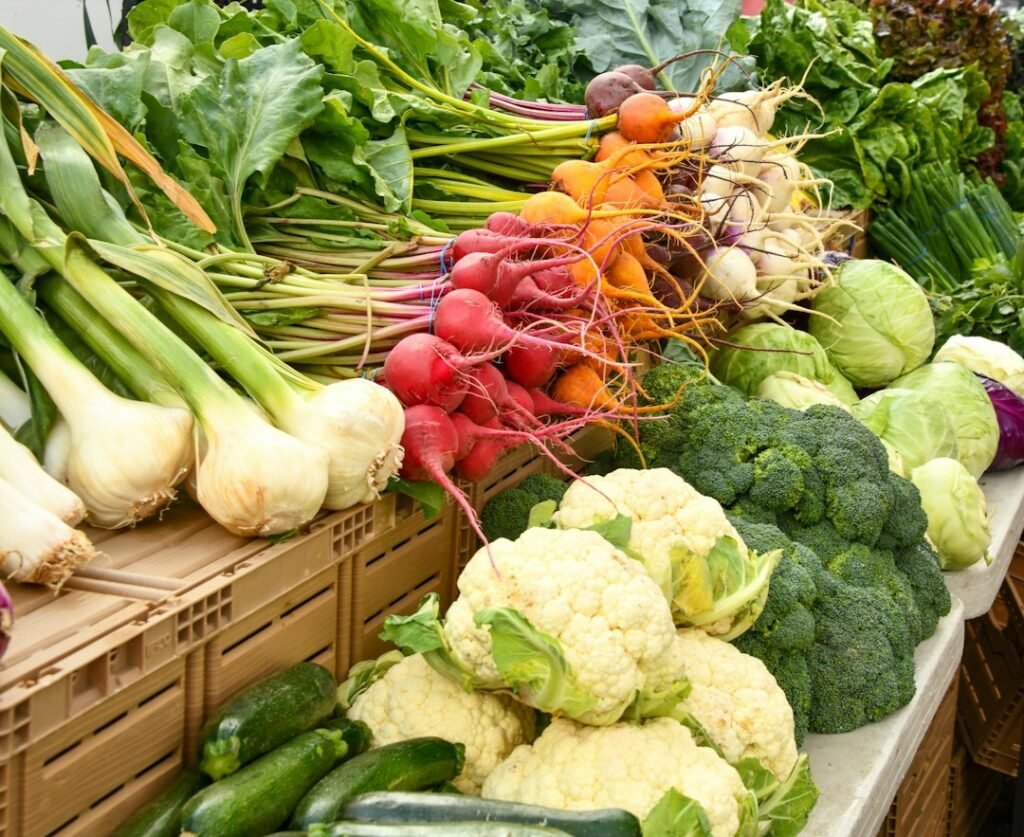
In this investigation
For most of human history, eating seasonally was not a lifestyle choice. It was the default. Fresh foods appeared when fields, trees, rivers, herds and weather made them available. Storage, preservation and trade could stretch those windows, but a winter diet in a temperate farming community could not look like its summer diet, and a monsoon harvest in South Asia created different possibilities from a dry-season one.
Modern seasonal-eating advice often presents this pattern as if earlier people consciously followed a health programme: eat winter foods in winter, summer foods in summer, because the body supposedly needs a biologically specific menu for each season. That claim goes beyond the evidence. Traditional seasonality was unquestionably real; the reason was usually ecology first, while explicit medical theories came later or existed alongside practical constraints.
Before supermarkets, the environment wrote the menu
Agriculture produces pulses of abundance. Grain ripens at harvest. Fruit trees bear for limited periods. Vegetables respond to temperature and rainfall. Herd animals lactate cyclically. Fish runs and game availability can also be seasonal. Without refrigeration and rapid transport, communities ate more of what was currently abundant and relied on stored foods when fresh supply fell.
This made traditional diets dynamic even without a medical theory. Seasonal eating was often the nutritional expression of local ecology.
THE RECORD
Seasonal eating is historically authentic across farming, pastoral, fishing and foraging societies. But authenticity does not prove that people selected foods because they understood modern thermoregulation, circadian biology or micronutrient science.
Preservation weakened seasonality without eliminating it
Humans rarely accepted seasonality passively. Drying, fermentation, salting, smoking, pickling, cool storage and grain granaries were all ways of moving food through time. A summer vegetable could become a winter pickle. Milk could become cheese. Fish could be dried or salted. Grain could be stored for months.
Traditional seasonal diets were therefore not simply “fresh local food.” They were mixtures of fresh seasonal foods and carefully preserved foods from earlier abundance.
Trade also made diets less seasonal much earlier than modernity
Long-distance trade moved spices, dried fruits, grains, salt, oils and preserved foods across climates centuries before industrial transport. Wealthy urban populations could access foods that local ecology did not produce at that moment—or at all.
This complicates romantic stories about a perfectly local ancestral diet. Human food systems have long mixed ecology with trade, preservation and status.
Did people eat more in winter?
Modern human studies do find seasonal variation in appetite and intake, but not one universal pattern. A 2023 review reported that energy intake often rises in colder seasons and falls in summer, influenced by temperature, daylight, holidays, activity and emotion. Older controlled-diary studies also observed seasonal changes in meal size and hunger.
Yet larger population analyses show that the magnitude is often small and inconsistent. A study involving more than 44,000 participants across four countries found relatively limited and population-specific seasonal variation in energy and macronutrient intake, with seasonality apparently declining over time.
So human biology can respond to season, but modern evidence does not support one fixed nutritional rule such as “everyone needs heavier food in winter and lighter food in summer.”
THE EVIDENCE
Season can influence appetite, activity, daylight exposure and food availability. The evidence for a universal metabolic advantage from deliberately matching foods to the season, independent of overall diet quality, is much weaker.
Seasonality changes nutrient exposure mainly through food availability
A systematic review and meta-analysis of seasonal food-group intake found that fruits, vegetables, cereals and other food groups varied across seasons, but the direction differed by transition and population. This is exactly what ecology predicts: different foods enter and leave the available diet at different times.
Those changes can alter micronutrient intake. A community that eats more leafy greens during the rainy season or more fruits during harvest will naturally change vitamin and mineral exposure. But the health effect depends on what foods replace one another, not on seasonality itself.
Local does not automatically mean nutritionally optimal
A season can produce scarcity as easily as abundance. Historical populations often experienced late-winter or pre-harvest hunger. Monotonous staple dependence could create micronutrient deficiencies. Seasonal infections and heavy labour could increase needs precisely when food was scarce.
This matters because “traditional seasonal eating” can sound uniformly wholesome from the perspective of modern abundance. Historically, seasonality sometimes meant fresher food and variety; at other times it meant shortage.
The strongest modern argument is usually food quality, not mystical timing
Seasonal produce may be harvested closer to maturity, travel shorter distances in local systems and cost less when abundant. Those are practical advantages. A seasonal diet can also encourage variety over the year, especially when people rotate fruits and vegetables naturally.
But none of those benefits requires a claim that a tomato eaten outside its traditional season becomes biologically unsuitable. Frozen, canned or transported produce can still be nutritious, and preservation can make important foods available when fresh supply is poor.
Climate matters more than calendar labels
“Winter food” means different things in Rajasthan, Kerala, Norway and equatorial Africa. Temperature, rainfall and agricultural cycles—not the English name of the month—shape the food environment.
This is one reason universal seasonal-diet prescriptions are scientifically suspect. Human populations live in radically different climates and have adapted culturally through clothing, housing, preservation, agriculture and trade.
Seasonal disease patterns can make diet feel medically linked to time
Respiratory infections, diarrhoeal disease, vector-borne infections and heat stress can all vary with season. Historical medical systems therefore had good reason to notice that illness changed through the year. Seasonal diet advice may have emerged partly within those broader observations.
Modern epidemiology confirms seasonality for many diseases, but that does not validate every traditional food rule attached to them. Disease seasonality can be real while a proposed dietary mechanism remains untested.
Modern food systems have weakened the old ecological signal
Cold chains, controlled-atmosphere storage, greenhouse production and global trade allow many foods to appear year-round. This has nutritional benefits: populations are less dependent on local harvest failure and can access diverse foods through winter or drought.
It also means the connection between body, season and food environment is less obvious. Modern consumers can choose seasonal eating for cost, flavour, sustainability or cultural reasons without pretending that year-round availability is biologically unnatural.
Seasonality and sustainability are related but not identical
Eating foods that are naturally abundant nearby can sometimes reduce energy used for heated greenhouses, refrigeration or long storage. Yet transport is only one part of a food’s environmental footprint, and local production can be resource-intensive under unsuitable conditions.
A sustainability claim therefore needs life-cycle evidence, not just the label “seasonal.”
Seasonality once meant variation in the whole food environment
A preindustrial household did not merely swap one fruit for another when the season changed. Rainfall altered grazing, milk supply, river flow, fish catches, fuel availability, wild greens, storage conditions and the labour needed for planting or harvest. The entire food system moved with the year.
This is why traditional seasonal eating is better understood as ecological adaptation than as a list of “winter superfoods.” People ate differently because fields, animals, weather and preservation capacity changed together.
Storage technology determines how seasonal a diet really is
Dry grain, pulses, nuts and fermented foods can travel across seasons more easily than fresh berries or leafy vegetables. Root cellars, granaries, pickles, dried fruit and cured fish all weaken the direct connection between harvest date and eating date.
Two communities living at the same latitude can therefore have very different seasonal diets if one has better storage, trade routes or preservation traditions.
Nutrient intake can change with the agricultural calendar
Where fresh fruits and vegetables are abundant only for part of the year, vitamin and mineral intake can rise and fall with harvests. Dairy nutrients can vary with lactation cycles, and meat availability may follow herd management or hunting seasons.
This does not make seasonal fluctuation automatically healthy. Historical “hungry seasons” before harvest could bring weight loss and deficiency. Traditional seasonality included scarcity as well as abundance.
A seasonal food can be fresher without being nutritionally magical
Produce harvested near ripeness and eaten quickly may have better flavour and can retain some nutrients better than produce stored for long periods. But modern freezing, canning and controlled-atmosphere storage can preserve many nutrients effectively.
The scientifically defensible advantage is therefore often freshness, price and sensory quality—not the idea that the same vegetable becomes physiologically inappropriate when eaten in another month.
Photoperiod affects humans, but not enough to dictate a universal menu
Day length influences circadian timing, sleep, mood and seasonal behaviour, especially at high latitudes. Temperature also changes thermoregulatory demand. These are real biological effects.
They do not establish that specific colours, grains or spices must be eaten in each season. Environmental biology supports flexible adaptation, not a globally fixed seasonal food chart.
Appetite changes are smaller and less consistent than folklore suggests
Some studies find higher energy intake or stronger appetite in colder seasons, while others find modest or population-specific changes. Holiday patterns, physical activity and food availability can be as important as temperature.
This makes statements such as “the body naturally needs heavy food every winter” too broad. Individual activity, housing and climate determine energy requirements more directly.
Tropical seasonality works differently from temperate seasonality
In tropical regions, rainfall can matter more than cold. Monsoon cycles affect crop disease, spoilage, green-leaf availability and water contamination, while temperature may remain relatively high year-round.
Copying a four-season European diet framework into South Asia therefore makes little ecological sense. Traditional seasonal systems emerged from local calendars and should be interpreted locally.
Seasonality can diversify the diet across the year
When different fruits, greens, roots and grains enter the kitchen at different times, people may naturally rotate foods instead of eating the same few choices year-round. Greater dietary diversity can improve micronutrient coverage.
But modern consumers can create the same diversity without strict seasonality. Variety is the nutritional mechanism; season is one historical way of producing it.
Imported food is not automatically environmentally worse
“Seasonal and local” is often presented as a simple climate rule, but environmental footprint depends on production method, storage, heated greenhouses, transport mode and waste. A field-grown food transported efficiently can sometimes use fewer resources than the same food produced locally out of season in an energy-intensive greenhouse.
Sustainability therefore needs life-cycle evidence rather than a mileage slogan.
Modern cold chains solved real historical suffering
Year-round access to diverse foods can prevent deficiency, buffer crop failure and reduce dependence on one local harvest. Refrigeration also improves food safety for milk, meat and many leftovers.
Romantic seasonal-eating narratives should remember that breaking seasonality was one of the great achievements of modern food systems, even if it created new environmental and dietary problems.
Seasonal eating can still be a useful modern heuristic
Choosing foods when they are naturally abundant can lower cost, improve flavour and reconnect meals with regional agriculture. Farmers’ markets and household gardens can make the calendar visible again.
That is a practical and cultural reason to eat seasonally. It does not require claiming that imported or frozen foods confuse human biology.
The healthiest seasonal rule is probably flexible abundance
Eat a varied diet, use fresh local foods when they are good and affordable, preserve surplus safely, and use frozen, canned or transported foods when they improve nutrition or access. That approach keeps the strengths of traditional seasonality without recreating its scarcity.
Season can guide choice without becoming nutritional dogma.
Seasonal abundance also shapes price and household access
When a crop arrives in large volume, local prices often fall and households can eat more of it or preserve the surplus. Out-of-season production and long-distance transport can reverse that relationship, making some foods available but expensive.
Traditional seasonality was therefore partly an economic rhythm. Eating what was abundant could be the rational household strategy even without any belief that the body physiologically “needed” that food in that month.
Seasonal eating is therefore best treated as a flexible ecological pattern: useful for freshness, price, agricultural connection and variety, but not a rule that modern preservation or trade automatically makes food unhealthy.
Seasonality is a useful guide when it improves access, variety and freshness; it is not a test of whether food is biologically “correct” for a particular month.
What survives scrutiny?
- Traditional diets were strongly seasonal because agriculture, weather, animal cycles and wild-food availability were seasonal.
- Preservation and trade reduced seasonality long before modern supermarkets.
- Modern studies show some seasonal changes in appetite and food intake, but the pattern is inconsistent across populations.
- There is limited evidence that deliberate seasonal eating has a unique metabolic advantage independent of overall diet quality.
- Seasonal produce can offer practical advantages in cost, flavour, variety and sometimes sustainability.
- Seasonality historically could also mean scarcity and nutritional deficiency.
- Climate and local ecology matter more than universal calendar-based food rules.
- Frozen, canned, dried and transported foods can remain nutritionally valuable outside a fresh harvest window.
The Tradivior Evidence Profile
Historical Authenticity — Strong. Seasonal eating was unavoidable in most preindustrial food systems and remains visible in traditional cuisines.
Original-Purpose Evidence — Strong. Ecology, harvest cycles, storage limits and cost explain much of the pattern without requiring a medical theory.
Scientific Mechanism — Moderate. Temperature, daylight, activity and food availability can affect appetite and diet, but no universal seasonal metabolic prescription is established.
Experimental Evidence — Limited. Human observational evidence demonstrates seasonal intake variation; direct trials showing health superiority of a seasonal diet are scarce.
Cross-Cultural Evidence — Strong. Seasonal food patterns occur globally but differ according to climate, staple crops and preservation technology.
Modern Relevance — Moderate. Seasonal eating can support variety, culinary identity and practical food choices, but it should not be treated as a universal medical rule.
The Tradivior Conclusion
Historically Practical. Traditional cultures ate seasonally primarily because nature, storage and trade constrained what food existed at a given time. Human appetite and food intake can also vary with temperature and daylight, so season is biologically relevant. What current evidence does not show is that health requires everyone to follow a fixed seasonal menu or that foods become intrinsically inappropriate outside their traditional harvest period. The strongest modern case for seasonal eating is practical—variety, freshness, price, culture and sometimes sustainability—not a universal hidden physiological law.
Continue investigating
Sources & further reading
- Fujihira K, Takahashi M, Wang DH, Hayashi N. “Factors explaining seasonal variation in energy intake: a review.” Frontiers in Nutrition. 2023.
- Stelmach-Mardas M, et al. “Seasonality of food groups and total energy intake: a systematic review and meta-analysis.” European Journal of Clinical Nutrition. 2016;70:700–708.
- Ma Y, et al. “Seasonal variation in food intake, physical activity, and body weight in a predominantly overweight population.” European Journal of Clinical Nutrition. 2006.
- Marques-Vidal P, et al. “Seasonality of nutrient intake—an analysis including over 44,000 participants in 4 countries.” Clinical Nutrition ESPEN. 2018.
Continue exploring

Primarily Symbolic/Cultural
Why Do Menstrual Taboos Appear Across Cultures?
Menstruation has been treated as sacred, dangerous, polluting, powerful or private in different societies. Tradivior will investigate why restrictions emerged and distinguish rest or privacy from exclusion that harms health…

Primarily Symbolic/Cultural
Why Do Protective Symbols Mark Doors and Bodies?
Hands, eyes, crosses, yantras, knots and painted marks frequently guard thresholds or bodies. Tradivior will compare how visible symbols define boundaries and reduce anxiety without assuming that they exert physical…

Partially Supported
Why Do Cultures Isolate People After Birth, Death or Illness?
Isolation can reflect infection control, ritual danger, grief, recovery or stigma depending on context. Tradivior will compare these practices carefully so real quarantine logic is not projected onto every traditional…

Unsupported Claim
Why Is the Evil Eye Found Across Cultures?
Belief that envy or attention can cause harm appears from the Mediterranean and Middle East to South Asia and Latin America. Tradivior will investigate why the idea travels so well…
Picked for your curiosity
Enable JavaScript to build a reading profile and see recommendations.