 tradivior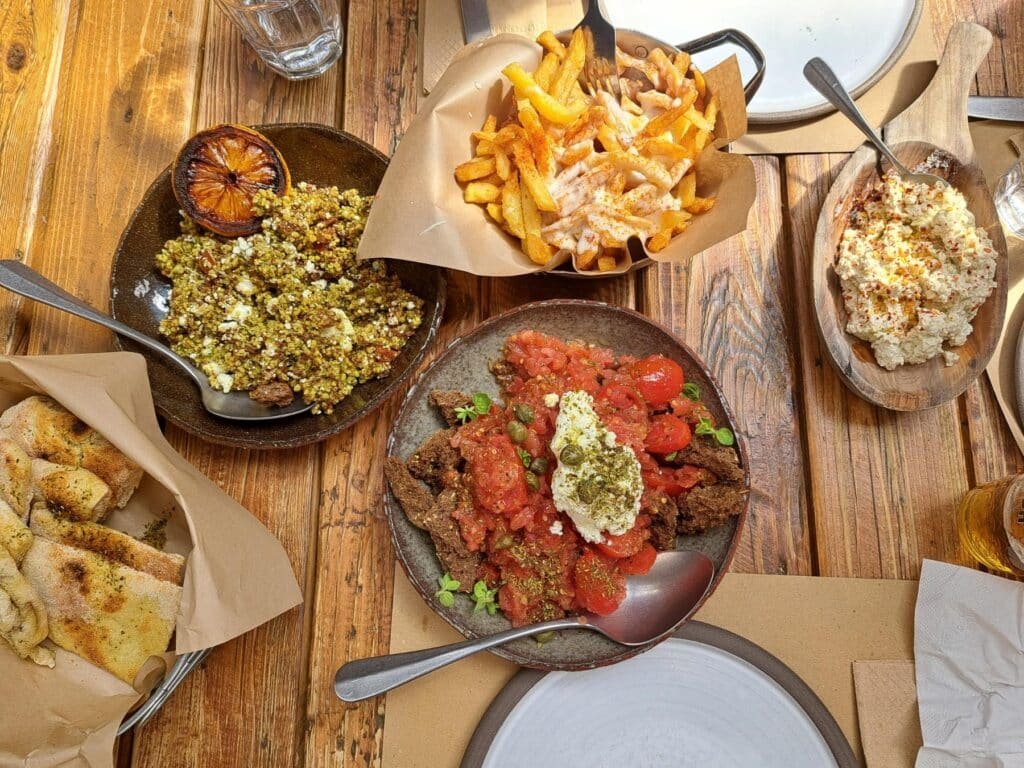
In this investigation
There was never one historical Mediterranean diet. Greek islanders, southern Italians, Levantine communities, North Africans and Iberian populations ate different grains, legumes, vegetables, fish, dairy, meat and fats according to religion, wealth, climate and trade.
The modern “Mediterranean diet” is a research model built from recurring features observed in some mid-20th-century Mediterranean populations: high intake of plant foods and olive oil, regular legumes and whole grains, moderate fish and dairy, and relatively low intake of some meats and highly processed foods. That abstraction has strong modern health evidence—but it should not be projected backward as a single ancient prescription.
The landscape shaped the food system
Mediterranean climates favour olives, grapes, wheat, barley, legumes, vegetables, herbs and tree crops. Coastal access supports fishing, while dry summers and uneven rainfall constrain agriculture.
The resulting cuisines reflect ecology before nutrition science: olive oil where olives thrive, bread where grain can be cultivated and stored, legumes as durable protein, and vegetables or wild greens according to season.
THE RECORD
The historical Mediterranean was diverse. The modern research diet is an evidence-based pattern inspired by that diversity, not a recipe followed uniformly from antiquity to today.
Scarcity helped create a plant-heavy cuisine
Modern admiration can make historical diets look like affluent choice. In many communities, meat was limited partly because it was expensive. Legumes, grains and vegetables were everyday foods because they were accessible.
A pattern associated today with health may therefore have emerged partly from economic constraint rather than preventive medical intent.
Religion also shaped meat and fasting patterns
Christian fasting calendars, Islamic dietary law and Jewish food rules all influenced when and how animal foods were consumed in Mediterranean societies. Religious practice contributed to dietary variation alongside ecology and economics.
Olive oil is important, but not magical
Extra-virgin olive oil supplies monounsaturated fat and numerous phenolic compounds. Replacing saturated fats with unsaturated fats can improve lipid profiles, and olive-oil-rich dietary patterns are associated with favourable cardiovascular outcomes.
Yet olive oil works inside a dietary pattern. Pouring it over a diet dominated by refined carbohydrates and processed meat does not recreate Mediterranean eating.
Legumes, nuts and whole plant foods carry much of the pattern
Beans, chickpeas, lentils, nuts, vegetables, fruits and whole grains contribute fibre, potassium, magnesium, unsaturated fats and diverse phytochemicals. These foods can replace more energy-dense or highly processed alternatives.
The benefits are therefore likely distributed across the pattern rather than residing in one superfood.
THE EVIDENCE
Modern Mediterranean-style diets have one of the stronger evidence bases among whole-diet patterns, including randomized and prospective evidence for cardiovascular benefit. The strongest claim concerns the modern pattern—not an unchanged ancient diet.
PREDIMED is important—and needs its full history told
The Spanish PREDIMED trial enrolled 7,447 adults at high cardiovascular risk and compared Mediterranean diets supplemented with extra-virgin olive oil or nuts against advice to reduce dietary fat. The original 2013 report was later retracted after irregularities in randomization procedures were identified.
The investigators reanalysed and republished the trial in 2018. The revised analysis continued to find lower major cardiovascular-event rates in the Mediterranean-diet groups. The episode matters because evidence should include methodological correction, not just the headline result.
The diet is not simply “low fat”
Mediterranean-style eating can be relatively high in fat when olive oil and nuts are prominent. The distinguishing feature is the type of fat and the overall food pattern rather than total fat percentage alone.
This helped shift nutrition thinking away from treating all dietary fat as equivalent.
Fish is one component, not a requirement at every meal
Fish contributes long-chain omega-3 fats and can replace processed or red meat. Yet historical fish intake differed dramatically between islands, coasts and inland communities.
A research score that awards points for fish is therefore a useful modern construct rather than a faithful map of every Mediterranean village.
Wine is the most controversial component
Traditional Mediterranean patterns sometimes include wine with meals, and older diet scores treated moderate alcohol as favourable. Contemporary cancer and public-health evidence makes the issue more cautious: alcohol is a carcinogen, and people should not begin drinking for presumed cardiovascular benefit.
The health value of the Mediterranean pattern does not depend on recommending alcohol.
Social eating may be part of the tradition but is difficult to isolate experimentally
Meals in Mediterranean cultures can involve long social gatherings, family eating and slower pace. These behaviours may affect wellbeing and intake, but they are harder to separate from food composition in clinical research.
The “Mediterranean lifestyle” is therefore broader than the diet score most trials use.
Modern Mediterranean populations no longer eat one traditional pattern
Urbanization, supermarkets and processed food have changed diets across the region. Younger populations may consume less legumes and vegetables and more packaged food than the populations that inspired early research.
This reinforces the point that “Mediterranean diet” now functions partly as a nutritional model rather than a geographic guarantee.
Why the pattern may work
Multiple mechanisms are plausible: lower LDL cholesterol, improved insulin sensitivity, greater fibre intake, reduced blood pressure, anti-inflammatory effects, better micronutrient density and displacement of ultra-processed foods.
No single pathway needs to explain the whole effect.
Can the pattern travel outside the Mediterranean?
Yes, if its principles are translated rather than copied literally. Local legumes, whole grains, vegetables, nuts and unsaturated fats can reproduce much of the nutritional structure without requiring imported Italian or Greek ingredients.
This makes the modern pattern more useful as a template than as culinary reenactment.
The Mediterranean diet is a research construct built from several regional cuisines
Southern Italy, Greece, coastal Spain, North Africa and the eastern Mediterranean do not share one identical traditional menu. Researchers created Mediterranean-diet scores by identifying recurring features such as vegetables, legumes, fruits, nuts, whole grains, olive oil and relatively low intake of some animal foods.
The scientific “Mediterranean diet” is therefore an abstraction from food cultures, not a recipe book for one historical village.
The pattern matters more than geographic purity
Someone in India, Brazil or Japan can eat a diet rich in legumes, vegetables, whole grains, nuts and unsaturated fats without using Mediterranean ingredients at every meal.
Health benefits appear to follow the nutritional pattern more than the passport of the food. Olive oil can be useful without making imported Mediterranean identity medically necessary.
PREDIMED strengthened the evidence—and also demonstrated research fallibility
The PREDIMED trial assigned people at high cardiovascular risk to Mediterranean-style diets supplemented with extra-virgin olive oil or nuts, compared with a lower-fat advice group. It reported fewer major cardiovascular events in the intervention groups.
The original paper was later retracted and republished after irregularities in randomization were discovered at some sites. Reanalysis still found a cardiovascular benefit. The episode is important because strong evidence can survive correction while still requiring transparent methods.
Meta-analysis supports the pattern, especially in older adults
A 2024 systematic review and meta-analysis of studies in older adults found higher Mediterranean-diet adherence associated with lower all-cause and cardiovascular mortality and fewer cardiovascular events. Most included evidence was observational, with only a small number of randomized trials.
This combination supports confidence in the overall pattern while leaving room for residual confounding in mortality estimates.
Olive oil is nutritionally useful without being miraculous
Extra-virgin olive oil supplies monounsaturated fat and polyphenols and can replace butter or other saturated fats in cooking. That substitution can improve lipid profiles and dietary quality.
Drinking spoonfuls of olive oil on top of an already energy-dense diet is not the same intervention. Context matters: olive oil is most useful as part of a pattern and as a replacement fat.
Legumes may be more important than the glamorous foods
Beans, lentils and chickpeas provide protein, fibre, minerals and slowly digested carbohydrate at low cost. They also make plant-heavy meals filling enough to reduce reliance on large portions of meat.
The celebrity ingredients of Mediterranean cuisine—wine, olive oil and fish—can overshadow these ordinary staples even though legumes likely carry much of the nutritional value.
Whole grains matter because refinement changes the pattern
Traditional breads, barley and other grains were often less refined than many modern flour products. Removing bran and germ reduces fibre and alters glycaemic response.
A “Mediterranean” meal built around refined pastries and white bread cannot be assumed to inherit the evidence associated with higher-fibre grain patterns.
Fish is useful, but the pattern does not require daily fish
Coastal communities historically used fish because it was locally available, while inland Mediterranean populations ate differently. Fish contributes protein and long-chain omega-3 fats, but plant foods remain central to the overall pattern.
A well-designed vegetarian diet can reproduce many Mediterranean nutritional features through legumes, nuts, seeds, whole grains and unsaturated oils.
Wine should not be prescribed for longevity
Traditional Mediterranean meals often included wine, which led older diet scores to treat moderate alcohol as favourable. Modern alcohol research has become more cautious because even low intake can increase the risk of some cancers and other harms.
People who do not drink should not start for cardiovascular benefit. The rest of the Mediterranean pattern can be followed without alcohol.
Salt can be a hidden contradiction
Olives, cheese, bread, cured foods and preserved fish can contribute substantial sodium. Traditional Mediterranean eating is therefore not automatically low-salt.
For blood-pressure control, modern adaptation may require retaining the plant-rich pattern while reducing heavily salted foods.
The pattern works partly by displacement
A plate filled with vegetables, legumes, whole grains and nuts leaves less room for processed meat, refined carbohydrate and highly processed snacks. Health effects can therefore arise from what is eaten and what is displaced.
This is one reason isolated nutrient explanations rarely capture the whole effect.
Meal context may support the pattern without being easy to randomize
Traditional Mediterranean meals often involve shared eating, home cooking and slower meal occasions. Those behaviours may influence portion size, social connection and food choice.
However, they are difficult to separate experimentally from income, family structure and culture. The social meal is plausible value, not a proven active ingredient of the diet score.
Modern Mediterranean populations have changed substantially
Urbanization, processed foods, sugary drinks and reduced physical labour have altered diets throughout the region. Today’s residents of a Mediterranean country should not automatically be classified as following a traditional Mediterranean diet.
The pattern survives in research as an idealized set of food choices rather than a description of everyone living beside the sea.
The diet travels well because its principles are modular
Local pulses can replace chickpeas, local nuts can replace almonds, and regional unsaturated oils can sometimes replace olive oil while preserving much of the nutritional logic.
This makes the Mediterranean pattern scientifically interesting: it is not dependent on one sacred ingredient but on a repeatable balance of plant foods, fats and minimally processed staples.
The strongest conclusion is about pattern-level evidence
Among traditional dietary models, the Mediterranean pattern has unusually strong support from cohorts and randomized intervention evidence for cardiovascular outcomes.
That does not prove every traditional Mediterranean custom is healthy, nor that one food causes longevity. The evidence is strongest for the combined pattern.
Affordability is part of whether the pattern can travel
Extra-virgin olive oil, nuts and fresh fish can be expensive outside the Mediterranean. If the diet is translated too literally, it can become a luxury brand rather than a public-health pattern.
The more transferable principle is to use locally available vegetables, legumes, whole grains, nuts or seeds and predominantly unsaturated fats within an overall minimally processed diet.
The Mediterranean label can hide major differences in portion size and processing
A packaged snack containing olive oil is not equivalent to a traditional meal built around vegetables and legumes. Marketing can preserve the ingredient name while losing the dietary pattern.
Research evidence therefore applies best to the full eating pattern, not to products borrowing Mediterranean imagery.
The pattern can be adapted to local oils and foods
Where extra-virgin olive oil is unaffordable, other predominantly unsaturated oils can fit a similar nutritional role, while local legumes, vegetables, nuts and whole grains can reproduce much of the pattern.
The evidence therefore supports a structure more than a shopping list.
The Mediterranean pattern remains valuable because its benefits survive translation across cuisines when the plant-rich structure and unsaturated-fat emphasis are preserved.
Affordability changes how easily the pattern travels
Extra-virgin olive oil, nuts and fresh fish can be expensive outside their producing regions. A literal Mediterranean shopping list may therefore be less accessible than its nutritional principles.
Local legumes, seasonal vegetables, whole grains, seeds and suitable unsaturated oils can reproduce much of the pattern at lower cost. Translating the diet should focus on function rather than imported prestige foods.
Ultra-processed foods can overwhelm the pattern even in Mediterranean countries
A person can live beside the Mediterranean and still eat sugary drinks, refined snacks and processed meat frequently. Geography does not protect the diet from industrial food environments.
This is why contemporary studies score food choices rather than classifying participants by nationality alone.
Weight loss is not required for cardiovascular benefit
Some Mediterranean interventions improve lipid profiles, blood pressure or cardiovascular outcomes without dramatic weight reduction. The pattern is not simply a disguised calorie-restriction diet.
Its benefit can come from fat quality, fibre, micronutrients and displacement of less favourable foods even when body weight changes little.
The strongest modern adaptation is culturally local
An Indian household does not need olives, feta and European bread to adopt Mediterranean-style principles. Dal, vegetables, whole grains, nuts, seeds and regionally appropriate oils can produce a similarly plant-forward structure.
This makes the diet useful as a nutritional framework rather than a heritage costume.
What survives scrutiny?
- There was no single uniform historical Mediterranean diet.
- Ecology, scarcity, religion and agriculture shaped plant-heavy regional cuisines.
- The modern Mediterranean diet is a research abstraction inspired largely by mid-20th-century patterns.
- Randomized and cohort evidence supports cardiovascular benefits from Mediterranean-style diets.
- The PREDIMED trial was retracted and republished after randomization irregularities; the revised analysis retained a cardiovascular benefit signal.
- Benefits likely arise from the whole pattern rather than one ingredient.
- Alcohol is not necessary to reproduce the diet’s health advantages.
- The pattern can be adapted to local foods outside the Mediterranean.
The Tradivior Evidence Profile
Historical Authenticity — Strong. Olive oil, grains, legumes, vegetables, fruits, fish and regionally variable animal foods are deeply rooted in Mediterranean cuisines.
Original-Purpose Evidence — Strong. Ecology, food economy, religion and scarcity explain the historical pattern better than preventive cardiology.
Scientific Mechanism — Strong. Unsaturated fats, fibre-rich plant foods, nuts and reduced processed-food intake have well-supported cardiovascular and metabolic effects.
Experimental Evidence — Strong. Randomized trials and prospective cohorts support health benefits, despite methodological nuance around PREDIMED.
Cross-Cultural Evidence — Moderate. The precise cuisine is regional, but the plant-forward pattern can be adapted elsewhere.
Modern Relevance — Strong. Mediterranean-style eating remains one of the best-supported whole-diet approaches for cardiovascular health.
The Tradivior Conclusion
Evidence Supported. Mediterranean communities did not eat this way because they had discovered modern cardiovascular medicine. Their diets emerged from ecology, agriculture, religion, scarcity and cuisine. Yet modern research has independently shown that a Mediterranean-style dietary pattern—rich in plant foods, legumes, nuts, olive oil and minimally processed foods—can reduce cardiovascular risk. This is a case where a traditional food pattern has strong modern support without requiring a myth of ancient biomedical intent.
Continue investigating
Sources & further reading
- Estruch R, Ros E, Salas-Salvadó J, et al. “Primary Prevention of Cardiovascular Disease with a Mediterranean Diet Supplemented with Extra-Virgin Olive Oil or Nuts.” New England Journal of Medicine. Republished 2018;378:e34.
- New England Journal of Medicine. “Retraction and Republication: Primary Prevention of Cardiovascular Disease with a Mediterranean Diet.” 2018.
- Willett WC, Sacks F, Trichopoulou A, et al. “Mediterranean diet pyramid: a cultural model for healthy eating.” American Journal of Clinical Nutrition. 1995.
- Keys A, Menotti A, Karvonen MJ, et al. Seven Countries Study publications.
Continue exploring

Partially Supported
Why Do Humans Repeat Rituals?
Rituals repeat because fixed sequences create predictability, memory, identity and coordination. Experiments suggest ritualized repetition can regulate anxiety and social connection, while mantra repetition shows small benefits for psychological distress;…

Primarily Symbolic/Cultural
Why Do Humans Make Offerings to the Sacred?
Offerings make relationships with gods, ancestors and sacred powers materially visible. Gifts can express reciprocity, devotion, gratitude, sacrifice and group commitment; costly-signalling models illuminate some public effects but cannot substitute…

Partially Supported
Why Do Festivals Bring Entire Communities Together?
Festivals concentrate shared time, symbols, music, food and synchronized action, making community membership unusually visible. Research links co-participation and synchrony with stronger social ties, but cohesion can be inward-facing and…
Primarily Symbolic/Cultural
Why Do Humans Hold Funerals?
Funerals transform death from a private loss into a publicly recognized social transition. Archaeology shows deep roots for mortuary ritual, while anthropology and grief research support roles in social support,…
Picked for your curiosity
Enable JavaScript to build a reading profile and see recommendations.