 tradivior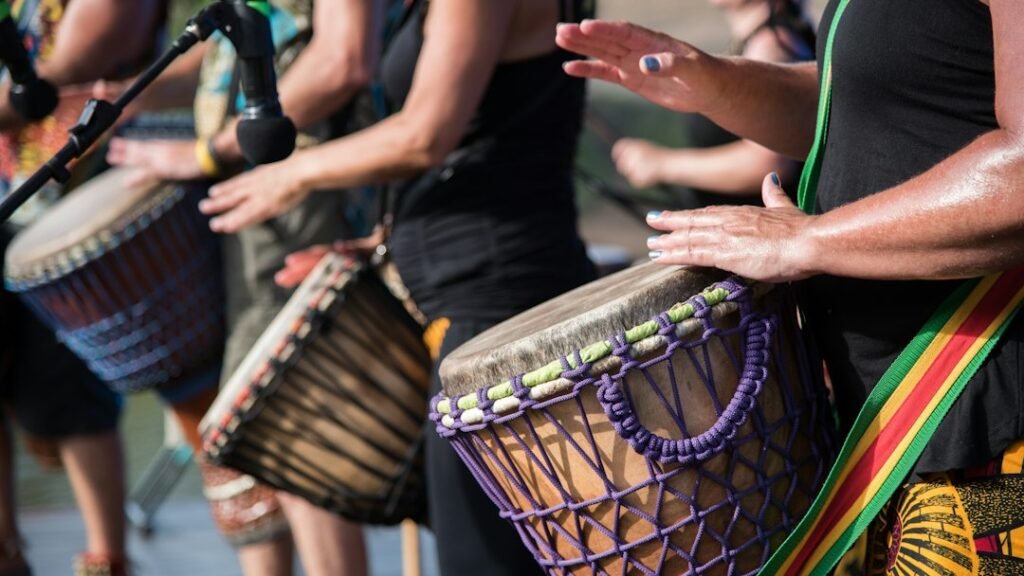
In this investigation
Human beings have repeatedly learned how to make ordinary consciousness feel less ordinary. Drums accelerate. Bodies sway in synchrony. Breathing changes. A dancer stops responding in the usual way. A medium speaks in another voice. A devotee reports being filled by a spirit. A meditator describes the boundaries of the self dissolving. A healer enters what the community understands as a journey to another realm. A person taking a psychoactive sacrament encounters visions, fear, unity or the conviction of having received knowledge.
Across cultures, such states have been cultivated deliberately rather than treated only as accidents. They appear in shamanic traditions, possession rituals, Sufi devotional practice, Pentecostal and charismatic Christianity, Hindu and Buddhist contemplative systems, Indigenous ceremonial life, initiations, healing rites and modern psychedelic settings. The methods vary: rhythm, chanting, repetitive movement, fasting, sensory restriction, sensory overload, prayer, hyperventilation, sleep disruption, meditation, expectation and psychoactive substances.
The temptation is to force all of this into one explanation. One camp says altered states prove contact with another world. Another says they are merely neurological glitches. Neither position is sufficient. The historical record shows that cultures built highly specific meanings and institutions around unusual states. Neuroscience shows that consciousness can be changed by manipulating attention, arousal, breathing, rhythm, expectation and pharmacology. The two levels need to be investigated together without collapsing one into the other.
“Altered state” is a family resemblance, not one single condition
The phrase “altered state of consciousness” sounds precise but covers very different experiences. Scientific reviews commonly describe altered states along several dimensions rather than as a single ladder from “ordinary” to “higher.” Activation can rise or fall. Attention can narrow or widen. Self-awareness can weaken or intensify. Sensory experience can become vivid, distorted or unusually quiet.
This means a meditative absorption, a possession trance, a psychedelic state and severe sleep deprivation can all be “altered” while differing radically in cause, content, risk and function. The category is useful if it organizes comparison. It becomes misleading when it implies that every nonordinary state is biologically equivalent.
THE FIRST RULE
Altered consciousness is multidimensional. Similar subjective reports can arise through different mechanisms, and similar mechanisms can be interpreted differently by different cultures.
Trance itself has no universally accepted anthropological definition
Anthropologists have long disagreed about what should count as trance. Erika Bourguignon and others showed that researchers use the word differently: sometimes for reduced responsiveness, sometimes for possession, sometimes for ecstatic ritual, and sometimes for any culturally patterned altered state.
That problem matters because labels can smuggle conclusions into the analysis. Calling a ritual “possession trance” tells us what the community may understand to be happening, while calling the same event “dissociation” places it inside a psychological framework. Neither label is neutral.
Possession and trance are related—but they are not synonyms
In some possession traditions, a spirit, deity, ancestor or other agent is understood to enter, control or speak through a person. The individual may later remember the event fully, partially or not at all. In other trance traditions, the practitioner remains the same social person and instead travels, receives a vision, concentrates intensely or experiences absorption.
This distinction changes social meaning. Possession can temporarily redistribute agency: “I did not act; the spirit acted.” That can authorize speech, healing, prophecy or socially unusual behaviour. A non-possession trance may instead demonstrate training, spiritual accomplishment or specialist expertise.
Shamanic traditions deliberately cultivate unusual consciousness
“Shamanism” is itself a contested comparative category, originally rooted in northern Asian traditions and later extended very broadly. Modern scholarship therefore cautions against assuming that every healer who uses trance belongs to one universal shamanic religion.
Even with that caution, a recent scoping review of shamanistic trance research found recurring induction methods across studied traditions and neo-shamanic derivatives: percussion, repetitive sound, chanting, dance, prolonged posture, sensory restriction or overload, fasting and, in some settings, psychoactive plants or fungi. The shared feature is deliberate alteration of attention, embodiment and ordinary self-world relations.
Rhythm is one of humanity’s most portable consciousness technologies
Drumming and repetitive music have unusual cross-cultural reach because they require no drug and relatively little equipment. A stable pulse coordinates movement, predicts timing and captures attention. When several people move or vocalize together, rhythm also aligns bodies socially.
A 2025 neurobiological review of drumming and rhythmic sound concluded that such stimulation can facilitate absorption and relaxation, although neural findings remain heterogeneous. The authors proposed that rhythmic sound may influence thalamocortical dynamics and low-frequency activity, offering one possible mechanism for nonordinary experience.
A 2026 review integrating anthropology and neuroscience likewise emphasizes that music-induced trance cannot be reduced to one frequency or brainwave. Rhythm, cultural expectation, movement, social context and learned ritual technique interact.
THE EVIDENCE
Rhythmic sound can change attention, arousal and subjective experience. Claims that a specific drum frequency universally “switches the brain into trance” are much stronger than the current evidence.
Repetition narrows the field of attention
Repetition is central to chanting, prayer, drumming and dance because predictable structure reduces the number of decisions the participant must make. Once a phrase, movement or rhythm becomes automatic, attention can shift from deliberate control toward absorption in the activity.
This narrowing can make internal sensations more salient. The person notices breath, heartbeat, vibration, muscular fatigue, imagery and emotion with unusual intensity. Repetition also makes deviations—an accelerating drum, a leader’s call, a sudden silence—feel disproportionately powerful.
Synchrony turns altered experience into a social event
Many trance rituals are collective. Participants sing, step, sway, clap or breathe together. Synchrony has social effects even outside religion: coordinated movement can increase affiliation, cooperation and perceived unity.
Inside ritual, these effects are amplified by shared symbols and expectations. A person is not merely experiencing bodily arousal; everyone around them understands what the arousal means. The group can recognize when someone has “entered” the state, support the transition and interpret behaviour afterward.
Sufi dhikr shows how breath, repetition and devotion combine
Sufi traditions vary enormously, but collective dhikr can involve repeated divine names, rhythmic recitation, controlled breathing, swaying or movement. In some North African confraternities, collective ritual can build toward intense ḥāl—a state of religious passion or trance-like absorption.
Anthropological work in Morocco documents how music, breath, sacred names and social expectation can produce collective states interpreted through baraka, spirit relations and Sufi religious language. The event also regulates public behaviour: what may appear disorderly outside the ritual can be contained, recognized and reintegrated within the ritual frame.
Possession rituals can redistribute agency and authority
Possession can allow a person to speak with an authority unavailable in ordinary life. A spirit may criticize relatives, demand offerings, identify illness or provide instructions. This does not mean possession is consciously fabricated; it means the cultural model assigns agency to an entity other than the ordinary self.
Anthropologists have repeatedly observed that possession is socially structured. Who becomes possessed, by which beings, under what circumstances and with what consequences varies by gender, status, religion and local history. The state is biological experience interpreted through a social grammar.
The Pythia at Delphi illustrates inspired speech rather than generic “madness”
Ancient Greek accounts of the Delphic oracle describe the Pythia speaking as Apollo’s inspired medium. Modern retellings have often imagined incoherent frenzy caused by geological gases, but classical scholarship has challenged simplistic reconstructions.
The more defensible historical point is that Greek society possessed a culturally recognized institution in which altered inspiration authorized speech. The ritual setting, office of the priestess, consultation procedure and theology made the utterance meaningful. Whatever physiology accompanied the experience, the oracle’s authority cannot be explained by physiology alone.
Charismatic Christianity creates another vocabulary for altered embodiment
Pentecostal and charismatic worship can include glossolalia, falling, trembling, intense weeping, ecstatic prayer and the reported presence of the Holy Spirit. Participants may understand the state as divine filling rather than possession by an alien spirit.
Externally similar motor or vocal phenomena can therefore carry opposite theological meanings. A category such as “ecstatic trance” can help comparison, but it should not erase the religious distinction between being empowered by the Holy Spirit and being possessed by another entity.
Hindu ritual traditions also include deity and spirit possession
Across India, possession practices appear in highly diverse local traditions. Deities, ancestors or spirits may temporarily manifest through mediums during festivals, healing rites or oracular events. Regional forms differ so greatly that “Hindu possession” is too broad to function as one explanatory category.
As in other societies, the altered state often has a social role. A possessed medium may diagnose, bless, advise or embody divine presence for a community. The experience is therefore simultaneously personal, bodily and institutional.
Dance can push attention from deliberation toward embodiment
Repetitive dance changes breathing, vestibular input, muscular fatigue, temperature and cardiovascular arousal. Turning, swaying and prolonged movement also change the relationship between visual stability and body sensation.
In a ritual setting, these changes occur while music and expectation narrow attention. A person who begins by consciously performing steps may eventually feel that the movement is happening through them. That shift in experienced agency is one plausible bridge between repetitive movement and possession-like interpretations.
Whirling is better understood as disciplined ritual than a shortcut to dizziness
Popular accounts of Mevlevi Sufi whirling sometimes describe it as a technique to make practitioners dizzy enough to enter trance. The tradition itself is more structured: posture, music, symbolic dress, choreography and devotional intention are integral to the ceremony.
Vestibular stimulation certainly changes bodily experience, but a ritual specialist learns how to move within a symbolic system. Reducing whirling to dizziness misses both skill and meaning.
Breathing can alter consciousness rapidly because carbon dioxide matters
Breathing practices can change subjective state through several pathways: attention to breath, changes in autonomic balance and, when ventilation becomes intense, changes in carbon dioxide. Rapid overbreathing can lower arterial carbon dioxide and produce light-headedness, tingling, visual changes, muscle symptoms and feelings of unreality.
This makes hyperventilation a powerful altered-state inducer—but not a harmless one. Extreme breathing can produce distress, fainting or other complications. Modern “breathwork” should not be treated as proof that ancient traditions possessed a biochemical theory of carbon dioxide.
Breath-induced sensations can be interpreted through expectation
A participant told that tingling means “energy opening” may interpret the same sensation differently from a laboratory participant told that it is a normal consequence of hypocapnia. The sensation is real in both cases. The explanatory framework changes its emotional meaning.
This interaction between physiology and interpretation is central to altered states. Culture does not create every bodily effect, and physiology does not dictate what the effect means.
Fasting and sleep loss can intensify ritual experience—but at a cost
Some traditions combine trance practice with fasting or prolonged wakefulness. Both can change attention and bodily awareness. Sleep deprivation in particular can destabilize perception when extended, increasing the probability of distortions and hallucination-like experiences.
That fact can help explain why visions become more likely during extreme vigils. It does not prove that every vision is caused by sleep loss, nor does it make deprivation a safe route to insight.
Sensory deprivation and sensory overload can both alter consciousness
At first this seems contradictory. How can both reducing sensory input and flooding the senses change consciousness? The common feature is departure from ordinary predictive balance.
In darkness, silence or isolation, the brain receives less external correction and internally generated imagery can become more salient. Under intense music, movement, light or crowd stimulation, external input can overwhelm ordinary attentional filtering. Both conditions change how perception is organized.
Absorption is one of the strongest psychological bridges across practices
Absorption is the capacity to become deeply immersed in a sensory, imaginative or attentional experience. People differ in this trait. Highly absorptive individuals may lose awareness of time and surroundings more readily when focused on music, imagery or ritual.
Absorption helps explain why the same ceremony can produce dramatic trance in one participant and relatively ordinary emotion in another. Technique matters, but people are not interchangeable nervous systems.
Dissociation can be adaptive, pathological or culturally patterned
Dissociation broadly refers to disruptions in the usual integration of memory, identity, perception or agency. In psychiatry, severe dissociation can be distressing and impairing. In ritual, temporary dissociative experiences may be sought, bounded and socially interpreted.
This is why diagnosing ritual possession solely from outward behaviour can be misleading. A culturally sanctioned state that begins and ends within ritual may differ significantly from involuntary symptoms that disrupt everyday life.
Expectation is not “fake”—it is part of the mechanism
People enter ritual with models of what should happen. They have watched elders, heard stories and learned the signs of possession, ecstasy or spiritual breakthrough. These expectations shape attention and interpretation.
Calling this “suggestion” does not mean participants are pretending. Expectation can alter perception, pain, emotion and bodily response. In medicine, placebo research demonstrates that meaning and expectation can have measurable effects. Ritual uses the same predictive nervous system in a different cultural setting.
Set and setting matter far beyond psychedelic drugs
Psychedelic research popularized the idea of “set and setting”: internal expectations and external environment shape the experience. The same principle applies more broadly.
A racing heartbeat in a hospital can mean danger. The same heartbeat in a possession ceremony may mean the spirit is approaching. The body provides signals; the setting helps decide what those signals become.
Psychoactive substances are one route among many
Some Indigenous and religious traditions use psychoactive plants or fungi within tightly organized ceremonial systems. Modern psychedelic science has focused especially on psilocybin, LSD and DMT-related compounds.
Classic psychedelics primarily act through serotonin 5-HT2A receptors and produce changes in perception, self-experience, emotion and cognition. Neuroimaging studies commonly report reduced coherence within some established networks and increased communication between networks that ordinarily interact less strongly.
These findings show that chemistry can profoundly alter conscious organization. They do not prove that every culturally described trance state shares psychedelic neurobiology.
Psychedelic states are not simply “higher consciousness”
Scientific reviews caution against placing consciousness on a simple vertical scale. Psychedelics can intensify colour, imagery, emotional salience and experiences of unity while simultaneously impairing other functions.
A state can contain more unusual content while reducing accurate judgment, working memory or behavioural control. “More intense” is not equivalent to “more advanced.”
THE CAUTION
Altered states can generate conviction. Conviction is a psychological outcome, not proof that the belief formed during the state is factually correct.
Ego dissolution has a measurable phenomenology
Psychedelic studies describe “ego dissolution”: weakening of the usual boundary between self and world. Participants may report unity, loss of personal identity or a sense that the observer has disappeared.
Neuroscience links these experiences to changes in hierarchical message-passing and large-scale network organization, although no single theory has settled the mechanism. Importantly, similar language can also appear in meditation and mystical traditions without implying identical neural pathways.
Meditative absorption is an altered state built through training rather than overload
Some contemplative traditions cultivate deep absorption by reducing distraction and stabilizing attention. Buddhist jhāna, yogic concentration practices and other absorptive systems can involve profound changes in body awareness, time, affect and self-representation.
The method differs from possession or psychedelic intoxication. Instead of surrendering control to an external agent or chemical disruption, the practitioner often trains increasing attentional stability. The phenomenology may overlap in unity or altered selfhood while the path is different.
Similar experiences do not establish a single “mystical brain circuit”
Unity, timelessness, ineffability and altered self-boundaries can occur in meditation, psychedelics, ritual trance, near-death states and spontaneous experiences. Researchers can compare these dimensions scientifically.
But finding phenomenological overlap does not establish that all experiences arise from one circuit or have one metaphysical cause. Consciousness is produced by interacting systems, and multiple routes can converge on partially similar subjective states.
Why do people seek altered states if they can be frightening?
Not all trance is pleasant. Possession can be terrifying. Psychedelics can produce panic. Meditation can surface distressing material. Hyperventilation can feel like dying.
People still seek such states because intensity itself can be meaningful. A costly or difficult experience can mark initiation, confirm commitment, create unforgettable memory or generate a sense that ordinary life has been interrupted by something larger.
Ritual gives dangerous ambiguity a container
Traditional altered-state practices often come with specialists, rules and interpretation. A drummer knows when to intensify. A healer knows which spirit is expected. A monastery defines acceptable experiences. A psychedelic ceremony may specify preparation, dose, songs and supervision.
The container does not eliminate risk, but it reduces interpretive chaos. Participants know what should happen, whom to call for help and how the experience will be integrated afterward.
The social aftermath may matter more than the peak state
A dramatic experience lasts minutes or hours. Its consequences depend on what happens afterward. Communities may treat the person as healed, initiated, chosen, reconciled or newly responsible.
This social reintegration can transform the meaning of distress. A possession event may reorganize family obligations. A vision may authorize a vocation. A retreat experience may alter identity because teachers and peers reinforce its interpretation.
Altered states can provide culturally acceptable channels for distress
Anthropologists have long examined how possession and trance can express conflicts that are difficult to articulate directly. In some settings, a possessed person can speak complaints, demand support or occupy a temporary authority that ordinary social roles deny.
This does not reduce possession to hidden protest. The person and community may sincerely understand the experience spiritually. Social function can coexist with religious conviction.
Ritual can convert private sensation into public evidence
One reason altered states persist is that they make invisible states visible. Trembling, dancing, unusual speech and collapse are observable. The community can witness that “something happened.”
This public quality matters. A private intuition can be doubted. A collectively witnessed possession or ecstatic event becomes part of social memory.
Training changes what the practitioner can do inside the state
Experts are not merely people who enter altered states more easily. They often learn to navigate them. Experienced ritual specialists can maintain posture, remember sequences, respond to cues and terminate or modulate the state more reliably than novices.
This suggests that altered-state traditions transmit skills. The experience is partly trained performance in the neutral sense of learned capacity—not necessarily theatrical pretending.
Memory after trance is highly variable
Some possession traditions emphasize amnesia; others do not. Psychedelic users often remember intense fragments. Meditators may report unusual clarity. Sleep-deprivation states can impair encoding.
Because memory differs by induction method, expectation and individual, later reports should not be assumed to provide perfect recordings of the experience. Narrative reconstruction begins as soon as the state ends.
Narrative gives the experience durability
A transient altered state becomes culturally significant when it is narrated. The participant tells a healer, priest, family member, therapist or online audience what occurred. The available vocabulary shapes the story.
“The goddess entered me,” “my ego dissolved,” “I dissociated,” “I had a breakthrough” and “I hallucinated” can describe overlapping phenomenology while embedding it in different moral worlds.
Clinical interest does not validate every traditional explanation
Modern psychiatry is studying psychedelics, meditation, breath practices and other state-changing interventions for selected conditions. Some results are promising, especially in controlled therapeutic settings.
Clinical benefit, however, does not retroactively prove a tradition’s cosmology. Psilocybin reducing depressive symptoms in a trial would not demonstrate that ancestral spirits caused the illness. Mechanism, efficacy and historical meaning remain separate questions.
Psychedelic medicine reinforces the importance of context
Contemporary psychedelic therapy does not treat the drug as an isolated molecule. Preparation, therapeutic support, environment and integration are often considered part of the intervention.
This is one of the strongest points of convergence with ritual traditions: extraordinary states are easier to manage when expectations and social support are structured. The resemblance does not make the systems equivalent, but it highlights that consciousness is context-sensitive.
Not every altered state is desirable
Psychosis, delirium, seizures, panic and intoxication can all alter consciousness. A cultural fascination with “nonordinary states” can become dangerous if alteration itself is treated as evidence of growth.
The quality of a state must be evaluated by cause, controllability, consequences and context. A person who cannot return to ordinary functioning is in a very different situation from a practitioner who enters a bounded ritual state and resumes everyday life afterward.
Safety becomes especially important when induction techniques stack
Some modern retreats combine fasting, sleep loss, hyperventilation, prolonged dancing, heat and psychoactive substances. Each element can alter physiology. Combining them increases unpredictability.
Traditional precedent does not guarantee safety for every participant. Cardiovascular disease, epilepsy, psychiatric vulnerability, medication interactions and dehydration can all matter depending on the practice.
The existence of a neural mechanism does not make a sacred experience unreal
Every human experience has a biological correlate. Finding neural changes during prayer or possession no more disproves the experience than finding visual-cortex activity disproves seeing a sunset.
What neuroscience can test is how the state is produced and what capacities change. Whether the experience connects a person to a deity, spirit or metaphysical reality is a different claim requiring different forms of argument.
The existence of sacred meaning does not make factual claims immune to testing
The reverse mistake is equally important. A practice can be sacred and still make testable claims about health, memory, prophecy or physiology. Those claims can be evaluated without judging the value of the ritual as a whole.
This two-way boundary—science does not settle theology, theology does not settle physiology—is central to responsible analysis of altered states.
Why altered states recur across civilizations
The most parsimonious answer is that human consciousness is unusually modifiable and humans discovered this repeatedly. Rhythm changes attention. Breath changes physiology. Repetition changes absorption. Sleep loss changes perception. Psychoactive compounds change receptor signaling. Social expectation changes interpretation.
Once a society discovers that a technique reliably produces unusual experience, that experience can be recruited into religion, healing, authority, initiation, entertainment, warfare, identity or art.
Altered states can make beliefs feel self-validating
A powerful state can produce a feeling of certainty stronger than ordinary reasoning. Psychedelic research shows that altered states can influence belief and attribution. Possession rituals similarly situate unusual sensations inside a ready-made explanatory world.
This helps explain durability. The participant does not merely hear that a tradition is true; the participant experiences something the tradition predicted would happen. Experiential confirmation can be psychologically stronger than abstract doctrine.
But certainty is not a reliability test
People can feel equally certain under contradictory belief systems. One person experiences a deity, another an ancestor, another cosmic consciousness, another brain-generated imagery. The subjective force of conviction cannot by itself adjudicate between incompatible explanations.
This is one of the most important epistemic lessons of altered-state research: intensity and certainty are data about experience, not automatic proof about the external world.
What survives scrutiny?
- Deliberately cultivated altered states are historically and cross-culturally widespread.
- Trance, possession, ecstasy, absorption, meditation and psychedelic states overlap but should not be treated as one biological condition.
- Rhythm, repetitive movement, chanting, breath manipulation, sensory change, fasting, sleep loss and psychoactive substances can all alter conscious experience through different mechanisms.
- Rhythmic sound can facilitate absorption and nonordinary experience, but no single universal “trance frequency” is established.
- Possession states are culturally structured and can redistribute agency, authority and social roles.
- Expectation and ritual setting shape altered experience without implying that participants are consciously pretending.
- Classic psychedelics have well-characterized serotonergic mechanisms and reliably alter perception, selfhood and network dynamics.
- Psychedelic intensity should not be described scientifically as a simple “higher level” of consciousness.
- Similar subjective experiences across meditation, trance and psychedelics do not prove one common neural or metaphysical cause.
- Ritual containers, specialists and integration practices can shape the safety and meaning of altered states.
- Altered states can generate powerful conviction, but subjective certainty is not reliable evidence that factual or supernatural interpretations are correct.
- Some altered-state techniques carry real medical and psychological risks, especially when multiple stressors are combined.
The Tradivior Evidence Profile
Historical Authenticity — Strong. Deliberately cultivated altered states are extensively documented across shamanic, possession, Sufi, Hindu, Buddhist, Christian and Indigenous traditions.
Original-Purpose Evidence — Strong. Healing, spirit communication, divination, devotion, initiation, meditation, authority, identity transformation and communal integration are explicitly documented purposes, although no single purpose applies universally.
Scientific Mechanism — Strong. Rhythm, attention, absorption, hyperventilation, sleep loss, sensory manipulation, expectation, autonomic arousal and psychoactive pharmacology all have plausible and in many cases well-characterized mechanisms capable of altering conscious experience.
Experimental Evidence — Moderate to Strong. Evidence is strong for pharmacological psychedelics and for several physiological induction mechanisms; direct controlled evidence for historically specific ritual trance remains smaller and methodologically heterogeneous.
Cross-Cultural Evidence — Strong. Nonordinary states appear across geographically and historically distinct societies, although their phenomenology, methods and interpretations vary substantially.
Modern Relevance — Strong. Altered states remain important in religion, psychotherapy, psychedelic medicine, meditation, music, breathwork and identity practices, making careful distinction between experience, mechanism and interpretation especially important.
The Tradivior Conclusion
Evidence Supported—with major interpretive limits. Humans can reliably alter consciousness through rhythm, movement, breathing, attention, deprivation, social expectation and psychoactive chemistry. This makes the cross-cultural recurrence of trance and ecstasy scientifically unsurprising: human consciousness is highly modifiable, and societies repeatedly discovered techniques for changing it. What science does not establish is that every altered state reveals a higher reality, that possession is reducible to one psychiatric mechanism, or that similar experiences across cultures have identical causes. Traditions were correct that consciousness can be transformed deliberately. Their explanations of what those transformations mean remain culturally and metaphysically diverse.
Continue investigating
- Why Do Rituals Use Visualization and Mental Imagery?
- Why Do Monastics Keep Vigils and Stay Awake at Night?
- Why Do Humans Meditate?
Sources and further reading
- Vaitl D, Birbaumer N, Gruzelier JH, et al. “Psychobiology of altered states of consciousness.” Psychological Bulletin. 2005;131(1):98–127. PMID: 15631555.
- Bourguignon E. “Trance and shamanism: what’s in a name?” Journal of Psychoactive Drugs. 1989;21(1):9–15. PMID: 2656955.
- “Scoping review on shamanistic trances practices.” BMC Complementary Medicine and Therapies. 2024. PMID: 39497104; PMCID: PMC11536825.
- “The neurobiology of altered states of consciousness induced by drumming and other rhythmic sound patterns.” Annals of the New York Academy of Sciences. 2025. PMID: 40668575.
- “The rhythms of trance: Cultural phenomenology and neural mechanisms of music-induced non-ordinary states of consciousness.” Neuroscience & Biobehavioral Reviews. 2026. PMID: 42044758.
- Gruber C. “Graduated Publics Mediating Trance in the Age of Technical Reproduction.” Current Anthropology. 2017;58(S15).
- Maurizio L. “Anthropology and spirit possession: A reconsideration of the Pythia’s role at Delphi.” Journal of Hellenic Studies. 2012.
- Preller KH, Vollenweider FX. “Phenomenology, Structure, and Dynamic of Psychedelic States.” Current Topics in Behavioral Neurosciences. 2018. PMID: 28025814.
- Vollenweider FX, Preller KH. “Psychedelic drugs: neurobiology and potential for treatment of psychiatric disorders.” Nature Reviews Neuroscience. 2020;21:611–624.
- van Elk M, Yaden DB. “Pharmacological, neural, and psychological mechanisms underlying psychedelics: A critical review.” Neuroscience & Biobehavioral Reviews. 2022;140:104793. PMID: 35878791.
- “Psychedelics and Consciousness: Distinctions, Demarcations, and Opportunities.” 2021. PMID: 33987652.
- “Neural Mechanisms and Psychology of Psychedelic Ego Dissolution.” 2023. PMID: 36786290.
- “Synergistic, multi-level understanding of psychedelics: three systematic reviews and meta-analyses of their pharmacology, neuroimaging and phenomenology.” 2024. PMCID: PMC11618481.
- Siegel JS, Liston C, Nicol GE, Carhart-Harris RL, Bogenschutz MP, et al. “The science of psychedelic medicine.” Nature Medicine. 2026;32:449–462.
Continue exploring

Partially Supported
Why Is the Ganga Sacred?
The Ganga is river, goddess, pilgrimage route, purifier and national symbol. Tradivior will trace how these layers developed and evaluate modern claims about unusual self-purifying properties without confusing microbial findings…
Why Do Cultures Set Aside Days to Remember the Dead?
From Pitru Paksha and Qingming to Día de Muertos and All Souls’ Day, cultures repeatedly create calendar time for the dead. Tradivior will compare how recurring remembrance renews kinship, grief…
Why Do People Keep Ashes, Relics and Memorial Objects?
Hair, ashes, bones, clothing, photographs and relics allow the dead to remain materially present. Tradivior will examine why objects carry memory so powerfully and how continuing bonds differ from pathological…
Why Do Cultures Preserve the Dead?
Mummification, embalming, freezing, smoking and desiccation reflect very different beliefs about bodies and afterlives. Tradivior will compare preservation traditions with the chemistry of decomposition and the practical limits of each…
Picked for your curiosity
Enable JavaScript to build a reading profile and see recommendations.