 tradivior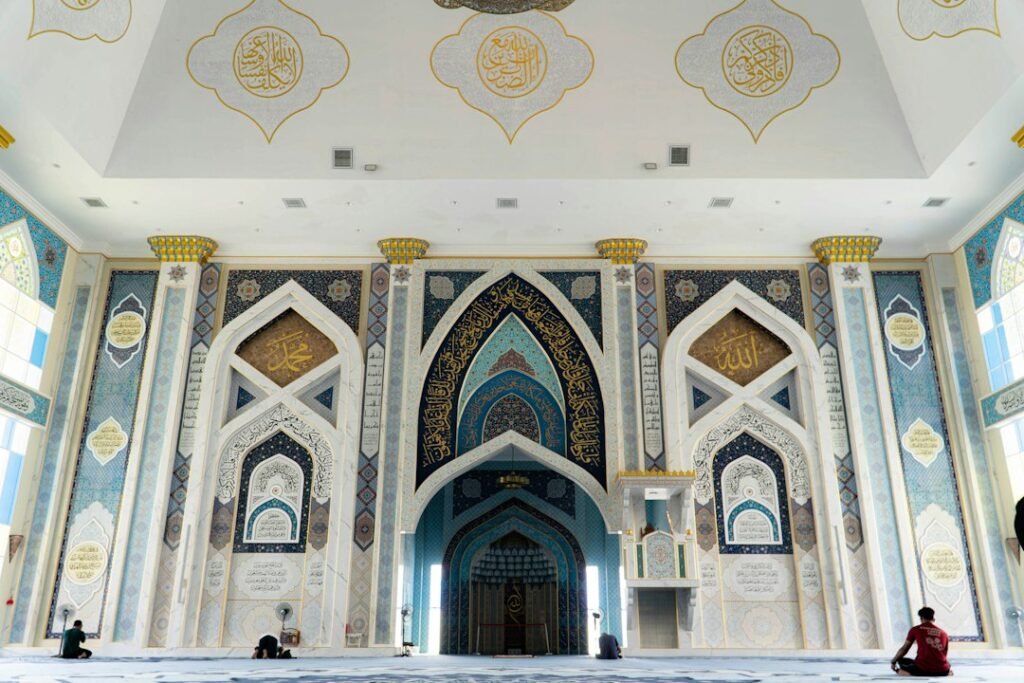
In this investigation
Separating men and women is one of the most visible ways societies organize difference. The separation may be a curtain in a place of worship, a women’s courtyard, a men’s house, different seating at a ceremony, separate schools, gendered work areas or rules limiting who may appear in public.
Because these practices are often politically and morally contested today, they are easy to explain too simply. Gender segregation can express modesty, ritual classification, labour division, status, privacy or community identity. It can also restrict freedom and reinforce unequal power. The same physical arrangement can therefore have very different meanings depending on who chooses it, who enforces it and what opportunities are lost because of it.
Gender segregation is not one institution
A women-only ritual is not the same thing as barring women from education. Separate seating in a synagogue is not identical to household seclusion. A men’s initiation house in a small-scale society is not equivalent to workplace discrimination.
The useful question is therefore not “is separation good or bad?” but “what is being separated, for what purpose, under whose authority, and with what consequences?”
THE ANALYTICAL RULE
Physical separation, social inequality and personal preference can overlap, but they are not the same variable. Each has to be investigated separately.
Many societies gendered space long before modern religious law
Anthropologists have documented societies in which men and women use different houses, work areas, ritual spaces, tools and ceremonies. Gender can organize the physical landscape as deeply as age, rank or kinship.
This indicates that gender segregation cannot be explained by one religion or one region. It is a recurring form of social classification.
Ritual separation can mark complementary roles
Some ceremonies assign distinct tasks to men and women without excluding either from the ritual system. One gender may prepare offerings while another performs a public rite. Men and women may worship separately but participate in the same festival.
In such settings, separation can express the belief that male and female ritual roles are different rather than that one gender has no religious value.
Complementarity can still hide unequal authority
Calling roles “complementary” does not prove they carry equal power. One gender may control doctrine, property or public leadership while the other performs essential but less authoritative work.
The distribution of prestige, decision-making and mobility must therefore be examined rather than inferred from symbolic language alone.
Purdah is a family of practices, not simply a veil
In South Asia, purdah can refer to veiling, spatial separation, restrictions on interaction with unrelated men, women’s quarters and limits on public mobility. The word literally evokes a curtain, but the social system extends far beyond cloth.
Hanna Papanek’s classic analysis emphasized that purdah among South Asian Muslims and Hindus followed different kinship rules. Muslim restrictions commonly focused on interaction outside specified close-kin categories, while Hindu forms could include avoidance between women and particular male affines.
Purdah was never exclusively Muslim
Modern popular discussion often associates purdah solely with Islam. Historical scholarship shows substantial use among upper-caste Hindu communities as well.
A 2025 historical overview of gender segregation notes that elite Hindu seclusion in parts of western India may even have become more rigid during the late eighteenth and early nineteenth centuries as colonial status politics rewarded visibly “traditional” respectability.
Status can encourage seclusion when work outside the home signals poverty
Where poorer women must work publicly while wealthy households can afford for women to remain inside, seclusion can become a status symbol. A family communicates that it has enough resources to withdraw women from visible labour.
Modern sociological research in India finds evidence consistent with this mechanism: upwardly mobile households in some settings adopt stronger female-seclusion practices as signals of social status.
This makes gender norms economically dynamic
A custom can become stricter when families become wealthier rather than disappearing with modernization. Economic mobility does not automatically produce more gender equality.
Households can use new wealth to perform an older ideal more visibly.
Control of sexuality is another recurring mechanism
In societies where inheritance, lineage legitimacy and family honour depend heavily on controlling marriage and reproduction, interactions between unrelated men and women may be closely regulated.
Segregation reduces opportunities for unsupervised relationships. This can make it part of broader systems involving arranged marriage, virginity expectations, veiling and family reputation.
Honour systems make individual behaviour collective
If a woman’s sexual reputation is treated as representing the honour of an entire family, relatives gain incentives to monitor her movement and social interaction.
The same logic can regulate men differently, especially through expectations that they protect or supervise female kin.
Purity systems can also create gendered boundaries
Menstruation, childbirth and sexuality are ritually classified in many religions. Some traditions temporarily restrict menstruating women from kitchens, temples, sexual contact or sacred objects.
These practices vary greatly. Menstrual blood may be treated as polluting in one culture and powerful or sacred in another. No universal “ancient hygiene” explanation can account for them.
Religious segregation can serve concentration or modesty
Some religious communities separate worshippers to reduce sexual distraction, protect modesty or preserve traditional ritual order. Orthodox Jewish synagogues use a mechitza to separate men’s and women’s prayer sections. Many mosques provide separate prayer areas. Historical Christian churches and monastic communities also developed forms of gender separation.
The theological reasons differ and should not be collapsed into one explanation.
Monastic separation can apply to both sexes
Christian, Buddhist and other monastic institutions often separate men and women because celibacy is central to the vocation. Here the boundary is designed not simply to restrict women but to structure both male and female ascetic communities.
Even so, equal separation does not guarantee equal institutional authority; clerical hierarchies may remain gendered.
Women-only spaces can create forms of autonomy
Segregated societies do not contain only male-controlled spaces. Women often create rituals, healing systems, conversations and networks that men cannot easily enter.
Ethnography from South Asia and Sudan documents women-centred ritual worlds operating inside broader systems of sexual segregation. These spaces can allow women to share information, perform authority and create solidarity.
THE PARADOX
A segregated system can restrict women in the public sphere while simultaneously creating women-only domains in which women exercise expertise and authority. Both effects can be true at once.
Women can reinterpret or resist segregation from inside it
Recent historical research on urban Pakistan shows women manipulating and challenging purdah conventions rather than acting as passive recipients of fixed rules.
Agency does not mean restriction was absent. It means people negotiate social systems even when they did not design them.
Labour division can spatially separate genders without full seclusion
Gendered work can create separate spaces in fields, markets, workshops and homes. Men and women may perform different agricultural tasks, process different products or control different tools.
Such separation can emerge from physical demands, inherited custom, property rules or ideas about appropriate work rather than a formal doctrine of modesty.
Biological differences do not determine the detailed division of labour
Pregnancy and lactation create real biological differences in some periods of life, but they cannot explain why one society assigns weaving to women and another assigns it to men, or why one market is mixed while another is gender-segregated.
The detailed pattern is cultural and historical.
Gender separation can reduce harassment in some contexts
Women-only transport cars, dormitories, clinics or support groups are often created because participants feel safer or more comfortable away from male harassment or scrutiny.
Voluntary protective separation can therefore be a pragmatic response to unequal conditions rather than an endorsement of permanent segregation.
But safety-by-separation can leave the underlying problem untouched
If women need separate public transport because mixed spaces are unsafe, the immediate intervention may help while failing to address harassment itself.
Protective segregation can therefore be useful and still reveal deeper inequality.
Choice is a decisive modern variable
A woman choosing a women-only religious retreat is in a different position from a woman legally barred from public space. A man choosing a monastery is different from someone prevented from studying or working with the opposite sex.
The physical separation may look similar in a photograph, but autonomy changes its ethical and psychological meaning.
Coercive segregation can restrict education and employment
When gender rules prevent women from attending school, travelling safely, working outside the home or interacting with necessary institutions, the consequences become material rather than symbolic.
Lower education and labour-force participation can reduce income, bargaining power and long-term independence.
Economic dependence can reinforce the same norms that produced it
If seclusion prevents women from earning independent income, families can later argue that women require male economic protection because they do not earn. The institution becomes self-reinforcing.
This feedback loop is one reason gendered mobility restrictions can persist even after their original status or honour logic weakens.
Segregation can change social skills and networks
When people grow up with limited cross-gender interaction, mixed workplaces or universities may feel unfamiliar. Professional networking can also become harder when informal social spaces are segregated.
Conversely, same-gender spaces can create strong peer networks and reduce social pressure for some participants.
Single-sex education produces mixed evidence
Claims that boys and girls inherently learn better when separated are not strongly established as a universal rule. School selection, socioeconomic differences, teacher quality and institutional culture complicate comparisons.
Single-sex environments may benefit particular students or contexts, but the evidence does not justify treating separation itself as a guaranteed academic intervention.
Public-private boundaries are historically movable
What counts as “public” or “private” changes with architecture and technology. A secluded woman may manage complex household finances, receive female clients or conduct business from inside the home.
Modern digital work complicates the boundary further: economic participation can occur without physical public presence.
Colonial observers often exaggerated cultural contrast
European colonial discourse frequently treated South Asian women’s seclusion as evidence of civilizational backwardness while overlooking gender segregation and restrictive domestic ideals in Europe itself.
Historical comparison is essential because no society entered modernity from a condition of complete gender equality.
Reform movements turned women’s visibility into political symbolism
In colonial and postcolonial settings, women’s clothing, education and public presence became symbols of national identity. Conservatives and reformers could both use women to represent the moral character of the community.
This means debates about segregation are often debates about politics as much as individual behaviour.
Modernization does not produce one predictable path
Urbanization and education often increase mixed-gender contact. Yet new wealth can sometimes encourage status-based seclusion, and religious revival can strengthen gender boundaries.
Traditions change through competing forces rather than a simple march from segregation to integration.
Legal equality and social practice can diverge
A constitution may guarantee equal access while households still restrict daughters’ movement. Conversely, communities can relax old customs before law formally changes.
Gender segregation therefore has to be measured at several levels: law, institution, household and personal choice.
Ritual separation can survive after everyday segregation declines
A community may work and study together while still seating men and women separately during worship. The ritual boundary can persist because its meaning has become symbolic rather than an everyday mobility rule.
This is one way traditions adapt without disappearing.
Voluntary single-gender space can coexist with public equality
Modern societies contain women’s shelters, men’s support groups, single-sex sports and private religious spaces while maintaining legal equality in public institutions.
The existence of any separation is therefore not sufficient evidence of oppression. The key questions are access, alternatives, consent and power.
Coercion changes the conclusion
When separation is imposed through violence, legal exclusion or severe economic penalties, it cannot be evaluated merely as cultural symbolism. The restriction becomes a material limitation on agency.
Cultural explanation can tell us why a rule developed; it does not morally justify coercive enforcement.
What survives scrutiny?
- Gender-segregated spaces appear across many societies and religions rather than belonging to one region or faith.
- Segregation can serve ritual classification, modesty, status, labour organization, sexual regulation and community identity.
- Purdah in South Asia includes multiple practices and historically occurs among both Muslim and Hindu communities.
- Economic mobility can sometimes strengthen rather than weaken seclusion when seclusion functions as a status signal.
- Women-only ritual and social spaces can create solidarity and authority inside broader gender-segregated systems.
- Such internal agency does not erase restrictions on public mobility or power.
- Voluntary single-gender spaces differ fundamentally from coercive exclusion from education, work or public life.
- Protective segregation can reduce immediate harassment while leaving underlying inequality unresolved.
- Modern evidence does not support a universal claim that single-sex education or separation inherently improves outcomes.
- Gender segregation changes over time and can persist symbolically even after everyday interaction becomes more mixed.
- The strongest evaluation depends on autonomy, equal access and the material consequences of the separation.
The Tradivior Evidence Profile
Historical Authenticity — Strong. Gender-differentiated public, domestic and ritual spaces are extensively documented across many historical societies.
Original-Purpose Evidence — Strong. Modesty, ritual order, status, honour, sexual regulation, labour organization and ascetic discipline are well-documented purposes.
Scientific Mechanism — Moderate. Social signalling, status competition, harassment avoidance, network structure, autonomy and economic dependency provide plausible mechanisms for outcomes.
Experimental Evidence — Limited. Many effects are studied observationally because coercive social institutions cannot be randomized; evidence varies strongly by type of segregation.
Cross-Cultural Evidence — Strong. Gender separation recurs widely, but the forms and balance of power differ dramatically.
Modern Relevance — Strong. Debates over religious space, education, safety, work and personal autonomy make gender segregation an active contemporary issue.
The Tradivior Conclusion
Historically Practical and Primarily Symbolic/Cultural—with outcomes determined by autonomy and power. Societies separated men and women for many reasons: ritual classification, modesty, honour, labour, status and control of sexuality. Some forms created valued single-gender spaces and protected privacy; others restricted education, mobility and economic independence. No single scientific mechanism explains the institution, and cultural meaning does not excuse coercion. The most defensible modern distinction is between chosen separation within equal access and imposed segregation that limits rights or opportunity.
Continue investigating
- Why Did Joint Families Become Common in South Asia?
- Why Did Arranged Marriage Become Common Across Many Societies?
- Why Did Menstrual Seclusion Appear in Different Cultures?
Sources and further reading
- Papanek H. “Purdah: Separate Worlds and Symbolic Shelter.” Comparative Studies in Society and History.
- Hellman L. “Gender and Segregation: An Introduction.” Gender & History. 2025.
- Kent EF. Converting Women: Gender and Protestant Christianity in Colonial South India. Oxford University Press; 2004.
- “The gendered practices of the upwardly mobile in India.” Sociological research on status mobility and female seclusion. PMCID: PMC10835134.
- Iob E. “The Girls Are in Town: Purdah, Emotions and Everyday Resistance in Urban Pakistan.” Gender & History. 2025;37(3).
- Minturn L. Sita’s Daughters: Coming Out of Purdah: The Rajput Women of Khalapur Revisited. Oxford University Press; 1993.
- Constantinides P. “Women heal women: spirit possession and sexual segregation in a Muslim society.” Social Science & Medicine. 1985;21(6):685–692. PMID: 4059951.
- Ullrich HE. “Menstrual taboos among Havik Brahmin women: a study of ritual change.” Sex Roles. 1992;26(1–2):19–40. PMID: 12317387.
- Cross-cultural anthropological literature on gendered ritual space, labour division and single-gender institutions.
Continue exploring
Why Do People Keep Ashes, Relics and Memorial Objects?
Hair, ashes, bones, clothing, photographs and relics allow the dead to remain materially present. Tradivior will examine why objects carry memory so powerfully and how continuing bonds differ from pathological…

Why Do Cultures Set Aside Days to Remember the Dead?
From Pitru Paksha and Qingming to Día de Muertos and All Souls’ Day, cultures repeatedly create calendar time for the dead. Tradivior will compare how recurring remembrance renews kinship, grief…
Why Do Cultures Preserve the Dead?
Mummification, embalming, freezing, smoking and desiccation reflect very different beliefs about bodies and afterlives. Tradivior will compare preservation traditions with the chemistry of decomposition and the practical limits of each…
Why Do People Change Names, Clothes or Homes After Marriage?
Marriage often transforms identity through surname changes, new dress, residence, kinship terms or household membership. Tradivior will investigate why marriage needs visible social consequences beyond the ceremony itself.
Picked for your curiosity
Enable JavaScript to build a reading profile and see recommendations.