 tradivior
In this investigation
Human beings repeatedly divide large societies into smaller groups that answer a basic question: who are “our people”? A lineage may trace descent from a known ancestor. A clan may claim descent from a symbolic or distant founder. A caste may regulate marriage, occupation, status and ritual relations across generations. These institutions look similar because all create durable social boundaries, but they are not interchangeable.
Groups based on descent can solve practical coordination problems. They identify heirs, organize marriage rules, distribute land, mobilize mutual aid and create political alliances. But inherited boundaries can also harden into hierarchy. In South Asia, caste became one of the most consequential examples: endogamous communities were linked to occupation, status, ritual classification, political power and unequal access to resources.
Modern genetics adds a powerful but easily misused piece of evidence. Long periods of endogamy leave detectable founder effects and population structure. That finding confirms the social force of marriage boundaries. It does not prove that caste categories are biologically natural, that social rank reflects genetic worth, or that present-day communities have existed unchanged since prehistory.
Lineage, clan and caste are different kinds of boundary
A lineage normally claims descent through known or remembered genealogical links. Members may be able to say how they descend from a particular ancestor.
A clan is broader. Members claim common ancestry but may not know the exact genealogical chain connecting every household. The ancestor can be remote, symbolic or even mythic.
Caste, especially in South Asia, is not simply a bigger clan. A caste or jati can involve endogamy, inherited social identity, occupation, status ranking, marriage rules and relations with other groups. Many castes also contain clans or gotras that are exogamous.
THE FIRST DISTINCTION
Lineage usually organizes descent. Clan organizes wider claimed ancestry. Caste organizes a more complex inherited social boundary. Similarities should not erase those differences.
Descent groups solve an inheritance problem
Property cannot pass randomly if land, livestock or ritual offices are meant to remain inside a recognized group. Descent rules determine who counts as an heir.
Patrilineal systems trace important rights through fathers. Matrilineal systems trace them through mothers. Bilateral systems recognize both sides more symmetrically.
Once inheritance follows a line, that line becomes politically meaningful. It can control land, titles, ancestor rituals and claims on communal resources.
Clans can organize people who cannot all know one another personally
A village of several hundred people can rely on face-to-face familiarity. A larger society needs categories that scale beyond personal acquaintance.
Clans solve part of that problem. A person may recognize another as clan kin even if their precise genealogical relationship is unknown. Shared ancestry becomes a social shortcut for obligation and identity.
Clan identity can create mutual aid
Members may owe one another help in conflict, marriage, funerals, compensation or migration. A clan can mobilize support rapidly because membership defines who is expected to respond.
This can be especially useful where formal state institutions are weak or geographically distant.
The same boundary can create exclusion
If insiders receive preferential help, outsiders may receive less. Strong internal solidarity can therefore produce external rivalry.
Kinship organization is not automatically peaceful. Clans can cooperate internally while competing over land, honour or political power.
Exogamy prevents some descent groups from becoming closed marriage populations
Many clans prohibit marriage within the clan. Exogamy forces people to create alliances with other groups and reduces close-kin marriage.
In South Asia, gotra exogamy can operate inside broader caste endogamy. A person may be expected to marry outside their clan but inside a wider caste community.
That combination is central to understanding caste reproduction
B. R. Ambedkar’s early analysis of caste emphasized this structural combination. Indian society already contained strong rules of clan exogamy. Caste added a larger endogamous boundary around groups that still prohibited some marriages within themselves.
His argument made endogamy—not simply occupation or ritual belief—the key mechanism through which caste reproduces itself across generations.
Varna and jati should not be treated as the same thing
Classical Sanskrit literature contains the fourfold varna model of Brahmin, Kshatriya, Vaishya and Shudra, with groups placed outside or beyond that scheme in different historical contexts.
Everyday caste life, however, has been organized largely through thousands of jatis—localized, regionally specific communities with marriage networks, occupations, reputations and political histories.
Mapping every jati neatly onto four varnas oversimplifies the historical system.
Caste cannot be explained by religious texts alone
Religious ideas about purity, duty and hierarchy influenced caste. But caste also depended on land, political power, occupation, military service, patronage, marriage and local economy.
Modern scholarship increasingly rejects the picture of caste as a single fossilized Hindu ritual system operating identically across the subcontinent.
Power is necessary for hierarchy to matter
A ritual claim to superiority has limited force unless it is supported by control over land, labour, temples, administration, violence or political influence.
Dipankar Gupta’s review of caste and politics emphasizes that ritual hierarchy becomes socially effective when backed by wealth and power. Different communities can also maintain competing accounts of their own rank.
This means caste hierarchy was never perfectly uniform
A group ranked highly in one region might hold less power in another. Dominant landholding communities could command local authority even when classical ritual schemes placed them differently.
Caste order therefore emerged through negotiation and conflict as well as inherited ideology.
Occupation helps explain persistence but not a single origin
Many jatis became associated with specific crafts, services, agricultural roles or forms of labour. Occupational specialization can make hereditary training efficient: children learn skills, tools and trade networks inside the household.
But occupation cannot by itself explain the entire caste system. Communities changed occupations, similar occupations could be performed by multiple castes, and status did not always track economic productivity.
Hereditary occupation lowers training costs
A family of metalworkers can transfer tools, tacit knowledge and customers across generations. A merchant community can transmit credit networks. Priestly families can train children in specialized ritual languages.
This creates economic reasons for occupation to cluster within kin groups even without formal coercion.
Yet hereditary occupation can become a trap
When social rules prevent people from changing occupations, efficiency for the group can become constraint for the individual.
Jobs regarded as low status can be inherited together with stigma. Occupational specialization becomes stratification.
Endogamy makes social boundaries reproduce themselves biologically
If people marry mainly within the same group generation after generation, the boundary becomes visible in population genetics. This does not mean the group was created by genetics. It means social rules changed patterns of reproduction.
That direction of causality is critical: social endogamy can produce genetic structure.
THE GENETIC RULE
Genetic clustering can reveal the long-term effects of marriage boundaries. It does not transform caste rank into a biological hierarchy or prove that social categories are natural species-like divisions.
South Asian genetics shows both mixture and later separation
Genome-wide studies show that present-day South Asian populations descend from multiple ancient ancestry sources and extensive historical mixture.
Older genetic literature sometimes summarized major components with labels such as Ancestral North Indian and Ancestral South Indian. Later work demonstrates a more complex population history with several major ancestry components and repeated migrations.
The scientifically responsible conclusion is not that modern castes descend from pure ancient races. It is almost the opposite: major mixture occurred before strong endogamy narrowed marriage networks.
Genetic evidence suggests stronger endogamy emerged after substantial admixture
A 2013 genome-wide study of seventy-three South Asian groups estimated major mixture events roughly 1,900 to 4,200 years ago and found evidence for a later transition toward stronger endogamy.
A 2016 genomic reconstruction likewise found widespread earlier admixture followed by increased endogamy in several populations, particularly around roughly seventy generations ago in some groups.
These estimates do not identify one exact historical moment when “caste began.” They show that marriage boundaries intensified unevenly after periods of substantial population mixing.
There is no genetic evidence for pure, timeless caste populations
All large human populations are historically mixed. South Asia has experienced migration, trade, conquest and local movement for thousands of years.
Claims that any caste represents an untouched ancient biological race misuse population genetics.
Founder effects are a health consequence of endogamy
When a relatively small population remains endogamous, rare genetic variants can become unusually common through founder effects and drift.
Genetic studies of India have therefore highlighted the medical importance of population-specific screening for recessive disorders.
This is a genuine biological consequence of social history—not evidence that the social hierarchy itself is biologically valid.
Endogamy creates dense marriage networks
Network science provides another way to understand group boundaries. If most marriages occur within a community, households become connected by repeated ties across generations.
Information, jobs, loans and political support can then circulate rapidly within the same network.
Dense networks increase trust—and can exclude outsiders
Repeated relationships make reputation powerful. A trader who cheats one community member may lose access to many others.
But the same trust network can disadvantage people outside it. Job referrals, credit and marriage prospects may remain concentrated within inherited boundaries.
Marriage is the key reproduction mechanism
A caste boundary can survive occupational change if marriage remains endogamous. A person can become an engineer rather than follow the traditional occupation and still marry primarily within the same community.
This is why endogamy remains central to caste persistence even as the economy modernizes.
Ambedkar recognized endogamy as the central mechanism
In his 1916 paper Castes in India: Their Mechanism, Genesis and Development, Ambedkar argued that caste is fundamentally maintained through endogamy imposed upon a society already containing exogamous kin groups.
His analysis also connected the maintenance of endogamy to control over marriage and women’s sexuality. Later scholarship has examined both the power and historical limits of that framework.
Gender is essential to caste reproduction
Endogamy cannot be maintained without regulating who marries whom. Families therefore monitor courtship, sexuality and marriage choices.
Women have often carried disproportionate consequences because patrilineal inheritance and family honour make their marriages especially consequential for group boundaries.
Honour violence reveals the coercive edge of endogamy
When families treat inter-group marriage as a threat to collective identity, adults who choose partners across caste or clan lines may face ostracism, threats or violence.
Such coercion is not an incidental detail. It demonstrates how strongly inherited social boundaries can be defended when marriage is the mechanism reproducing them.
Clans often do the opposite: they require out-marriage
A clan can strengthen internal identity while requiring members to marry outsiders. Exogamy prevents the descent group from becoming reproductively closed.
This is why “clan” and “caste” should never be used as synonyms simply because both are inherited groups.
Exogamy creates political alliance
When members must marry outside their clan, marriage links different groups. Children then connect two kin networks.
Anthropologists have long treated marriage alliance as one of the main ways descent groups transform potential rivals into relatives.
Totemic clans create symbolic kinship
Some Indigenous clan systems associate descent groups with animals, plants, places or ancestral beings. The shared emblem expresses common identity rather than a literal claim of ordinary biological descent from the species.
Totemic systems show how kinship can organize cosmology as well as property and marriage.
Lineages can become political factions
Where the state is weak, descent groups can mobilize armed defence, negotiate compensation or control local offices.
Political competition may then occur between lineages rather than only between individuals or ideological parties.
Genealogy becomes political memory
A claim to descend from an important ancestor can justify land rights or leadership. Genealogies can therefore be preserved, edited and contested.
Shared descent is not merely remembered history; it can be a claim on present resources.
Status systems can absorb newcomers
Inherited groups often appear rigid in retrospect, but historical communities changed names, occupations, origin stories and status claims.
Political success or wealth could support claims to higher rank. Groups sometimes reworked genealogies to align themselves with prestigious lineages.
This is why caste cannot be understood as a frozen ladder
Rank was contested. Multiple hierarchies could coexist, and local dominance did not always correspond neatly to textual ritual status.
The institution could be rigid in marriage while flexible in political identity.
Colonial enumeration changed the way caste was recorded
British administrators attempted to classify Indian society through censuses, ethnographies and legal categories. Local identities that had been context-dependent were sometimes forced into fixed administrative boxes.
Colonial classification did not invent caste from nothing. Endogamy, hierarchy and jati identities long predated British rule. But colonial governance could harden, reorder and standardize categories.
Scientific racism added dangerous biological interpretations
Nineteenth- and early twentieth-century writers often tried to explain caste through racial typologies, skull measurement and supposed biological hierarchy.
Modern genetics rejects those crude racial classifications. Population structure caused by endogamy is not equivalent to a hierarchy of races.
Genes describe ancestry, not human worth
Genetic variation can reveal migration, mixture and founder events. It cannot scientifically rank communities by purity, moral value or entitlement.
This boundary is especially important in caste research because genetic findings can be politically misused to naturalize social inequality.
Caste and class overlap without being identical
A wealthy person can belong to a historically subordinated caste, and a poor person can belong to a traditionally higher-ranked group.
Economic modernization changes class position faster than inherited social identity. This creates new combinations of wealth, caste and political influence.
Democracy weakens some caste functions while strengthening caste identity
Modern markets reduce hereditary occupation. Cities weaken village-level ritual control. Education expands individual mobility.
At the same time, electoral politics can mobilize caste identities as voting blocs and organizations. The old social system can weaken while group identity becomes politically stronger.
Political organization can empower subordinated groups
Caste identity is not only a tool of hierarchy. Marginalized communities have organized through caste identity to demand representation, education, land and dignity.
This is one reason modern caste politics cannot be understood simply as survival of an ancient order.
Affirmative action changes the institutional meaning of caste
India’s constitutional system recognizes categories such as Scheduled Castes, Scheduled Tribes and Other Backward Classes for representation and affirmative-action purposes.
The state therefore uses inherited social categories partly to counter historical inequality created through those categories.
Legal abolition does not erase network effects
Untouchability is constitutionally prohibited, and discrimination is legally restricted. Yet marriage networks, neighbourhood patterns, school access, employment referrals and social prejudice can preserve inequality without explicit legal rules.
Social institutions often survive by changing form.
Endogamy remains one of the most persistent mechanisms
Inter-caste marriage remains a minority pattern in India. Research using national data has found strong persistence of caste endogamy even alongside rising education and urbanization.
This helps explain why caste identity can persist even when occupation and daily ritual relations become less rigid.
Education can weaken boundaries but does not automatically dissolve them
Schools and universities increase cross-group contact and individual choice. Yet educated families may still use caste filters in marriage.
Modernization changes incentives without guaranteeing social integration.
Matrimonial platforms digitize inherited boundaries
Online matrimonial services allow users to search by education, occupation, religion, language and caste. Technology makes matching more efficient while preserving older categories.
This demonstrates that digital modernization can reinforce tradition rather than simply erase it.
Network segregation can persist without explicit prejudice
If people mostly attend schools, workplaces, neighbourhoods and family events populated by their own group, they meet fewer potential partners from outside it.
Endogamy can therefore persist partly through opportunity structure even when individuals claim no strong ideological commitment to caste.
But explicit prejudice still matters
Opportunity structure is not the whole story. Families can actively reject inter-caste relationships, discriminate in housing or employment, and enforce stigma.
Structural and attitudinal mechanisms reinforce one another.
Clans remain important in many societies without creating caste-like hierarchy
Scottish clans, Somali lineages, Arab tribal genealogies, African descent groups, Indigenous Australian clan systems and many others organize belonging without reproducing the exact features of South Asian caste.
This comparative evidence shows that descent organization is a broad human strategy, while caste is one historically specific form of inherited social stratification.
Clan and lineage systems can coexist with states
Modern citizenship does not automatically eliminate descent groups. People can simultaneously belong to a nation, religion, profession, clan and family.
Identities stack rather than replace one another.
Descent groups solve collective-action problems
Groups with repeated interaction can enforce reputation and mutual obligation more easily than anonymous populations. Members know who should contribute to a funeral, defend land or repay a debt.
This makes kin groups efficient governance units in some settings.
The efficiency comes with a boundary cost
Strong internal cooperation may reduce trust toward outsiders. Benefits can be allocated preferentially to insiders, entrenching inequality.
The challenge for modern institutions is to preserve voluntary community support without allowing inherited identity to determine rights.
Status myths can make hierarchy feel natural
Groups often tell origin stories that explain why their social position is ancient, sacred or heroic. These stories give present arrangements a deep past.
Historical research frequently finds that such identities are more dynamic than their myths suggest.
Purity language can stabilize otherwise political inequality
If hierarchy is described only as power, people may challenge it openly. If hierarchy is framed as cosmic, ritual or moral order, inequality can appear inevitable.
This helps explain why symbolic classification can support material hierarchy without being reducible to economics.
Ritual hierarchy and material power can diverge
A community may claim high ritual standing while lacking land or political influence. Another may wield local power despite ambiguous ritual rank.
Caste therefore contains multiple dimensions of status rather than one universally agreed ladder.
Occupational change reveals which parts of caste are most durable
Industrialization and education weaken hereditary occupations. A community once associated with one craft may now contain doctors, engineers, labourers and entrepreneurs.
If the group still marries endogamously and maintains strong identity, caste persists even after the original occupational function weakens.
Urban anonymity can weaken ritual enforcement
Large cities make it harder for village communities to monitor food, occupation and everyday interaction. People work beside strangers whose caste may be unknown.
But family-controlled marriage can carry the boundary into urban life.
Migration can both loosen and strengthen identity
Moving away from a village can free individuals from local hierarchy. At the same time, migrants may form caste or regional associations for mutual aid in unfamiliar cities.
The institution adapts because group identity can provide practical support in new environments.
Caste discrimination produces measurable inequality
Modern social science documents caste-linked disparities in education, employment, wealth, health and social treatment.
These outcomes are not evidence of innate differences between groups. They reflect unequal histories, resources, discrimination and network access.
Inherited categories can become self-fulfilling
If a group is restricted from education or prestigious occupations for generations, lower average income can later be misread as proof that the group is less capable.
The institution creates the inequality and then uses the inequality to justify itself.
Genetics is especially vulnerable to this mistake
Founder effects can produce different disease risks among endogamous populations. Those medical differences are real.
But moving from “this population has a higher frequency of a variant” to “this caste is naturally superior or inferior” is scientifically invalid and ethically dangerous.
Population genetics works with probabilities, not caste essences
Individuals within the same community vary genetically. Neighbouring groups share substantial ancestry. Boundaries are statistical, not absolute.
Social labels are therefore imperfect proxies even when they correlate with ancestry because of endogamy.
Modern medicine can use founder history without endorsing hierarchy
Community-specific screening can identify recessive disease risks. Genetic counselling can help families make informed decisions.
The appropriate lesson from endogamy is medical precision—not biological caste ideology.
Clans and castes both create social capital
Members can gain job referrals, loans, marriage introductions and emergency support through group networks.
This explains why inherited groups may remain attractive even to people who oppose hierarchy: networks provide real resources.
The challenge is making social capital portable
Modern states attempt to provide rights, insurance, courts and welfare independent of descent. The more people can access support as citizens rather than clan members, the less survival depends on inherited networks.
This can weaken the coercive power of kin groups while allowing voluntary identity to survive.
Why inherited groups are psychologically powerful
People prefer identities that provide continuity, belonging and meaning. A lineage tells a person where they came from. A clan supplies a larger family. A caste or community may provide language, ritual, food, marriage networks and collective memory.
These benefits help explain persistence even when formal economic functions decline.
Identity is not the same thing as hierarchy
A community can preserve history, cuisine or ritual without claiming hereditary superiority over another community.
This distinction matters for the future of inherited social groups: identity can survive while rank and exclusion weaken.
Intermarriage is one of the strongest tests of boundary change
People may work, study and vote together while still maintaining strict marriage boundaries. Intermarriage therefore reveals whether social equality extends into family formation.
Because children inherit identity through marriage networks, endogamy is especially powerful at reproducing group boundaries.
Legal equality cannot by itself dissolve endogamy
The state can prohibit discrimination, but it rarely chooses spouses for adults. Marriage remains heavily influenced by families, social networks and personal preference.
This is why private choices can reproduce public inequality even after formal legal reform.
Yet endogamy can decline without identity disappearing
Religious and ethnic communities around the world show that people can retain heritage despite increasing intermarriage.
Cultural continuity therefore does not require complete reproductive closure.
The search for one origin of caste is probably misguided
Occupation, conquest, ritual ideology, kinship, gender control, state formation, agrarian economy and imitation between groups have all been proposed as causal mechanisms.
The historical system likely developed through several of these processes interacting over long periods rather than through one founding event.
Different regions probably hardened boundaries at different times
Genetic evidence itself points to variation in the timing of mixture and endogamy among populations.
A single date for the “origin of caste” therefore risks treating South Asia as more uniform than the evidence allows.
What genetics can tell us—and what it cannot
- It can detect ancient mixture and migration.
- It can estimate periods when endogamy intensified.
- It can identify founder effects and disease-relevant variants.
- It cannot determine the moral worth of social groups.
- It cannot validate ritual rank.
- It cannot prove that modern caste labels correspond to timeless biological populations.
- It cannot replace historical, linguistic and social evidence.
What network science can add
Network approaches show how repeated marriage, business and friendship inside groups create dense clusters. Such clusters can transmit trust, norms and resources efficiently.
They also explain why boundaries persist even when individuals do not consciously endorse hierarchy: network opportunity itself is unequal.
Modern mobility weakens some inherited functions
Education, urban employment, welfare institutions and individual property rights reduce the need for descent groups to provide every form of security.
But identity and marriage networks can remain strong long after economic dependence declines.
Why these institutions persist
Lineages and clans persist because they organize belonging, mutual aid and memory. Caste persists because endogamy, social identity, political mobilization and inherited networks can continue even after traditional occupations weaken.
Institutions survive by changing which functions they perform.
The modern ethical line is equality of rights
People can value ancestry, clan identity or community history without accepting inherited inequality.
The crucial distinction is whether group membership remains voluntary cultural identity or determines a person’s dignity, occupation, marriage freedom, education or legal treatment.
What survives scrutiny?
- Lineages, clans and castes are distinct social institutions despite all involving inherited group identity.
- Lineages and clans organize descent, inheritance, marriage, mutual aid and political alliance across many cultures.
- Clan systems are often exogamous, while caste reproduction depends heavily on endogamy.
- South Asian caste cannot be reduced to the fourfold varna model; everyday social organization has involved thousands of regionally specific jatis.
- Religion influenced caste, but occupation, property, gender, political power and local economy were also central.
- Endogamy is one of the strongest mechanisms reproducing caste boundaries across generations.
- Genome-wide studies show substantial historical mixture followed by stronger endogamy in many South Asian groups; this contradicts ideas of timeless “pure” caste populations.
- Long-term endogamy produces real founder effects and medical implications but does not validate hereditary social rank.
- Colonial administration did not invent caste, but enumeration and racial classification could harden or reorder identities.
- Modern markets weaken hereditary occupation while democracy and affirmative action can strengthen caste as a political identity.
- Dense inherited networks provide social capital but can also exclude outsiders from jobs, credit and marriage.
- Identity can survive without hierarchy; ancestry does not scientifically justify unequal rights.
The Tradivior Evidence Profile
Historical Authenticity — Strong. Lineage, clan and caste-like institutions are extensively documented across world history, while South Asian caste has a deep and complex historical record.
Original-Purpose Evidence — Moderate to Strong. Descent, inheritance, alliance, occupation, ritual status, political power and social closure are well documented, but no single origin theory explains every caste or region.
Scientific Mechanism — Strong. Network closure, endogamy, founder effects, reputation, social capital and intergenerational transmission provide strong mechanisms for boundary persistence.
Experimental Evidence — Moderate. Population genetics and network analysis provide strong empirical evidence for endogamy and social structure, while causal claims about the historical origin of caste remain necessarily non-experimental.
Cross-Cultural Evidence — Strong. Descent groups occur globally, but caste as developed in South Asia combines endogamy, status and social hierarchy in historically distinctive ways.
Modern Relevance — Strong. Caste, clan and lineage identities continue to influence marriage, politics, networks, health screening, migration and social inequality.
The Tradivior Conclusion
Historically Practical and Primarily Symbolic/Cultural—with biological essentialism contradicted by evidence. Humans organize into descent groups because lineage and clan solve real problems of inheritance, alliance, mutual aid and identity. South Asian caste developed into a more restrictive system in which endogamy, occupation, status, gender control and political power reinforced inherited boundaries. Modern genetics confirms that long-term endogamy shaped population structure and disease risk, but it also shows extensive historical mixture and provides no support for caste rank as a biological hierarchy. These institutions survive scrutiny as powerful social technologies of group organization; inherited inequality and claims of biological superiority do not.
Continue investigating
- Why Did Arranged Marriage Become Common Across Many Societies?
- Why Do Kinship Systems Give Different Roles to Maternal and Paternal Relatives?
- Why Did Joint Families Become Common in South Asia?
Sources and further reading
- Ambedkar BR. “Castes in India: Their Mechanism, Genesis and Development.” Paper presented 1916; published 1917.
- Gupta D. “Caste and Politics: Identity Over System.” Annual Review of Anthropology. 2005;34:409–427. doi:10.1146/annurev.anthro.34.081804.120649.
- The Oxford Handbook of Caste. Oxford University Press; 2023.
- Mitra D. “‘Surplus Woman’: Female Sexuality and the Concept of Endogamy.” Journal of Asian Studies. 2021;80(1):3–26. doi:10.1017/S0021911820003666.
- Reich D, et al. “Reconstructing Indian population history.” Nature. 2009;461:489–494. PMID: 19779445.
- Moorjani P, et al. “Genetic Evidence for Recent Population Mixture in India.” American Journal of Human Genetics. 2013;93(3):422–438. PMID: 23932107; PMCID: PMC3769933.
- Basu A, Sarkar-Roy N, Majumder PP. “Genomic reconstruction of the history of extant populations of India reveals five distinct ancestral components and a complex structure.” PNAS. 2016;113(6):1594–1599. PMID: 26811443.
- Majumder PP. “The Human Genetic History of South Asia.” Current Biology. 2010;20(4):R184–R187.
- Chaubey G, Metspalu M, Kivisild T, Villems R. “Peopling of South Asia: investigating the caste-tribe continuum in India.” BioEssays. 2007;29:91–100. PMID: 17187379.
- Sanil A. “How Caste Shapes the Origin and Transformation of Work and Employment in India.” Journal of Asian and African Studies. 2025;60(5).
- Anthropological reference literature on clans, lineages, exogamy, descent groups and alliance theory.
Continue exploring
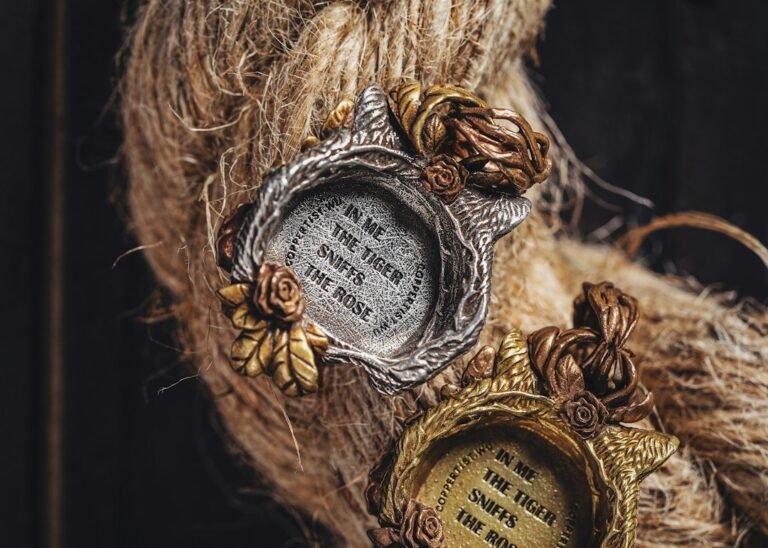
Why Do People Keep Ashes, Relics and Memorial Objects?
Hair, ashes, bones, clothing, photographs and relics allow the dead to remain materially present. Tradivior will examine why objects carry memory so powerfully and how continuing bonds differ from pathological…
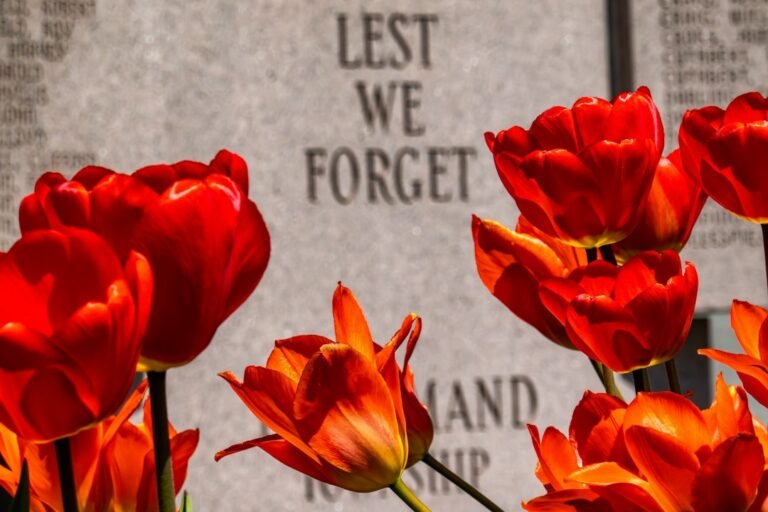
Why Do Cultures Set Aside Days to Remember the Dead?
From Pitru Paksha and Qingming to Día de Muertos and All Souls’ Day, cultures repeatedly create calendar time for the dead. Tradivior will compare how recurring remembrance renews kinship, grief…
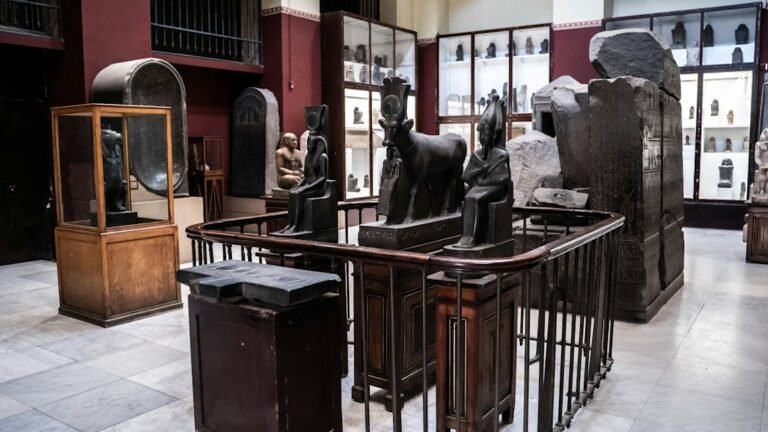
Why Do Cultures Preserve the Dead?
Mummification, embalming, freezing, smoking and desiccation reflect very different beliefs about bodies and afterlives. Tradivior will compare preservation traditions with the chemistry of decomposition and the practical limits of each…

Why Do People Change Names, Clothes or Homes After Marriage?
Marriage often transforms identity through surname changes, new dress, residence, kinship terms or household membership. Tradivior will investigate why marriage needs visible social consequences beyond the ceremony itself.
Picked for your curiosity
Enable JavaScript to build a reading profile and see recommendations.