 tradivior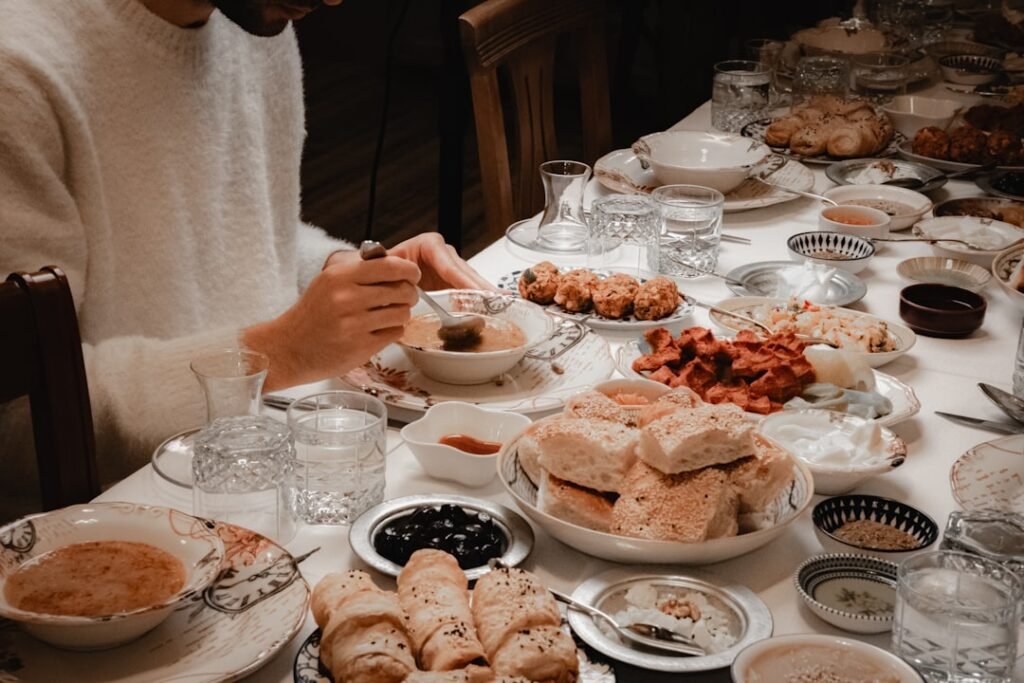
In this investigation
Few acts are more ordinary than offering food. Few acts are more culturally loaded than offering food to a stranger. Across civilizations, hospitality has been treated not merely as politeness but as duty, sacred obligation, moral test, status display and social insurance. A guest may be fed before the household eats, seated in the best place, offered water immediately or protected even when the host has little.
Why would societies repeatedly elevate hospitality to this level? The answer is not one universal religion or one ancient law. Feeding guests solves several recurring human problems at once: strangers are uncertain, travel is dangerous, food is a visible form of trust, and today’s host may become tomorrow’s traveller.
In India, hospitality became an explicit moral injunction
The well-known Sanskrit teaching atithidevo bhava—commonly rendered “the guest is like God” or “be one for whom the guest is divine”—appears in the Taittirīya Upaniṣad. It stands beside injunctions concerning mother, father and teacher.
This placement is significant. The guest is not treated as a casual visitor who receives generosity if convenient. Hospitality is elevated into the same moral register as other foundational duties of household life.
THE MORAL LOGIC
A guest is outside the household’s normal circle of obligation. Sacred hospitality expands moral concern beyond close kin.
The word “guest” historically carried uncertainty
An arriving stranger might be harmless, dangerous, prestigious, poor, politically important or spiritually significant. Before modern identification, hotels and transport networks, travellers depended more heavily on local households, monasteries, caravanserais or kin connections.
Hospitality rules reduced ambiguity. Instead of negotiating from scratch, both sides knew the expected sequence: arrival, water, food, rest, conversation, sometimes gifts, and eventual departure.
Ancient Greek xenia also placed the stranger under sacred protection
In ancient Greek culture, xenia governed relations between host and guest. Literary and historical traditions associate hospitality with Zeus Xenios, protector of strangers and guests.
Hospitality could include food, bathing, lodging, gifts and protection. The guest also had obligations: respect the household, avoid abuse and remember the relationship. Xenia therefore created a reciprocal bond rather than an unlimited right to consume a host’s resources.
Hospitality can turn a stranger into an ally
Sharing food creates a low-cost but meaningful signal of peaceful intent. A host who feeds a visitor is demonstrating that the visitor will not immediately be treated as an enemy. The guest who eats within the household accepts a temporary relationship of trust.
In societies with limited formal institutions, such relationships can have long-term value. A traveller gains protection. The host gains reputation, information and potentially a future ally.
Food sharing is one of humanity’s oldest forms of cooperation
Anthropologists treat food sharing as a central feature of human social organization. Compared with most primates, humans share food extensively outside the parent-child relationship.
Research on human cooperation suggests that sharing can buffer risk, build alliances, signal generosity and support reciprocal relationships. In small-scale societies where hunting success or harvest is unpredictable, food sharing can spread the consequences of bad luck.
Hospitality extends sharing beyond the normal reciprocal circle
Kin sharing is easier to explain: helping close relatives can support people with shared interests and shared survival. Hospitality is more interesting because the guest may be unrelated.
Sacred rules can stabilize generosity toward outsiders by making the obligation less negotiable. A host does not need to calculate immediate repayment if the culture says that feeding the guest is intrinsically right, honourable or spiritually meritorious.
Religion can convert a risky social behaviour into a duty
Offering food to strangers creates costs. The household loses resources and accepts a person whose intentions are not fully known.
Religious framing changes the incentive. If hospitality earns merit, fulfils divine law or avoids moral shame, generosity becomes easier to sustain even when direct repayment is uncertain.
THE SOCIAL MECHANISM
Sacred hospitality can transform one-off generosity into a predictable social norm. Predictability is valuable to both travellers and hosts.
Abrahamic traditions also make hospitality morally serious
Hebrew Bible narratives repeatedly use hospitality as a moral test. The story of Abraham receiving visitors becomes one of the most influential examples: food, water and rest are offered before the identity or significance of the visitors is fully known.
Christian traditions later preserve strong obligations toward strangers, travellers and the poor. Islamic ethics likewise place high value on feeding guests and travellers, with hospitality integrated into broader duties of generosity and charity.
The details differ, but the recurring principle is recognizable: how a household treats the outsider reveals something about its moral quality.
Desert and pastoral environments make hospitality especially practical
In harsh environments, refusing shelter or water can be dangerous. Hospitality among pastoral and desert communities therefore carries obvious survival value.
A norm that protects travellers reduces risk across the entire network. The family feeding a stranger today may depend on another family when travelling tomorrow.
Hospitality works partly because reciprocity can be delayed
Direct exchange requires immediate equivalence: I give you food, you pay me now. Hospitality often works through generalized reciprocity. The guest may never repay the same host.
Instead, repayment can occur indirectly: the guest later hosts someone else, enhances the host’s reputation, provides information or maintains a relationship between families.
Generosity creates reputation
Hospitality is visible. Guests remember how they were treated and tell others. A household known for generosity can gain social standing, trust and influence.
This creates a signalling function. Feeding well may demonstrate wealth, competence or moral character. That does not make generosity insincere; human motives can be both prosocial and reputational at the same time.
The best food can become a form of honour
Many hospitality traditions reserve special foods for guests: meat that is not eaten daily, sweets, tea, coffee, fruit or elaborate dishes.
The expense communicates value. The host demonstrates that the guest is important enough to justify using scarce or labour-intensive resources.
Refusing food can also carry meaning
Because hospitality establishes relationship, refusal is not always neutral. Declining food may imply distrust, distance or rejection of the relationship.
This helps explain the repeated ritual of offering and modest refusal found in many cultures. The negotiation allows generosity and restraint to be displayed simultaneously.
Hospitality protects the guest by making the host responsible
Once a stranger becomes a guest, norms can impose obligations of safety. The host may be expected to defend the visitor, provide shelter or help resolve local difficulties.
The category “guest” therefore changes social status. A stranger outside the house has uncertain protection; a guest inside it has been incorporated temporarily into the host’s moral sphere.
The guest also carries information
Before rapid communication, travellers brought news, trade information, stories and knowledge of distant places. Feeding them could produce informational returns even when no material payment changed hands.
Hospitality therefore supported networks of communication as well as survival.
Food creates a measurable social bond
Eating together synchronizes behaviour. People sit near one another, share serving rules and spend time in conversation. Meals provide structured opportunities for trust and information exchange.
Modern social research repeatedly finds that shared meals are associated with social connection, although causation varies by context. The mechanism is intuitive: food creates time in which relationships can be formed and reaffirmed.
Hospitality is not always egalitarian
A guest may be honoured, but the labour of hosting is often distributed unevenly. Women may cook, clean and serve while male household heads receive the social credit.
Hospitality can therefore strengthen community while also reproducing gendered labour expectations.
The duty to host can become financially burdensome
When reputation depends on generosity, families may spend beyond their means for weddings, funerals, festivals or visiting relatives. A norm that encourages mutual aid can turn into competitive display.
This is a recurring theme in social traditions: the same mechanism that generates cohesion can create pressure.
Sacred hospitality can exclude as well as include
No society treats every outsider equally. Hospitality may depend on caste, status, religion, ethnicity, gender or perceived respectability.
Historical claims about universal hospitality should therefore be tested against actual social boundaries. A moral ideal can coexist with unequal practice.
Modern commercial hospitality changes the relationship
Hotels and restaurants transform hospitality into paid service. The guest no longer depends on personal generosity; contractual exchange replaces some reciprocal obligation.
Yet the language survives. Businesses compete on whether customers “feel like guests,” revealing how strongly hospitality remains associated with care rather than mere transaction.
Tourism campaigns can simplify a much older ethic
India’s modern tourism use of Atithi Devo Bhava converts a household moral teaching into a national hospitality slogan. The connection is real, but the context has changed.
The Upanishadic injunction concerns ethical conduct. Tourism marketing uses the phrase to encourage service toward visitors. The modern slogan therefore draws on tradition without being identical to its original setting.
Why hospitality often begins with water
Water is immediate, low-cost and biologically necessary. In hot climates, offering water can be more urgent than offering food.
This helps explain why water, washing and seating frequently precede meals in hospitality rituals. The sequence moves from basic bodily need toward deeper social incorporation.
The guest ritual manages uncertainty
Anthropologically, strangers create uncertainty because they sit outside ordinary kinship rules. Hospitality converts an unknown person into a temporary social role with defined expectations.
This may be the deepest cross-cultural mechanism. Hospitality is a social technology for transforming dangerous ambiguity into a manageable relationship.
What survives scrutiny?
- Feeding guests is historically embedded in major South Asian, Mediterranean, Abrahamic and other hospitality traditions.
- The Taittirīya Upaniṣad explicitly elevates duty toward the guest alongside duties toward parents and teacher.
- Ancient Greek xenia placed guests and strangers under strong social and religious protection.
- Food sharing is a fundamental human cooperative behaviour that can buffer risk and support reciprocal relationships.
- Hospitality reduces uncertainty by converting a stranger into a temporary social role with defined rights and obligations.
- Generosity can create reputation, alliances and long-term reciprocal value even without immediate repayment.
- Harsh travel environments make hospitality practically important for survival.
- Shared meals create time and structure for trust, information exchange and relationship formation.
- Hospitality can also create financial pressure, gendered labour burdens and status competition.
- Sacred ideals of hospitality should not be mistaken for evidence that every historical society welcomed every outsider equally.
The Tradivior Evidence Profile
Historical Authenticity — Strong. Sacred and moral hospitality is extensively documented in Indian, Greek, Abrahamic and many other traditions.
Original-Purpose Evidence — Strong. Surviving texts and ethnography explicitly connect hospitality with duty, protection, honour, generosity and relationship-building.
Scientific Mechanism — Moderate. Reciprocity, reputation, trust signalling, risk pooling and social bonding provide plausible behavioural mechanisms.
Experimental Evidence — Moderate. Research strongly supports human food-sharing and cooperation, while specific historical hospitality norms are mainly studied anthropologically rather than experimentally.
Cross-Cultural Evidence — Strong. Hospitality obligations appear in many independent cultural settings, though forms and boundaries differ.
Modern Relevance — Strong. Hospitality remains socially important in homes, migration networks, disaster response, tourism and community life.
The Tradivior Conclusion
Historically Practical and Primarily Symbolic/Cultural. Feeding the guest became sacred because hospitality solves a real social problem: how to treat outsiders when trust is uncertain and future reciprocity matters. Religion and custom turned generosity into a predictable obligation, allowing travellers to receive food and protection while hosts gained reputation, relationships and moral standing. The sacred language is not merely decoration, but neither does it require a hidden biological mechanism. Hospitality survives scrutiny as a powerful moral technology for turning strangers into temporary members of the social world.
Continue investigating
- Why Do Communities Treat Hospitality as a Moral Obligation?
- Why Does Eating Together Build Trust?
- Why Did Extended Families Share Kitchens and Courtyards?
Sources and further reading
- Taittirīya Upaniṣad 1.11.2, including the injunction atithidevo bhava.
- Classical Greek literary and historical scholarship on xenia, hospitality and Zeus Xenios.
- Jaeggi AV, Gurven M. “Natural cooperators: Food sharing in humans and other primates.” Evolutionary Anthropology. 2013;22(4):186–195.
- Schiefenhövel W. “On the human ethology of food sharing.” Anthropological Review. 2014.
- Anthropological literature on generalized reciprocity, hospitality, risk sharing and guest-host relationships.
- Religious and historical scholarship on hospitality in Jewish, Christian and Islamic traditions.
Continue exploring

Why Do People Keep Ashes, Relics and Memorial Objects?
Hair, ashes, bones, clothing, photographs and relics allow the dead to remain materially present. Tradivior will examine why objects carry memory so powerfully and how continuing bonds differ from pathological…

Why Do Cultures Set Aside Days to Remember the Dead?
From Pitru Paksha and Qingming to Día de Muertos and All Souls’ Day, cultures repeatedly create calendar time for the dead. Tradivior will compare how recurring remembrance renews kinship, grief…

Why Do Cultures Preserve the Dead?
Mummification, embalming, freezing, smoking and desiccation reflect very different beliefs about bodies and afterlives. Tradivior will compare preservation traditions with the chemistry of decomposition and the practical limits of each…

Why Do People Change Names, Clothes or Homes After Marriage?
Marriage often transforms identity through surname changes, new dress, residence, kinship terms or household membership. Tradivior will investigate why marriage needs visible social consequences beyond the ceremony itself.
Picked for your curiosity
Enable JavaScript to build a reading profile and see recommendations.