 tradivior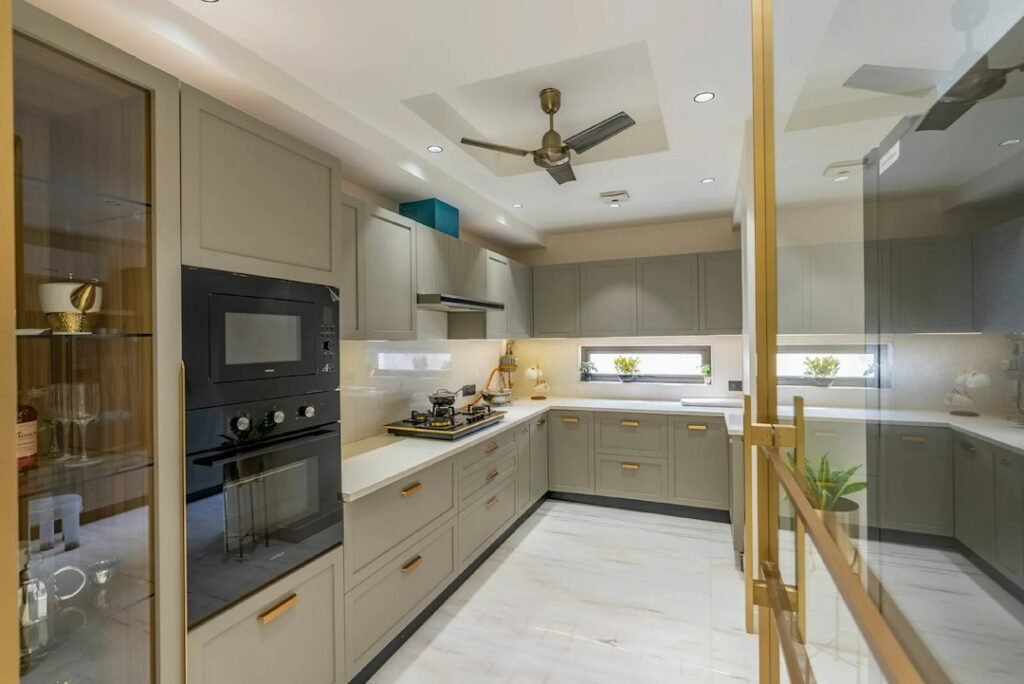
In this investigation
For much of human history, a household was not just a couple and their children. It could include grandparents, married sons, daughters-in-law, unmarried siblings, cousins, widowed relatives, apprentices, servants or dependants—often living around a shared courtyard, hearth or kitchen.
Modern housing often treats privacy as the basic unit of domestic comfort: one nuclear family, one kitchen, individual bedrooms, clearly separated property. Earlier households were organized around a different problem. How do many related people share labour, food, childcare, property and care when work and survival are deeply interdependent?
The shared kitchen and courtyard were practical answers. They concentrated resources and made coordination visible. They also created hierarchy, surveillance and conflict. The same arrangement that could provide security for one person could reduce autonomy for another.
The “joint family” was never one universal household type
South Asian discussions often use the phrase joint family as though it described one fixed institution. In reality, household forms varied by region, caste, class, landholding, inheritance system, marriage pattern and life stage.
Some households contained several married brothers and their families under one roof. Others occupied connected houses around a courtyard. Some shared property but not all meals. Some divided after conflict, inheritance or migration and later recombined.
THE HISTORICAL CAUTION
“Extended family living” is a family of arrangements rather than one timeless Indian blueprint. The kitchen, courtyard, property and authority structure could all be shared to different degrees.
Agrarian economies rewarded pooled labour
In farming households, work arrives in bursts. Planting, harvest, livestock care, irrigation, food processing and storage can require many hands at the same time. A larger household creates a pool of labour that can be redistributed when one member is sick, pregnant, elderly or occupied elsewhere.
The household becomes partly an economic organization. Family membership determines who works, who eats, who controls land and who receives support.
One kitchen turns income and harvest into a shared resource
Cooking is labour-intensive when fuel must be collected, grain processed, water carried and meals prepared from raw ingredients. Several separate kitchens duplicate that work.
A shared kitchen allows fuel, utensils, storage vessels and cooking labour to be pooled. Large pots can feed many people efficiently. Surplus from one worker can support children, older relatives or temporarily non-earning members.
In this sense, the common kitchen is not merely a symbol of family unity. It is part of the household’s redistribution system.
Eating from one kitchen can define who belongs to the household
Across South Asia, commensality has often carried legal, ritual and social meaning. Who eats with whom, who cooks, whose food is acceptable and whether a branch maintains a separate hearth can signal kinship, status or separation.
When a married brother “separates” from a joint household, one of the clearest practical signs may be the establishment of a separate kitchen. The hearth marks an economic boundary as much as a culinary one.
Courtyards solve a coordination problem that hallways do not
Traditional courtyard houses arrange rooms around a shared open centre. This spatial form appears in many climates and cultures, but in extended households it has a particularly important social function.
The courtyard allows multiple family units to have semi-private rooms while remaining connected to a common activity zone. Cooking preparation, childcare, craft work, drying grain, washing, conversation, ceremonies and sleeping in hot weather can all spill into the central space.
The courtyard is a spatial negotiator
Recent architectural research describes the courtyard as a space that negotiates public and private life within the household. It is neither a street nor a bedroom. It allows observation, interaction and circulation without requiring everyone to share the same enclosed room.
This makes the courtyard particularly well suited to multigenerational living. Grandparents can remain socially present. Children can play within sight of adults. Several domestic tasks can occur simultaneously.
Shared domestic space also distributes childcare
Parents in a large household are not the only adults available to supervise children. Grandparents, aunts, older siblings and cousins can all contribute to care.
This can reduce the vulnerability of a household when one caregiver is working, ill or absent. In societies without formal childcare systems, kin networks provide an informal care infrastructure.
The same structure supports elder care
Older adults may lose income, mobility or physical independence. Multigenerational households provide nearby assistance with meals, transport, medicine, household work and companionship.
A recent scoping review of South Asian research found that intergenerational support commonly takes financial, emotional and instrumental forms. Positive relationships with adult children are frequently associated with better subjective well-being and reduced loneliness among older adults.
THE EVIDENCE
Co-residence can increase access to care and social support, but the benefits depend heavily on relationship quality. Living together is not automatically the same thing as being well supported.
Resource pooling can reduce household risk
One worker losing income is less catastrophic when several earners contribute. One bad harvest can be absorbed more easily when land, livestock or wages are pooled. Shared housing also reduces per-person costs for cooking space, tools and infrastructure.
Economists sometimes describe this as risk sharing. Families do not need a formal insurance contract to spread risk if they share income and consumption.
Property systems can encourage co-residence
Joint ownership, inheritance rules and family businesses can make physical separation costly. A household may share a house because it shares land, workshop space, animals or commercial assets.
Domestic architecture therefore reflects legal and economic systems. A large courtyard house can be both a home and the physical expression of a corporate family estate.
Shared households create dense social learning
Children living among multiple generations observe adult work, ritual, language, conflict resolution, food preparation and caregiving. Skills are transmitted continuously rather than only through formal instruction.
This helps preserve local knowledge. Recipes, craft techniques, religious routines and family histories are easier to transmit when generations share everyday space.
But shared kitchens also concentrate authority
The common kitchen can redistribute resources, but someone controls it. Decisions about food, money, work and access may be concentrated in a household head or senior woman.
That authority can create stability when trusted. It can also create dependency. Younger adults may have limited control over spending, diet, work choices or household routine.
Domestic cooperation is often gendered
Historically, the efficiencies of the joint household have often depended on women’s unpaid labour. Cooking for twenty people is efficient at the household level only if someone performs the cooking.
Daughters-in-law may enter a household where senior women control domestic work while younger women carry much of its physical burden. A system that protects children and older adults can therefore distribute costs unequally across gender and age.
Care is not automatically reciprocal
The ideal of intergenerational reciprocity suggests that adults care for children when they are young and receive care from those children when they age. Real households do not always achieve that balance.
Care burdens can fall on one daughter, daughter-in-law or unmarried relative while others contribute less. Shared residence can hide unequal work because the labour is framed as family duty rather than counted as employment.
Privacy is one of the clearest modern trade-offs
Multigenerational households reduce physical and social privacy. Decisions that a nuclear household might treat as personal—spending, parenting, marriage, diet, work or relationships—can become collective matters.
The South Asian scoping review on older adults found that some residents experience stress from lack of privacy, reduced control over space and difficulty adapting to other household members.
More people can mean more support—and more conflict
Support networks and conflict networks are often the same network. The relatives available to help with childcare are also present during disagreements about money, authority or parenting.
A 2025 systematic review of multigenerational living and mental health found highly heterogeneous results. Some studies linked multigenerational households with poorer mental-health outcomes; others found nuclear-family living associated with greater distress. The overall certainty was low.
The important conclusion is not that one household type is healthier. Relationship quality, crowding, financial strain, voluntariness and cultural expectations modify the outcome.
Crowding and multigenerational living are not the same thing
A spacious courtyard compound with several rooms is very different from three generations forced into a small apartment because housing is unaffordable. Both are technically multigenerational households.
Studies that fail to distinguish household size from housing adequacy can therefore confuse family structure with crowding stress.
Choice matters
A family that chooses to live together for companionship may experience the arrangement differently from one that has no alternative because of unemployment, housing shortage or care dependency.
Voluntary co-residence can feel supportive. Compulsory co-residence can feel like lost autonomy. The building can be the same while the psychological meaning is different.
Modern migration changes the old household bargain
Education and wage labour pull younger adults away from ancestral homes. When employment is concentrated in cities, a joint rural household may no longer function as a single economic unit.
This can create a care gap. Older parents remain in one place while adult children move for work. Money may still flow back, but daily assistance becomes harder to provide.
Housing design increasingly separates generations even when families remain close
One response is “close but separate” living: adjacent flats, different floors, nearby houses or semi-independent kitchens. This preserves access to care while increasing autonomy.
Recent research from China suggests that older adults may sometimes report better mental health when adult children live nearby rather than in the same dwelling, illustrating that proximity can deliver support without maximum co-residence.
The courtyard can survive even when the joint household weakens
Contemporary architects continue to reinterpret the courtyard because its value is not limited to traditional kinship. It provides ventilation, daylight, a protected outdoor room and an intermediate social space.
In other words, architectural forms can outlive the exact family system that once used them.
Family cohesion should not be confused with family hierarchy
Traditional accounts often praise joint households for unity. That unity may be genuine, but it can also depend on unequal authority. Younger members, women or lower-status relatives may be expected to comply rather than negotiate.
A household can therefore be highly cohesive and still restrict individual autonomy. Social stability and personal freedom are separate dimensions.
Why the model persisted for so long
The extended household solved multiple recurring problems: childcare, elder care, labour coordination, inheritance, risk sharing, food preparation, housing costs and social identity.
No single mechanism explains every family. The arrangement persisted because several benefits reinforced one another, especially in settings where formal welfare, insurance and childcare systems were limited.
Why it changes under modern conditions
As states, markets and services take over functions once performed by kin, the economic need for co-residence can weaken. Schools transmit knowledge, pensions support older adults, insurance spreads risk, refrigerators reduce daily cooking pressure and paid childcare substitutes for some family care.
At the same time, housing costs can push generations back together. Modern multigenerational living is therefore not simply a survival of tradition; it can reappear for new economic reasons.
What survives scrutiny?
- Extended and multigenerational households have taken many forms rather than one universal “joint family” model.
- Shared kitchens reduce duplicated cooking labour and allow food and income to be redistributed across dependants and earners.
- Courtyards provide semi-public domestic space suited to childcare, work, ritual, conversation and circulation among multiple family units.
- Co-residence can increase access to childcare, elder care, emotional support and financial risk sharing.
- Positive intergenerational relationships are often associated with better well-being among older adults.
- Shared households can also reduce privacy, concentrate authority and increase intergenerational conflict.
- Domestic labour and care burdens are often distributed unequally, particularly by gender and seniority.
- Modern research does not show one universally healthier household form; outcomes depend on relationship quality, crowding, choice and economic conditions.
- Migration, employment and changing housing patterns weaken some traditional joint-family arrangements while creating new forms of nearby multigenerational living.
- The strongest explanation is practical social organization rather than the idea that large families are inherently more harmonious.
The Tradivior Evidence Profile
Historical Authenticity — Strong. Multigenerational households, common kitchens and courtyard compounds are extensively documented in South Asia and many other agrarian societies.
Original-Purpose Evidence — Strong. Labour pooling, food sharing, property management, childcare, elder care and kinship organization provide clear historical and practical functions.
Scientific Mechanism — Moderate. Social support, resource pooling, care availability, crowding, autonomy and conflict provide plausible mechanisms linking household structure to well-being.
Experimental Evidence — Limited to Moderate. Modern evidence is largely observational and heterogeneous; multigenerational living has both positive and negative associations depending on context.
Cross-Cultural Evidence — Strong. Extended-family co-residence and shared domestic space appear across many societies, though inheritance and gender systems differ.
Modern Relevance — Strong. Multigenerational living remains important for care, housing affordability and family support, while modern design increasingly seeks ways to balance connection and privacy.
The Tradivior Conclusion
Historically Practical. Shared kitchens and courtyards helped extended families function as economic and care networks. They reduced duplicated labour, pooled resources and kept children, workers and older adults within a common support system. But these advantages were never free: privacy loss, hierarchy, unequal domestic labour and intergenerational conflict are equally real parts of the arrangement. The model survives scrutiny not because large families are naturally harmonious, but because shared space once performed many functions that modern households now outsource to markets, institutions and the state.
Continue investigating
- Why Did Courtyard Houses Appear Across Hot Climates?
- Why Did Indian Kitchens Separate Cooking, Eating and Purity Zones?
- Why Did Joint Families Become Common in South Asia?
Sources and further reading
- “Understanding intergenerational dynamics and social support’s impact on health and well-being of older adults in South Asia: a scoping review.” 2025. PMCID: PMC11987332.
- Jones A, Pugh D, Bell V, Wong KKY. “Multigenerational Living and Mental Health Outcomes of Working-Age Adults and Children—A Scoping Systematic Review.” Health & Social Care in the Community. 2025;7513142.
- Madhavan VK, et al. “Impact of intergenerational conflict on young people and interventions to mitigate its effects: a scoping review.” International Review of Psychiatry. 2024;36(4–5):374–392.
- Bertolani B, Boccagni P. “Two houses, one family, and the battlefield of home: A housing story of home unmaking in rural Punjab.” Geoforum. 2021.
- Verma LA, Bano F, Verma P. “Courtyard as a Spatial Negotiator: Socio-Spatial Transformation of Domestic Life in Traditional and Contemporary Indian Houses.” 2026.
- Anthropological and historical scholarship on South Asian joint households, inheritance and domestic organization.
Continue exploring

Partially Supported
Why Do People Keep Ashes, Relics and Memorial Objects?
Hair, ashes, bones, clothing, photographs and relics allow the dead to remain materially present. Tradivior will examine why objects carry memory so powerfully and how continuing bonds differ from pathological…

Primarily Symbolic/Cultural
Why Do People Change Names, Clothes or Homes After Marriage?
Marriage often transforms identity through surname changes, new dress, residence, kinship terms or household membership. Tradivior will investigate why marriage needs visible social consequences beyond the ceremony itself.
Evidence Supported
Why Do Humans Fear Ageing Yet Honour Elders?
Age can bring prestige, authority and memory while also attracting fear of frailty and dependency. Tradivior will compare societies that honour elders with those that valorize youth and ask what…
Evidence Supported
Why Does Parenthood Change Social Identity?
Becoming a parent often changes status, obligations, kin relations and personal identity far beyond childcare itself. Tradivior will examine why societies ritualize parenthood and what psychological research says about this…
Picked for your curiosity
Enable JavaScript to build a reading profile and see recommendations.