 tradivior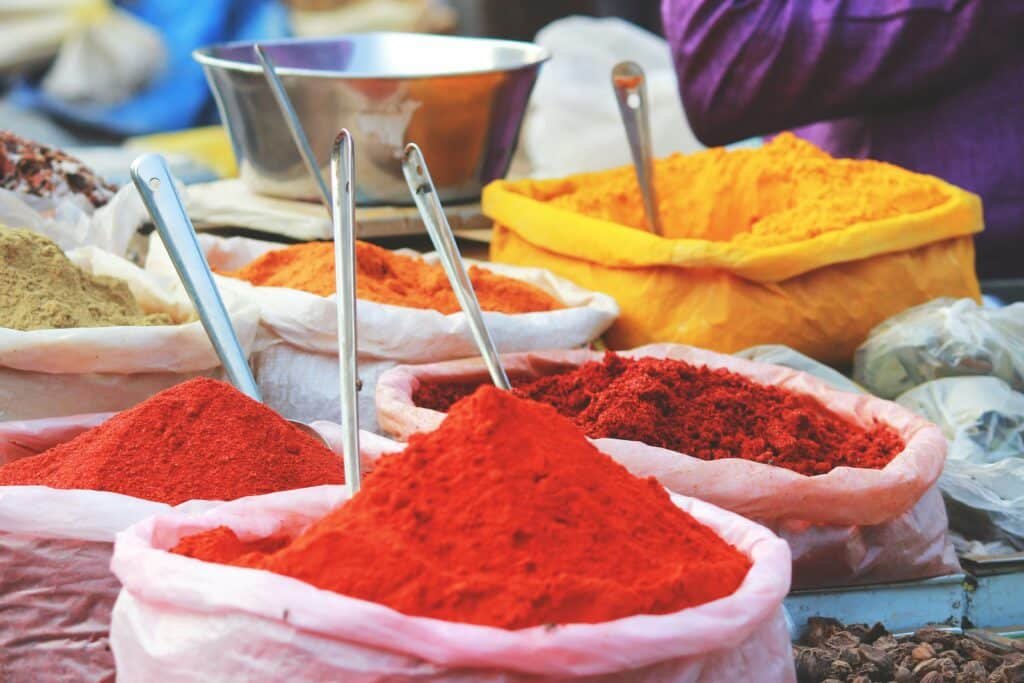
In this investigation
Cuisines rarely use spices as isolated compounds. Garam masala, ras el hanout, berbere, Chinese five-spice and countless household blends combine aromatics because mixtures create flavours no single ingredient can reproduce.
Modern explanations sometimes add a stronger claim: traditional cooks supposedly discovered biochemical synergy and deliberately paired ingredients so one magnified another’s effects. Some interactions are real. Black pepper can increase curcumin exposure, and laboratory studies sometimes find additive or synergistic antimicrobial effects. But synergy is specific to particular compounds, doses and outcomes; it is not an automatic property of every traditional spice blend.
Flavour complexity is the simplest explanation
One spice contributes heat, another floral aroma, another citrus notes, bitterness, sweetness or earthiness. Combinations let cooks shape flavour with precision and balance harsh notes.
That culinary function is sufficient to explain why sophisticated cuisines prefer blends without assuming a medical origin.
THE RECORD
Spice combinations are historically widespread because cooking is a problem of balancing aroma, pungency, colour and local ingredients. Therapeutic interpretations may coexist, but culinary function is directly visible.
Chemical interactions are real but variable
If two compounds have biological activity, their combined effect can equal, exceed or fall below the sum of their individual effects. Food science therefore distinguishes additive, synergistic and antagonistic interactions.
Popular writing often labels any combination “synergistic.” Scientifically, synergy has to be demonstrated for a defined pair, concentration and endpoint.
The turmeric–black pepper example
Piperine, a constituent of black pepper, can alter curcumin metabolism and increase measured exposure. Human pharmacokinetic studies support this interaction.
That does not show the culinary pairing was originally invented for pharmacokinetic enhancement. Pepper and turmeric can be combined for flavour, availability and established cooking traditions without knowledge of curcumin absorption.
THE EVIDENCE
Specific spice interactions can alter absorption, antimicrobial activity or flavour chemistry. Evidence for one pair cannot justify the claim that traditional masalas as a category are scientifically optimized formulations.
Antimicrobial mixtures can broaden activity
Different essential oils and spice compounds affect microbial membranes, enzymes and oxidation in different ways. Combining them can sometimes inhibit a wider range of organisms or lower the amount needed for an effect.
Food-preservation research studies such mixtures because lower concentrations may achieve useful effects without overwhelming flavour.
A laboratory result may disappear in a meal
Fats, proteins, starches, acidity and heat can bind or transform spice compounds. A concentration that inhibits bacteria in broth may be far higher than what is present in a curry.
Laboratory synergy therefore establishes potential rather than proving that a traditional recipe reliably preserves food or produces a clinical outcome.
Roasting and tempering change the mixture
Whole spices may be dry-roasted, ground, fried in oil or added late in cooking. Heat drives off volatiles, creates new aroma products and changes extraction into fat or water.
A spice blend is therefore a process rather than merely an ingredient list.
Sequence matters
Tempering illustrates this clearly. Mustard seed, cumin, dried chilli, curry leaves or asafoetida may enter hot fat at different moments because they tolerate heat differently and release aroma at different rates.
The resulting sequence can be explained through culinary chemistry without requiring a therapeutic theory.
Fat changes extraction and bioaccessibility
Many aromatic and pigment compounds are lipophilic. Cooking them in oil or ghee can improve dispersion and sometimes increase absorption relative to consuming the compounds dry.
This can make traditional techniques biologically consequential even if cooks did not formulate the mechanism in modern terms.
Blends create sensory stability
Plant chemistry changes with cultivar, harvest, storage and age. A blend can create a recognizable sensory identity despite variation in one ingredient. Household masalas are therefore also a form of culinary standardization.
Medical and culinary mixtures should not be collapsed
Ayurvedic formulations can combine multiple ingredients according to a therapeutic framework. These may overlap with culinary spices, but their intent, dose and preparation can differ greatly from a household masala.
Evidence for one extracted compound should not be treated as validation of every traditional formulation, just as a culinary spice blend should not be treated as a medicine merely because some constituents are bioactive.
Cross-cultural recurrence matters
Mexican moles, Ethiopian berbere, North African ras el hanout, Southeast Asian curry pastes and European herb blends show that combining aromatic plants is a general culinary strategy.
The recurrence supports a simple principle: mixtures let cooks build layered identities from locally available plants.
A spice blend is a flavour architecture before it is a pharmacological formula
Blends let cooks distribute different sensory roles across ingredients: one spice may supply heat, another floral aroma, another bitterness, another sweetness and another colour. The mixture becomes more stable and complex than relying on one dominant flavour.
This culinary explanation is sufficient to explain why spice combinations recur across cuisines. Medical synergy is a separate question that requires direct evidence.
Synergy has a precise scientific meaning
Two compounds are synergistic when their combined effect is greater than expected from their individual effects. Simply detecting activity from both ingredients does not prove synergy.
Food and herbal literature often uses the word loosely. A mixture can be useful because several compounds act independently, because one improves absorption of another, or because they affect different sensory targets without any true biochemical synergy.
Black pepper and curcumin are a real interaction—but not a universal model
Piperine can increase curcumin exposure by altering metabolism and transport. This is one of the best-known examples of a culinary compound changing another compound’s pharmacokinetics.
It should not be generalized into the claim that every traditional spice blend was deliberately engineered to maximize absorption. Most combinations have never been tested in human pharmacokinetic studies.
Fat changes extraction in ways cooks discovered empirically
Many aromatic spice compounds are more soluble in fat than in water. Heating spices in oil can therefore extract and spread those compounds through a dish more effectively.
This helps explain techniques such as tempering and blooming spices. A practical cooking method can exploit chemistry long before the molecules are named.
Water-soluble and fat-soluble compounds behave differently in the same pot
Spice mixtures contain compounds with very different chemical properties. Some dissolve readily in water; others prefer fat; volatile compounds may escape with steam; heat can create new breakdown products.
The final meal is therefore chemically different from the raw spice powder. Studies of isolated raw extracts cannot be assumed to describe the cooked mixture.
Roasting changes more than aroma
Dry roasting can reduce moisture, transform volatile oils and create browned flavours. Excessive heat can also degrade delicate compounds and produce bitterness.
Traditional cooks manage this trade-off by adjusting time and sequence rather than treating “more heat” as better.
Whole spices and ground spices release at different rates
Grinding dramatically increases surface area, which speeds extraction but also exposes aromatic compounds to oxygen and evaporation. Whole spices release flavour more slowly and often survive longer cooking.
A recipe that adds whole cumin early and ground cumin later is therefore manipulating release kinetics, not merely repeating the same ingredient.
Antimicrobial mixtures can broaden activity in laboratory systems
Different spice compounds may inhibit different microbes or attack different cellular targets. In vitro combinations can therefore show additive or sometimes synergistic antimicrobial effects.
But concentrations effective in a laboratory may be much higher than those present in an ordinary curry. Food matrices, heat, fat and protein can also reduce activity.
A blend cannot make unsafe food safe
Spices may modestly inhibit bacterial growth, but they do not replace refrigeration, adequate cooking temperature, clean water or safe storage. Pathogens can survive in highly seasoned food.
The public-health value of antimicrobial spice effects is therefore supplementary rather than absolute.
Garam masala illustrates why blends are cultural, not fixed formulas
There is no single universal garam masala. Families and regions vary pepper, cardamom, clove, cinnamon, cumin, coriander, nutmeg and other ingredients according to cuisine and preference.
This variability makes it historically implausible to assign one precise biomedical purpose to “garam masala” as if it were a standardized drug.
Blending can reduce sensory harshness
One strongly bitter, pungent or astringent spice may be unpleasant on its own. Combined with sweeter, aromatic or earthy ingredients, it can become balanced enough to use regularly.
This sensory moderation can increase habitual exposure to diverse plant compounds even without deliberate health intent.
Mixtures can also create antagonism
Compounds can compete for absorption, alter metabolism in opposing directions or bind one another. More ingredients do not guarantee more biological benefit.
This is another reason the “ancient synergistic formula” narrative should be tested rather than assumed.
Culinary dose keeps most spice mixtures far below supplement exposure
A teaspoon distributed across a family meal produces a much smaller individual dose than a concentrated capsule. This difference can make ordinary culinary use safe even when high-dose extracts carry interaction risks.
Evidence from supplements should therefore not be used to exaggerate either the benefits or dangers of normal spice mixtures.
Blends stabilize cuisine across variable ingredients
A spice mixture can give recognizable identity to dishes even when vegetables, pulses or meats change with season. This makes food culture more consistent despite changing raw materials.
That cultural function may be as important historically as preservation or pharmacology.
The strongest scientific claim is methodological
Traditional spice combinations create genuine chemical interactions, but each claimed health effect needs to be tested at the dose, preparation and food context actually used.
The existence of one well-documented interaction such as piperine–curcumin does not turn every masala into a hidden drug-delivery system.
Spice combinations often work by contrast, not by chemical similarity
One tempting explanation for successful food combinations is that ingredients taste good together because they share many aroma compounds. Large recipe-network studies show that this is not a universal rule. A 2015 analysis of eight regional Indian cuisines found a consistent pattern of “negative food pairing”: ingredients sharing many flavour compounds tended to co-occur less often than expected, and spices were among the strongest contributors to that pattern. Later work on Northeast Indian cuisines found a similar tendency.
This does not mean Indian cooks were consciously optimizing chemical distance. It means the sensory logic of a cuisine can be built on contrast as much as similarity. Cumin, cardamom, chilli, coriander, clove, mustard, fenugreek and asafoetida occupy very different sensory spaces. Combining them can widen the aroma and taste profile rather than duplicating one flavour family. The result may feel balanced precisely because no single aromatic note dominates.
A masala is not a fixed scientific formula
Modern packaging can make “garam masala,” “curry powder” or regional blends look like standardized chemical recipes, but household and regional mixtures are often flexible. Ratios change with the dish, season, family tradition and what is available. Some blends are roasted before grinding; others contain delicate aromatics added only near the end. Fresh pastes behave differently from dry powders. The mixture is therefore a culinary system rather than one universal formula.
This flexibility is important historically. If a blend survives while its exact ratios change, the persistence of the tradition may lie in its function: creating warmth, aroma, bitterness, pungency, colour or a recognizable regional profile. A tradition can transmit a method of balancing flavours without preserving one immutable list of ingredients.
Biological synergy is possible, but it is not the default result of mixing
Contemporary essential-oil research provides a useful warning against simplistic “more spices equals more benefit” claims. Reviews of antimicrobial mixtures report examples of synergy, where a combination inhibits microbes more strongly than expected from its components. But they also report additive, indifferent and antagonistic interactions. The outcome depends on the organisms tested, the compounds, their proportions and the experimental conditions.
A 2026 review of optimized essential-oil blends reaches a similar conclusion from another direction: improved antimicrobial or antioxidant performance often requires deliberate mixture design. That is very different from assuming any traditional spice mixture is automatically synergistic. A masala may have interesting biological activity, but each claimed effect must be demonstrated for the actual combination and concentration being discussed.
The food matrix can overpower elegant laboratory chemistry
Essential oils and purified compounds are commonly tested in simplified laboratory systems. A curry, stew or pickle is far more complicated. Fat can dissolve hydrophobic aroma molecules, proteins and starches can bind them, water changes their distribution, heat can destroy some volatiles while creating others, and acids can alter both flavour and microbial survival. The same two spices can therefore behave differently in oil, yoghurt, lentils or a dry rub.
This is why laboratory synergy should be treated as mechanism evidence rather than direct proof of culinary benefit. A combination that suppresses bacteria in a culture medium may need much higher concentrations in food, potentially making the dish unpleasant. Conversely, a blend that is sensorially excellent may have little meaningful antimicrobial effect at ordinary culinary doses.
Culinary sequence is part of the combination
Two recipes can contain the same spices and still taste different because their sequence differs. Whole cumin added to hot oil behaves differently from ground cumin stirred into a wet sauce. Mustard seeds may pop and release aroma; powdered chilli can scorch; cardamom added late can retain volatile notes that prolonged heating would drive away. Grinding also changes surface area, while crushing fresh ginger or garlic triggers different chemical reactions from using dried powders.
The “combination” is therefore not just a list of ingredients. It includes order, temperature, grinding, fat, water and time. This helps explain why traditional recipes can encode sophisticated practical chemistry without containing a written scientific theory. Repetition teaches cooks which sequence produces the desired aroma and which one produces bitterness, burnt spice or a flat result.
Cross-cultural recurrence suggests a general human strategy
Complex aromatic blends appear in many cuisines: Ethiopian berbere, North African ras el hanout, Chinese five-spice, Levantine za’atar, Mexican moles, Southeast Asian curry pastes and countless local mixtures. The ingredients and techniques differ, but the recurring strategy is similar—combine several strong plant aromas so that the final food becomes more complex than any one component.
That recurrence is strong evidence for culinary usefulness and cultural transmission. It is much weaker evidence for a single ancient medical mechanism. Humans repeatedly discovered that mixtures could build distinctive flavour identities, adapt to local plants and support preservation or medicinal practices in some contexts. The safest conclusion is plural: flavour is primary, while chemistry can add secondary effects that vary by blend and use.
What survives scrutiny?
- Combining spices is historically widespread across cuisines.
- Mixtures create sensory complexity through complementary aromas, tastes and pungency.
- Specific combinations can show additive or synergistic antimicrobial effects in laboratory studies.
- Black pepper can increase curcumin exposure in humans.
- Food matrices, heat and dose can greatly change interactions observed outside real foods.
- One demonstrated interaction cannot be generalized to all spice blends.
- There is no evidence that traditional masalas as a category were engineered from modern pharmacokinetic knowledge.
- Traditional processing such as roasting, grinding and tempering can alter flavour and bioaccessibility.
The Tradivior Evidence Profile
Historical Authenticity — Strong. Spice mixtures are deeply embedded in culinary traditions across regions.
Original-Purpose Evidence — Strong. Flavour construction, identity and ingredient balancing are direct historical functions.
Scientific Mechanism — Moderate. Chemical interactions, lipid extraction and antimicrobial combinations are plausible and sometimes demonstrated.
Experimental Evidence — Limited. Evidence is frequently pair-specific or laboratory-based rather than derived from whole traditional dishes and long-term human outcomes.
Cross-Cultural Evidence — Strong. Multi-spice and herb blends recur globally.
Modern Relevance — Strong. Spice combinations remain valuable for flavour and research, provided synergy claims remain specific.
The Tradivior Conclusion
Scientifically Plausible. Humans combine spices primarily because mixtures make complex and distinctive food. Modern science shows that some combinations also interact biologically, changing antimicrobial activity, extraction or absorption. But synergy is not a universal property of masalas; it is an experimentally demonstrated relationship between specific substances, doses and outcomes. Traditional spice blends are sophisticated culinary systems without needing to be retroactively redefined as premodern pharmacology.
Continue investigating
Sources & further reading
- Jain A, Rakhi NK, Bagler G. “Analysis of Food Pairing in Regional Cuisines of India.” PLOS ONE. 2015;10(10):e0139539. doi:10.1371/journal.pone.0139539.
- Ahn Y-Y, Ahnert SE, Bagrow JP, Barabási A-L. “Flavor network and the principles of food pairing.” Scientific Reports. 2011;1:196.
- Soulaimani B. “Comprehensive Review of the Combined Antimicrobial Activity of Essential Oil Mixtures and Synergism with Conventional Antimicrobials.” 2025. doi:10.1177/1934578X251328241.
- Ben Akacha B, et al. “Optimizing Essential Oil Blends by Mixture Design Approaches for Enhanced Antimicrobial and Antioxidant Activity: A Review.” Journal of Food Science. 2026;91(1):e70794. doi:10.1111/1750-3841.70794.
- Khajeh Pour S, et al. “Effect of pepper on curcumin bioavailability.” Food Science & Nutrition. 2023.
- Billing J, Sherman PW. “Antimicrobial Functions of Spices: Why Some Like it Hot.” Quarterly Review of Biology. 1998.
- Stabnikova O, Stabnikov V, Paredes-López O. “Spices and Essential Oils in Food Preservation.” Plant Foods for Human Nutrition. 2026.
Continue exploring
Primarily Symbolic/Cultural
Why Do Cultures Create Fertility Rituals?
Fertility rituals appear wherever reproduction, inheritance and survival carry uncertainty. Tradivior will compare prayers, offerings, symbols and seasonal rites while distinguishing social meaning from unsupported claims that rituals directly increase…

Historically Practical
Why Does Pregnancy Become a Protected Social State?
Pregnancy often brings exemptions, restrictions, blessings and intense social attention. Tradivior will examine why societies formalized protection around pregnancy and where protective customs help, do nothing or cause harm.

Why Do Societies Create Prohibitions Around Sacred Days, Places and Objects?
Sacred time and space are often protected by rules about work, food, touch, speech or access. Tradivior will investigate how prohibitions create boundaries and commitment, and when they also conserve…

Primarily Symbolic/Cultural
Why Do Menstrual Taboos Appear Across Cultures?
Menstruation has been treated as sacred, dangerous, polluting, powerful or private in different societies. Tradivior will investigate why restrictions emerged and distinguish rest or privacy from exclusion that harms health…
Picked for your curiosity
Enable JavaScript to build a reading profile and see recommendations.