 tradivior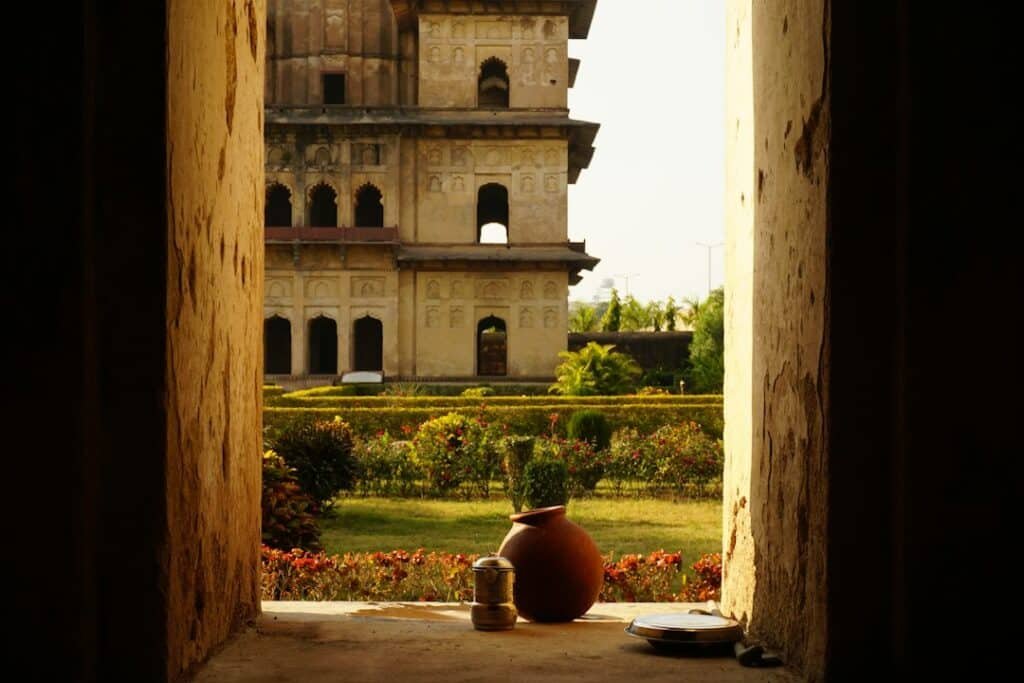
In this investigation
Before refrigerators, electric coolers and bottled water, millions of households relied on a simple material technology: porous clay. In India the matka, matki and surahi became familiar water vessels. Comparable earthen pitchers appeared in the Mediterranean, Middle East, North Africa and other hot regions. Their appeal was obvious long before thermodynamics had a name: water stored in the right kind of unglazed pot could become noticeably cooler than the surrounding air.
Modern explanations sometimes turn that practical observation into much larger claims. Clay-pot water is said to become “alkaline,” “detoxified,” enriched with minerals, better for digestion, better for metabolism or safer than all other stored water. Some claims have a measurable basis; others stretch beyond the evidence.
The historical and scientific story is stronger when the claims are separated. Earthenware really can cool water through evaporation. Vessel material can change water chemistry. Some studies report reductions in certain contaminants or bacterial counts. But no single clay pot has one universal effect, and safe storage still depends on the starting water, the vessel, cleaning practices and local conditions.
Why clay became such a natural material for water storage
Clay has several properties that made it historically attractive. It is widely available, can be shaped without metalworking, becomes rigid after firing and can be produced in many sizes. A household pot can be made locally and repaired economically through replacement rather than industrial manufacture.
Archaeological pottery is one of the most common material traces left by ancient settlements. Not every vessel stored drinking water, but large jars, pitchers, narrow-necked containers and storage pots occur across many early societies. Their functions included water, grain, oil, fermentation, transport and domestic storage.
In South Asia, the matka became a household water cooler
In the Indian subcontinent, unglazed earthen water pots became especially suited to hot climates. Ethnographic and craft records describe vessels such as matka, matki and surahi specifically for household water storage and cooling. Different regions developed different shapes, firing styles and clays.
The practice persisted because it solved several problems at once. The vessel stored a useful daily volume, kept water accessible inside the home and could cool it without fuel or electricity. In a pre-refrigeration household, that combination was difficult to improve upon.
THE PRACTICAL ADVANTAGE
A clay water pot is not merely a container. When the ceramic remains porous enough, its wall becomes part of the cooling system.
The cooling mechanism is straightforward physics
Unglazed fired clay contains microscopic pores. A small amount of water migrates through the wall toward the exterior surface. Once that moisture reaches the outside and evaporates, it requires energy. The latent heat needed for evaporation is drawn partly from the water and vessel, lowering the temperature of the remaining water inside.
This is evaporative cooling—the same broad physical principle used when sweat evaporates from skin or when wet cloth cools as it dries.
A clay pot can cool water below ambient air temperature
Experimental and modelling studies of earthen pitchers confirm that water temperature can fall several degrees below the surrounding air. A 2021 engineering study modelling the traditional Spanish botijo showed how shape, exposed surface area and evaporation interact to determine cooling performance.
A 2025 review focused on traditional clay-pot cooling in Bangladesh estimated that under favourable dry-season conditions the cooling potential can reach roughly 5–15°C, while humid monsoon conditions sharply reduce performance.
The lesson is not that every clay pot lowers water by a fixed amount. Cooling depends on weather, airflow, vessel porosity, wall thickness, size, starting water temperature and where the pot is placed.
Humidity is one of the biggest limits
Evaporative cooling works best when the surrounding air can accept more water vapour. Dry, moving air promotes evaporation. Humid air slows it.
This explains why the same matka can feel remarkably effective during a hot dry spell and much less impressive during a humid monsoon. The traditional technology is climate-sensitive rather than magically constant.
Shape matters because surface area and evaporation matter
Traditional vessels are often rounded rather than box-shaped. A broad belly increases surface area relative to volume and can support evaporation. Narrow openings reduce contamination and limit direct heat exchange while still allowing filling and pouring.
Engineering analysis of earthen pitchers shows that geometry can influence cooling performance. This does not mean historical potters calculated differential equations. Repeated craft experience can preserve effective vessel proportions without formal scientific theory.
Porosity is both the strength and the weakness
A vessel that is too vitrified or heavily glazed loses much of the evaporation pathway. A vessel that is excessively porous can leak too much water, weaken structurally or be difficult to keep clean.
Traditional pottery therefore represents a materials compromise. Clay composition, firing temperature and wall thickness determine how much water migrates through the ceramic and how durable the vessel remains.
Clay-pot water often tastes different—and there are several reasons why
Cooler water is perceived differently from warm water. Ceramic storage can also change dissolved mineral content, dissolved gases and odour exposure. The vessel itself may contribute trace minerals depending on its composition and firing.
This can produce a distinctive taste that many users prefer. But taste preference is not proof of superior nutritional quality. A pleasant mineral note and a medically meaningful mineral dose are different claims.
Does clay make water “alkaline”?
Some studies report increases in pH after water is stored in clay vessels. A 2024 Egyptian study found that several physicochemical parameters changed during seven days of storage, including pH and dissolved oxygen.
The direction and size of pH change depend on the original water and the ceramic. Clay and mineral exchange can influence pH, while dissolved carbon dioxide can also change during storage.
It is therefore reasonable to say that some earthen vessels can alter water pH. It is not reasonable to assume every clay pot produces the same “alkaline water” or that a higher pH automatically creates a proven health benefit.
THE EVIDENCE LIMIT
Changing water chemistry is measurable. Turning that change into claims about detoxification, digestion or systemic health requires separate clinical evidence.
Clay can also change dissolved solids and hardness
The 2024 Egyptian study reported changes in total dissolved solids, hardness and other water-quality measures after storage in clay pots. The authors concluded that the tested vessels could provide a low-cost storage option under their conditions.
But clay is not one standardized material. Different clays contain different minerals. Firing temperature changes their structure. Surface coatings, decorative pigments and manufacturing contamination can also matter.
Water chemistry results from one region therefore cannot be transferred automatically to every matka sold in another country.
Can clay storage reduce microbes?
Some studies report lower bacterial counts after storage in particular earthen vessels. The 2024 Egyptian study found reductions in total viable bacteria and Legionella under the tested conditions. Earlier studies cited by the authors also reported microbial differences between clay and plastic storage containers.
Possible mechanisms include settling, adsorption within porous material, changes in water chemistry and environmental conditions inside the vessel.
But an ordinary matka is not a certified water purifier. If contaminated water is poured into a vessel, users should not assume the pot has made it microbiologically safe. Purpose-built ceramic water filters are engineered differently and often include specific pore structures or antimicrobial materials.
Storage itself can create contamination if hygiene is poor
Any household water container can become contaminated through hands, cups, ladles, dust, insects or biofilm. Wide-mouth vessels are especially vulnerable when people repeatedly dip cups or hands into the stored water.
The safest traditional practice is therefore not simply “use clay.” It is use a clean vessel, keep it covered, pour rather than dip when possible, clean it regularly and start with safe water.
Porous walls make cleaning different from cleaning glass or steel
Because unglazed ceramics absorb moisture, residues can penetrate surface pores. Strong detergents or scented cleaning agents may also be difficult to rinse completely from highly porous ware.
Traditional cleaning practices vary, but modern hygiene logic supports regular emptying, physical scrubbing, full drying and avoiding cracked vessels that are difficult to clean.
Glazed pottery introduces a different safety question
The classic cooling matka is usually unglazed because porosity is required. Decorative glazed ceramicware can behave differently.
Poorly formulated or inadequately fired glazes may leach lead or cadmium. That risk is well recognized by food-safety authorities. A decorative earthen vessel should not automatically be assumed safe for drinking water merely because it is handmade or traditional.
Traditional does not mean chemically uniform
Two pots that look similar may differ in clay source, temper, firing temperature, glaze, pigment and kiln contamination. Those differences influence porosity, cooling and what may migrate into the water.
This is why blanket claims such as “clay adds healthy minerals” are too broad. The vessel has to be evaluated as a material, not as an abstract category called clay.
Why the water feels gentler than refrigerated water
Matka water often cools to a moderate temperature rather than becoming refrigerator-cold. Many people describe this as more comfortable to drink in hot weather.
The preference is understandable, but claims that cold refrigerated water is inherently harmful to digestion are not well established. The more defensible point is sensory: moderate cooling can feel refreshing without the intensity of very cold water.
The vessel can cool without electricity
One of the strongest modern advantages is environmental and infrastructural. A clay pot uses no electricity during operation. In places with unreliable power, high energy costs or extreme heat, that matters.
The 2025 Bangladesh review explicitly frames clay-pot coolers as a potential low-cost heat-adaptation technology for outdoor workers and low-income communities. Their value is not nostalgia alone; under the right climate conditions they can still solve a real problem.
Evaporative cooling also consumes water
The cooling effect is not free in a physical sense. Water leaves the vessel through evaporation. Engineering studies have therefore explored ways to reduce unnecessary evaporative losses without losing most of the cooling benefit.
In water-scarce regions, that trade-off matters. A traditional technology can be low-energy while still consuming another resource.
Why the practice appeared in multiple hot regions
The same physical problem appears wherever people need cool drinking water in warm climates without mechanical refrigeration. Porous pottery is widely available. Evaporation is a universal physical process.
That makes independent invention highly plausible. Similar water-cooling vessels in South Asia, the Mediterranean, North Africa and elsewhere do not require one civilization to have copied another. Different potters could discover the same effect because the material behaves the same way.
Craft knowledge can encode materials science without formal theory
A potter does not need to know the phrase “latent heat of vaporization” to learn which clay makes a good water pot. If one vessel leaks, another fails to cool and another works well, repeated production creates a practical selection process.
That is one of the most important lessons in traditional technology. Useful knowledge can be empirically accumulated without being expressed in modern scientific language.
The cooling effect should not be used to prove unrelated health claims
Because one traditional claim is clearly true—clay pots can cool water—it is tempting to assume every associated claim must also be true. That is poor reasoning.
Evaporative cooling does not demonstrate detoxification. Mineral exchange does not establish a clinically meaningful nutritional effect. A pH change does not prove improved digestion. Each claim requires its own evidence.
What survives scrutiny?
- Porous earthenware has long been used for household water storage in South Asia and other warm regions.
- The cooling effect is real and is produced by evaporation through porous ceramic walls.
- Cooling performance varies with humidity, airflow, vessel shape, clay properties and firing.
- Some clay vessels measurably change pH, dissolved solids, hardness and other water-quality parameters.
- Some studies report reductions in bacterial counts, but an ordinary matka should not be treated as a guaranteed water purifier.
- Safe use still depends on starting water quality, covering, clean handling and regular vessel cleaning.
- Unglazed clay is functionally different from decorative glazed pottery, which may introduce metal-leaching risks if poorly made.
- Claims that clay water is universally “alkaline,” detoxifying or medically superior are not established.
- The technology remains relevant because it can cool water without electricity.
- The strongest explanation for the tradition is practical materials knowledge rather than hidden medical theory.
The Tradivior Evidence Profile
Historical Authenticity — Strong. Earthen water-storage vessels are well documented historically and ethnographically across South Asia and other hot regions.
Original-Purpose Evidence — Strong. Storage, transport and cooling are clear practical functions of traditional water pots.
Scientific Mechanism — Strong. Evaporative cooling through porous ceramic walls is well understood in heat- and mass-transfer science.
Experimental Evidence — Moderate to Strong. Cooling performance is experimentally demonstrated. Water-quality changes are also documented, but they vary by vessel and water source.
Cross-Cultural Evidence — Strong. Comparable porous ceramic cooling vessels occur in multiple warm-climate traditions.
Modern Relevance — Strong. Clay pots remain useful as low-energy cooling and storage devices where climate, hygiene and material quality are suitable.
The Tradivior Conclusion
Evidence Supported. Storing drinking water in porous clay vessels is a historically practical technology with a clear physical mechanism. Evaporation through the ceramic wall can cool water without electricity, and vessel material can measurably change some water-quality characteristics. But the science supports a storage-and-cooling technology, not a universal health tonic. Hygiene, clay composition, firing quality and starting water safety still matter. The matka survives scrutiny because it is good materials engineering expressed through craft—not because every modern wellness claim attached to it is true.
Continue investigating
- Why Did Traditional Kitchens Cook in Clay Pots?
- Why Did Courtyard Houses Appear Across Hot Climates?
- Why Do People Sweep and Wash the Entrance Each Morning?
Sources and further reading
- Ibrahim AK, Said G, Badr MM. “Exploring the use of clay pots as sustainable storage containers to improve water quality.” Journal of the Egyptian Public Health Association. 2024;99:17. doi:10.1186/s42506-024-00164-w.
- “A primitive method for cooling water: does the shape matter?” Case Studies in Thermal Engineering. 2021;26:101022.
- Saagoto MS, Chowdhury N. “Traditional clay pot coolers as drinking water cooling technology for urban heat adaptation in Bangladesh.” Sustainable Energy Technologies and Assessments. 2025;83:104575.
- Joshi VV, Tiwari M, Subba Rao A. “Experimental investigations to reduce unwanted evaporative losses of drinking water from a clay pot.” Engineering study on porous earthen water cooling.
- Census of India 1961. Village Pottery, Delhi, descriptions of matka and related earthen vessels.
- Archaeological Survey of India and Harappa archaeological records documenting large earthen storage vessels and domestic pottery traditions.
- Food-safety guidance on lead and cadmium migration from improperly made ceramic glazes.
Continue exploring

Partially Supported
Why Do New Year Festivals Cluster Around Seasonal Turning Points?
Why do New Year festivals mark different seasonal thresholds? Compare calendar rules, cultural meanings and the evidence for fresh starts across civilizations.
Historically Practical
Why Did the Monsoon Shape Calendars and Rituals in South Asia?
In South Asia, rain determines sowing, travel, disease risk and food security, so the monsoon naturally entered ritual and seasonal calendars. Tradivior will trace how climate uncertainty became social time.

Evidence Supported
Why Do Human Bodies Follow Daily Light-Dark Cycles?
Traditional schedules often followed dawn, daylight and darkness because artificial lighting was limited, not necessarily because people knew circadian biology. Tradivior will connect historical time use with modern evidence on…
Contradicted by Evidence
Why Did Astrology Become So Influential Across Civilizations?
Astrology linked the sky to personality, politics, medicine and fate across South Asia, the Mediterranean, China and the Islamic world. Tradivior will trace its intellectual history and examine why it…
Picked for your curiosity
Enable JavaScript to build a reading profile and see recommendations.